Is India safe to visit?
Yes, many itineraries in India are reasonable with precautions. The U.S. State Department advises Americans to exercise increased caution nationwide at Level 2 and issues higher warnings for specific areas, including Level 4 advice against travel to Manipur and the India–Pakistan border area.
For a U.S. traveler, start with the State Department entry for every destination and the route between them. Check intermediate stops, road segments and any overnight connection you would use if the original plan changed. A city name on a booking confirmation can leave out the places where a transfer or detour takes you. Where the wording refers to part of a state or a border area, compare the full itinerary with the description in the advisory.
Once the route fits the guidance, consider where you would have the fewest choices if a connection fell through. A city stay can hinge on getting from the airport to a staffed lodging entrance after a delay. On a rail trip, the critical detail might be whether you can get help aboard the train or arrange an onward ride from the station. On a rural trip, a closure can affect the only transfer you have arranged. Use the checks below for the parts you will actually travel, and settle the ones that could change your bookings before you commit.
| Trip situation | Check before committing | Who to consult |
|---|---|---|
| City arrival | Pickup point, delayed-arrival arrangements and lodging contact | Airport, transfer provider and lodging |
| Long-distance rail | Exact stations, train details and onward pickup | Railway operator, station staff or RailMadad at 139 |
| Rural road journey | District alerts, road status and an alternative if the route closes | NDMA SACHET, local authorities and transport operator |
| Remote stay | Communications, emergency transport and access to medical care | Lodging or tour operator and relevant local services |
| Area under a higher advisory | Exact geographic scope, exceptions and current wording | Government advisory for your nationality |
Where U.S. regional warnings change the itinerary
The U.S. advisory has Level 4 entries for Jammu and Kashmir, the India–Pakistan border, specified parts of central and eastern India, and Manipur. Its Jammu and Kashmir entry contains exception wording for eastern Ladakh and Leh. Read that wording in full if you plan to visit either, especially if your booking includes a transfer through another area. For central and eastern India, compare your destinations with the specific places named in the advisory before applying the warning to a whole state.
The U.S. Northeastern States entry carries Level 3, meaning reconsider travel. Manipur has its own Level 4 entry, meaning do not travel. If a tour lists a Northeast circuit, get the towns, overnight stops and transfer routes from the operator before paying. For example, if a proposed circuit includes Imphal, treat that stop under the Manipur entry when deciding whether to keep the itinerary. Check the other stops individually if the operator proposes a revised circuit.
Reopen the advisory before departure and again if a route changes. The issue date identifies the version the department displays, so record it separately from the date you read it. Pay particular attention to the text beneath the national headline. If the advisory describes travel approvals for U.S. federal employees, read those provisions alongside the separate guidance for ordinary travelers. For a permit or entry restriction, check the authority responsible for access to the particular destination.
When U.S., UK and Australian advice differs
The UK Foreign, Commonwealth & Development Office advises against all but essential travel to Manipur, including Imphal. Australia advises against travel to Manipur, as does the United States. Read each government's wording in its own terms. For Americans making a booking decision, use the State Department's Level 4 entry for Manipur. In a group with different nationalities, each traveler can check the guidance from their own government for the same route.
Exceptions can differ even when two advisories discuss the same region. The UK Jammu and Kashmir entry has explicit exceptions for air travel to Jammu city and travel within the city. Keep those exceptions attached to the UK entry when reading across advisories. The UK and U.S. also describe their India–Pakistan border warnings differently. Australia advises a high degree of caution overall and identifies separate areas where travelers should reconsider, including Chhattisgarh and border areas of neighboring states, Nagaland and named districts of Assam. The official entry gives the geographic detail you need for a specific journey.
The FCDO flags possible insurance consequences when travelers go against its advice. To verify coverage for your own trip, give the insurer the actual stops, transfers and activities, then ask which policy terms apply to an advisory in force at booking or departure. If a route changes, check whether the new segment falls within the coverage you confirmed. Look up local access rules separately, since the authority that grants entry and the company that provides coverage answer different questions.
| Issuing authority | Countrywide advice | Manipur wording in the checked source |
|---|---|---|
| U.S. Department of State | Level 2, exercise increased caution | Separate Level 4 entry |
| UK Foreign, Commonwealth & Development Office | Read the current regional warnings | Against all but essential travel, including Imphal |
| Australian Department of Foreign Affairs and Trade | Exercise a high degree of caution | Do not travel |
Check a proposed destination against the actual geographic description on the advisory page. Then check the road or flight operator and any entry or permit authority separately. An older summary can still describe an earlier warning accurately. Use the current government page to decide which published advice you need to consider for travel on your dates.
Is India safe for women traveling alone?
The U.S. State Department advises women against traveling alone in India. If you are deciding between a solo trip and traveling with others, look at how much of the itinerary you would spend independently, including airport transfers, side trips and evenings after a tour ends. A companion, an escorted itinerary or an arranged transfer can give you company and a point of contact during the legs where you would otherwise have to manage delays and changes on your own.
For a woman considering a group tour that starts the morning after her flight lands, the first evening may be the part that deserves a closer look. Ask the operator when its responsibility for transfers begins and who answers if the flight arrives late. If pickup starts the next day, arranging a hotel transfer or choosing an arrival that fits the tour schedule addresses the gap in different ways. Check when the escort ends too, especially if the package finishes before the journey to your departure airport.
These choices are ways to arrange support and make it easier to change plans. Responsibility for assault lies with the perpetrator. For immediate danger, call 112. After reaching safety, a U.S. traveler can use State Department resources for women travelers and victims of crime or contact the relevant U.S. consular post. Consular staff can help connect you with services and explain the assistance available, including help replacing a passport if needed.
Airport arrivals and city transfers
For an urban stay, confirm your first ride and your lodging's arrival arrangements together. Ask the lodging for its full address and the entrance a driver should use, along with a number someone answers during your expected arrival window. If you plan to use an official airport taxi, check the airport's current instructions for your terminal. If the lodging sends a driver, ask where they will wait and how you can confirm the pickup through the contact you arranged with the property.
A flight scheduled to land in the evening may leave you reaching the property after its usual check-in hours. Find out whether a delay changes the pickup or whether someone can still let you in. If the original lodging offers a limited arrival window, a property that confirms late access may be easier to reach without relying on a tight connection. Keep the address, pickup instructions and phone number available offline so you can still use them while getting mobile service set up.
For a multi-city trip, repeat that check when you switch terminals, airports or lodging. Use current airport or operator information to verify pickup locations, operating hours and any fare you plan to rely on. A confirmation for your specific terminal and time is more useful for making the transfer than a citywide estimate. If your flight or terminal changes, verify the meeting point again with the provider.
Long-distance rail and overnight arrivals
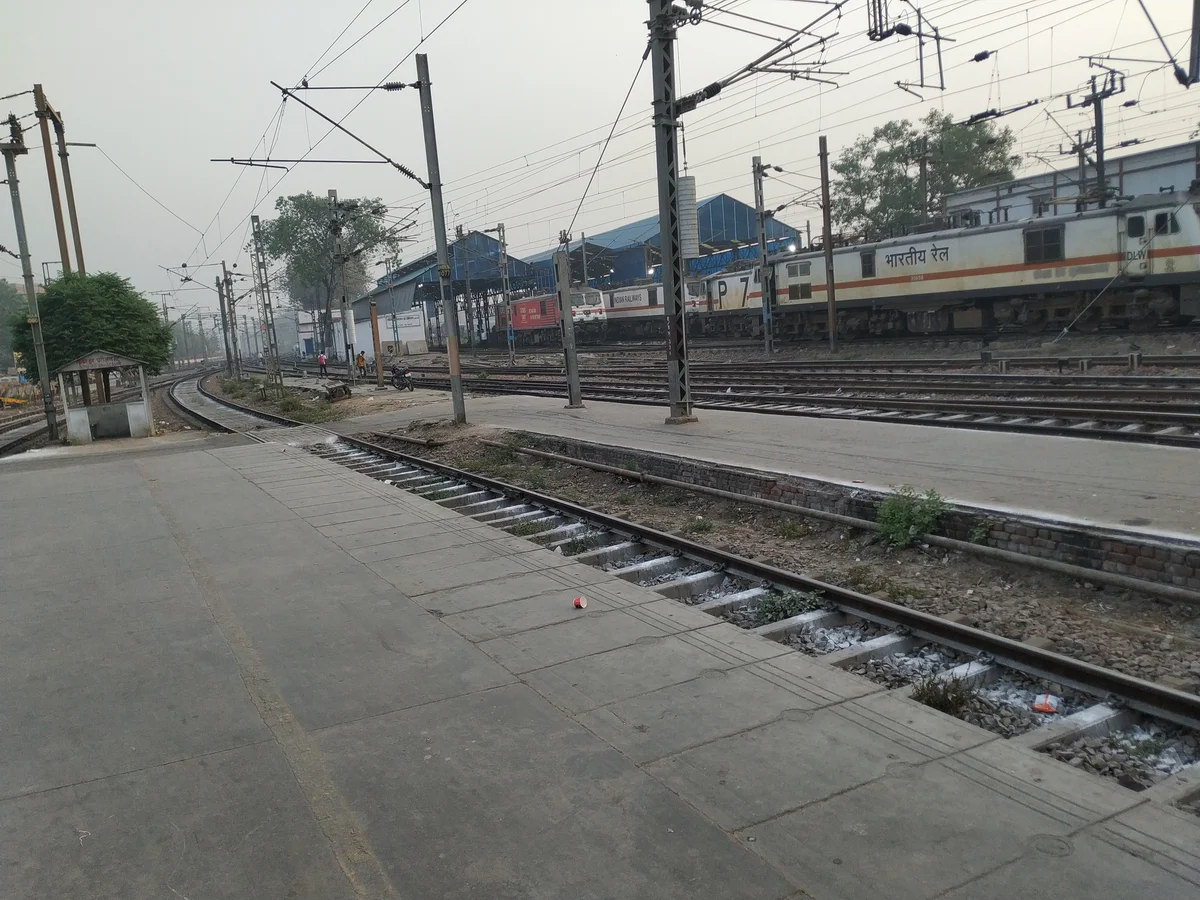
On a rail itinerary, pay attention to both ends of the trip. Use the operator's timetable and your booking to confirm the station names, train number and travel date. A city name alone may be too broad for arranging a pickup. For an overnight service, check the calendar day of arrival when you book lodging or onward transport. Keep the train and coach details handy so station staff or passenger support can identify your journey if you need assistance.
If you are choosing between a daytime train and a sleeper that reaches your destination before dawn, compare the options through to your lodging. The overnight service may work if your pickup and room access line up, including after a delay. If you would have an extended wait before your onward ride or check-in, the daytime train may make the whole trip easier to manage. Confirm the actual schedule and arrangements before booking, since the arrival time alone tells you little about the rest of the transfer.
Indian Railways provides passenger support through RailMadad and helpline 139, including security and medical assistance. You can also approach on-board or station staff. Give them your station or train details and explain what help you need. For immediate danger or another urgent emergency, call 112.
Rural roads, weather and remote stays
Heavy rain and flood surges during monsoon and cyclone seasons can disrupt travel while the national advisory remains unchanged. Look up NDMA SACHET alerts for the districts along the road, including the approach to your destination. Read the issue time, the period covered and any local authority instructions. Then ask the transport operator whether it expects to run your specific route. The district warning describes local conditions, while the operator can tell you what has happened to the service you booked.
If a lodge can only collect you after a rural road transfer, check what happens if a closure prevents you from reaching the meeting point. A flexible overnight stop before that leg gives you somewhere to wait if the road is closed or the driver cancels. Confirm changes with the operator and consult public instructions from local authorities before accepting a detour. A change of road may take you into a different district or an area covered by a regional advisory.
Medical care can be less accessible in rural and remote areas. Before choosing a remote stay, ask the lodging or trip operator how guests can reach assistance, what communications are available and how emergency transport would be arranged. Establish who can make the call where mobile service is limited. Use those answers to decide whether the location and the time needed to reach care fit the trip you are planning.
Who to call for help in India
Call 112 for urgent police, health, fire or other emergency assistance in India. Give the dispatcher your location, including the station, terminal, property or other landmark if you know it, and say what assistance is needed. On a train or at a station, nearby railway staff can help identify where you are. RailMadad and 139 are the railway's passenger support channels.
The Ministry of Tourism provides tourist information and distress guidance around the clock at 1363 or 1800 111 363. It lists support in English, Hindi and ten international languages for domestic and international visitors. Use that service when you need guidance about what to do or whom to contact. In an immediate emergency, use 112 to reach emergency dispatch.
If a theft leaves a U.S. visitor without a passport, the local authorities handle the investigation and the U.S. consular post can explain how to replace the passport. After any immediate safety needs are addressed, the post can also explain available assistance, help connect victims with services and share information on local lawyers. Medical and legal expenses remain the traveler's responsibility under the published consular service scope. Save the relevant post's current contact details before departure and keep your booking information available offline in case you need to identify where you were or where you are staying.
| Need | Public service | Published contact or channel |
|---|---|---|
| Emergency dispatch | Emergency Response Support System | 112 |
| Tourist information and assistance route | Ministry of Tourism Tourist Info Helpline | 1363 or 1800 111 363 |
| Help with a railway journey | Indian Railways RailMadad | 139 and RailMadad |
| Local disaster alert | NDMA SACHET | Public alerts for the relevant area |
Travel scams in India, official bookings and reportingTravel insurance for India, medical cover and trip costs
Sources
- U.S. Department of State — India advisory as displayed 26 November 2026
- UK FCDO — India regional warnings, 7 October 2026 update
- Australia DFAT Smartraveller — India regional distinctions
- Ministry of Home Affairs — India emergency response number 112
- Ministry of Tourism — 24-hour Tourist Info Helpline
- Indian Railways — RailMadad passenger support
- NDMA SACHET — district and local disaster warning platform
- U.S. Department of State — victims of crime overseas
- Credited photograph — New Delhi Railway Station platform 5
