Find a notable person by field
Notable people from India include Rabindranath Tagore in literature, Satyajit Ray in film, M. S. Subbulakshmi in music, C. V. Raman and M. S. Swaminathan in science, and Kalpana Chawla in space exploration. B. R. Ambedkar and Savitribai Phule are documented figures in constitutional drafting and education, Mary Kom and Abhinav Bindra in Olympic sport, and Ratan Naval Tata in business.
This directory is an illustrative, unranked selection. Each entry starts with a contribution a reader can locate in a dated record. Those records answer different questions. A competition result establishes a placing in a specified event. An institutional biography can establish who held a position. An archival document can show that a performance or a formal decision took place on a particular day. The milestone in the table gives you a starting point for each person.
| Person | Area | Field | Milestone type | Documented milestone | Record keeper |
|---|---|---|---|---|---|
| Rabindranath Tagore | Literature | Literature | Prize | Nobel Prize in Literature, 1913 | Nobel Prize archive |
| Satyajit Ray | Performing arts | Film | Career honour | Honorary Academy Award, 1992 | Academy Film Archive |
| M. S. Subbulakshmi | Performing arts | Carnatic music | Performance | United Nations General Assembly Hall concert, 23 October 1966 | UN Digital Library |
| C. V. Raman | Science and exploration | Physics | Prize | Nobel Prize in Physics for light scattering, 1930 | Nobel Foundation |
| M. S. Swaminathan | Science and exploration | Agricultural science | Prize | First World Food Prize laureate, 1987 | World Food Prize Foundation |
| Kalpana Chawla | Science and exploration | Space exploration | Mission role | Mission specialist on STS-87, launched 19 November 1997 | NASA |
| B. R. Ambedkar | Civic reform and education | Constitutional drafting | Committee role | Chair of the Drafting Committee constituted in 1947 | Parliament of India |
| Savitribai Phule | Civic reform and education | Education | Teaching | Taught girls in the 1848 Pune schooling initiative | Savitribai Phule Pune University |
| Mary Kom | Sport | Boxing | Olympic result | Bronze at London 2012, representing India | International Olympic Committee |
| Abhinav Bindra | Sport | Shooting | Olympic result | Men’s 10-metre air rifle gold at Beijing 2008 | International Olympic Committee |
| Ratan Naval Tata | Business | Business | Corporate office | Became chairman of Tata Sons in March 1991 | Tata Group |
Use the field to choose a subject and the milestone type to decide what to read next. A profile centred on a body of work often needs a named publication, performance or collection. A profile centred on a public role needs the institution, the exact title and the dates that the source establishes. A single entry can support more than one angle, as the sections below show.
- Nobel Prize: Rabindranath Tagore
- Academy Film Archive — Satyajit Ray Collection
- UN Digital Library — Secretary-General U Thant address before M.S. Subbulakshmi’s 1966 concert
- Nobel Prize linked data — 1930 Physics laureate
- World Food Prize Foundation — first laureate M.S. Swaminathan
- NASA — STS-87 mission record
- Sansad — Dr. B.R. Ambedkar
- Savitribai Phule Pune University — Phule Chair work chronology
- International Olympic Committee — Mary Kom interview and Olympic record
- International Olympic Committee — Abhinav Bindra’s Olympic record
- Tata Group — Ratan Naval Tata
Literature, film and Carnatic music
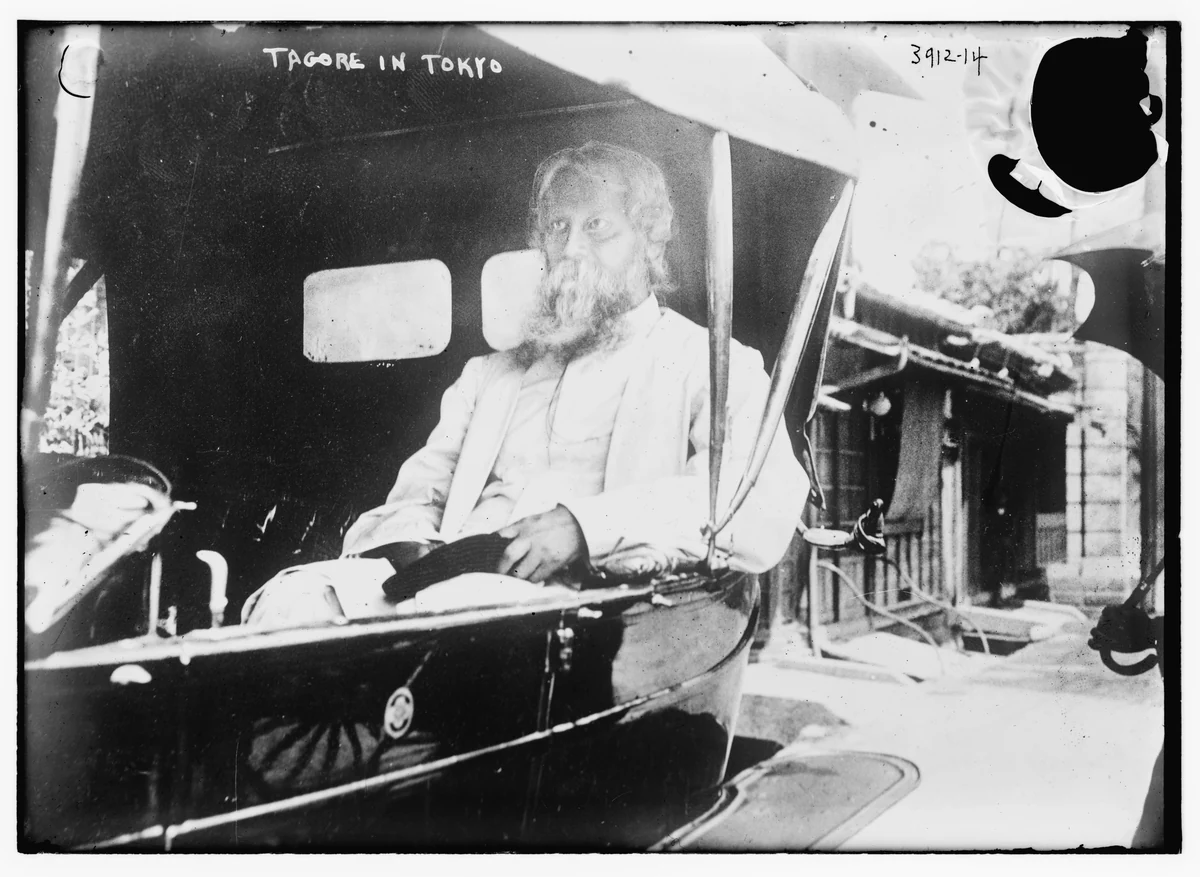
Rabindranath Tagore received the 1913 Nobel Prize in Literature. His English Gitanjali brought a selection of his poems to a new readership and offers a specific starting point for a profile about how his writing circulated. The Nobel archive covers his literary work and wider career. When using the book in a caption or reading note, identify the English selection so that the title points readers to the work discussed in that account.
The Academy recognised Indian filmmaker Satyajit Ray with an Honorary Academy Award in 1992. The award commemorated his career, and the Academy Film Archive provides a second angle on his work through its preservation collection of 18 features and one short. If you mention that count, attach it to the archive’s collection. A reader looking for a particular film can then use the collection record to check its inclusion.
Carnatic singer M. S. Subbulakshmi performed in the United Nations General Assembly Hall in New York on 23 October 1966, on the eve of United Nations Day. Secretary-General U Thant’s welcoming address is a contemporary record for the performer, location and occasion. It offers a dated point of entry for a profile about her public performances.
The Gazette of India notification dated 1 March 1998 names Subbulakshmi for the Bharat Ratna under the name Madurai Shanmukhavadivu Subbulakshmi and lists Ray for the same honour posthumously. Use the Gazette date for the notification. For Ray, the Academy award and the Gazette entry each need their own date and granting institution.
For a citation on M. S. Subbulakshmi, the UN’s dated welcome and the Government of India’s honour record give different milestones. Use the 23 October 1966 General Assembly Hall record for the concert. Use the 1 March 1998 Gazette notification for the Bharat Ratna. The same Gazette also documents Ray’s posthumous Indian honour, separate from the Academy’s 1992 award.
Physics and agricultural science
C. V. Raman received the 1930 Nobel Prize in Physics for work on the scattering of light and the discovery of the effect that bears his name. His Nobel lecture on 11 December 1930 describes experiments on molecular scattering and refers to his scientific work in Calcutta. The two Nobel records serve different parts of a profile. The laureate record gives the award and its stated basis, while the lecture lets readers follow Raman’s account of the experimental work.
M. S. Swaminathan became the first World Food Prize laureate in 1987 for his role in applying new plant varieties and agricultural practices to improve Indian food production. The prize foundation documents work involving institutions and farmers. A profile can use the application of plant varieties as its focus, with the collaborative setting explaining how agricultural research reached production.
Swaminathan led the Indian Council of Agricultural Research from 1972 to 1979 and the International Rice Research Institute from 1982 to 1988. These appointments give readers a way to follow his work through two named research institutions. They also provide a chronology for reading the prize foundation’s account, with the 1987 prize falling within the period it gives for his leadership of the rice institute.
The President of India’s March 2024 investiture release records Swaminathan’s posthumous Bharat Ratna. For an entry about food production, the prize foundation supplies the basis for describing his agricultural contribution. The investiture release supplies the record for the later national honour. Readers can use both when the profile covers his scientific career and subsequent recognition.
Kalpana Chawla and space exploration
Kalpana Chawla was born in Karnal and flew as a NASA mission specialist on STS-87. NASA records the launch on 19 November 1997 and identifies it as her first spaceflight. The Smithsonian National Air and Space Museum describes Chawla as the first woman of Indian origin to travel into space. Keep that full wording when using the distinction, since it gives the scope of the Smithsonian’s claim.
The Smithsonian’s collection identifies two space shuttle missions in Chawla’s career, STS-87 in 1997 and STS-107 in 2003. The mission identifiers are useful when a search for her name turns up accounts centred on different flights. A profile about her first flight can anchor its opening in the STS-87 launch and use the collection record to place that mission within her career.
A school display about people from India could identify Chawla through her Karnal birthplace, then give her mission role and NASA affiliation beside the launch date. That wording establishes the local connection and the organisation under whose programme she flew. The same display could describe a sportsperson through the country they represented, because a national team result establishes a different kind of connection.
For a timeline focused on the first flight, describe 19 November 1997 as the launch date. The year 2003 identifies the second mission in the supplied archival record. A fuller timeline with exact dates or descriptions of onboard duties would need the record for each relevant mission and a source that specifies the individual assignment.
Constitutional drafting and girls’ education
The Constituent Assembly constituted its Drafting Committee on 29 August 1947 and named B. R. Ambedkar among its members. Parliament’s institutional biography identifies him as the committee’s chair and independent India’s first Law and Justice Minister. In a profile about the Constitution, name his chairmanship within the Assembly’s wider drafting process. The committee role is precise enough for a short entry and provides a basis for explaining his contribution in a longer one.
The date belongs to the Assembly’s constitution of the committee. Its debate record supports that event and the membership, while Parliament’s biography supplies the chairmanship and ministerial title. The biography also records his posthumous Bharat Ratna recognition in 1990. If your timeline follows the development of the Constitution, put the 1947 committee entry under that subject and reserve the 1990 entry for recognition.
Savitribai Phule Pune University’s Phule Chair chronology records a girls’ school in Pune in 1848. Savitribai Phule taught girls and worked in the schooling effort with Jyotirao Phule. The place, year and teaching role make a compact profile possible. They also let a reader look up the particular schooling effort without having to start from a claim about all schools in India.
If a caption calls the Pune school a first, check what geography, period and type of institution the claim covers. The chronology here supports the 1848 entry and Phule’s participation. A claim of priority across a wider area needs evidence about other schools and teachers within the same scope. Her documented role gives a clear subject for a caption or an education timeline on its own.
Olympic boxing and shooting
Mary Kom represented India and won a boxing bronze medal at London 2012. The International Olympic Committee identifies her as the third Indian woman to win an individual Olympic medal. A profile about Olympic participation can use that distinction alongside her sport, medal and Games. The ordinal applies to Indian women winning individual Olympic medals, so keep those qualifications together when shortening the entry.
Abhinav Bindra won the men’s 10-metre air rifle event at Beijing 2008. The IOC identifies him as the first athlete to win an individual Olympic gold medal for India. The event name adds information that a general label such as shooting leaves out. The word individual specifies the category in which the IOC records his first.
If you are making a panel on India’s individual Olympic gold medals, Bindra is the relevant entry from this directory. If the panel covers Indian women’s individual Olympic medals across sports, Mary Kom’s London bronze fits that criterion. The choice follows from the panel’s scope. Each profile can carry the full result on its own, including the Games, sport and medal.
A dated Olympic result can anchor a career profile even when the person also competed in other tournaments. For a longer account of Mary Kom’s boxing career or Bindra’s shooting career, check the official records for any additional competition you plan to name. Those events need their own results and dates. For a changing statistic such as India’s current medal total, use the latest official Olympic results and specify the Games covered.
Verify a name, date or distinction
Start by matching the wording of your claim to the kind of record you have. The 1998 Gazette gives a notification date for a national honour. The President’s March 2024 release records an investiture, including posthumous honours for P. V. Narasimha Rao, Chaudhary Charan Singh, M. S. Swaminathan and Karpoori Thakur. A chronology can label these events precisely even when a short biography refers to both kinds of record under the heading of national honours.
When looking for a contemporary scientist to add, use the President’s 2024 Rashtriya Vigyan Puraskar release to find candidates by research field and award category. If you are updating a list of recipients, look for the release for the relevant award year and verify the exact category. Then find an institutional record for the research itself so the entry can explain what the person contributed.
Check whether the spelling you plan to use is sufficient to find the underlying record. The United Nations material documents Subbulakshmi’s concert, and the Gazette gives her expanded name. Keeping the familiar name in the heading and using the expanded form when discussing the Gazette helps readers connect the two records. For any new entry, a field and a dated contribution provide the same kind of search anchor.
Sources
- President of India: March 2024 Bharat Ratna Investiture
- Nobel Prize: Rabindranath Tagore
- President of India: Rashtriya Vigyan Puraskar 2024
- Academy Film Archive — Satyajit Ray Collection
- UN Digital Library — Secretary-General U Thant address before M.S. Subbulakshmi’s 1966 concert
- Gazette of India — Bharat Ratna notification dated 1 March 1998
- Nobel Prize — C.V. Raman’s 1930 Nobel lecture
- Nobel Prize linked data — 1930 Physics laureate
- World Food Prize Foundation — first laureate M.S. Swaminathan
- Smithsonian National Air and Space Museum — Kalpana Chawla Collection
- NASA — STS-87 mission record
- Parliament Digital Library — Constituent Assembly Debates, 29 August 1947
- Sansad — Dr. B.R. Ambedkar
- Savitribai Phule Pune University — Phule Chair work chronology
- International Olympic Committee — Mary Kom interview and Olympic record
- International Olympic Committee — Abhinav Bindra’s Olympic record
- Tata Group — Ratan Naval Tata
- Library of Congress — Tagore in Tokyo, Bain News Service archival negative