When Steve Jobs went to India
Steve Jobs travelled to India before Apple existed, and Walter Isaacson’s authorized biography places the trip in 1974. Jobs recalled flying from Zurich to New Delhi while on leave from Atari, and his travel companion Daniel Kottke recalled that their interest in Indian philosophy and spirituality began during their Reed College years.
The trip belongs to the period when Jobs had left Reed and was working at Atari. His recollection in the Steve Jobs Archive begins with a work assignment involving games sent to Europe. He describes taking leave and flying onward to India. That sequence explains how Europe figures in the story and why Atari appears in accounts of a journey undertaken for personal reasons. The Computer History Museum’s timeline places the trip between Reed and Apple’s founding, making it easy to locate in Jobs’s working life.
Each source answers a different question. Jobs identifies the cities at either end of his flight. Kottke confirms that he travelled in India with Jobs and remembers Atari as part of the lead-up. Isaacson supplies the calendar year in chapter 4, ‘Atari and India,’ of his 2011 biography. The publisher’s catalogue identifies the book, so a reader checking the year needs the chapter itself. A dated timeline can therefore use ‘1974, according to Isaacson’ and leave the arrival day open. That wording is specific enough to use in a caption, a chronology or a reference entry.
- Steve Jobs Archive: Make Something Wonderful
- CNN Transcript: Daniel Kottke's First-Person Account
- Computer History Museum: Steve Jobs Timeline
- KQED | first-person interview with travel companion Daniel Kottke
- Simon & Schuster | Walter Isaacson’s authorized biography Steve Jobs
- Library of Congress | Bernard Gotfryd photograph of Steve Jobs and a Macintosh
- Los Angeles Times | interview with Larry Brilliant, who met Jobs in India
Why 1973 also appears in accounts of the trip
The Ministry of Tourism’s Utsav listing for the Kainchi Dham fair puts Jobs’s visit in 1973. That creates a genuine discrepancy with Isaacson’s 1974 account. For dating Jobs’s movements, the biography is the stronger reference because the relevant chapter follows his preparations and travel in the course of his life story. The tourism listing is useful for locating the site and identifying the fair. Its connection to a government tourism service gives it authority in that context, while the historical year it assigns to Jobs’s visit still needs independent support.
| Year or date | Record | What the date describes | Scope |
|---|---|---|---|
| 11 May 1973 | Passport reproduced by the Steve Jobs Archive | Issue date printed on the passport. | Document date |
| 1973 | Ministry of Tourism’s Kainchi Dham fair entry | Year reported for Neem Karoli Baba’s death. | Temple history |
| 1973 | Same tourism entry | The trip year given by the tourism listing. It differs from the biographical chronology. | Conflicting account |
| 6 March 1974 | Trust property notification cited by the Kainchi temple trust | Administrative milestone for the trust property. | Temple history |
| 1974 | Biographical chronology and recollections | Best-supported year for Jobs’s India trip. The arrival day remains unverified. | Travel account |
Two precisely dated records can make this discrepancy harder to spot. The passport shown in the Steve Jobs Archive bears an issue date of 11 May 1973. That date records the issuance of the document. The Shri Kainchi Hanuman Mandir Trust cites a Uttar Pradesh notification dated 6 March 1974 concerning the vesting of scheduled property. That date records a step in the trust’s property history. Neither record identifies the date Jobs boarded a flight or reached the ashram.
If you encounter a timeline that gives 11 May 1973 as the date Jobs arrived in India, follow its citation to see exactly what the date labels. A passport issue date is often easy to verify because it is printed on the document, but an arrival claim needs something that records the journey, such as a legible entry stamp tied to the relevant trip or an independently dated account of his arrival. Jobs’s archive interview leaves that day open, and Kottke’s recollections supply no exact flight or arrival date.
- Steve Jobs Archive: Make Something Wonderful
- CNN Transcript: Daniel Kottke's First-Person Account
- KQED | first-person interview with travel companion Daniel Kottke
- Simon & Schuster | Walter Isaacson’s authorized biography Steve Jobs
- Shri Kainchi Hanuman Mandir Trust | temple operator and trust history
- Ministry of Tourism Utsav | Kainchi Dham fair and discrepant tourism year
What drew Jobs and Kottke to India
Kottke’s interview with KQED traces the idea back to Reed College. He remembered exploring Indian philosophy and spirituality with Jobs and credited their mutual friend Robert Friedland with inspiring the trip. Kottke gives a broader account of their shared interests, while Isaacson describes a specific purpose of the journey, visiting the ashram associated with Neem Karoli Baba. Together those accounts explain why the ashram mattered to the travellers and why the idea had taken shape before Jobs found a chance to fly from Europe.
The two first-person accounts follow different parts of the story. Jobs remembers the circumstances that put him in Zurich and how he got to New Delhi. Kottke speaks about the interests they shared and remembers travelling in India with him. Their accounts support describing Kottke as Jobs’s travel companion in India. The available passages give too little detail about Kottke’s flight to put him on the Zurich departure with Jobs or to specify where the pair first met up.
Atari’s role is also easy to overread. Jobs recalled that his assignment involved games sent to Europe, which gives the European part of his journey a workplace context. He describes taking leave for the India part. Kottke’s account of their Reed years and Larry Brilliant’s recollection of Jobs as a spiritual seeker supply the personal context. For someone tracing Apple’s history, the resulting distinction is practical. A company chronology can include the trip as part of a founder’s life before Apple, while the description of the journey itself belongs to his personal history.
- Steve Jobs Archive: Make Something Wonderful
- CNN Transcript: Daniel Kottke's First-Person Account
- KQED | first-person interview with travel companion Daniel Kottke
- Los Angeles Times | interview with Larry Brilliant, who met Jobs in India
- Simon & Schuster | Walter Isaacson’s authorized biography Steve Jobs
Did Steve Jobs meet Neem Karoli Baba?
Neem Karoli Baba had died by the time Jobs and Kottke reached Kainchi Ashram, according to the Los Angeles Times account that includes an interview with Larry Brilliant. Isaacson identifies visiting the ashram as a purpose of the journey, and the Utsav fair listing gives 1973 as the year of the teacher’s death. The supported connection is a visit to the ashram associated with Neem Karoli Baba after his death. The relationship between teacher and place explains why his name is central to the story.
Brilliant is someone Jobs did meet in India. He recalled that Jobs was 19 at the time and described them as spiritual seekers. His recollection supplies evidence of a personal encounter from someone who took part in it. The article’s statement about Neem Karoli Baba’s death before the travellers reached the ashram is a separate part of the reporting. A careful retelling can attribute Brilliant’s memory of Jobs’s age to Brilliant and the sequence at the ashram to the article.
This distinction matters when search results compress the story into a phrase such as ‘Steve Jobs and Neem Karoli Baba.’ That phrase can cover a teacher’s reputation, an ashram visit or an alleged meeting. If you are checking a claim that the two spoke, trace the claim to a source that actually describes a conversation and gives a basis for knowing it happened. A destination page that connects Jobs with Kainchi Dham supports the place association. The reported sequence of the death and the visit is the relevant evidence for the meeting claim.
New Delhi and Kainchi Dham on the historical map
New Delhi is the point of entry Jobs names. Kainchi Dham is the site near Bhowali associated with the ashram visit. Uttarakhand Tourism includes it in its Bhowali destination information, the trust gives its address as Kainchi in District Nainital, and the Utsav listing places it on the Nainital–Almora Road. These descriptions help a reader identify the destination when an account uses ‘Kainchi Ashram’ and a contemporary listing uses ‘Kainchi Dham.’
Present-day Uttarakhand is the right state label for finding Kainchi Dham now. In 1974, the locality was part of Uttar Pradesh. The trust’s history illustrates how the two labels can appear in the same source. Its modern address names Uttarakhand, and its historical reference is to a 1974 Uttar Pradesh government notification. Use the modern address for a map or visitor search. In a historical account, ‘then in Uttar Pradesh’ situates the ashram in the jurisdiction that existed at the time.
The two locations answer different geographical questions. New Delhi tells you where Jobs remembers his flight landing. Kainchi identifies an inland destination tied to the purpose of the trip. Jobs’s published reminiscence leaves the intermediate stages open. A map for a history reader can mark New Delhi and Kainchi with brief descriptions of the evidence for each location. A line connecting them would imply knowledge of how he travelled between the two, which the city names alone cannot supply. The same limit applies to claims about how long he stayed at each stop.
Things to do in Delhi: one, two and three-day itineraries
- Steve Jobs Archive: Make Something Wonderful
- Los Angeles Times | interview with Larry Brilliant, who met Jobs in India
- Uttarakhand Tourism | Bhowali destination information
- Shri Kainchi Hanuman Mandir Trust | temple operator and trust history
- Ministry of Tourism Utsav | Kainchi Dham fair and discrepant tourism year
What Jobs’s recollection says about the trip’s influence
In the Steve Jobs Archive, Jobs reflects on the personal meaning of the journey. That material can ground an account of how he understood the experience looking back. Kottke’s interview adds context about what interested the two friends before they left. Reading the interviews together gives the story some depth because the philosophical and spiritual interests were already part of their lives at Reed, and Jobs could later describe the trip from his own perspective.
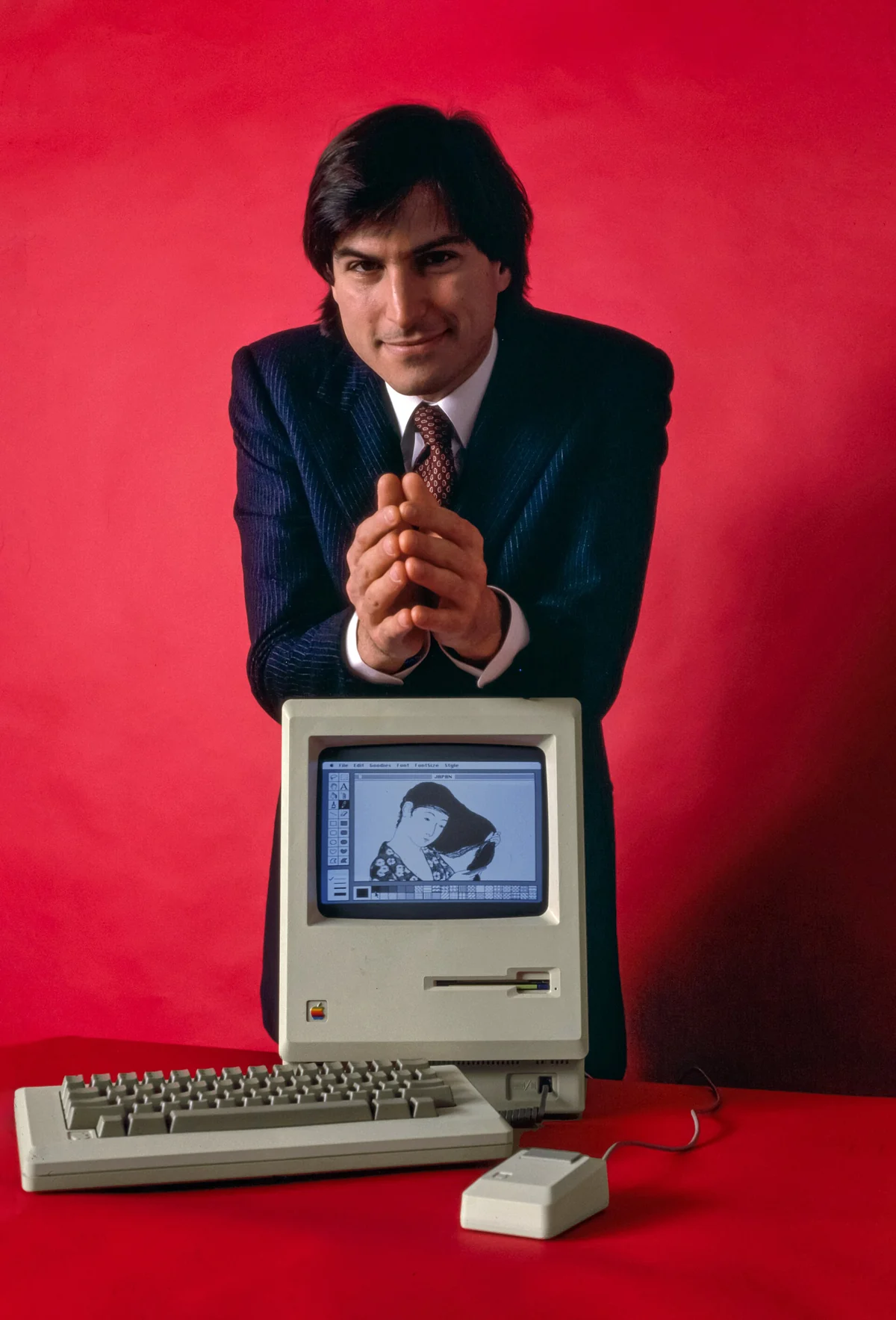
The threshold is higher for a claim about a particular product or decision at Apple. The Computer History Museum timeline establishes the order of events. Bernard Gotfryd’s January 1984 photograph documents Jobs with a Macintosh years later. If an article credits the Macintosh’s design to the India trip, the claim needs a source connecting the experience to a particular design choice, such as a documented account from someone involved in that decision. The timeline and photograph tell readers where the two episodes sit in Jobs’s life and supply no such link.
The same care applies to vivid descriptions of what Jobs thought or felt at Kainchi. A tourism listing can introduce readers to the fair and its setting. To attribute a specific thought to Jobs, look for his own words or an identified person who heard him express it. Check when the recollection was recorded and whether the passage concerns the trip as a whole or a named place. A reflection about India in general can easily acquire an unwarranted connection to a single stop when it is excerpted for a short article.
- Steve Jobs Archive: Make Something Wonderful
- Computer History Museum: Steve Jobs Timeline
- KQED | first-person interview with travel companion Daniel Kottke
- Ministry of Tourism Utsav | Kainchi Dham fair and discrepant tourism year
- Library of Congress | Bernard Gotfryd photograph of Steve Jobs and a Macintosh
Checking a visit or fair at Kainchi Dham today
For a present-day visit, start with the Shri Kainchi Hanuman Mandir Trust, the operator identified by its Kainchi address in District Nainital. Use the Ministry of Tourism’s Utsav listing to identify the Kainchi Dham fair, then check for an announcement that explicitly names the edition you plan to attend. An undated destination description can help you find the site. The current year and the stated local date and time are what make a fair announcement usable for a travel decision.
Check what the timing applies to. Hours for an ordinary temple visit, a fair programme and instructions for entry on an event day answer different questions. For a trip timed around the fair, verify the event date and any published entry arrangements close to departure. Use the operator’s current visitor information for access to particular areas. Recollections of a personal journey in the 1970s supply no permission to enter private spaces or reason to expect the same arrangements today.
- Use Kainchi, District Nainital, Uttarakhand to verify you have found the right operator or listing.
- Match the fair announcement to your intended year and any schedule to Indian Standard Time.
- Check whether published hours apply to ordinary visits or to the fair.
- Recheck access information shortly before travel and treat an expired announcement as a record of that edition.
12 Jyotirlingas in India, temple directory and Shivaratri 2027
Sources
- Steve Jobs Archive: Make Something Wonderful
- CNN Transcript: Daniel Kottke's First-Person Account
- Computer History Museum: Steve Jobs Timeline
- KQED | first-person interview with travel companion Daniel Kottke
- Los Angeles Times | interview with Larry Brilliant, who met Jobs in India
- Simon & Schuster | Walter Isaacson’s authorized biography Steve Jobs
- Uttarakhand Tourism | Bhowali destination information
- Shri Kainchi Hanuman Mandir Trust | temple operator and trust history
- Ministry of Tourism Utsav | Kainchi Dham fair and discrepant tourism year
- Library of Congress | Bernard Gotfryd photograph of Steve Jobs and a Macintosh
- Wikimedia Commons | Steve Jobs and the Macintosh, restored JPEG derivative
