When Jet Li was in India
Jet Li’s documented visits to India include a September 2003 meeting with the 17th Karmapa and an October 2005 Buddhist pilgrimage to Dharamsala, Himachal Pradesh, where he met the Dalai Lama and the Karmapa. Journalist Amitabh Pal places the Dalai Lama encounter on 6 October 2005, and the available records establish no upcoming public appearance in India.
| Date or period | Recorded location | Record type | What is documented | Source |
|---|---|---|---|---|
| 2000, recalled in 2007 | Place unverified | Recollection, location unresolved | Li recalled an encounter with the Dalai Lama without placing it in India. | Contemporary account of Li’s interview |
| September 2003 | India, exact town and day unverified | Documented India pilgrimage | Li describes his first India pilgrimage. The Karmapa’s office records an encounter and shows the two together. | Karmapa office meeting archive |
| 6 October 2005 | Dharamsala, Himachal Pradesh | Documented India pilgrimage | Interviewer Amitabh Pal places Li at the Dalai Lama’s office that afternoon. | Amitabh Pal’s firsthand account |
| 8 October 2005, report date | Dharamsala, Himachal Pradesh | Corroborating local dispatch | The local account identifies the trip as a pilgrimage and reports meetings with both teachers. | Dharamsala dispatch |
| Late November 2003 | Upstate New York, United States | Separate documented retreat | Li places the Chan retreat with Sheng Yen in New York in his own chronology. | Li’s published memoir excerpt |
The two visits have different kinds of documentation. The 2003 account comes from the Karmapa’s office, which published a photograph of the meeting, and from Li, who later wrote about his first pilgrimage to India. The 2005 account comes from a dispatch filed from Dharamsala and from Pal, who was there to interview the Dalai Lama. Together they give the story a firm chronology at month level, with one encounter that can be dated more precisely through an eyewitness.
The records describe religious travel and meetings with Buddhist teachers. They establish why the actor appears in accounts of Dharamsala and in the Karmapa’s archive. For a calendar listing, the practical details would be different. A public appearance needs a named organiser, a venue and some statement about who may attend. The historical accounts give readers a way to trace Li’s connection to India, with the dates below reflecting the precision each source can support.
- Official Kagyu Office archive | Visit to Gopalpur and Meeting with Jet Li
- Jet Li | Beyond Life and Death excerpt from licensed ebook distribution
- The Progressive | interviewer Amitabh Pal’s contemporaneous account from Dharamsala
- India Travel Times | Hemant Chauhan’s 8 October 2005 Dharamsala dispatch
- Tricycle | licensed first-person Buddhist memoir excerpt by Jet Li
- The Economic Times | news agency report of Jet Li’s 2007 first-person interview
September 2003 and the meeting with the Karmapa
The Kagyu Office archive documents a September 2003 audience with Ogyen Trinley Dorje, the 17th Karmapa. It shows the Karmapa and Li together. The entry also covers a September tour of the Tibetan Children’s Village at Gopalpur. That tour is a separate item in the same entry, and the account leaves the location of Li’s audience unspecified. India is the supported location for the meeting. The day of the month and the rest of Li’s itinerary remain undetermined.
Li gives the meeting personal context in his memoir, Beyond Life and Death: The Way of True Freedom. He describes 2003 as his first pilgrimage to India and recalls the Karmapa giving him the name Karma Nyingjei Bu, which he renders in English as Son of Compassion. The name is a detail from Li’s own recollection. It gives the encounter a place in his account of studying Tibetan Buddhism and explains why he tells the story as part of his religious life.
For a chronology, the office archive carries the month and documents the audience, while the memoir supplies Li’s description of the journey and its significance to him. Use the phrase first pilgrimage with that full qualifier. Li’s wording leaves the question of any earlier travel to India open. The publisher’s catalogue helps identify the work as his memoir, and the passage itself is where readers can check precisely what he says about the trip.
The archive entry can be used to find the contemporary photograph. Within the same article, the part about Gopalpur describes a different visit by the Karmapa. Use the paragraph that actually names Jet Li when checking his itinerary. His memoir gives the pilgrimage’s country and year, and the office archive supplies the month of its encounter. Neither record gives enough to assign Li’s meeting to the Gopalpur stop.
October 2005 in Dharamsala
Hemant Chauhan’s 8 October 2005 dispatch for India Travel Times places Li in Dharamsala on a Buddhist pilgrimage and reports meetings with both the Dalai Lama and the Karmapa. It spells the actor’s name Jet Lee. That spelling is useful when looking for the original report in an archive, since a search using only his usual professional name can miss the item. Use Jet Li in a chronology and retain the variant as a search term.
Amitabh Pal supplies a day for the Dalai Lama encounter. Writing in the January 2006 issue of The Progressive, he recalls meeting the Dalai Lama on 6 October in Dharamsala and says Li dropped by that afternoon. Chauhan’s dispatch independently supports the year, the town and the fact of a meeting. The day comes from Pal’s account of what he witnessed. It can be used with his name attached, while October 2005 is the date the reporting supports for the visit as a whole.
If a calendar entry needs one date for Li’s visit, use October 2005. A biographical timeline with a separate entry for the Dalai Lama encounter can use 6 October 2005 with attribution to Pal. The dispatch date belongs to the article record, and the date of the Karmapa meeting during that visit remains open. When checking whether another publication adds evidence for the sixth, look at the byline and the passage. Pal’s account appears in several places, including his own archive, and those versions trace back to one witness.
Dharamshala and McLeod Ganj: a practical one- to three-day itinerary
What the reporting says about a film
The October 2005 dispatch mentions speculation about a possible film concerning the Karmapa and reports that the Tibetan leader’s office denied it. Chauhan’s article therefore documents that the story circulated during the visit and that the office responded. The trip itself is described as a pilgrimage. The film remains unconfirmed, and the coverage gives no production title, credited role for Li or record of filming in India.
For a filmography, a production record would need to identify the project and specify Li’s involvement. To enter it as work in India, that record would also need to place the relevant work there. A story about discussions for a possible film would support an entry about the discussions if they were independently documented. A report on a completed production or its credits would answer a different question. Here the mention of the rumour and denial belongs to the history of the coverage around the pilgrimage.
An event listing has its own evidence requirements. Pal describes Li dropping by during the afternoon of an interview, and Chauhan reports meetings with religious leaders. Those descriptions establish encounters. Neither account gives a programme or an invitation for members of the public. An archive can date an appearance and name the people present while leaving the arrangements for attendance private or simply unrecorded. Any claim that fans could attend would need a source describing the terms of admission.
Other dates and photographs that can cause confusion
A 2007 news agency report carried by The Economic Times refers to Li recalling a meeting with the Dalai Lama in 2000. The interview was reported from Hong Kong, and the account leaves the location of the earlier encounter undetermined. A chronology of Li’s meetings with the Dalai Lama can include that recollection with the location marked as unspecified. A chronology of visits to India needs a source placing a meeting within the country before it can include the 2000 entry.
Li’s account of surviving the 2004 Indian Ocean tsunami also comes up in coverage of his life and philanthropy. In a 2026 Harvard Business Review interview, he places his experience in the Maldives. His official biography connects the tsunami to his philanthropy and dates the formation of One Foundation under the Chinese Red Cross to 19 April 2007. These dates help trace the sequence he gives for that work. The geographic detail from the interview settles where he was during the tsunami.
The location attached to a photograph can be checked independently of the article that uses it. The first-person excerpt in Tricycle describes a retreat with Chan teacher Sheng Yen in upstate New York in late November 2003, following the September entry in the India chronology. The excerpt also carries a photograph with Kyabje Dodrupchen Rinpoche captioned Thailand in 2018. The photograph and retreat account describe separate episodes, each with its own teacher, place and date.
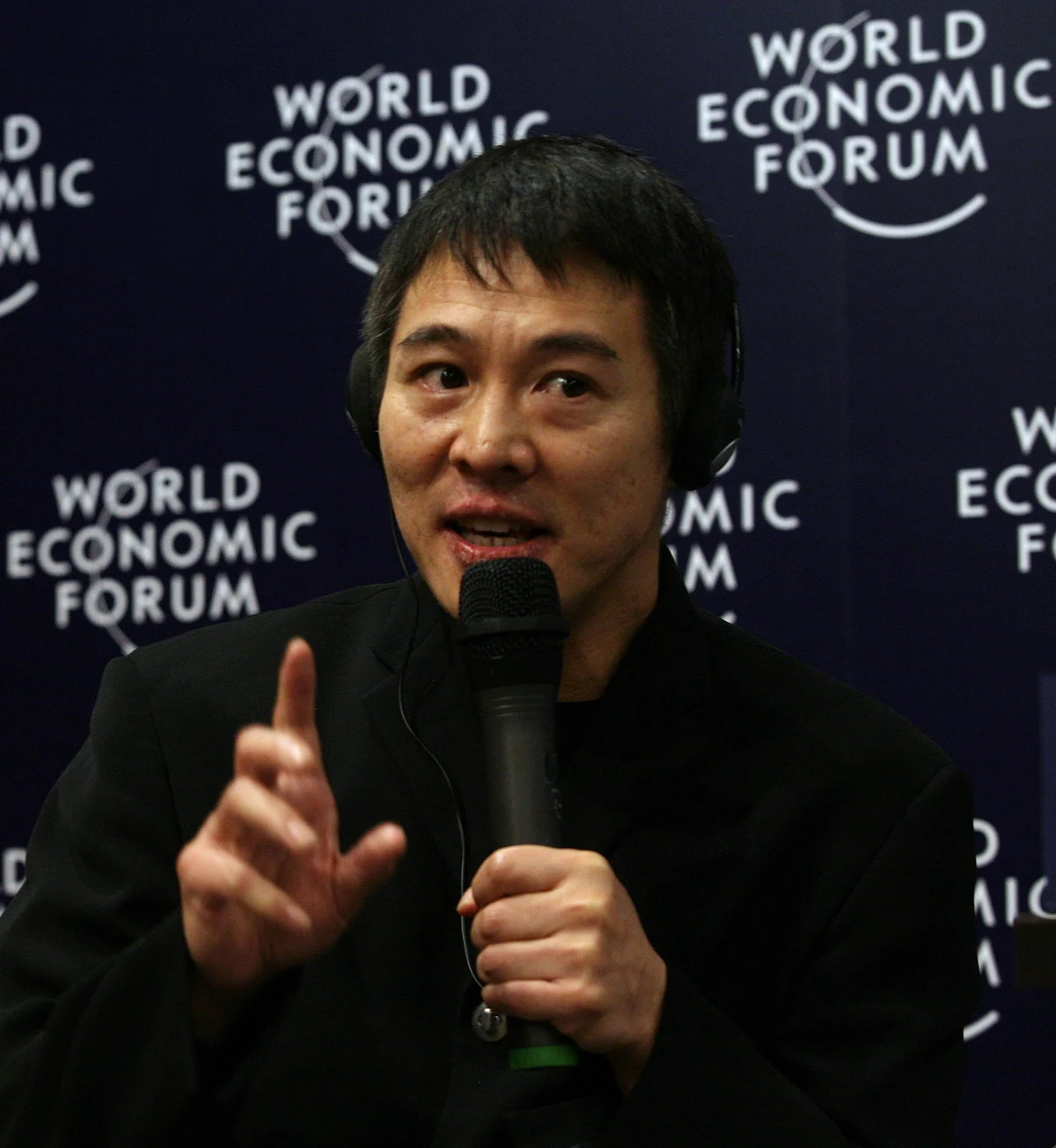
A widely reusable photograph of Li speaking at a World Economic Forum event has an equally specific location. Its record places him at the Annual Meeting of the New Champions in Tianjin, China, on 28 September 2008. The photograph in the Kagyu Office entry documents the 2003 encounter with the Karmapa. Captions that identify the setting let readers tell whether an image depicts the event discussed in the surrounding text or illustrates an article about the same person.
- Official Kagyu Office archive | Visit to Gopalpur and Meeting with Jet Li
- Jet Li | Beyond Life and Death excerpt from licensed ebook distribution
- Tricycle | licensed first-person Buddhist memoir excerpt by Jet Li
- The Economic Times | news agency report of Jet Li’s 2007 first-person interview
- Wikimedia Commons / World Economic Forum | previously verified open Jet Li portrait
- Jet Li official website | One Foundation history and the 2004 Indian Ocean tsunami
- Harvard Business Review | firsthand 2026 Jet Li interview
How to verify a new appearance in India
Start with the date and the role claimed for Li. A new publication date can appear above a story about the 2005 pilgrimage, especially when an old account is republished. Read the date in the body and check the earliest version you can identify. For a future event, look for a dated announcement from the organiser that names Li, specifies his role and identifies a venue in India. Confirm the local start time and attendance terms before using the notice to plan a journey.
Suppose a venue in Himachal Pradesh advertises a screening of a Jet Li film and a repost describes it as a Jet Li event. The venue’s programme can establish that the film will be shown at a particular time and place. To decide whether there is a personal appearance, check whether the programme explicitly lists Li as a guest and says how he will participate. A statement that a guest will join by video answers the participation question, while the venue still tells you where the audience will gather.
Keep a confirmed future listing tied to the organiser’s latest notice. Record the event time in Indian Standard Time, the city and state or union territory, and any access conditions the organiser publishes. Recheck the notice close to the event and again before relying on it for admission. If the organiser announces a postponement without a replacement date, record the postponement and remove the old date from upcoming listings. Once the scheduled appearance has passed, expire its upcoming status. A dated report, recording or organiser recap can then establish whether Li actually took part.
Jackie Chan in India, film festival, Rajasthan shoot and Mumbai visitIndia events calendar: announced festivals and tentative dates
Sources
- Official Kagyu Office archive | Visit to Gopalpur and Meeting with Jet Li
- Jet Li | Beyond Life and Death excerpt from licensed ebook distribution
- Tricycle | licensed first-person Buddhist memoir excerpt by Jet Li
- The Progressive | interviewer Amitabh Pal’s contemporaneous account from Dharamsala
- India Travel Times | Hemant Chauhan’s 8 October 2005 Dharamsala dispatch
- The Economic Times | news agency report of Jet Li’s 2007 first-person interview
- Wikimedia Commons / World Economic Forum | previously verified open Jet Li portrait
- Jet Li official website | One Foundation history and the 2004 Indian Ocean tsunami
- Harvard Business Review | firsthand 2026 Jet Li interview
- Penguin Random House International Sales | Beyond Life and Death by Jet Li
- Jet Li | Beyond Life and Death
