Selected listings checked on . Dates come from the organiser or the linked public authority. Tentative listings are planning leads. Confirm session times, tickets and any changes with the linked source.
Source for Holi, 2026 Institutional holiday used as a date reference. Historical Delhi timings were separate.
Rangotsav, 2027
to
Mathura and Vrindavan, Uttar Pradesh Rangotsav regional programme
Announced
Source for Rangotsav, 2027 Uttar Pradesh Tourism’s published programme window. Check individual town and temple notices for the events inside this range.
Holi is Tuesday, 23 March 2027 in the IIRS–ISRO gazetted holiday calendar and the Rashtriya Panchang. The Panchang lists Holika Dahan and Dolayatra on Monday, 22 March. For the Braj region of Uttar Pradesh, Incredible India publishes 16–30 March 2027 for Rangotsav in the Mathura–Vrindavan area. That range covers multiple events whose exact town and temple schedules must be checked separately.
The 2026 reference dates were Tuesday, 3 March for Holika Dahan and Wednesday, 4 March for Holi in Delhi’s central government office listings. IIRS–ISRO also listed 4 March. The year on the source matters when a search still returns last year’s festival dates, whether you are arranging leave, buying transport or attending a ceremony.
IIRS publishes its own institutional holiday list. Its entry establishes the date that the institute designates as Holi and gives travellers a reference for the festival. A local organiser, a state office, a museum and a railway operator each answer a different planning question. The relevant source depends on whether you are trying to attend a celebration, use a public service, visit an attraction or make a connection.
The date record has two entries with a clear institutional scope. The IIRS list for 2026 places Holi on March 4. Its list for 2027 places Holi on March 23. Keep the year and the issuing institution alongside each date when saving it in a shared itinerary. A bare date copied into a group chat or planning document can easily outlive the context that made it useful.
The National Portal of India provides a month-by-month calendar for public reference. Use the calendar for the relevant year when laying out a trip, then confirm institution-specific openings with the office or business concerned. If you are planning an appointment, the office’s response should identify the branch and the service you need. Building access and the availability of a particular counter or appointment slot are separate details.
Two annual entries give you a record of which date IIRS lists for each year. To establish when an entry first appeared or whether it was revised, look for a dated official circular, revision notice or archived version. The year printed on a holiday list identifies the period it covers. A separate publication or revision record is needed to establish when someone could first have relied on the listing.
For example, if a festival article and a holiday calendar show different March dates, first check the year on each page. Then look at the activity attached to the date. A notice for a particular gathering and a gazetted holiday entry may both be accurate for their own purposes. If both sources describe the same event in the same year, check with the issuer for a correction or a later notice before booking around either date.
The Survey of India’s 2027 notice for central government offices in Uttarakhand places Holika Dahan and Dolyatra together on its restricted list on 22 March. IIRS–ISRO’s gazetted Holi entry is 23 March. These two categories help explain why both dates can appear in travel results and office calendars. For a religious service, check the ritual and time at the temple. For a workplace or bank, read the applicable institution’s schedule.
Start with what you want to attend. If your priority is Holika Dahan, look for a notice that names that observance. If you want to join a colour celebration, look for a schedule that explicitly describes it. A listing headed simply “Holi” can leave the activity, venue and timing unclear. Ask the organiser whether the listed date covers the observance you want and whether visitors can attend.
Check the jurisdiction alongside the place name. A state holiday calendar can help with a state office query, while a municipal notice may deal with a particular gathering or street. For a venue programme, verify the exact address and the organiser’s role. A notice can apply to one neighbourhood, institution or venue even when a headline names the entire city.
For example, suppose a town notice announces a Holika Dahan gathering and a hotel advertises a colour celebration under the same festival name. Record them as separate itinerary entries and verify each date with its issuer. Ask the hotel whether the event is open to visitors or limited to guests, and check whether the town notice identifies an assembly time, the start of the observance or both.
Record confirmed event times in Indian Standard Time, or IST. If you coordinate with someone abroad, include the local date with the time so they can convert both correctly. Ask for clarification when an announcement gives only a broad window or uses a time without identifying what starts then. For an event with controlled entry, the time you need for planning may be the last admission time.
Holika Dahan is the evening bonfire observance associated with the Prahlada and Holika story. The Ministry of Tourism describes the coloured powders and water of the following day separately. At a temple or community event, establish whether the notice refers to a bonfire, a public colour gathering, worship or another part of the programme. It is possible for the activity you want to fall outside the main gazetted holiday.
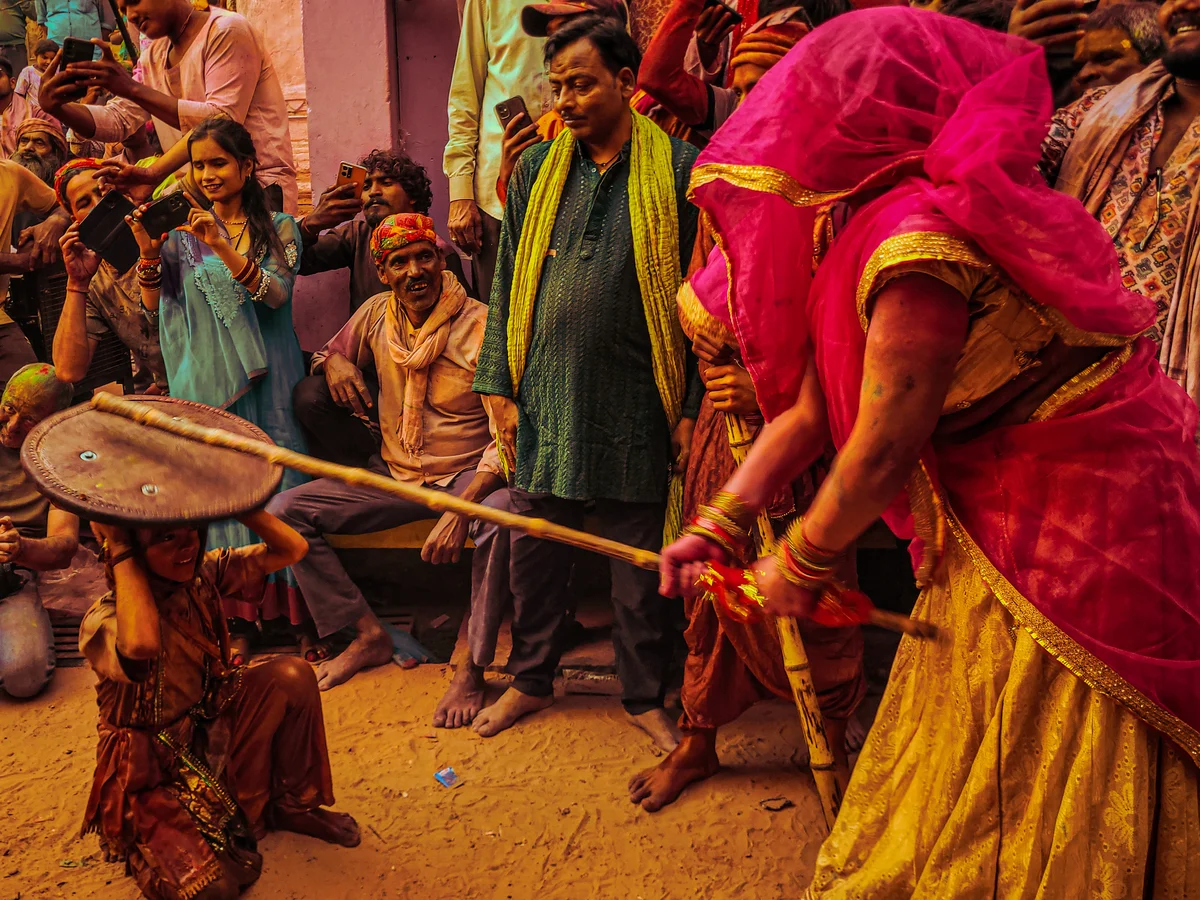
In the Braj region, Uttar Pradesh Tourism names Mathura, Vrindavan, Barsana, Nandgaon, Gokul and Govardhan within its Rangotsav description. Lathmar Holi is associated with Barsana and Nandgaon. Vrindavan is associated with the flower-petal observance, Phoolon Ki Holi. The tourism page supplies the regional window and describes the traditions. It does not list the time, entrance or day of each individual 2027 ceremony.
Match your travel dates to the purpose of the trip
If a specific celebration is the reason for the trip, build the itinerary around the organiser’s confirmed programme. Check whether you can reach the venue in time after arriving and whether you have a confirmed way back. If the programme is still pending, compare accommodation and transport change terms before committing. A room that fits the trip on paper may be awkward if the venue changes or if access to the area is limited during the event.
For a trip focused on museums, markets or appointments, March 23 is the IIRS date to flag in your 2027 itinerary. Check the specific stop that matters most first and move it to another day if its opening remains uncertain. For a museum, check the gallery or exhibition you want to see as well as the main building. For a market trip, confirm the hours with the particular shop or vendor if that visit is essential.
For example, suppose your train would arrive on the day of the colour celebration you want to attend. Compare arriving earlier with keeping the same arrival and choosing a later confirmed activity. Factor in the time you need to leave the station, reach the hotel and get to the venue. If the event sets a last entry time, use that deadline when judging whether the same-day plan is workable.
For a short stay, choose the bookings that depend directly on an event time and keep the rest of the day flexible. If you will spend the holiday in transit and have no festival plans, give priority to the booked service and the transfer at each end. The useful itinerary is the one that answers the uncertainties that could change your day.
If you need a base for a Braj itinerary, choose it around the town of your primary event and the return route to your room. A Mathura or Vrindavan reservation does not settle how you will leave Barsana after a gathering. In West Bengal, Santiniketan’s Basanta Utsav is a distinct spring celebration associated with Dol Purnima, song and dance. Consult its own programme if that is the event you want to attend.
Check intercity services with the operator for your exact travel date and booking. Verify the station, terminal or boarding point as well as the departure time. For a connecting journey, check each segment independently. A confirmed long-distance ticket leaves a separate question about how you will reach the departure point or continue after arrival.
For local travel, consult the relevant transport operator for service notices and the responsible local authority for any announced street restrictions. If a notice lists streets, junctions or hours, compare them with the actual entrance and pickup point you need. Ask your accommodation or the venue which entrance to use if access changes. Include your arrival time when asking so the answer can account for the period covered by the notice.
Confirm opening hours directly with the venue or business. Ask about admission, ticket collection and the hours of the service you need. For example, if you plan to visit an exhibition after a celebration, confirm both the exhibition’s last admission and the conditions for using your ticket at that time. If a hotel event matters to your plan, confirm any separate reservation requirement when you check the programme.
For example, suppose an operator confirms your departure but a local notice names the road where you had planned to meet your driver. Check whether the notice covers your pickup time and direction of travel. If access is affected, agree on a reachable meeting point with the provider and share it with your group. Leave enough time to make the transfer from that point using the route you have confirmed.
For a concrete example of holiday transport changes, Delhi Metro’s notice of 2 March 2026 said trains would begin from line termini at 14:30 on 4 March, including the Airport Express. That was the 2026 operating decision. Look for the 2027 dated notice before treating a normal morning Metro or airport connection as available on the festival day.
When you first plan, save the issuing body, calendar year and named event beside each important detail. For an event or service update, record when you checked it and which booking, venue or area it covers. This helps if you later find two versions of a notice or somebody in your group forwards a screenshot without its year. Keep a copy of the booking confirmation so you can compare it with any later operator update.
Before paying for a booking that is difficult to change, verify the detail on which it depends. That might be confirmed public admission, the opening of a particular attraction or the availability of an airport transfer. If the responsible issuer has yet to publish the detail, mark it as pending in the itinerary and account for that uncertainty in the booking. Recheck the operator, venue or organiser shortly before departure, when later notices may affect your plan.
Save the year, observance and name of the authority behind each date.
Check the venue’s entrance, session time and admission separately from the regional calendar.
Use the transport operator’s notice for the exact festival day and check your return connection.
Add the broad date reminder to your calendar and make a separate timed entry once the organiser confirms the programme.
For example, suppose a confirmed programme later moves to a different venue. Verify the change with the organiser, then check whether your existing admission confirmation still applies and whether the new location works with your transport. Update the shared itinerary with the latest location and time together. A change in address can affect the trip even when the event date stays the same.
Keep the 2026 date labelled as historical and revisit the upcoming date when IIRS publishes the next annual list or revises an existing entry. Treat a local timetable, opening notice or street restriction as applicable only to the date and area it names. Once that period has passed, archive it with its year and wait for a fresh notice before using the details to plan another visit.
The calendar’s date download creates all-day reminders. In particular, the Rangotsav item spans the official date window through 30 March. It does not reserve entry, announce a day-by-day itinerary or place a timed reminder for a ceremony. Save the organiser’s update separately if it specifies a time, entrance or change after this check.