Check provisional 2027 dates for Eid al-Fitr and Bakrid, local moon-sighting announcements and which office calendar applies to an appointment.
India IRL editorial team · Sources checked
Save the provisional 2027 Eid holiday dates
Selected listings checked on . The two dates come from one central office calendar and are subject to moon sighting. Check the relevant authority for any revised office date and the local organiser for worship.
For 2027, the central government lists Eid al-Fitr on Wednesday 10 March and Eid al-Adha, or Bakrid, on Monday 17 May for its administrative offices in Delhi and New Delhi. Both are provisional office holiday dates in India Standard Time, subject to moon sighting, so check the latest notice for your locality before planning worship, travel or an appointment.
The dates come from the Department of Personnel and Training memorandum of 16 July 2026, reproduced in a Department of Posts circular dated 8 September. The applicable holiday list is Annexure I. The calendar download marks both entries tentative and sets them up as all-day reminders. Use them to prompt a check for a local confirmation before making an appointment or committing to travel.
The memorandum uses the names Id-ul-Fitr and Id-ul-Zuha (Bakrid). On an official notice, those spellings can help you find the correct entry, especially if the schedule also shows Milad-un-Nabi. The central-office wording identifies who the calendar serves. A date for worship needs a local congregation announcement, and school, workplace and banking arrangements follow their own authorities.
Eid al-Fitr celebrates the close of Ramadan and the beginning of Shawwal. Incredible India describes the crescent sighting that signals the change of month and the congregational prayers that mark the festival. Indian notices may spell the name Eid-ul-Fitr or Id-ul-Fitr. If an invitation mentions the end of Ramadan, look under those spellings when checking the office calendar or the local announcement for the same occasion.
Eid al-Adha falls on the tenth day of Dhu al-Hijjah, the Islamic pilgrimage month. The festival commemorates Ibrahim's devotion and is associated with prayer, sacrifice and sharing, including with people in need. Eid-ul-Adha, Eid-uz-Zuha, Id-ul-Zuha and Bakrid are names you may encounter in India. The Department of Personnel and Training uses Id-ul-Zuha and Bakrid together, which helps when matching an invitation to an office holiday notice.
Eid-e-Milad has its own calendar entry and commemorates the birth of the Prophet. If someone gives you a date simply as an Eid holiday, ask which occasion they mean before matching it to a calendar row. The distinction also matters when browsing festival coverage. A description of foods and gatherings associated with the end of Ramadan answers a different question from an account of the observance in Dhu al-Hijjah.
For worship, start with the verified announcement from the local community or the organiser of the congregation you plan to join. You need the Gregorian date and the prayer time for that gathering. An official office calendar can help you plan ahead while the moon-dependent date is pending. The organiser's announcement is the source to check when you need to know when and where people will gather.
For central government administrative offices in Delhi and New Delhi, paragraph 5.1 of the 2027 memorandum gives the Ministry the role of declaring a date change after checking with the Delhi authorities. Paragraph 5.2 allows central government employee welfare coordination committees outside Delhi to change office dates in line with a state or union territory decision. For a state office, start with the relevant state schedule and look for any later amendment covering that office.
The central government employees' coordination committee in Dehradun reproduces 10 March and 17 May for central government offices in Uttarakhand. The Nuclear Fuel Complex calendar in Hyderabad marks both dates with asterisks. If your appointment is at the Hyderabad complex, use its calendar to identify the planned holidays and check with the complex for any change. If you also plan to attend prayers in Hyderabad, verify that schedule with the congregation separately.
Short-notice office changes can appear through the Press Information Bureau, television, All India Radio or newspapers under paragraph 5.3 of the memorandum. When you see a change reported, check the date of the announcement and read the wording that identifies the offices covered. The National Portal of India provides a month-by-month calendar for public reference. A later notice from the responsible authority is the one to use for the affected office.
Delhi's 2026 Bakrid revision shows how a published holiday can move. On 22 May 2026, the Department of Personnel and Training announced that the Id-ul-Zuha holiday for central government administrative offices in Delhi and New Delhi would move from Wednesday 27 May to Thursday 28 May. The memorandum recorded the original moon-sighting caveat and said the Ministry had been informed that Delhi would observe the festival on 28 May.
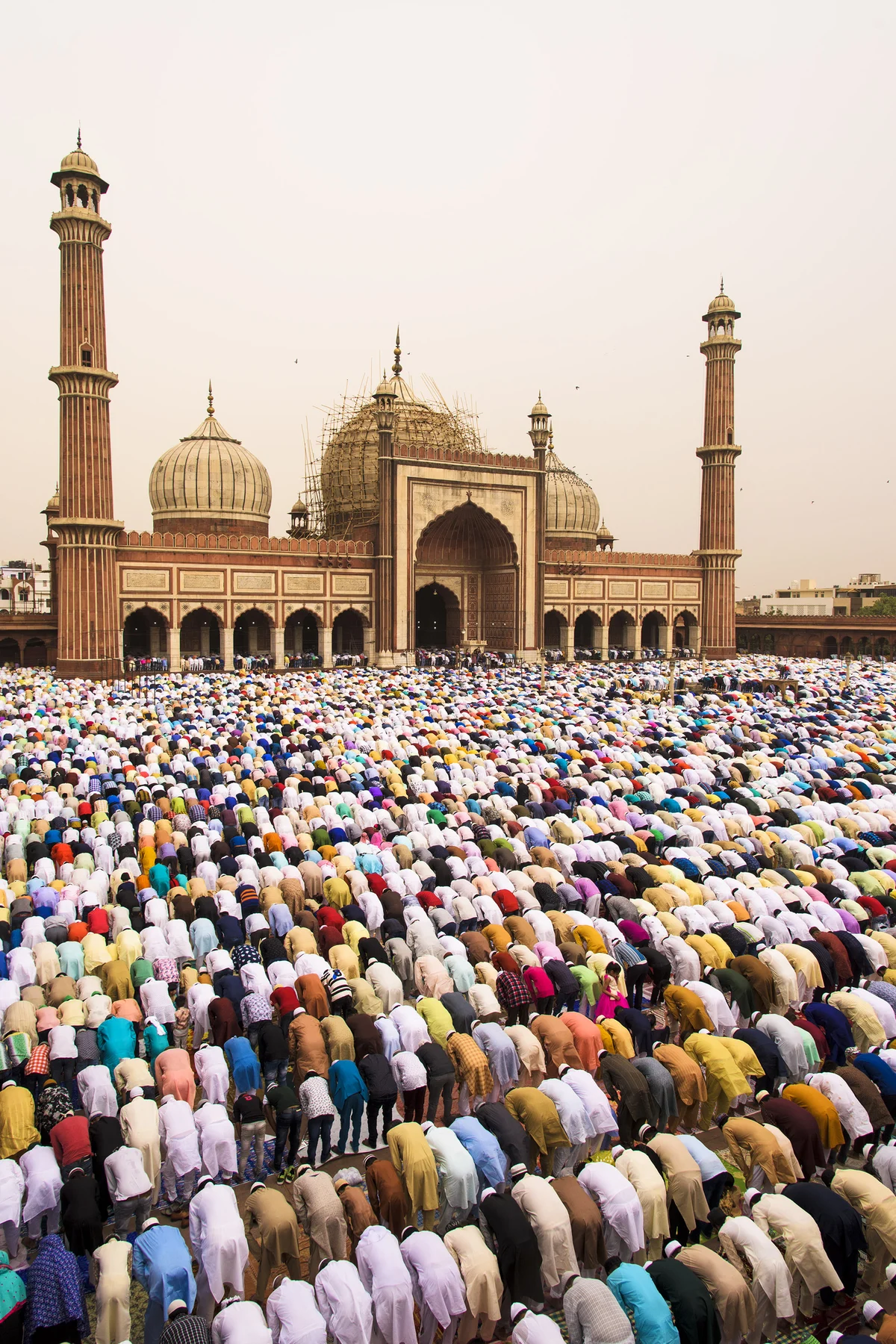
The Press Information Bureau also has a dated record of Eid al-Adha celebrations at Jama Masjid in Delhi on 28 May 2026. The office memorandum establishes the revised closure for the offices it names, while the archive documents the celebration at that mosque. A generic India Post listing retained 27 May. For someone reconstructing whether a central administrative office in Delhi was scheduled to close that Thursday, the dated amendment answers the question.
Kerala's initial 2026 public holiday schedule listed Friday 20 March for Id-ul-Fitr and Wednesday 27 May for Id-ul-Adha, with asterisks on both entries. A separate notice for central government offices in Kerala used the state list and provided for a state amendment to be followed for the relevant closed holiday. Record those two dates as initial administrative dates, with final local observance requiring its own evidence.
The Prime Minister's Eid-ul-Fitr greeting on Saturday 21 March 2026 documents a central public observance on that date. It can sit alongside Kerala's initial 20 March office entry because each record establishes a different event. A greeting carries the date of the public message, an office schedule gives the planned closure, and a dated record from a particular mosque can establish when that congregation gathered. Keep those distinctions when comparing records from different places.
What five separate 2026 Eid records establish
Record
Date shown
Type of evidence
Kerala state Eid al-Fitr schedule
20 March 2026
Initial office holiday, subject to moon sighting
Prime Minister’s Eid al-Fitr greeting
21 March 2026
Date of public greeting
Kerala state Eid al-Adha schedule
27 May 2026
Initial office holiday, subject to moon sighting
Delhi and New Delhi Eid al-Adha amendment
28 May 2026
Revised date for central administrative offices
Jama Masjid, Delhi Eid al-Adha archive
28 May 2026
Dated observance at this mosque
The Delhi amendment was announced on 22 May, several days before the original holiday. Anyone preparing a historical chronology can record three dates for that one decision. Keep 22 May as the date of the release, 27 May as the earlier date on the office schedule, and 28 May as the replacement. The separate photograph archive documents an observance on the new date. That context helps distinguish an archive’s publication timestamp from the date an office closed or a congregation met.
Congregational prayer, greetings, charity and shared meals are among the Eid al-Fitr traditions described by Incredible India. Its food examples include sheer khurma, a sweet vermicelli pudding, and sevaiyan, with Hyderabad and Lucknow among the places it discusses for their culinary traditions. Households and regions vary in what they serve and how they gather. If you're invited to a meal, use your host's plans to decide when to arrive and ask whether there is anything you should bring.
Eid al-Adha also brings people together for prayer. Its religious context includes Ibrahim's devotion and the practice of sharing with others, including people in need. Local listings may use Bakrid, while a host or organiser may use Eid al-Adha. Once you establish which gathering the announcement describes, use the invitation or event notice to plan your visit. A general tradition describes the occasion. The invitation tells you what the host has arranged.
If you want to visit Jama Masjid in Old Delhi during Eid, decide whether you intend to attend prayers or make an ordinary sightseeing visit. It is an active place of worship, and the mosque's local announcement is the place to check the prayer time and public access for that gathering. Confirm any clothing requirements, photography rules and restrictions on the approach before setting out. A national tourism card with a no-ticket entry describes the listing and leaves those local access details to the venue.
Dates and timings can describe different parts of the same occasion. A message about sighting the crescent may report a decision in the evening for observance the following day. A local venue can then publish one time for the prayer and another for access to the grounds. When sharing that information, include the Gregorian date, city and time zone, and name the organiser or venue. A message forwarded from another city may accurately describe the day there while answering a different question from the one your own host or venue has announced.
For an in-person bank visit, use the Reserve Bank of India's holiday matrix. Select the applicable regional office, month and year, then check with the specific branch if timing matters. If you plan to submit documents at a Delhi branch on Wednesday 10 March 2027, the central administrative holiday entry identifies a date worth checking. The RBI region and the branch are the sources for deciding whether you can make that visit.
For an office appointment, check which authority runs the office and whether the appointment is still scheduled. A central administrative office, a state department and an institution with its own holiday calendar can publish separate notices. When two entries differ, look at the place and offices named in each and the date it was issued. The office can confirm what happens to a booking if its holiday moves after you have already arranged the visit.
For dining or shopping, choose the neighbourhood and ask the specific business about its hours on the date you intend to go. For transport, check the carrier or operator and look for local event-day notices relevant to the place you are visiting. A prayer announcement can tell you when the congregation meets. The transport operator and local access notice answer whether your planned service and approach are available around that time.
Prayer or mosque visit. Check the local organiser's date, time and access notice.
Government appointment. Check the calendar and latest amendment that name the office's jurisdiction.
Bank visit. Check the RBI region and confirm the specific branch if the visit is time-sensitive.
Meal, shopping or travel. Check the business or operator serving your destination.