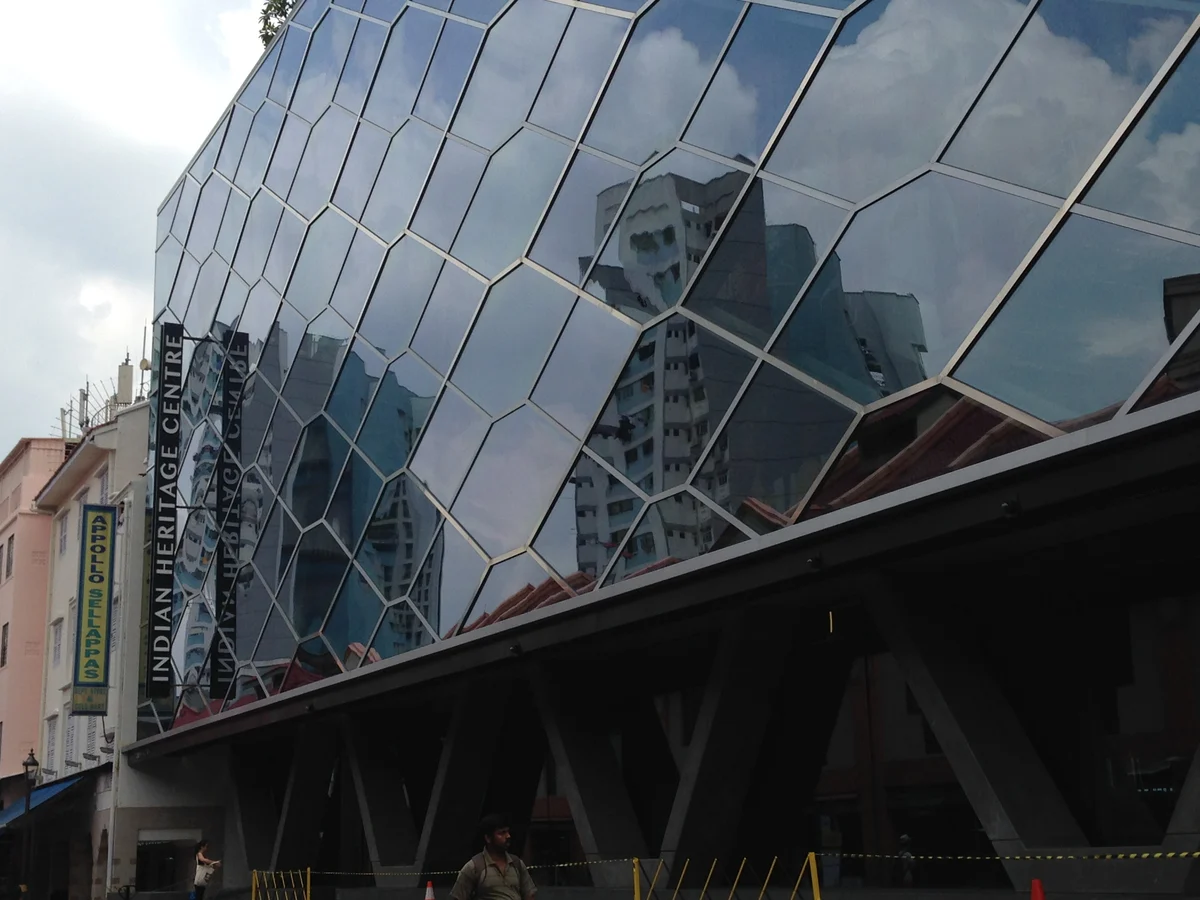
Start with Indian heritage on Campbell Lane
Start at the Indian Heritage Centre at 5 Campbell Lane, then use the galleries to read the neighbourhood outside. Follow migration and community institutions through the museum’s objects, then compare two addresses, the Sri Veeramakaliamman Temple on Serangoon Road and the former house of Tan Teng Niah on Kerbau Road. Each helps explain a different part of Little India’s working and religious history.
Give the walk one question. If you want to understand Indian heritage as part of a living district, ask how communal life takes up space. The centre identifies streets, buildings and religious sites associated with several communities. Those are three useful scales for a walk. A street can show how different activities sit together, a building can show how one address is used, and a religious site can raise questions about the community associated with it.
Use the centre’s material to decide what deserves a closer look outside. Pick one place, activity or architectural feature that you can identify by name or address. If an account relates to a particular period, carry that detail with you. Knowing the period helps you ask whether you are looking at a surviving feature, a later use or simply a present-day scene that raises a similar question.
A short visit can focus on the centre and one street segment. If you have more time, follow a second theme that you can connect to the first. Commercial life and building use make a good pairing because they let you look at what happens at street level and then consider the premises in which it happens.
The centre lists Tuesday to Sunday hours of 10:00 to 18:00 Singapore time, with last admission at 17:30. It closes on Monday, including Monday public holidays unless the centre announces an exception. Its admission page lists free entry for Singapore citizens and permanent residents and S$10 for an adult foreign visitor. Check the official concession and identification rules for anyone in your group who qualifies for another category.
- Indian Heritage Centre | Discover Little India
- Indian Heritage Centre | Location and access
- Singapore Urban Redevelopment Authority | Little India Conservation Area
- Indian Heritage Centre | Current Admission Fees
- Indian Heritage Centre | Indians in Singapore, Past and Present
- Smuconlaw | CC BY-SA 4.0 Indian Heritage Centre Photograph
Find the entrance from your arrival point
The Indian Heritage Centre directs train visitors to Little India MRT Exit E. Set the Campbell Lane entrance as your walking destination. A search for Little India can bring up the district, the station or a general map pin, so check the name of the entrance street on the route preview before you set off. At the station, follow the exit signs and recheck your orientation once you reach street level.
The centre also lists a bus stop on Serangoon Road near Tekka Centre. If you are arriving by bus, use the stop shown on the centre’s current access information and check that your selected service reaches it in your direction of travel. Preview the walk from that specific stop to Campbell Lane. Nearby stops can look interchangeable when you view the neighbourhood at district scale.
A visitor plans to arrive by train and leave by bus. They check the walk from Exit E to the centre before arriving. Once they choose where the walk will finish, they check the outbound trip from that endpoint to the actual boarding stop. This gives them two routes tied to the way they will travel, each with its own start and finish.
If your visit depends on a step-free route, check the station’s current accessibility information, the pedestrian connection and the centre’s entrance access separately. Confirm the arrangement with the operator or venue where the published information leaves a gap. An exit recommendation identifies where the centre directs train visitors. The approach, crossings and doorway each matter when deciding whether the whole trip suits you.
The museum lists Little India MRT Exit E, two bus stops, 07031 at Tekka Centre and 07539 on Sungei Road after Serangoon Road, and a car drop-off on Clive Street. If you need a lift out of the station, SBS Transit names exits A, B, C and F in its lift list. Recheck the street route from the selected lift exit. The centre has ramps at Campbell Lane and beside Clive Street and an interior lift from Level 1 to the galleries.
Choose what to follow from the centre
The Indian Heritage Centre gives you a way into the area’s history, culture and commerce. Choose a theme according to what you want to be able to explain after the walk. If you are interested in trading life, focus on the relationship between an activity and the space it occupies. If you are interested in community history, follow a documented association between a group and a particular place.
When the centre’s material gives you a name or an address, keep the wording close to the source. A person’s name, a business name and the name of a community all identify different things. If you later find a sign with similar wording, check whether the source gives you enough detail to connect the two. Addresses and time periods are especially useful when names recur or premises change hands.
A visitor chooses to follow commerce after reading material at the centre about commercial life. They pick a stretch with several visible shopfronts and note how each doorway relates to the pavement. They can describe the current use where it is clear and leave the history of each premises open until they find an account that names the address.
You can also begin outdoors if access to the centre does not fit your visit. Choose a street segment within the mapped conservation area and give yourself a question about the buildings you can identify. The planning record provides a geographic starting point, and the centre’s published district material can help you develop the heritage question before you go or after you return.
In the permanent galleries, start with Roots and Routes for migration from the 19th through the 21st centuries. The centre describes an entrance object from a Chettinad residence. For earlier context, the Early Contact gallery covers maritime trade and exchanges between South and Southeast Asia. The third gallery follows individuals and community institutions from the 19th to mid-20th centuries, including schools, publications and religious associations. Use the dates on the gallery labels when connecting an object to a later street address.
- Indian Heritage Centre | Discover Little India
- Singapore Urban Redevelopment Authority | Little India Conservation Area
- Indian Heritage Centre | Indians in Singapore, Past and Present
- National Heritage Board Roots | Sri Veeramakaliamman Temple
- Urban Redevelopment Authority | Former House of Tan Teng Niah
- National Heritage Board Roots | Little India Heritage Trail Booklet
Read commercial life at street level
Since the centre treats commercial life as part of Little India’s heritage, give everyday premises some of the attention you would give a prominent landmark. A doorway, signboard or row of storefronts can show how the street works at the time of your visit. Observe what is legible from the street, such as the service advertised, how people enter or whether more than one business uses the address.
Business activity and a building’s history run on different clocks. A visible sign can identify the current occupant, while a dated record may identify an earlier use of the same premises. When you have both pieces of information, keep the dates attached. This makes the observation more informative than a general claim that an old-looking street has hosted the same trades for generations.
A visitor sees two businesses using adjacent ground-floor units. One advertises a service through a window display, and the other relies on signs at the doorway. The visitor can describe the two ways they address people passing on foot. To say either business represents a longstanding trade on that street, they would need a dated source that establishes the connection.
One stretch of street gives you a small sample of the district. A closed shop, a temporary sign or an unusually quiet pavement may reflect the timing of your visit. If your question is about who trades there or how a business has changed, give more weight to a named account with dates and a clear address than to the impressions you collect on a single walk.
The Urban Redevelopment Authority traces the area’s growth from cattle-related trades to other businesses and community institutions. The shophouses and back lanes are part of that setting. 37 Kerbau Road gives you a different type of building to compare. The National Heritage Board connects the former Tan Teng Niah villa with local Chinese cottage industries that operated alongside Indian-dominated cattle trades. Read the house in that shared commercial setting.
Check the conservation area and individual addresses
Singapore’s Urban Redevelopment Authority identifies a formal Little India Conservation Area. Use its conservation portal when you want to locate a street or building in the designated area. Start with the street name and, where possible, a building number. A neighbourhood name used in visitor information can describe the general destination, while a conservation map identifies the area the planning record covers.
Look at the scale of the record before using it to explain something you see. An area entry can situate a group of streets and give built-heritage context. If your question concerns one building’s age, former use or designation, look for information specific to the property. Match the address carefully, especially when a corner building can be approached or described from either street.
A visitor wants to describe a building near the edge of the mapped area. They find its address and compare the location with the official boundary. They then look for an individual property entry or another documented building history. If they can establish only the location, they describe where the building sits and leave its date and any individual designation unresolved.
On the walk, give yourself time to look along the frontage as well as at individual details. The relationship between neighbouring buildings, side streets and entrances can help you understand why the planning record treats the area geographically. Features that catch your eye can guide your questions. A dated record tied to the address gives you a firmer basis for saying when a feature appeared or what role it served.
The Little India Conservation Area was gazetted on 7 July 1989. The URA property record lists 37 Kerbau Road separately and identifies protected timber casement windows and the double-leaf timber door. Look from the public street for the frontage elements described. The conservation listing records planning status and features. For an exterior walk, it provides a specific address and something identifiable to look at.
Follow community histories through specific places
The Indian Heritage Centre describes a district with religious sites, buildings and streets associated with several communities. Use that plurality to frame the walk. When a source identifies a community connected to a place, pay attention to the kind of connection it describes. Founding a site, using it at a particular time and occupying nearby premises are different relationships, each with its own evidence.
A named religious site can help you ask a more precise question about the district. Look for an account that identifies the site and explains how a particular community is connected to it. A façade or a name gives you something to identify on the ground. Founding dates, institutional histories and changes in congregation need documentation that can support those specific claims.
A visitor finds an account that associates a family or community with one address during a stated period. At the address they see a present-day use that the account does not discuss. They record the historical association with its date and describe the current use separately. A second dated source would help them establish what happened between those two observations.
If you want to enter a religious site, verify visitor access with the site itself. Check posted guidance or ask the custodian about access during worship and photography before taking out a camera indoors. An exterior stop can still serve a heritage walk. From a public spot, identify the site and consider how it sits in relation to the street, using documented history for any account of its community ties.
At 141 Serangoon Road, the National Heritage Board describes a shrine believed to have been established by Tamil lime-pit workers as early as 1855 and a temple built by Bengali labourers in 1881. The dates identify separate stages of one site, without dating every part of today’s temple to either year. The same record describes later work and a statue brought from South India. That history links local labour and religious life with continuing ties across the Indian Ocean.
Temples in India: a visitor directory and ancient temple guideIndia’s regions explained: states, landforms and regional councils
Verify details that affect your visit
Check time-sensitive details once you have chosen your day and approximate arrival time. The centre’s location and opening-hours information is the starting point for planning a visit to the Campbell Lane entrance. Look for any notice that applies to your date and distinguish the venue’s opening hours from the hours of a particular activity you want to attend. Check transport separately if your route depends on a specific service or exit.
Keep the route easy to revise. If the centre is unavailable when you arrive, an outdoor visit can still follow a question anchored in the official conservation record. Choose a street you can locate in that record and look at the relationship between premises and the street. If the centre is the main reason for your visit, use its published information to choose a day when you can go inside.
For a historical detail you plan to share, save enough information to find the original account again. Record the institution or author, the relevant title and the address or time period the account describes. For a practical detail such as entry, record the date it applies to. That distinction makes it easier to tell which part of your plan needs rechecking before another visit.
| Stop | Address or rail access | What to look for | Visit details to check |
|---|---|---|---|
| Indian Heritage Centre | 5 Campbell Lane · Little India MRT | Migration objects and named community institutions | Official hours, applicable admission category and current exhibition access |
| Sri Veeramakaliamman Temple | 141 Serangoon Road | Distinct shrine and temple phases tied to Tamil and Bengali labour | Temple custodian for interior access and photography |
| Former house of Tan Teng Niah | 37 Kerbau Road | Conserved villa and protected timber frontage | Exterior stop from the public street |
The museum’s published conditions allow personal, noncommercial photography without flash where there is no posted restriction. Confirm that the current conditions cover the gallery and object you visit. At the temple, check current worship, interior access and photography with the custodian before entering or relying on a specific time. The two street stops also work as exterior visits alongside the museum.
- Indian Heritage Centre | Discover Little India
- Indian Heritage Centre | Location and access
- Singapore Urban Redevelopment Authority | Little India Conservation Area
- Indian Heritage Centre | Current Admission Fees
- SBS Transit | Little India MRT Station Information
- Indian Heritage Centre | Accessibility and Facilities
- National Heritage Board | Indian Heritage Centre Visitor Conditions
- Sri Veeramakaliamman Temple | Custodian Contact and Address
Sources
- Indian Heritage Centre | Discover Little India
- Indian Heritage Centre | Location and access
- Singapore Urban Redevelopment Authority | Little India Conservation Area
- Indian Heritage Centre | Current Admission Fees
- SBS Transit | Little India MRT Station Information
- Indian Heritage Centre | Accessibility and Facilities
- National Heritage Board | Indian Heritage Centre Visitor Conditions
- Indian Heritage Centre | Indians in Singapore, Past and Present
- National Heritage Board Roots | Sri Veeramakaliamman Temple
- Sri Veeramakaliamman Temple | Custodian Contact and Address
- Urban Redevelopment Authority | Former House of Tan Teng Niah
- National Heritage Board Roots | Little India Heritage Trail Booklet
- Smuconlaw | CC BY-SA 4.0 Indian Heritage Centre Photograph
