How to say “Welcome to India” in Hindi
“Welcome to India” in Hindi is भारत में आपका स्वागत है, written in Roman letters as Bhaarat mein aapka swaagat hai. For “hello” and “thank you” in Hindi, use नमस्ते (Namaste) and धन्यवाद (Dhanyavad).
The Prime Minister’s Office used the full Hindi sentence in a bilingual release on 17 February 2026, with “Welcome to India” in the English version. That pairing gives you an exact line for welcoming an arrival. भारत names India, भारत में supplies “in India,” and आपका connects the welcome to the person you are addressing. Keep the whole sentence together when you copy it onto a sign or into a message.
The Roman spelling is an editorial aid for readers who use the Latin alphabet. The doubled vowels in Bhaarat and swaagat are deliberate, and the spelling mein represents a single word. For printed Hindi, copy the Devanagari line directly from the bilingual release. If you will read the line aloud at an event, ask a Hindi speaker to read the complete sentence at a pace you can follow. A recording of Namaste gives you practice with that greeting alone.
If you are meeting someone who has just arrived in India, you can open with Namaste and follow it with the full welcome. If you are simply introducing yourself to someone during your own visit, Namaste does the work of opening the conversation. The full sentence has a different job because it addresses the other person as the one being welcomed to India.
Hello and thank you in five Indian languages
Choose the row for the language you intend to speak or print. The first part of each entry is the phrase in its native script. The text in parentheses is a Roman form you can use to recognise the phrase or find it in teaching material. The English column headings tell you what each expression does in conversation.
| Language | Hello | Thank you |
|---|---|---|
| Hindi | नमस्ते (Namaste) or नमस्कार (Namaskar) | धन्यवाद (Dhanyavad) |
| Marathi | नमस्कार (Namaskar) | धन्यवाद (Dhanyawaad) |
| Gujarati | નમસ્કાર (Namaskar) | આભાર (Aabhaar) |
| Bengali | নমস্কার (Nomoshkar) | ধন্যবাদ (Dhonyobad) |
| Tamil | வணக்கம் (Vanakkam) | நன்றி (Nandri) |
The CBSE and NCERT Bhasha Sangam booklet supplies Namaskar in Hindi, Marathi and Gujarati, Nomoshkar in Bengali, and Vanakkam in Tamil. Michigan State University Libraries and Penn State Harrisburg support the Hindi and Tamil pairs. The Bengali thanks comes from iGOT Karmayogi training. Union Bank of India and the Reserve Bank of India supply examples for Marathi and Gujarati respectively. Read the native script with each Roman form. The Roman spelling is a learning aid and can vary from one course to another.
For Marathi, the Union Bank of India’s practical language guide uses धन्यवाद at the end of a thank-you sentence, transliterated as dhanyawaad. The Reserve Bank of India lists Gujarati આભાર as a standalone thanks. A separate recording from New Zealand’s Ministry for Ethnic Communities uses આપનો આભાર, Aapno Aabhaara, a longer form addressing the person you are thanking. Use the recording for that full phrase and the RBI entry when you need the short printed form.
Bhasha Sangam teaches 100 everyday sentences across the 22 scheduled Indian languages and provides supporting audio and Indian Sign Language video materials. The constitutional schedule sets the scope of that teaching collection. This five-language table serves a narrower task, and the individual materials are the place to look when the language you need falls elsewhere in the programme.
India’s official languages, national language and the 22 scheduled languagesIndia’s regions explained: states, landforms and regional councils
- NCERT: Bhasha Sangam Language Learning Materials
- Ministry of Education: Bhasha Sangam Programme
- CBSE/NCERT Bhasha Sangam, script and Roman greeting columns
- Michigan State University Libraries, Basic Tamil, exchanging basic information
- Michigan State University Libraries, Basic Hindi, common words and phrases
- Michigan State University Libraries, Basic Hindi, greetings and introductions
- Penn State Harrisburg, participant-recorded language greetings
- iGOT Karmayogi Bengali training, introductions and daily conversations
- Union Bank of India Marathi practical language handbook
- Reserve Bank of India Gujarati phrase list
- New Zealand Ministry for Ethnic Communities Gujarati greetings and recordings
Choosing between Namaste, Namaskar and Hindi thanks
For a first Hindi introduction, Namaste is a straightforward choice. The Michigan State beginner dialogue uses नमस्ते when speakers greet and introduce themselves, and the Penn State Harrisburg collection lets you hear Namaste on its own. Namaskar is also a documented Hindi greeting. Bhasha Sangam gives नमस्कार as its Hindi entry for hello, so either is a sound choice for a phrase card meant to help someone open a conversation.
For thanks, use धन्यवाद if you want a matched pair of native script and Roman lettering. Michigan State supplies the Hindi script and Penn State Harrisburg supplies Dhanyavad. The Penn State entry also lists Shukriya as a way to say thank you. Its contributor recording is a useful place to hear that option before using it. The sources here give you those choices, with no firm basis for ranking them by formality or frequency across Hindi-speaking settings.
Suppose you arrive at a guesthouse and ask the person at reception to point out your room. Namaste fits the moment you approach the desk. Dhanyavad fits the moment the person has given you directions. Learning the two at those separate points in the exchange makes them easier to recall than memorising them as a single string.
For a bilingual name badge or welcome card, put the Devanagari on one line and identify the Roman line by its purpose. A reader using the card to speak needs Namaste or Dhanyavad. A reader checking the meaning needs “Hello” or “Thank you.” On a small card, the distinction matters because either line could otherwise look like a translation of the line above it.
Using the Marathi, Gujarati and Bengali greetings
Hindi and Marathi share the printed greeting नमस्कार in Bhasha Sangam. The Gujarati row reads નમસ્કાર, and the booklet prints Namaskar in the Roman column for all three. Use the language label when the phrase appears by itself on a multilingual sheet. Someone checking the sheet can then match the line to the intended language even when another row has the same Roman form or the same native-script text.
For Bengali, preserve the pairing নমস্কার and Nomoshkar from the Bhasha Sangam booklet. The Roman form gives readers a quick way to distinguish that row from Namaskar in the same table. Pair it with ধন্যবাদ and Dhonyobad, the thanks documented by the iGOT Karmayogi training module. The two Bengali entries come from different teaching sources, so use each source to check the form it actually documents.
If you are preparing an opening line for a Bengali-language community meeting, write নমস্কার at the start of your notes and keep Nomoshkar beside it as a prompt. Reserve ধন্যবাদ for the point where you thank the host. That placement gives each expression a clear role, and a Bengali speaker reviewing your notes can see both the wording and the moment you plan to use it.
Bengali Dhonyobad and Hindi Dhanyavad both express thanks in the cited lessons. Each has its own native-script entry and source spelling. When laying out parallel columns, copy each pair as a unit. It is easy to move the right English meaning onto the wrong Roman entry during layout, especially when the entries look similar. A final check by language row catches that kind of mix-up.
- NCERT: Bhasha Sangam Language Learning Materials
- CBSE/NCERT Bhasha Sangam, script and Roman greeting columns
- iGOT Karmayogi Bengali training, introductions and daily conversations
- Union Bank of India Marathi practical language handbook
- Reserve Bank of India Gujarati phrase list
- New Zealand Ministry for Ethnic Communities Gujarati greetings and recordings
Saying hello and thank you in Tamil
Use வணக்கம் (Vanakkam) to greet someone and நன்றி (Nandri) to thank them in Tamil. Michigan State University Libraries presents both in its Basic Tamil lesson on exchanging basic information. Bhasha Sangam independently gives வணக்கம் for hello, and Penn State Harrisburg supplies the same script and Roman pairs for both phrases. You can use these spellings when making a short Tamil phrase card.
The Basic Tamil lesson puts the words into an exchange and links teacher audio. Listen to the greeting where it opens the exchange, then listen for the thanks in context. After that, say each separately. The context helps you learn when the words fit, while the separate repetitions help you recall the right expression without having to remember the rest of the dialogue.
If you are about to ask a Tamil-speaking museum attendant which gallery is open, you can say Vanakkam to begin and Nandri once the attendant has helped. You can use the language you share for the question in between. This is a manageable way to use two Tamil expressions while keeping the practical part of the conversation clear.
Keep the Roman forms Vanakkam and Nandri beside the Tamil script if you need a reading prompt. For the sound, use the teacher recording or Penn State’s contributor audio. English readers bring different sound associations to the same Roman letters, and an improvised English spelling can reinforce the wrong sound. Following a named recording gives you a specific model to return to when you practise.
Check what to say aloud and what to print
Start with the job the phrase has to do. A person speaking it needs a recording of the words they will actually say. A person setting type needs the exact native-script line and a preview of the finished layout. For Hindi Namaste and Dhanyavad, Penn State Harrisburg provides contributor audio. For Tamil, use the Basic Tamil teacher recordings or the Penn State contributors. For the full Hindi welcome, check the printed sentence against the bilingual release and have a Hindi speaker confirm the spoken line.
Open the individual NCERT material when you are making a card or preparing to speak. Check the lesson phrase against the lettering and confirm that the supporting recording reads the words you chose. Hindi alone gives two greetings on this page, so match the audio by its native-script phrase as well as its English label. If a short printed version and an audio phrase differ, leave both clearly labelled so the reader knows which one to practise.
When you copy a phrase into a document or design, inspect the exported version. Check that every character is visible and that the phrase remains on the intended line. If the final version is a sign or slide, read it at the size the audience will see. A speaker reviewing it can check the script, the intended meaning and whether the wording suits the setting in a single pass.
If you are choosing text for a reception sign, decide whose arrival the sign marks. The bilingual release supports भारत में आपका स्वागत है when the destination being named is India. A sign meant to welcome guests to a particular venue needs a line checked for that venue. Ask the reviewer to read the sign as a visitor would see it, with any adjacent English and the venue name in place.
How to call India from the US: +91, area codes and dialingHow to plan a trip to India
- NCERT: Bhasha Sangam Language Learning Materials
- Ministry of Education: Bhasha Sangam Programme
- CBSE/NCERT Bhasha Sangam, script and Roman greeting columns
- Michigan State University Libraries, Basic Tamil, exchanging basic information
- Penn State Harrisburg, participant-recorded language greetings
- iGOT Karmayogi Bengali training, introductions and daily conversations
- Prime Minister’s Office bilingual release, 17 February 2026
- New Zealand Ministry for Ethnic Communities Gujarati greetings and recordings
Sources
- NCERT: Bhasha Sangam Language Learning Materials
- Ministry of Education: Bhasha Sangam Programme
- CBSE/NCERT Bhasha Sangam, script and Roman greeting columns
- Michigan State University Libraries, Basic Tamil, exchanging basic information
- Michigan State University Libraries, Basic Hindi, common words and phrases
- Michigan State University Libraries, Basic Hindi, greetings and introductions
- Penn State Harrisburg, participant-recorded language greetings
- iGOT Karmayogi Bengali training, introductions and daily conversations
- Prime Minister’s Office bilingual release, 17 February 2026
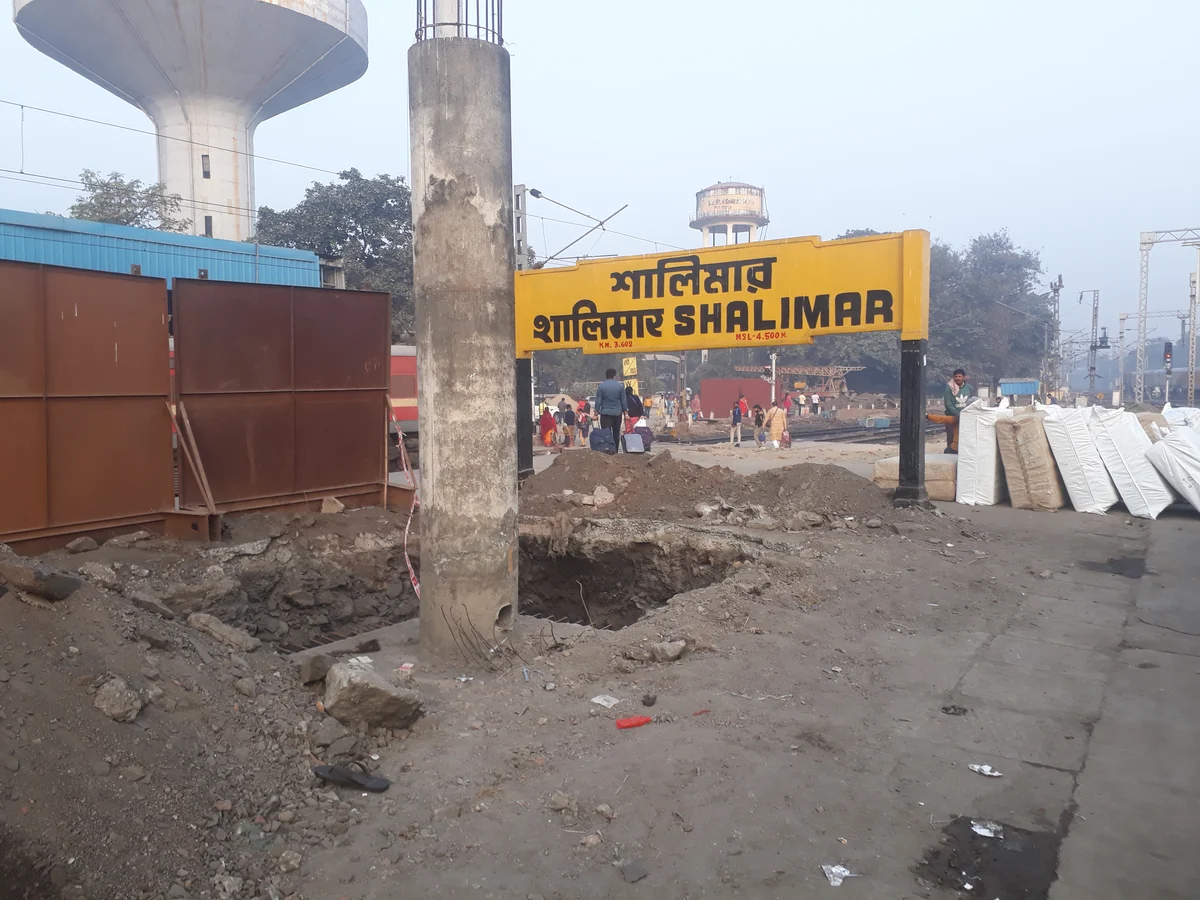
- Visual candidate — multilingual station sign at Shalimar, Howrah
- Union Bank of India Marathi practical language handbook
- Reserve Bank of India Gujarati phrase list
- New Zealand Ministry for Ethnic Communities Gujarati greetings and recordings
