Compare the fare, seller and route at checkout
Book international flight tickets to India by comparing the final price for the bags you need, the seller’s change and cancellation terms, and how each connection works. Before you pay, check whether the seller will issue the connecting flights on one through-ticket, then verify the issued e-ticket against the itinerary you selected.
Open each finalist at checkout with the same passenger count and baggage needs. Compare the amount due and the currency the seller will charge. U.S. Department of Transportation rules require advertised fares within their scope to include mandatory costs. Optional services can still change what you spend. If you need a checked bag, price it into each option using the allowance and charges for that specific fare.
Read the fare conditions while you still have both options open. Find the terms for a voluntary change, cancellation and any fare difference on a replacement flight. A booking with a lower total may still fit fixed travel dates. If you expect the dates to move, the written change terms help you judge whether paying more upfront makes sense.
Identify the merchant shown at payment, the seller issuing the ticket, and the airline operating each flight. A flight number may carry one airline’s code while a partner operates the aircraft. The issuer may handle ticket changes, and the operating airline may supply a separate booking reference for check-in or flight status. Save the seller name, charge currency, total, itinerary and fare terms before paying so you have a record of the offer you accepted.
Check your cancellation window before buying
For a qualifying airline-direct booking covered by U.S. DOT rules and made at least seven days before departure, the airline must offer one of two options. It can hold an unpaid reservation at the quoted price for 24 hours or let you cancel within 24 hours after purchase without a penalty. Check which option the airline offers on the booking screen. The rule gives carriers that choice and excludes free changes and bookings made through third-party agents.
Suppose you are booking directly with an airline for a departure from the U.S. ten days away and still need to confirm the arrival date with someone in India. The itinerary meets the seven-day timing condition. If the airline offers an unpaid hold, you can confirm the date before paying. If it offers penalty-free cancellation after payment, save the applicable deadline and follow the airline’s cancellation instructions if your plans fall through.
Air India publishes a separate 48-hour direct-channel mechanism in section 6.1.3 of its conditions of carriage. The section distinguishes travel from the U.S. or Canada to India and Indian domestic travel, with a seven-day threshold, from travel originating in India to the U.S. or Canada and other international travel covered by its stated 15-day threshold. Read the current provision for your exact itinerary and transaction. A waived change penalty can still leave a fare or tax difference to pay. If you’re buying through an agent, check the seller’s written terms for that purchase.
| Source and booked direction | Minimum lead time in the cited rule | Published mechanism |
|---|---|---|
| U.S. DOT for covered airline-direct bookings | 7 days | Carrier must offer a 24-hour penalty-free cancellation or qualifying unpaid hold. |
| Air India, covered domestic or U.S./Canada to India | 7 days | Carrier’s 48-hour look-in under the listed conditions. |
| Air India, India to U.S./Canada and other covered international itineraries | 15 days | Carrier’s 48-hour look-in under the listed conditions. |
Verify the issued ticket after payment
Check that the seller sends an issued e-ticket receipt and that it covers the passengers and flights you paid for. A booking reference lets you retrieve the reservation. The issued receipt and its listed segments show what the seller ticketed. Air India describes sending the booking confirmation, electronic ticket and itinerary for direct reservations. With an agency purchase, start with the issuing seller if you only receive an order acknowledgement.
Compare the passenger names with the passport or other identification required for the journey. Read the local departure and arrival dates on every segment. An overnight flight can put your pickup or domestic connection on a different calendar date from the one you initially searched. Check the exact airport codes, the operating airline and the onward destination. If the itinerary includes a change of airport, account for the ground journey as well as the next flight’s check-in deadline.
Compare the recorded baggage allowance and fare conditions with the checkout terms you saved. Keep any operating airline reference that the seller supplies, especially when a partner flies one of the segments. If your payment posts and the issued receipt is still missing, ask the seller to verify issuance before buying the itinerary again. Give the seller the booking reference and identify the passengers or segments whose ticket records you need confirmed.
Save the issued itinerary in a form you can read without opening a booking portal. Use the full airport codes, each segment’s local date and the seller’s receipt. Keep any case number for a change separate from the booking reference. If your payment appears but an e-ticket receipt is missing, follow up through the seller before assuming the booking is ready to travel.
Work out which baggage allowance applies
Read the allowance on the ticket you are buying before using a carrier’s general baggage chart. Under 14 CFR 399.87, when the passenger’s ultimate ticketed origin or destination is a U.S. point, the baggage allowances and fees that apply at the beginning of the itinerary apply throughout it. On a codeshare, the marketing carrier’s baggage allowances and fees apply throughout the covered itinerary to the extent they differ from the operating carrier’s. Identify the marketing carrier using the airline code attached to the flight number.
Suppose you’re choosing between one issued ticket from the U.S. to your final city in India and an international ticket to Delhi plus a separate domestic ticket. For the first option, check the allowance recorded for the covered itinerary. For the second, price baggage under each ticket’s terms. If the domestic allowance covers less than you intend to pack, include any applicable extra charge for that flight in your comparison before choosing the split booking.
Also find out where you will physically handle your bag. An allowance tells you how much you can check and what charges apply. The bag tag and airport procedures tell you where you may have to collect it and hand it over again. At the departure desk, check the tag destination and ask where you will next take possession of the bag. A tag showing the final city can still involve a customs collection at Delhi.
Plan the international-to-domestic transfer at Delhi
At Delhi, passengers arriving internationally for an onward domestic flight go through immigration, reclaim checked baggage and clear customs before following the domestic transfer process and passing security. Air India uses Abu Dhabi to Delhi to Chandigarh to illustrate the procedure. The example explains what happens at the first arrival in India. Check the schedules for your own dates to see which flights are available together.
Air India’s instructions for its terminal transition effective October 26, 2025, say that international-to-domestic passengers collect even through-checked bags at Terminal 3, clear customs and recheck their bags before continuing to Terminal 2 when assigned there. Use your booking and the current airline and Delhi Airport information to confirm the domestic terminal. Check the boarding pass and airport departure information again on the travel day because the assignment is specific to the flight.
For a separately issued onward ticket, establish whether you need to use the domestic carrier’s regular check-in and bag-drop desks. Compare its published cutoff with the time available after immigration, reclaim, customs and any terminal movement. If a marketplace sold both legs together, read its missed-connection terms before paying. Find out who handles a replacement when an inbound delay leaves you past the onward cutoff and whether the seller attaches any conditions to that help.
| Connection type | What to verify |
|---|---|
| Protected connection within one terminal | Confirm the issuer’s missed-connection terms and allow for any required immigration, baggage reclaim, customs and security. |
| Landside change between terminals at Delhi | Check the onward terminal, the airport’s transfer directions and where the carrier accepts rechecked bags. |
| Separately ticketed domestic departure | Check ordinary check-in and bag-drop cutoffs and any written missed-connection terms from the seller. |
| Change to a different airport | Match both airport codes and allow for ground transport and the onward carrier’s check-in deadline. |
On a hypothetical international arrival into Delhi followed by a domestic flight, follow the process for that day’s assigned terminals. A through-checked tag tells staff the bag has an onward route. Air India’s transfer page says to collect that bag in Terminal 3 and clear Customs before rechecking it. Note the carrier’s recheck location and the onward boarding pass before moving to a different terminal. If two independent tickets are involved, start with the ordinary domestic bag-drop cutoff and ask the onward carrier which help is available if the first flight is late.
Check a Dubai connection and the travel documents it requires
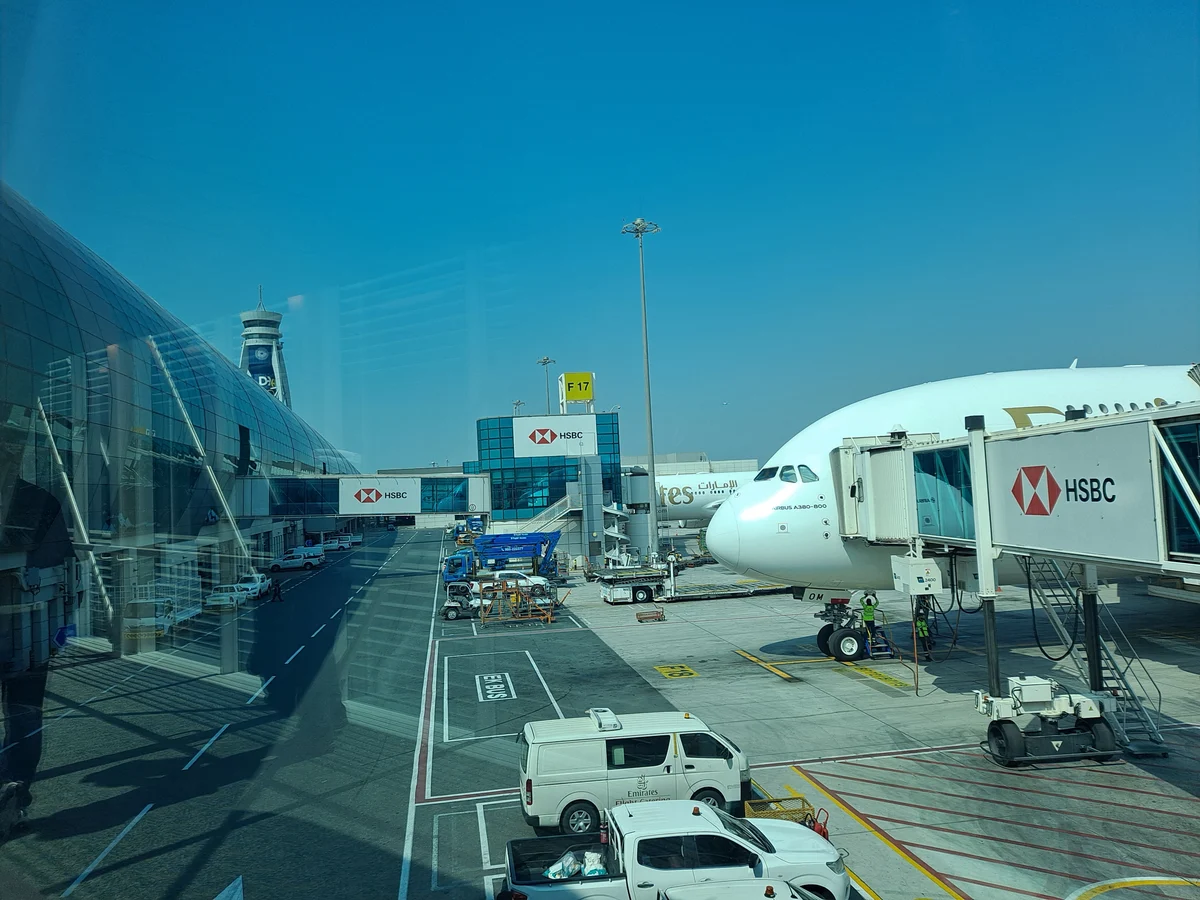
At Dubai International Airport, identified as DXB, check the operating carrier and terminal for both flights. Emirates publishes transfer guidance that distinguishes terminal movements and the procedures that may apply when the onward flight was booked separately. Use the guide for the actual flights you are considering. A search result that groups two flights under Dubai gives you a city to examine. You still need the airport codes and the handling instructions for that particular pair of flights.
Suppose a U.S. to India search shows a protected single-ticket connection via DXB and a lower-priced itinerary made up of two separately issued tickets. For the first, check the terminal route and the issuer’s written terms if the inbound flight is delayed. For the split option, establish whether you must reclaim and recheck your bag and whether you can complete the transfer with your documents. If the instructions require leaving the transit area, verify entry requirements with the relevant authority before deciding whether the saving is worth taking.
Check India’s entry requirements independently of the reservation. Use the Government of India’s Indian Visa Online service for official visa information and consult its separate e-Arrival channel for arrival formalities. Review the operating airline’s document guidance for each segment and consult the relevant government authority for any transit requirement. Use the traveler’s passport, origin, transit points and destination for the check. If you change the route after booking, verify the requirements for the new transit point before accepting the replacement itinerary.
Sources
- U.S. DOT — buying a ticket and the qualifying 24-hour airline reservation rule
- Air India official conditions of carriage — separate carrier ticketing terms
- Air India booking FAQs and issued e-ticket records
- 14 CFR 399.87 — itinerary-wide baggage rules for covered U.S. travel
- Air India — international to domestic baggage and customs example
- Delhi Airport — international arrivals to domestic departures
- Air India — Delhi terminal transition and transfer instructions
- Emirates — international transfer at Dubai International Airport
- Government of India — Indian Visa Online entry point
- Credited photograph — Dubai International Airport Terminal 3
- Air India | Documents required to fly
