Compare two complete flight quotes
Use US dollars and the same travellers and trip dates for both quotes. Enter each checkout ticket price including mandatory charges, then add only costs that it leaves out.
Fare classes + comparison guide
Check Air India ticket prices for your dates and compare Economy fare families by baggage, change fees and cancellation terms before booking.
Check Air India’s latest booking search and fare cardsUse US dollars and the same travellers and trip dates for both quotes. Enter each checkout ticket price including mandatory charges, then add only costs that it leaves out.
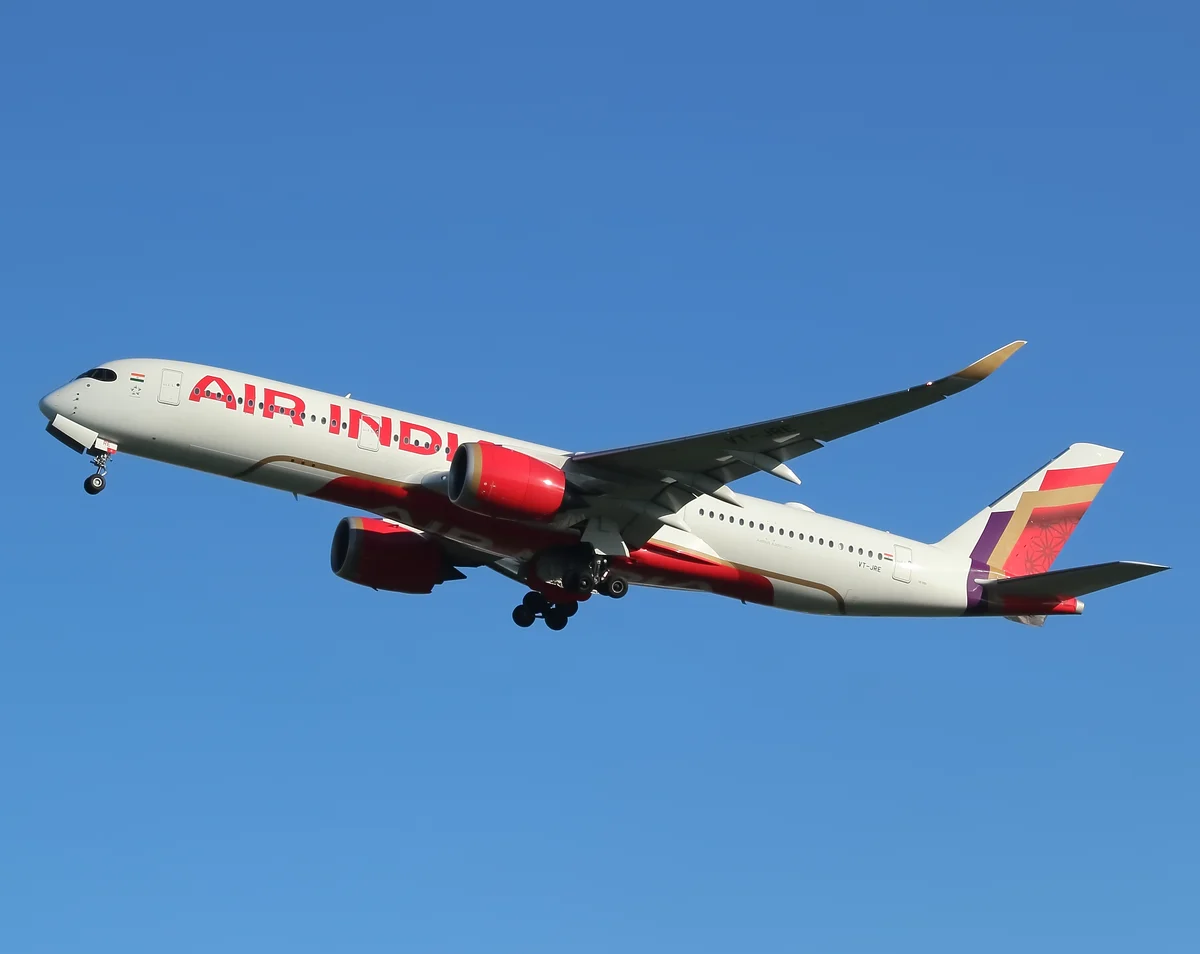
Air India displayed one-way Economy fares from US$368 for Newark to Mumbai, US$396 for New York to Delhi and US$451 for San Francisco to Delhi, each for a different travel date. To find your Air India ticket price, search for your exact journey and compare the payable totals for the fare families you can book.
Air India says its U.S. storefront examples reflect fares collected over the previous 24 hours and may be unavailable when you book. The figures below are historical observations for the listed travel dates. A card can help you decide which date to search first. A fresh search shows the flights and fare choices currently offered for your party, and the final booking screen shows the total for your selection.
| Storefront | Sold direction | Travel date | Cabin | Displayed from |
|---|---|---|---|---|
| United States | Newark to Mumbai | 5 May 2027 | Economy | US$368 |
| United States | New York to Delhi | 23 February 2027 | Economy | US$396 |
| United States | San Francisco to Delhi | 30 March 2027 | Economy | US$451 |
| India | Delhi to Mumbai | 14 December 2026 | Unspecified | ₹7,055 |
| India | Delhi to Toronto | 21 December 2026 | Unspecified | ₹45,133 |
| India | Delhi to Dubai | 11 February 2027 | Unspecified | ₹14,061 |
| India | Delhi to San Francisco | 1 April 2027 | Unspecified | ₹59,809 |
Keep the direction and storefront currency attached to each figure. The rupee examples are for travel starting in India. Delhi to San Francisco and San Francisco to Delhi are distinct searches, and the examples also have different travel dates. Converting one entry into the other currency would leave both differences unresolved.
Use the city names as Air India displayed them. For the New York to Delhi entry, open the flight details to identify the departure airport. If your plans depend on flying from a particular airport or avoiding a connection, check the airport codes and every segment of the itinerary before using the fare in your comparison.
Set the trip type, traveler count and cabin before comparing results. For a return trip, compare totals that cover both the outbound and inbound flights for the whole party. Multiplying a one-way lead fare by two gives no reliable indication of the return price because the inbound journey needs its own dates and available flights. When a U.S. advertisement shows an each-way price that requires a round-trip purchase, the federal advertising rule specifically requires disclosure of that purchase condition.
If your dates are flexible, start with the same airports and travel party on each search. Look at nearby departures within the times you can actually use. Once you find a candidate, expand the itinerary to check the number of segments, departure and arrival airports, and the local arrival date. An overnight arrival or a connection may put an otherwise cheaper flight outside the hours that work for your trip.
Suppose a traveler whose plans require a Newark departure sees both a Newark result and a cheaper result under a broader New York search. The immediate choice is whether both itineraries meet the airport requirement. Check the airport code on the cheaper result first. If it matches, compare the arrival time and segments before opening the fare options. If it departs elsewhere, the traveler can set it aside and compare the Newark results on equal terms.
Economy is a cabin. Basic, Value, Classic and Flex are fare families that describe the bundle offered with a ticket. Two fares in the same cabin can have different checked baggage, change and cancellation terms. Air India publishes different combinations of families across its fare and market tables, so use the family names and inclusions shown beside the flight you have selected.
Air India offers Basic on selected domestic Economy routes. The carrier describes that fare as including 15 kg of checked baggage and allowing a meal to be added for a charge. Check whether Basic appears on your dates and review the bundle displayed for that booking. A low price on an international lead card gives you no fare family name, and the domestic Basic announcement does not establish availability for a U.S. departure.
Consider a passenger comparing domestic Economy choices from Delhi to Mumbai who wants a meal on board. If the booking screen offers Basic, the passenger can add the displayed meal charge to that fare and compare the result with any other family that explicitly includes the meal they want. If the price difference is small, the conditions for changing the booking may decide which bundle is more useful.
Review the fare details for every part of a return itinerary. When the selection screen lets you make separate choices for the two directions, record each displayed family beside its flight. That gives you something specific to compare if a later screen abbreviates the bundle name or presents the booking as a single total.
Air India's fare-family table for travel from the United States and Canada to India lists one checked piece of up to 23 kg for Economy Value. Economy Classic and Flex list two checked pieces of up to 23 kg each. The corresponding Premium Economy columns show two pieces of up to 23 kg each, while Business and First show two pieces of up to 32 kg each. Confirm the allowance attached to the specific ticket before buying.
The allowance is expressed as a piece count with a limit per piece. Under a two-piece allowance of 23 kg each, check each bag's weight independently. A traveler packing one bag over 23 kg and another lighter bag should look up the applicable overweight terms or redistribute the contents before using the included allowance to budget for the trip.
For a traveler taking two bags that each meet the 23 kg limit, the relevant comparison is the final Value price plus the actual second-piece charge versus the Classic total with its two included pieces. Use the additional-bag price that applies to that itinerary. The storefront lead fares provide neither that charge nor the price difference between the two families, so the lower total can only be established from those booking details.
Check the ticket allowance again when the trip includes a partner carrier or several flights on one ticket. Identify the operating carrier on each segment and confirm which allowance applies through to the destination. For a return journey, check the reverse direction separately, since the published row cited here names the direction to India.
| Cabin and published fare family | Checked pieces | Weight per piece (kg) |
|---|---|---|
| Economy Value | 1 | 23 |
| Economy Classic | 2 | 23 |
| Economy Flex | 2 | 23 |
| Premium Economy, listed fare families | 2 | 23 |
| Business, listed fare families | 2 | 32 |
| First, listed fare families | 2 | 32 |
Air India's ordinary North America fee table gives separate Economy amounts in USD. Value lists a US$165 change fee, with only applicable taxes refundable on cancellation. Classic lists a US$110 change fee and a US$275 cancellation fee. Flex lists no change fee and a US$11 cancellation fee. Use these figures to understand how published conditions vary by family, then read the conditions for the ticket and purchase channel you select.
A voluntary change can involve both the listed fee and a difference in fare or taxes for the new itinerary. Consider a traveler choosing between Classic and Flex with one possible date change. If the replacement flight would produce the same fare and tax difference under either option and the published USD fees apply, Flex saves US$110 in change fees. The traveler can weigh that potential saving against the extra cost of buying Flex today. The comparison changes if the replacement fare differs between the two options.
Cancellation calls for a separate calculation. Read what the ticket says about the refundable amount and any applicable fee before judging the value of the bundle. Use the currency shown in the rules for your ticket because the published table contains distinct USD, CAD and INR columns. Check the separate no-show provisions if you may miss the departure. For a schedule change or cancellation initiated by Air India, consult the instructions for that disruption, since the figures here cover ordinary voluntary requests.
Air India ticket changes, cancellation fees and refundsFlight delays and cancellations in India, refunds and assistance
Within the scope of the U.S. full-fare advertising rule, the advertised price of air transportation must include the entire mandatory amount payable. Optional services that raise the total require your affirmative agreement. An advertised fare can therefore reflect the mandatory cost of the offer while the amount you ultimately pay also includes a seat selection, checked bag or other optional service you choose and the fare does not already cover.
Use the final total for the selected flights and passengers as the starting point. Add only the optional items you plan to buy that are still outside that total. If the checkout total already reflects a selected extra, adding it again overstates the price. Match each inclusion to the passenger and direction where it matters. A total for two travelers becomes useful for comparison once it reflects the same set of choices for both.
For a couple booking to India, one traveler might need an extra checked piece while the other travels within the included allowance. Price the itinerary with the extra bag assigned where needed, then compare it with the cost of the available fare choices that cover the same baggage needs. Check how the booking screen applies the fare selection across the party before assuming both travelers can buy different bundles. The total that covers their actual bags is the figure to compare.
Start a fresh search on Air India's storefront with your intended origin, destination, dates and traveler count. Open the details for the exact result you want and check the airport codes, operating carrier and segments. Select the cabin and fare family, then open the conditions attached to that selection. The carrier's fare-family announcements can explain the types of bundle it introduced. The booking screen identifies which families you can select for the itinerary in front of you.
If the fare has moved since an earlier search, look for a change in the flight, family or included services as well as in the total. A result can have the same departure time while showing a different fare choice. When comparing a travel seller with Air India's own checkout, check who handles changes or refunds under the offer and read the conditions supplied by that seller. Keep the currency visible beside each total so that two numerically similar figures do not appear equivalent by accident.
At the last screen before payment, match the total to your selected flights, passengers and extras. Keep the fare family and the displayed baggage and change terms with the booking record so you can find them if your plans change. If a booking screen leaves the family or allowance unclear, ask the seller to confirm the terms for the exact itinerary while you can still evaluate the price.
Compare offers in the currency the seller actually charges. In the quote calculator you can use an identical exchange-rate assumption for two charges in a foreign currency, keeping any card conversion cost with the quote to which it applies. The original storefront rows remain in the currencies displayed. A lead service date and an airport or city label are not a confirmed booking for your selected routing.
