Convert time between Dubai and India
India is 1 hour and 30 minutes ahead of Dubai.
Route guide + table
Compare published DXB nonstop examples to India, find the operating carrier’s terminal, and convert Dubai and India times. Check DWC separately.
India is 1 hour and 30 minutes ahead of Dubai.
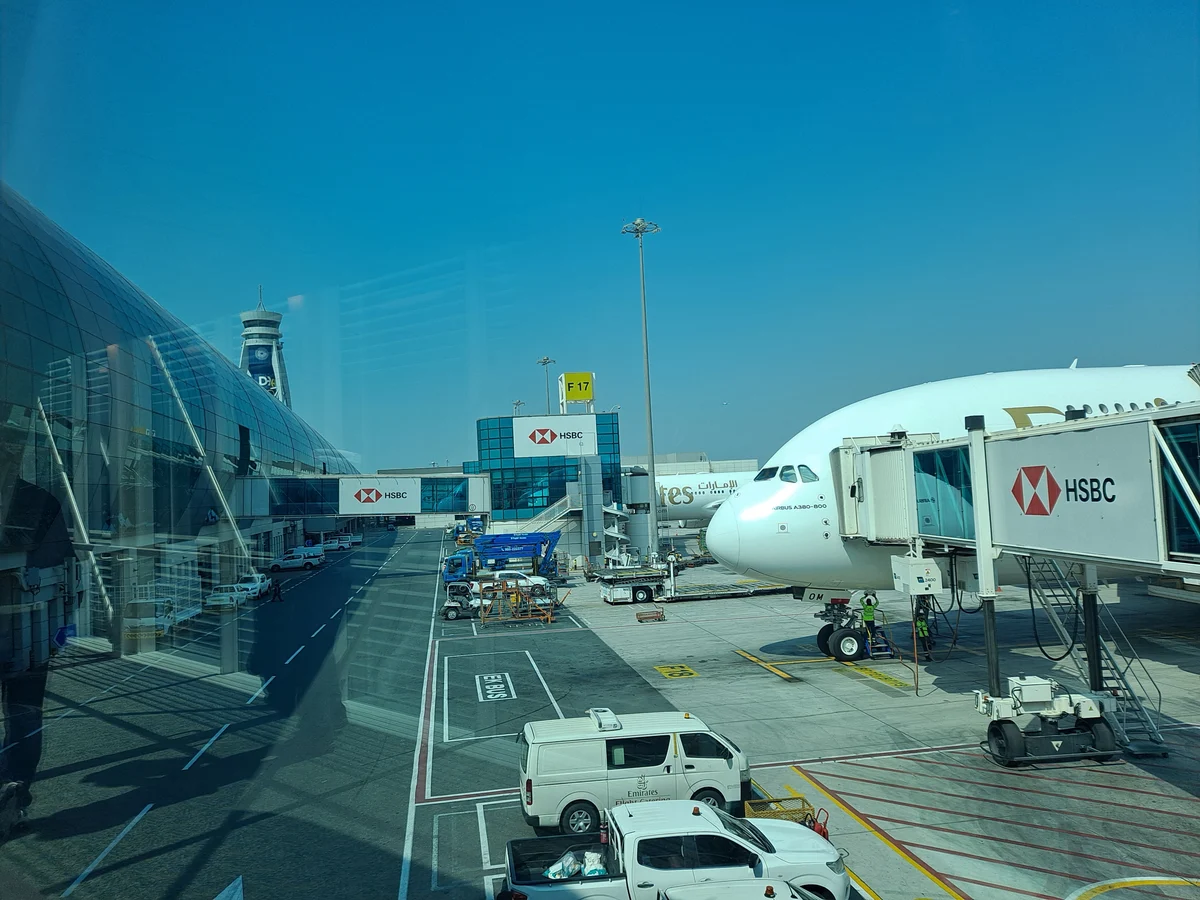
Dubai International (DXB) has nonstop flights to Indian gateways including Delhi, Mumbai, Bengaluru, Kochi, Ahmedabad and Kozhikode. Choose the airport that best serves your final destination, then search your travel date with the operating airline to confirm the flight, local arrival day and Dubai terminal.
Emirates lists nine Indian gateways from DXB. Its November 2026 network announcement named the same cities as its destination directory. For a first search, use the airport code for the city where you actually need to arrive. The directory includes Ahmedabad (AMD), Bengaluru (BLR), Chennai (MAA), Delhi (DEL), Hyderabad (HYD), Kochi (COK), Kolkata (CCU), Mumbai (BOM) and Thiruvananthapuram (TRV). Each city has its own schedule, so open the relevant route and select your date.
The flydubai examples extend the comparison in two ways. Ahmedabad appears in both airlines’ published networks, giving you a second carrier to check for the same airport. Kozhikode adds a different Kerala arrival point. Tickets for Kozhikode can show Calicut International Airport, so use CCJ when searching. Emirates’ Kochi example arrives at COK. For travel to Kerala, map the onward journey from each airport to your actual address before deciding which departures to compare.
For a trip involving several Indian cities, compare flying into the first city and returning from the last with a round trip through a single gateway. Search each direction on its own date to see which airports work. Then price the full itinerary, including any travel inside India needed to reach the return airport.
| Indian gateway | Airport code |
|---|---|
| Ahmedabad | AMD |
| Bengaluru | BLR |
| Chennai | MAA |
| Delhi | DEL |
| Hyderabad | HYD |
| Kochi | COK |
| Kolkata | CCU |
| Mumbai | BOM |
| Thiruvananthapuram | TRV |
The examples below give you flight numbers to look up and show the range of departure times you may encounter. All rows depart Dubai International. The Delhi entry comes from a dated winter timetable that lists EK516 daily from 27 October 2026 through 26 March 2027. The remaining rows come from carrier route cards or summaries. Select your travel date to see which examples the airline offers that day.
The two Kochi services illustrate why departure and arrival windows deserve more attention than flight duration alone. Both list three hours and 50 minutes. EK530 leaves Dubai in the early morning and reaches Kochi after 08:00. EK532 leaves Dubai in the evening and arrives at 03:00 the following day. If someone is picking you up, give them the local arrival date along with the flight number. Check when you can access your accommodation if you expect to arrive before dawn.
Set the search direction before comparing times. The Bengaluru route card shows EK564 from Dubai with a duration of three hours and 40 minutes. Its Bengaluru-to-Dubai example, EK565, lists four hours and five minutes. Use the outbound and return listings separately when comparing pickup windows or setting the time aside for a connection.
The flydubai summaries listed two weekly flights to Ahmedabad and three to Kozhikode. Use those frequencies as a reason to check nearby dates if your first search comes up empty. Once you find a result, read the date and terminal alongside the flight number, particularly if you saw the same flight in a general timetable.
| Destination | Operating carrier | Flight | Dubai departure | India arrival | Elapsed time | Schedule scope |
|---|---|---|---|---|---|---|
| Delhi DEL | Emirates | EK516 | 09:55 | 14:40 same day | 3 h 15 m | Daily example, 27 October 2026–26 March 2027 |
| Mumbai BOM | Emirates | EK500 | 21:35 | 02:15 next day | 3 h 10 m | Published route card checked 26 November 2026 |
| Bengaluru BLR | Emirates | EK564 | 03:40 | 08:50 same day | 3 h 40 m | Published route card checked 26 November 2026 |
| Kochi COK | Emirates | EK530 | 02:45 | 08:05 same day | 3 h 50 m | Published route card checked 26 November 2026 |
| Kochi COK | Emirates | EK532 | 21:40 | 03:00 next day | 3 h 50 m | Published route card checked 26 November 2026 |
| Ahmedabad AMD | flydubai | FZ437 | 22:35 from Terminal 2 | Check local arrival for your date | 2 h 35 m | Route page checked 26 November 2026 |
| Kozhikode CCJ | flydubai | FZ429 | 01:30 from Terminal 2 | Check local arrival for your date | 3 h 50 m | Route page checked 26 November 2026 |
The departure clock is local to Dubai and the arrival clock is local to India. India is one hour and 30 minutes ahead of Dubai, which explains why the difference between the printed times exceeds the elapsed flight time on the examples here. EK516 shows 09:55 to 14:40 on the same day. The clocks are four hours and 45 minutes apart as printed, and the scheduled flight duration is three hours and 15 minutes.
Watch for midnight at both ends of the trip. Take the Bengaluru flight shown at 03:40. If your ticket lists that departure for Friday, plan your journey to DXB around the night from Thursday to Friday. Searching for Friday evening departures would put you in a different part of the timetable. Set your reminder for leaving your address using the Dubai departure date and the time you need to be at the airport.
The Mumbai example crosses midnight after departing Dubai at 21:35. Its scheduled arrival is 02:15 the following day in Mumbai. When comparing that option with a daytime flight, include the cost and logistics of reaching your accommodation at the scheduled hour. For a hotel, confirm when the room will be available and how to arrange access if your arrival in town falls in the early hours.
An airport-to-airport duration covers one part of the day. For an appointment in India, start from the local arrival time and account for the time you need to leave the airport and reach the address. If you plan to take another flight, read its local departure date and check the transfer terms before settling on the first leg.
Use the Dubai–India clock at the top to convert an arrival time or a pickup message. A 21:35 Dubai departure corresponds to 23:05 in India before adding the flight duration. Adding three hours and ten minutes reaches 02:15 the following day for the Mumbai example. Use the full date on the booking when communicating the pickup time.
Dubai International is DXB. Dubai World Central–Al Maktoum International is DWC. The Dubai-to-India flights in the table use DXB. Dubai Airports describes DWC as about 60 km from DXB, so the code matters for both departures from Dubai and itineraries that connect there. Read the arrival and departure codes on individual flight segments, especially when a search result groups both airports under Dubai.
Changing between the airports involves going landside, passing passport control, collecting baggage and traveling by road. Dubai Airports lists a taxi or a journey involving the Metro to Ibn Battuta and its DWC bus. Verify current service details and how they fit the hours of your journey. The full transfer window also has to accommodate baggage reclaim and the next carrier’s check-in deadline.
If a booking arrives at DWC and departs for India from DXB, show the carrier both flight numbers and the scheduled connection time. Ask how the airport change is handled, when you have to present yourself at the DXB terminal and what happens to the onward segment if your incoming flight is delayed. Check the entry-document requirements that apply to you before relying on the landside transfer.
DWC has its own public arrival and departure board. The available board sample left scheduled DWC service to India unconfirmed. If a booking names DWC, check the carrier’s dated itinerary and consult the DWC board when the flight is within its reporting window. An airline’s directory listing or plans for airport expansion give no departure time for the sector you intend to book.
Use the operating carrier and flight number to identify the departure terminal. The flight you buy may be marketed by Emirates and operated by flydubai. A booking can show both airline names, so look for the operating carrier in the segment details and use that carrier’s flight information when checking where to go.
flydubai uses both Terminal 2 and Terminal 3 at DXB. Its published Ahmedabad and Kozhikode examples show Terminal 2. For a specific departure, check your reservation against the airline’s current terminal information. This matters when comparing flights on different days or when an airline changes the flight shown on your booking. Record the terminal beside the flight number when arranging transport.
Air India’s own Dubai airport guide places its counters in departures area 2 of Terminal 1. The area number identifies where to go within that terminal. Treat Air India Express and flights operated by codeshare partners as separate checks. Dubai Airports’ DXB directory lists Air India, Emirates and flydubai and offers terminal filtering. The airline’s booking details tie the terminal to the flight you are taking.
For a connection inside DXB, keep both terminal numbers handy and use Dubai Airports’ transfer instructions for that terminal pair. The instructions you need depend on the incoming and outgoing flights and how your baggage is handled. If the onward ticket sits in a separate booking, ask the airlines where you need to collect or present your bag and which check-in deadline applies. For a journey starting in Dubai, give your driver the terminal shown for your operating flight.
Start with the operating airline’s booking search using the same dates, passenger count and cabin for each option. On the Dubai-to-Ahmedabad route, for instance, you can check Emirates and flydubai for the same airport pair. If their available dates differ, compare the trade-off between shifting the trip and keeping the date you need. The schedule gives you a flight to look for. The dated booking result gives you the fare and seat options the airline is offering.
Compare the payable total with the baggage and flexibility you intend to buy. Read the allowance and change conditions on each fare you are considering. When two arrival airports are practical, include the onward ground journey in the comparison. A useful way to decide is to put the booking total, local arrival time and onward arrangements side by side for the specific flights you could buy.
Dubai Airports reported India as DXB’s largest country market in calendar 2025, with 11.9 million passengers. Its city market figures included 2.4 million for Mumbai and 2.2 million for New Delhi. These are historical passenger traffic figures. Use the carrier’s dated inventory for departure choices and prices. Assessing how often people search for these routes requires separate data by searcher location.
If you are booking around a fixed commitment, compare how much scheduled time each flight leaves you after landing. Include the arrival date and any airport or terminal change in that comparison. A fare search for the right day can still return options with very different practical arrival windows.
A Dubai-to-India nonstop can also be the last leg of a trip that begins elsewhere. The dated EK516 example appeared as the second segment of an Abidjan-to-Delhi itinerary, with a connection in Dubai. The same distinction applies when searching from the United States. A nonstop Dubai-to-Delhi segment describes the flight after Dubai. To plan the whole journey, start with your U.S. departure airport and read each segment through to the Indian airport.
When comparing connecting itineraries, write down the scheduled arrival and onward departure in Dubai local time, with a date for each. Note the two airport codes and their terminals. Check whether both flights are on the same booking and confirm with the carrier what happens to checked baggage and the onward flight if the first flight is late. The time printed between segments is the starting point for that discussion, particularly where baggage collection or a terminal transfer is involved.
On the day of travel, use the corresponding airport status board and search by operating flight number, local date and direction. DXB and DWC publish separate boards. For a pickup in India, use the arrival information for the Indian airport and the local landing date, which can fall a day after the departure date in Dubai.
Read the scheduled time and the latest status as separate fields. The carrier itinerary tells you the service you booked, while the board can show updated movement information for the flight. Use the airline’s current instructions for when and where to check in, especially if the flight time displayed on the board has changed.
India e-Arrival Card guide and traveller checklistNonstop flights between the United States and India
