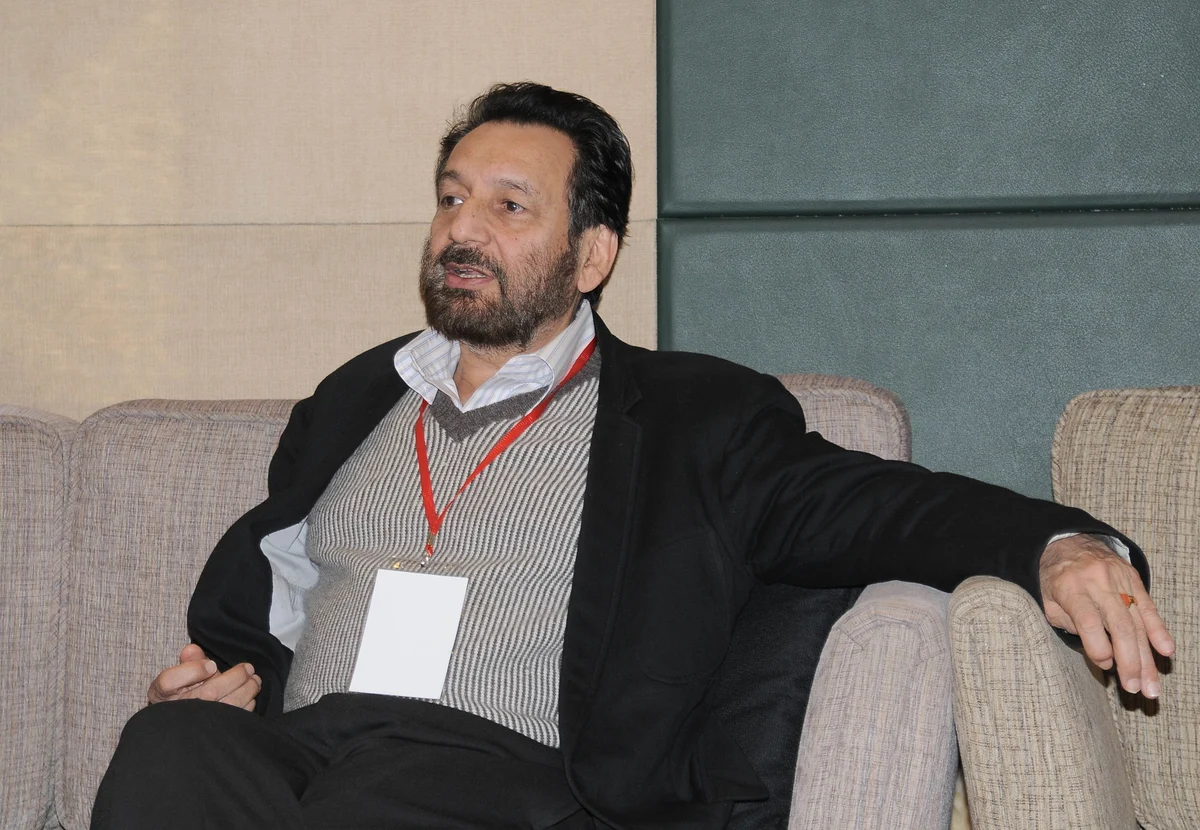
Which Mr. India is this?
Mr. India is Shekhar Kapur’s 1987 Hindi film with Anil Kapoor as Arun Verma, Sridevi as reporter Seema Sohni and Amrish Puri as Mogambo. Arun looks after a group of children and acquires a device that makes him invisible. He uses it as the children and their home face threats connected to Mogambo. Look for this cast and the original year when locating the feature. Public offers vary by country and list two runtimes.
Those three actors and the year make a reliable search combination when a service displays only the title. Look for them together on the details page before choosing a viewing option. The British Film Institute records the film as an Indian production in its Film Wallahs programme, while B4U and ZEE5 identify the language as Hindi. These details let you match an archive entry to a service listing even when the two show different running times.
ZEE5’s public title entry and its Indian Airtel partner both list 171 minutes. The BFI screened a 179-minute digital presentation in 2023, and US and UK Prime Video pages also show 179 minutes. The reviewed data establishes those runtime labels. A difference of eight minutes in metadata cannot identify removed scenes, playback speed, restoration work or credits without edition-specific verification.
For director and screenplay credits, the BFI programme provides a clear reference. ZEE5’s public listing identifies Shekhar Kapur, but its detailed metadata also places a spelling variant of Satish Kaushik’s name in a director field. In the BFI’s principal cast list, Kaushik is credited as Calendar. Searching by all three lead actors is especially useful when an app exposes inconsistent crew fields.
Principal cast and character names
The BFI Southbank programme gives ten principal cast and role pairings. It also credits Boney Kapoor as producer and the partnership Salim–Javed as screenwriters. B4U lists Surinder Kapoor alongside Boney Kapoor on its producer line. For a film club handout, keep the source with the credit you reproduce. The principal performance list follows the BFI presentation, and the additional child role is marked with its own source.
| Actor | Character |
|---|---|
| Anil Kapoor | Arun Verma / Mr. India |
| Sridevi | Seema Sohni |
| Amrish Puri | Mogambo |
| Satish Kaushik | Calendar |
| Annu Kapoor | Mr Gaitonde |
| Ajit Vachani | Teja |
| Sharat Saxena | Daaga |
| Ashok Kumar | Professor Sinha |
| Bob Christo | Mr Wolcott |
| Ramesh Deo | Police inspector |
| Aftab Shivdasani | Jugal, supplementary Bollywood Hungama credit |
Calendar, played by Satish Kaushik, is the household’s cook and helper. Annu Kapoor’s Mr Gaitonde is a newspaper editor. Ashok Kumar’s Professor Sinha belongs to the story’s parallel strand involving the invisibility device. These pairings give you practical starting points when trying to recognise a figure in a still, a film clip or a description of a particular scene.
These credits also help when someone remembers the film through one performer. A query for Sridevi as Seema Sohni or Amrish Puri as Mogambo takes you to a specific role. If the remembered name is Calendar, adding Satish Kaushik narrows the search to the character and helps distinguish cast results from film credits that happen to include the same performer elsewhere.
Supporting cast and child performers
The trade catalogue extends beyond the BFI’s ten principal names. It identifies Gurbachan as Captain Zorro, Harish Patel as Roopchand, Anjan Srivastava as Baburam and Yunus Parvez as Maniklal. These are useful supplemental credits for a discussion of the film’s supporting characters. They belong to the same 1987 feature, but the supporting list and the children’s roles are less fully documented in the institutional programme.
Aftab Shivdasani is credited as Jugal in the trade catalogue. B4U also identifies him among the child performers. Ahmed Khan appears in both sources, and the trade entry describes him as one of the children without giving him an individual character name. The trade catalogue also credits Karann Nathh as a child performer and leaves the role unnamed.
If you are trying to identify Jugal, the trade entry gives you a direct actor-to-character match. If you are trying to identify another child from a particular scene, the evidence may only establish that an actor appeared among the children. A named part in one row of a catalogue cannot supply the missing role assignments in the others.
For a more complete cast index, look for a presentation with the original credits visible and record the spelling as it appears there. Check whether the roll actually pairs each performer with a named part. Where it gives only a performer’s name, keep the role field open unless a production record or another attributable source supplies the pairing. The available programme and catalogue entries cover different portions of the cast.
What the 1987 dates refer to
The original year is 1987. Exact May dates differ in surviving public sources. B4U gives 25 May and a director interview published on 25 May 2012 was framed as the twenty-fifth anniversary. A retrospective photograph caption attributed to producer Boney Kapoor dates the premiere to 27 May 1987. Bollywood Hungama’s trade catalogue gives 29 May for release. The original cinema opening notice needed to reconcile those entries was not found in the reviewed sources.
Bollywood Hungama gives 29 May 1987 in its trade catalogue. Its separate report on a premiere photograph quotes Boney Kapoor dating the photographed premiere to 27 May 1987. The same report puts the premiere two days before release and elsewhere gives 25 May for the theatrical release. Since those claims do not align, attribute the premiere date to Kapoor’s caption as reproduced in the report and treat the trade catalogue’s release field as a separate record.
ZEE5’s detailed metadata introduces a third date, 22 August 1987, with no corroboration in the film history sources reviewed here. The service page can help identify its own offer and listed running time. A year-only film caption avoids assigning an exact opening day on the strength of conflicting catalogue fields.
If you are documenting a cinema opening, look for a dated advertisement that gives the city, venue and public showtimes, or a distributor record that specifies the territory. A dated premiere photograph can support the date of that event. A local theatre advertisement can support a public screening at that venue. Determining when the first paying audience saw the film requires evidence about the scope of the opening as well as the date.
For a dated repertory screening, the BFI’s 17 December 2023 programme is direct evidence of that presentation. In a filmography, the 1987 year is sufficient unless an exact date is essential. A reader can then cite the programme for the cast and use the service page that matches the intended viewing country. These references stay useful when a streaming offer changes.
- BFI Southbank archive — Mr. India programme and production notes
- B4U Movies — broadcaster catalogue, release metadata and territories
- Shekhar Kapur interview — 25 May 2012, Rediff
- Bollywood Hungama — Boney Kapoor's premiere photograph and caption
- Bollywood Hungama — trade catalogue and supplementary cast
- ZEE5 — licensed global catalogue entry for the 171-minute Hindi listing
- Airtel Xstream Play India — direct licensed ZEE5 title route
- Prime Video — US-facing digital rental and purchase listing
- Prime Video — UK-facing Mr. India listing
Music, choreography and production credits
The BFI identifies the 17 December 2023 Film Wallahs presentation as a 179-minute digital screening. Its programme credits director Shekhar Kapur, cinematographer Baba Azmi, editors Waman Bhonsle and Gurudutt Shirali, and set designer Bijon Dasgupta. It also flags blackface in the film. These details describe a particular repertory programme and give a dated comparison point for the running times in viewing catalogues.
Javed Akhtar appears in two credits that serve different purposes. The screenplay is credited to Salim–Javed, and the lyrics carry Akhtar’s individual credit. If you are identifying a song for a screening handout or a reference entry, use the individual lyric credit and the composers’ names. A credit for a particular playback singer requires a track-level source or an original credit that confirms the performance.
Laxmikant–Pyarelal composed the music and Saroj Khan received the choreography credit. The film shifts between the children’s household, Seema’s work as a reporter and Mogambo’s threatening plans, often using comedy or a musical number alongside the adventure. One useful way to discuss the device is to notice when the viewer knows where Arun is while the people in the scene have to infer it from sound or movement.
| Credit | Name |
|---|---|
| Direction | Shekhar Kapur |
| Screenplay | Salim–Javed |
| Cinematography | Baba Azmi |
| Editing | Waman Bhonsle and Gurudutt Shirali |
| Set design | Bijon Dasgupta |
| Music | Laxmikant–Pyarelal |
| Lyrics | Javed Akhtar |
| Choreography | Saroj Khan |
- BFI Southbank archive — Mr. India programme and production notes
- ZEE5 — licensed global catalogue entry for the 171-minute Hindi listing
- Airtel Xstream Play India — direct licensed ZEE5 title route
- Prime Video — US-facing digital rental and purchase listing
- Prime Video — UK-facing Mr. India listing
- B4U Movies — broadcaster catalogue, release metadata and territories
- Shekhar Kapur interview — 25 May 2012, Rediff
- Bollywood Hungama — Boney Kapoor's premiere photograph and caption
- Bollywood Hungama — trade catalogue and supplementary cast
Where to check legal viewing offers
In India, Airtel Xstream Play lists the 1987 Hindi film through ZEE5 at 2 hours 51 minutes. Airtel’s FAQ says viewing depends on active Xstream Play access on the user’s Airtel number. If you already use Xstream Play, sign in with that number and open the film page to see what your access includes. ZEE5’s global-facing page displays a subscription prompt, and its public domestic page returned a technical error during verification.
In the United States, the public Prime Video offer showed an SD rental at US$0.99 and an SD purchase at US$2.99. The UK Prime Video page displayed a Join Prime offer for the 2-hour-59-minute feature. Each describes the offer shown in that market. Check the signed-in title page for the current terms, especially if you need a particular video quality or want to know if your existing membership covers the film.
For television, B4U Movies lists the title in its catalogue for India, the UK, the United States, Canada and the UAE. Use the country-specific schedule and look for a dated slot. The catalogue entry stays useful as a way to find the relevant schedule even when you have yet to establish an upcoming broadcast. For Canada and the UAE, it supplies a television schedule route while streaming offers remain unverified.
When an offer changes, check from the country where you plan to watch, with the account you intend to use. Match the year and lead cast, then inspect the current watch, rent, buy or subscription prompt. If an app takes you to a provider’s page, check the final terms there before paying. A public listing records what a service displayed, while the signed-in offer and its playback controls can establish what is available to your account.
| Market | Provider | Runtime and public offer |
|---|---|---|
| India | Airtel Xstream Play / ZEE5 | 171 minutes. Check eligible plan and local offer. |
| Global product page | ZEE5 | 171 minutes. Subscription prompt. Territorial playback unverified. |
| United States | Prime Video | 179 minutes. SD rent $0.99 or buy $2.99 at check. |
| United Kingdom | Prime Video | 179 minutes. Join Prime prompt at check. |
- B4U Movies — broadcaster catalogue, release metadata and territories
- ZEE5 — licensed global catalogue entry for the 171-minute Hindi listing
- Airtel Xstream Play India — direct licensed ZEE5 title route
- Prime Video — US-facing digital rental and purchase listing
- Prime Video — UK-facing Mr. India listing
- BFI Southbank archive — Mr. India programme and production notes
- Shekhar Kapur interview — 25 May 2012, Rediff
- Bollywood Hungama — Boney Kapoor's premiere photograph and caption
- Bollywood Hungama — trade catalogue and supplementary cast
Captions and age labels in the public offers
The US Prime Video offer specifies Hindi audio with English closed captions and lists Hindi Dialogue Boost options. It also carries a flashing and strobing imagery advisory. ZEE5 specifies Hindi audio on its public product page. If captions are essential for your viewing, verify the language and caption options in the offer for your own market, then check the playback controls if you have access.
The public pages display different age labels. ZEE5 shows G, Prime Video’s US offer shows TV-G, and the UK Prime page shows 12+. Keep each label with the service and market that displays it. The BFI programme also flags blackface, a separate piece of content information that may matter when choosing the film for a group screening.
A screening for a group may depend on English closed captions or a given Hindi track. Start by asking which participant needs the feature, then compare the offer with the public programme record before picking a service. Once a version becomes available under your account, briefly check the title screen and caption menu on the device you plan to use. That gives a firmer result than a cached title description.
If you are citing a particular line or scene, include the edition or platform and its displayed runtime with the timestamp. A time taken from the 179-minute listing can be awkward to match in the 171-minute listing. No source reviewed identified precisely why the two numbers differ. A timestamp anchored to the version you actually saw is more reproducible than treating either duration as a universal editing credit.
- BFI Southbank archive — Mr. India programme and production notes
- ZEE5 — licensed global catalogue entry for the 171-minute Hindi listing
- Airtel Xstream Play India — direct licensed ZEE5 title route
- Prime Video — US-facing digital rental and purchase listing
- Prime Video — UK-facing Mr. India listing
- B4U Movies — broadcaster catalogue, release metadata and territories
- Shekhar Kapur interview — 25 May 2012, Rediff
- Bollywood Hungama — Boney Kapoor's premiere photograph and caption
- Bollywood Hungama — trade catalogue and supplementary cast
Sources
- BFI Southbank archive — Mr. India programme and production notes
- B4U Movies — broadcaster catalogue, release metadata and territories
- Shekhar Kapur interview — 25 May 2012, Rediff
- Bollywood Hungama — Boney Kapoor's premiere photograph and caption
- Bollywood Hungama — trade catalogue and supplementary cast
- ZEE5 — licensed global catalogue entry for the 171-minute Hindi listing
- Airtel Xstream Play India — direct licensed ZEE5 title route
- Prime Video — US-facing digital rental and purchase listing
- Prime Video — UK-facing Mr. India listing
- Licensed visual — Sridevi at IIFA 2014
- Licensed landscape visual — director Shekhar Kapur at X|Media|Lab

