Is prostitution legal in India?
Indian law addresses specified conduct around prostitution through the Immoral Traffic (Prevention) Act, 1956. The Supreme Court distinguishes voluntary adult sex work from trafficking, and the Act covers conduct including brothel keeping, procuring, detention, prostitution in specified public-place circumstances and soliciting. The conduct alleged, the age of the person and the wording of each provision determine which law is relevant.
That distinction explains why a single yes or no gives an incomplete answer. A question about an adult’s own consensual conduct can sit alongside questions about someone else’s actions, the circumstances in which the conduct occurred, or whether anyone was coerced. Each question has its own legal test. The national Act, often abbreviated to ITPA, remains in force alongside separate criminal provisions on trafficking and the sexual exploitation of a trafficked person. Sexual offences involving children have a distinct statutory framework.
“Sex work” is the general term used here for consensual adult activity. “Prostitution” appears when discussing the wording of the ITPA and the scope of its provisions. The terminology signals which question is being discussed. A statutory reference to prostitution does not, on its own, establish whether a particular offence has occurred. Likewise, describing an activity as sex work does not settle questions about third parties or the conditions under which a person acted.
A separate question concerns how public authorities must treat people. In its 19 May 2022 order in Budhadev Karmaskar, the Supreme Court recalled that Article 21 protects dignity regardless of occupation and issued directions concerning the treatment and rights of sex workers. Those protections matter alongside the applicable criminal law. A legal account should identify the conduct at issue and the authority responsible for the action being discussed.
- Immoral Traffic (Prevention) Act, 1956, India Code
- Supreme Court of India, Budhadev Karmaskar order of 19 May 2022, original record
- Bharatiya Nyaya Sanhita, 2023, official NCRB statutory text
- Protection of Children from Sexual Offences Act, 2012, India Code
- Supreme Court, Prajwala v Union of India, 29 May 2026, 2026 INSC 609
What the Immoral Traffic (Prevention) Act covers
Sections 3 to 8 of the ITPA deal with several different kinds of conduct. Section 3 deals with brothel keeping and allowing premises to be used as a brothel. Section 4 deals with knowingly living wholly or partly on another person’s prostitution earnings. Sections 5 and 6 address procuring or inducing a person and detention, respectively. Sections 7 and 8 address specified public-place circumstances and soliciting. The section number matters because a description that fits the general subject of one provision may omit an element the law requires.
Consider a report that says a person was accused of living on a sex worker’s earnings and mentions that the two shared household expenses. Section 4 makes knowledge and dependence on another person’s earnings relevant. The household detail alone leaves those questions unresolved. A reader comparing the report with the Act should look for which conduct the allegation actually describes. The same discipline applies to a report that uses the word “brothel.” The label tells the reader what may be alleged, while the statutory text sets out the conduct and the conditions for liability.
Consent also has a different role depending on the provision. Section 5 expressly covers certain procuring conduct with or without the person’s consent. An account that establishes adulthood and agreement can therefore still leave a question about what another person did. When the issue concerns where conduct occurred, Section 7 calls for checking the specific public-place circumstances in the text. A general description of the setting cannot substitute for those statutory conditions. Read Section 8 separately when the allegation concerns soliciting.
| Conduct described | Provision to read |
|---|---|
| Keeping a brothel or allowing premises to be used as one | Section 3 |
| Knowingly living wholly or partly on another person’s prostitution earnings | Section 4 |
| Procuring or inducing a person | Section 5 |
| Detaining a person | Section 6 |
| Prostitution in specified public-place circumstances | Section 7 |
| Soliciting | Section 8 |
What the Supreme Court directed in May 2022
The 19 May 2022 order was issued in Budhadev Karmaskar, Criminal Appeal No. 135 of 2010. The Supreme Court invoked Article 142 and expressly directed states and union territories to comply with six panel recommendations. It separately directed authorities administering the ITPA to comply with the Act. The order’s operative wording is essential because the document reproduces a longer set of recommendations and specifies which of them authorities were directed to follow that day.
The six recommendations specified for compliance were numbered 2, 4, 5, 6, 7 and 9. They concern assistance and medical care for survivors of sexual assault, review of involuntary detention in protective homes, respectful treatment by police, protection of identity in media coverage, treatment of health and safety measures, and awareness of legal rights. The direction on health and safety measures says they should be treated as neither offences nor evidence of an offence. The media direction addresses a separate issue, protecting people from identification in coverage.
Statements about adult consensual sex work appear in recommendations 1 and 3, which the Court reproduced in the order. Those two points, along with points 8 and 10, fell outside the six expressly specified for strict compliance on 19 May. An account attributing a statement to the Supreme Court should therefore identify whether it appears in a panel recommendation, in the Court’s own reasoning, or in a direction. Quoting a sentence from the document only establishes where it appears. Its legal effect depends on the surrounding language and any subsequent order.
The order also addresses Aadhaar documentation and confidentiality separately. This is another reason to check the original order by subject. The numbered recommendations explain one part of the record, while the operative paragraphs tell the reader what the Court directed and whom it addressed.
| Court record | What the Court directed or addressed | Date |
|---|---|---|
| Budhadev Karmaskar, May order | Strict compliance with recommendations 2, 4, 5, 6, 7 and 9. The Court also reproduced other panel recommendations. | 19 May 2022 |
| Budhadev Karmaskar, protective homes | Asked states to survey protective homes and report for review of involuntary detention. | 2 September 2022 |
| Prajwala, reportable judgment | Distinguishes the trafficking offence, ITPA provisions and the rights and dignity of voluntary adult sex workers. | 29 May 2026 |
| Prajwala, implementation hearing | Reiterates a magistrate’s threshold inquiry in an adult rescue proceeding and asks for a protocol and further reporting. | 13 October 2026 |
Protective homes and the September 2022 follow-up
On 2 September 2022, the Supreme Court returned to recommendation 4 concerning protective homes under the ITPA. It directed state governments to survey those homes and file reports within 12 weeks so that the cases of adult women detained against their will could be reviewed. The direction identifies who was to act, what information they were to produce and why the reports were sought. The 12 weeks was a reporting deadline for state governments.
An account that says an adult woman’s case was eligible for review raises a different evidentiary question from an account that says a review happened or release followed. The September direction establishes the task assigned to state governments. A claim about what happened in a particular state would require a subsequent filing, order or other official record covering that state. An account of an individual outcome would also need evidence of the decision in that case.
To check for developments, search the Supreme Court’s order records using the case number and compare the dates and operative paragraphs. Read the May and September orders together when tracing recommendation 4. The later order confirms that the Court accepted certain recommendations and reiterates this particular one. A report about subsequent compliance should identify the later record that actually establishes what was done.
The Supreme Court returned to this legal distinction in Prajwala. Its May 2026 judgment describes an initial threshold inquiry for adults produced before a magistrate under Section 17 of the ITPA and explains the distinct requirements of the BNS trafficking offence. Its October follow-up asks the National Judicial Academy to prepare guidance for magistrates and requests further implementation reporting. The case was listed for 14 December 2026 at the time this guide was checked.
Trafficking, sexual exploitation and offences involving children
The Bharatiya Nyaya Sanhita, 2023 has distinct offences for trafficking and sexual exploitation of a trafficked person. Section 143 addresses trafficking and expressly makes the victim’s consent immaterial in determining whether trafficking occurred. Section 144 concerns sexual exploitation of a person whom the accused knows or has reason to believe has been trafficked. The provisions pose different questions. For Section 143, the question is whether the statutory elements of trafficking are met. Section 144 adds a specific focus on sexual exploitation and what the accused knew or had reason to believe.
The Protection of Children from Sexual Offences Act, 2012, known as POCSO, defines a child as anyone below 18 in Section 2(1)(d). Where a person below 18 is involved, the adult-consent distinction cannot supply the legal analysis. POCSO has its own offence and protection framework. Section 19 sets out the reporting framework for child sexual offences, and Section 23 restricts media identification. That restriction extends to details that could identify a child indirectly, so withholding the child’s name alone can leave identifying information in an account.
The Bharatiya Nyaya Sanhita and the Bharatiya Nagarik Suraksha Sanhita transition date was 1 July 2024. An older document, including the Supreme Court’s May 2022 order, can refer to the Indian Penal Code or Code of Criminal Procedure because those were the codes in use when it was issued. To interpret a later report of a case, check the date of the alleged conduct or proceeding and the provisions actually cited. The date of publication of an article about the case does not establish which code applies.
Human trafficking in India, reporting, law and dataRape and sexual violence statistics in India
- Immoral Traffic (Prevention) Act, 1956, India Code
- Supreme Court of India, Budhadev Karmaskar order of 19 May 2022, original record
- Bharatiya Nyaya Sanhita, 2023, official NCRB statutory text
- Protection of Children from Sexual Offences Act, 2012, India Code
- Supreme Court, Prajwala v Union of India, 29 May 2026, 2026 INSC 609
What the national case figures measure
The National Crime Records Bureau’s Crime in India 2024 report lists 1,497 cases registered nationwide under the ITPA in 2022, 2,166 in 2023 and 2,137 in 2024. These figures are from Volume I, Table 1.3, which covers special and local laws. The 2024 figure was 29 cases below the 2023 figure and 640 above the 2022 figure. Those comparisons describe changes in recorded case registration under one Act.
The unit of measurement is a registered case. The table cannot establish how many people sell sex, how common trafficking is, or how many allegations resulted in convictions. The report has a separate trafficking series in Chapter 14. A claim about trafficking should identify the series and the unit it uses before comparing any numbers with ITPA registrations. For a later data update, open the latest Crime in India release and verify the table title, reporting years and nationwide row before carrying forward the comparison.
Finding public legal aid and support
The National Legal Services Authority, or NALSA, lists 15100 for free legal aid support and provides links to legal services institutions. Section 12 of the Legal Services Authorities Act includes women, children and victims of trafficking or begar among the relevant categories under the legal aid framework. The directory and helpline are ways to find the appropriate institution and ask about assistance. The statutory categories do not establish the outcome of a particular request.
The Ministry of Women and Child Development identifies 112 for emergency assistance, 181 for women’s support and referrals, and 1098 for child protection. Its One Stop Centres under Mission Shakti connect survivors of violence with support. Check the ministry’s current public information for these services and NALSA’s current directory for legal aid access. The service descriptions help distinguish an emergency contact, a referral service and a legal assistance route.
Sources
- Immoral Traffic (Prevention) Act, 1956, India Code
- Supreme Court of India, Budhadev Karmaskar order of 19 May 2022, original record
- Supreme Court order in Budhadev Karmaskar on protective homes, 2 September 2022
- Bharatiya Nyaya Sanhita, 2023, official NCRB statutory text
- Protection of Children from Sexual Offences Act, 2012, India Code
- NCRB Crime in India 2024, Volume I, Table 1.3 special and local laws
- NALSA public legal assistance and the 25 November 2026 MoWCD public referral campaign
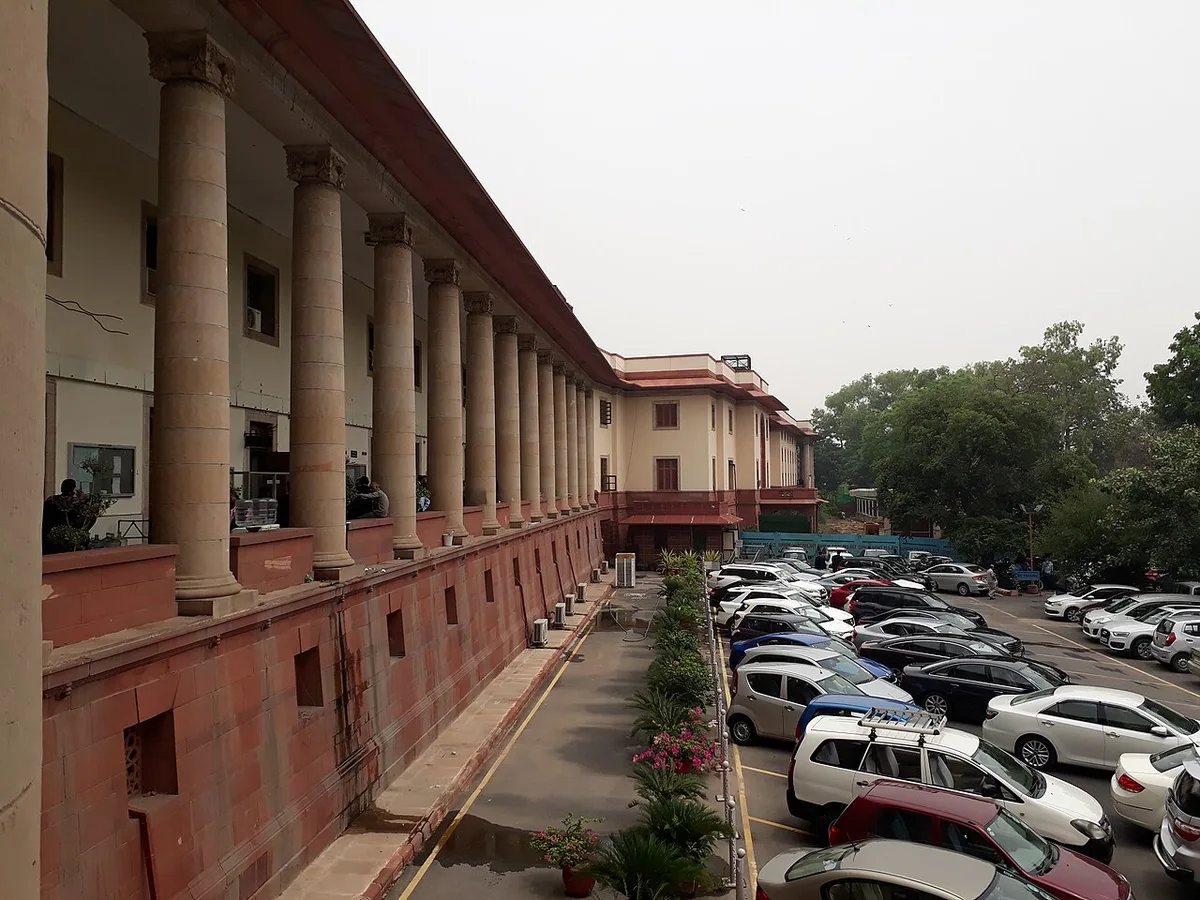
- Existing civic image: Supreme Court of India in New Delhi
- India Code Immoral Traffic Prevention Act 1956
- Supreme Court office report reproducing May 2022 Budhadev Karmaskar directions
- Ministry of Women and Child Development One Stop Centre scheme
- Supreme Court, Prajwala v Union of India, 29 May 2026, 2026 INSC 609
- Supreme Court, Prajwala follow-up order, 13 October 2026
- Women and Child Development Ministry’s current public support routes
