Check the NCS dashboard for the Indian source. For a second catalogue, request up to 50 reports of magnitude 4 or greater from USGS. The box covers India and nearby land and seas (6.5–38.5° N, 67.5–98.5° E). Place labels give nearby reference points.
Recent earthquakes in the selected region and period
Start with the NCS record and check instructions separately
Check the National Center for Seismology dashboard for official Indian earthquake reports. Search using the event’s date, time, area and magnitude. If you are indoors and shaking is happening now, drop, cover your head and upper body and hold on under sturdy furniture if you can. India’s emergency number is 112. After the shaking, check NDMA’s SACHET service or instructions from the authority covering your area.
An NCS entry describes a seismic event that has already been observed. Its time, location and magnitude can help you identify the event behind a headline or forwarded message. The figures may be provisional or revised, so a detail copied into a chat can differ from the one currently shown in the official record.
The word “alert” can refer to several things in a message about an earthquake. A message reporting a recorded event, a claim about a future earthquake and an instruction for people in a specific area each call for a different check. Read the full message before deciding which claim you are trying to verify.
Where to check each kind of earthquake claim
What you want to check
Where to look
What to compare
An earthquake reportedly occurred
NCS recent earthquake records
Event date, time, reported location and magnitude
A report gives additional details about a selected event
NCS dated event bulletin, if available
Event identity, report date and any stated revision date
An instruction reportedly applies in your area
Relevant local emergency authority
Issuing authority, date, covered area and current wording
General earthquake preparedness
NDMA SACHET earthquake guidance
The official guidance for the situation you are reading about
A post predicts a future earthquake
Check what the cited NCS item actually records
Whether the source describes an event that already occurred
Match the date, time and location before the magnitude
Start with the event date, especially if all you have is a screenshot. The time a message was sent, the date an article was updated and the time an earthquake occurred are different timestamps. Look for the date attached to the event itself. If a crop hides the date, the message alone gives you too little information to match the event confidently.
Read the time as displayed in the official record and retain any time zone label it supplies. A report that says “this morning” or gives an hour without a time zone leaves room for ambiguity. When an apparent mismatch matters, check the timestamp conventions in both sources before treating the times as evidence of separate events.
Next compare the location in the NCS entry with the location claimed in the report. A headline may name the city where people reported feeling shaking. The location in the official entry describes the recorded event. If the headline leaves that distinction unclear, read the article to see which location it actually attributes to NCS.
A message says “earthquake in our city this morning” and gives a magnitude. The NCS list has two entries with roughly that magnitude, each with a different location. Look for an event time or a named source in the message and compare it with the entries. If those details are missing, neither entry can establish which event the sender meant.
The NCS dashboard lets you compare dates, depths, magnitudes and geographic searches. Check whether the display says IST or UTC. The reviewed Khargone record gives 14 November 2026 at 09:15:28 IST, 21.590° N, 75.552° E, magnitude 4.5 and depth 10 kilometres. Someone comparing it with a UTC report should look first for the same event on the same date and at the corresponding time. India time is UTC plus five hours and 30 minutes.
An NCS entry gives you a reported event location and magnitude. Keep the location wording close to the official entry when sharing it. A broader place name may help someone recognise the area, but the source wording lets them find the same entry and check how closely it matches the place named in the original claim.
Magnitude describes the size of the earthquake. A magnitude by itself cannot establish how strongly someone felt shaking at a particular address, whether a building was damaged or what residents have been instructed to do. Those are separate questions. For current instructions, use the notice that covers your area and read any conditions it places on who should act.
A group chat circulates a recorded magnitude alongside a claim that a school has closed. An NCS entry can support the earthquake details if its date, time and location match. To verify the closure, look for the current notice from the school or the relevant local authority, then check the named premises and the date it covers.
A city in a directional label can serve as a reference point across a border. NCS labelled a 24 November 2026 event region Eastern Nepal, while USGS described the estimated location relative to Mangan, India. Use the epicentral region and coordinates when identifying the recorded location. The place people name in a message may also be somewhere they felt shaking away from the epicentre.
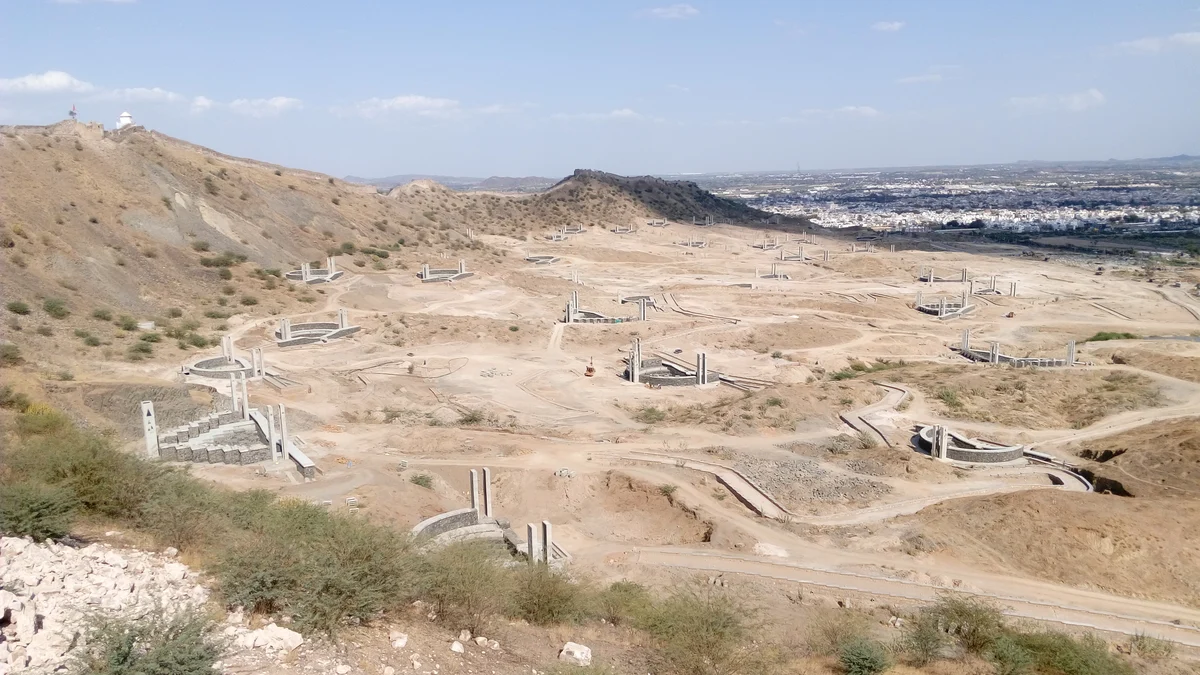
The photograph shows Bhuj’s Smritivan memorial site in 2016. It commemorates the Gujarat earthquake of 26 January 2001. A historical photograph shows what could be seen at its own date. The USGS archived event record is a separate source for the 2001 event’s magnitude, time and geographic estimate.
NCS publishes more detailed event bulletins for selected earthquakes. Start with the recent records to identify the event, then look for a bulletin when a news article cites one or you need to check the details behind an initial entry. Match the bulletin to the earthquake using the event date, time and location before comparing individual figures.
Keep the event date separate from the document date. The earthquake time places the event in the sequence of observations. The bulletin date identifies the report you consulted. If NCS gives a revision date, keep that alongside any detail you take from the revised report so someone else can identify the version you used.
An early article quotes one magnitude and a later NCS bulletin gives a different figure. Check whether both describe the same event, then look for a stated revision date. If the bulletin identifies a revised figure, use that figure with the revision date. If the relationship is unclear, attribute each figure to its own source and date.
Since the bulletins cover selected events, you may find an entry in the recent records without a matching detailed report. In that case the record can support the details it displays. If an article claims further information comes from NCS, look for the specific report it cites before repeating the claim with that attribution.
The optional USGS table requests at most 50 recent magnitude 4 or greater events in a box covering India and neighbouring areas. The table shows USGS’s origin and revision times in IST and retains the catalogue’s place label and event link. The check time tells you when this browser received the data. The source-generated time tells you when USGS generated its response. Smaller and earlier events can still appear on NCS even when they fall outside the USGS request.
Recognise when a message is making a forecast claim
An NCS recent record documents an observed event. Its date and time refer to that observation. If a post presents the same entry as proof of an earthquake due later, open the source and check what its timestamp describes. A correct link or screenshot can still be attached to a claim the source does not support.
Some forwards combine an accurate report of shaking with an unsupported claim about what will happen next. Check the sentences separately. The first may match a recorded event while the second may have no supporting official statement. Treat each claim according to what its own source says, even when both appear under the same official-looking heading.
A forward reproduces an NCS event entry and adds that another earthquake will occur later that night. Compare the place, date and time in the screenshot with the original record, then check whether the added sentence appears in the source. Even if the entry is authentic, it supports the past observation alone.
Earthquake early warning works after an earthquake starts. Detection of its first waves may provide some lead time before stronger shaking reaches some areas. The Ministry of Earth Sciences described the NCS early-warning work as a pilot in August 2026. It also identifies BhooKamp as an official NCS channel for earthquake information. Check any claimed warning coverage against the issuing authority and use the event catalogue for observed events.
When somebody forwards an emergency instruction, find the original notice from the local authority it names. Check the date, the issuing authority and the places covered. Read the full text for any stated duration or conditions, then look at the same authority’s more recent notices for an update. A screenshot can omit a locality, qualification or later change.
Use NDMA’s SACHET earthquake material when you want official preparedness guidance. Use an applicable local emergency notice for instructions tied to a particular incident or place. You can check that notice directly even if you are still trying to identify an earthquake in the NCS records. A magnitude match is unnecessary for establishing the scope of a notice that names the area it covers.
A notice names one district, and a group in a neighbouring district forwards it with the caption “applies here too.” Check the area listed in the original notice and look for any corresponding instruction from the authority responsible for the neighbouring district. The caption alone does not extend the scope of the notice.
NIDM advises staying inside during shaking if you are already indoors, dropping, protecting your head and upper body, and holding on. Keep clear of windows and mirrors and avoid lifts. If already outside, move into open space away from buildings, bridges, trees and overhead lines. After the shaking, move carefully around hazards, keep clear of damaged buildings and be prepared for aftershocks. Follow directions from the authorities covering your location and call 112 for urgent assistance when it is safe.
If you cannot find a matching entry, check how you defined the search. “Today” in a forwarded message may refer to the day it was written, so look for the original message date. If you started with a city where shaking was reported, compare the nearby event entries by time and reported location before deciding whether any is a plausible match.
If the source details are still too sparse, say what you checked and where the uncertainty lies. There is a difference between being unable to match an undated screenshot and finding an official entry with matching time and location but a different magnitude. In the latter case, check whether NCS issued a dated bulletin or identified a revision.
Before resharing a figure, reopen the current record and any bulletin you plan to cite. Write down when you consulted the source, separately from the earthquake time and any report revision date. If a figure changes later, those details let another reader trace the earlier version and compare it with the current one without confusing the two timestamps.
You are updating a community group after finding a revised event figure. Name the event using its date and reported location, attribute the revised magnitude to the dated NCS bulletin, and mark your earlier figure as superseded. If you also share a local instruction, give its own issuing authority, date and covered area so readers can verify it independently.