India emergency card
Nationwide emergency response for police, fire and medical help in India.
- What happened
- Address or nearest landmark
- People who need help
- Callback number
Reference table + checklist
Call 112 for immediate police, fire or medical help in India. Save or print the emergency card, and check the role of local 108 and 102 ambulance services.
Nationwide emergency response for police, fire and medical help in India.
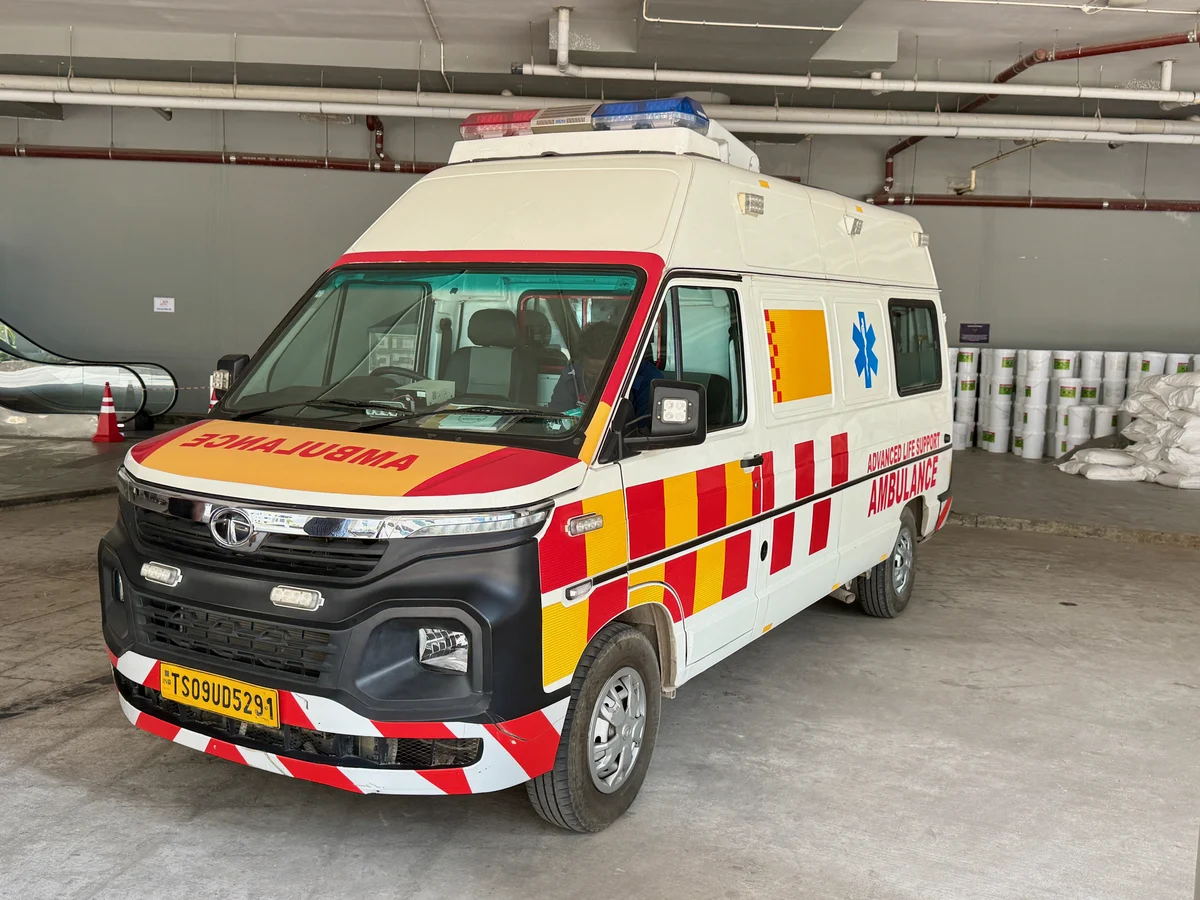
Call 112 for an immediate emergency anywhere in India, including when you need an ambulance. India’s nationwide emergency number coordinates police, fire and medical assistance.
If you arrived here looking for 108, use 112 when someone needs urgent help now. The Ministry of Home Affairs information confirms 112 nationwide. Whether 108 is an official ambulance number at your destination is a separate question to check with the relevant state or union territory government before you travel.
When you call, say what happened and where help is needed. Give a working callback number if possible. If more than one kind of help may be needed, describe what you can see. A collision with an injured person and smoke coming from a vehicle gives the operator more to work with than the word ‘accident’ alone.
You see someone collapse near the entrance to a railway station. Call 112, say that someone has collapsed and give the station name, city and entrance as precisely as you can. When the station has more than one entrance, use the name or number on the nearest sign if you can read it from where you are.
The Ministry of Home Affairs describes 112 as the national number for the Emergency Response Support System. A state or union territory public safety answering point receives the emergency request. Use the number from inside India and tell the operator where help is needed, even when your phone or saved address can display a location.
Keep 112 at the top of a printed card or an offline phone note. Under it, leave space for three details you may need to read out under pressure. Those are the emergency, the location and a working callback number. For a trip with several stops, keep the nationwide number on the card and give each night’s accommodation its own labelled address.
| Entry | What to write | When to use it |
|---|---|---|
| Nationwide emergency number | 112 | Immediate police, fire or medical assistance |
| Local emergency ambulance | 108 in areas where the state confirms it | National Health Mission describes 108 primarily as emergency response |
| Local patient transport | 102 where provided and applicable | Programme mainly supports transport for pregnant women and children |
| Location prompts | City or district, address or road, landmark, entrance or pickup point | To identify where help is needed |
| Callback number | A number someone at the scene can answer | When the operator needs to reach the caller again |
| Local ambulance number | Add only after checking the applicable state or union territory government source | Follow the published conditions for the place and service |
You are staying in a guesthouse whose booking lists a property name but gives little detail about the entrance. Before you go out, ask the desk for the street address and the landmark they would give a driver. Save both under the property name. If the front entrance faces a different street from the one in the booking, record that entrance separately.
If you share the card with a companion, make the prompts easy for either person to read aloud. A paper copy can go in a wallet or day bag. For a phone copy, save the information as selectable text and check that you can open it without a data connection. This is especially useful when an address is otherwise available only inside a booking app.
Start with a short description of the emergency and the location. If you know how many people need help, say so. Give a working callback number if possible, including any details needed to dial it. Use the number of the phone someone can answer at the scene, especially if a companion or a member of staff placed the call for you.
Say what you observed in ordinary words. ‘A person fell and is lying on the pavement’ describes what happened without asking you to identify an injury. When people nearby give different accounts, stick to the details you know and say when a detail is uncertain. You can tell the operator that you see two people on the ground and are unsure whether anyone else needs help.
A companion falls in a hotel stairwell. Give the hotel’s name, city, street address and the floor or landing where your companion is. Mention if the most direct entrance is inside a courtyard or through a side door. If staff can help, ask someone to confirm which entrance leads to that staircase while you speak.
If you need help explaining the location, ask someone nearby to say the street or landmark name as it appears on a sign. A staff member may be able to give the full address. You can then describe the emergency yourself or ask that person to relay your description. Tell the operator who will answer if they call back.
Make the operator’s location information as precise as possible. In a large venue, give the venue name and the part of it where help is needed, such as a terminal, platform, gate or floor. Include the city when you know it. If the sign has a gate number and a nearby street name, give both so the entrance can be identified.
A passenger needs urgent medical assistance at a bus terminal. The operator needs the terminal name and city as well as the bay where the person is. ‘Beside the ticket counter’ can add a useful landmark if there is more than one bay entrance. If the passenger has already been moved into the terminal building, give their current location.
You are a passenger on an unfamiliar road when you see a crash. Ask the driver to identify the road, the direction of travel and a nearby junction or signed landmark. A visible kilometre marker or exit number may help narrow it down. If the driver knows only the last town you passed, pass that on and make clear it is the last town you saw.
A map pin can help you work out what to say. Read out the road name, junction or nearby named place if your map shows it. Check which side of a divided road, river or station the incident is on when you can tell. If you are calling from another location, explicitly identify the place where help is needed.
Search the relevant state or union territory government’s health department or ambulance service information before adding 108 to your travel notes. Look for a page or document that explicitly gives the number, names the service and describes the area it covers. A search result that puts ‘108’ next to ‘ambulance’ gives you a lead to check against the government publication.
Read the service description closely. A government notice might describe a particular patient group, a referral between facilities or a programme serving specified districts. Where the document gives conditions, copy those conditions alongside the number. Check the issuing authority and any publication or revision information, especially when an older announcement and a current service directory appear to differ.
Your itinerary includes overnight stops in two states. You find a government listing for 108 in the first state and a hotel directory mentioning it in the second. Use the first listing only for the coverage it describes. For the second state, look for its own government health or ambulance directory. Keep 112 on both itinerary entries while you check.
When published information leaves coverage unclear, use the agency’s published general enquiry channel if one is available. Record the jurisdiction, service name and when you checked it, so you can revisit the same detail if your trip changes. During an immediate emergency, call 112 without delaying to resolve a directory discrepancy.
The National Health Mission describes 108 as primarily an emergency response number for critical illness, trauma and accidents, and 102 as mainly basic patient transport focused on pregnant women and children. The Mission’s statement that states and territories have 108 or 102 service is a combined description. Read your state’s listing before assuming both services apply at your destination.
Delhi’s disaster-management heat action plan lists 108 for medical emergencies and 112 for police. That record is specific to Delhi and dates from 2024. For an urgent emergency in India, the nationwide 112 route is the easiest number to keep on the saved card.
Save the address of each place you are staying in a form that can be read aloud. If the accommodation supplies the address in a locally used script, keep that version with the version you can read. A companion or local staff member can use it to identify the place, and you still have the name and street details to give over the phone.
If your phone is out of power or your call fails, ask someone nearby with a working phone to call 112. Tell them the kind of emergency and point out the location details they should pass along. Where staff are available, someone who knows the building can help specify which gate or entrance serves the area.
Your phone battery runs out near a market and a fellow traveller needs urgent assistance. Ask a shopkeeper to call 112 and give the market name and the shopfront nearest the person. If the call comes from the shopkeeper’s phone, use that number for the callback only if the shopkeeper can answer and relay information.
When travelling in a group, share the location details before people split up. A message that says ‘meet at the south entrance’ may be enough for companions who know the plan. A record that also names the venue and city is more useful if one person has to call from elsewhere and explain where the other person needs help.
Use 112 for an immediate emergency. For a journey arranged ahead of time, such as transport to a scheduled appointment, ask the treating facility which transport services it uses and how to contact them. The facility can explain its own arrangements and tell you where a vehicle should arrive. If the situation becomes an immediate emergency, call 112.
A travelling companion has a clinic appointment and wants to arrange a vehicle for the next morning. Ask the clinic about the transport and entrance arrangements. If the companion collapses that evening, call 112 and give the place where they are now. The address of the next day’s clinic may be irrelevant to finding them.
If you delegate the call during an emergency, give the caller the exact location and make sure they know what they are calling about. People in a group may each assume someone else has already phoned. Ask a specific person to make the call, then find out whether they reached the service and which number the operator can call back.
If the operator gives you further instructions, use those for the situation at hand. Keep the callback phone available if possible. If someone else takes over that phone, tell them what location and emergency details have already been given so they can answer a follow-up clearly. If the person who needs help moves to another entrance or building, be ready to give the updated location.