Identify the three India products
Organic India’s India catalogue lists Ashwagandha Capsules, Ashwagandha Advance Capsules and Tulsi Green Tea Ashwagandha. The first uses whole ashwagandha root, Advance lists a standardised root extract and a component called Whole Herb Shakti, and the tea combines several ingredients in a tea bag.
Start with the full name and format when checking a listing or a pack. Both capsule lines appear in a 60-capsule format, so a listing that says only “Organic India ashwagandha 60 capsules” leaves the formulation unresolved. The word “Advance” identifies the extract-plus-whole-herb line. “Tulsi Green Tea” identifies the blend, even when a retailer’s search result gives greater prominence to ashwagandha than to the rest of the name.
| India product | Format | Listed pack sizes | Manufacturer ingredient description |
|---|---|---|---|
| Ashwagandha Capsules | Whole-root capsule | 60 or 180 capsules, plus two-pack bundles | Whole Withania somnifera root. Check shell ingredients on the pack. |
| Ashwagandha Advance Capsules | Extract capsule | 60 capsules or 2 × 60 | Root extract standardised to 5% withanolides, alongside Whole Herb Shakti. |
| Tulsi Green Tea Ashwagandha | Tea bag | 25 tea bags | Green tea, tulsi, ashwagandha and lemongrass. No plant part or caffeine quantity verified. |
Pack count answers a separate question from product identity. On a bundle, the count can describe each inner pack or the total shipment, depending on how the seller writes the listing. The India catalogue documents the formats in the table. The selected variant, the visible pack and the seller’s delivery information together establish what a particular order contains. For products found through international search results, confirm the India-market pack before adding another format to this comparison.
Read the whole-root capsule label
Organic India’s India listing identifies the botanical in Ashwagandha Capsules as organically grown whole root of Withania somnifera. The Latin name identifies the species, and “whole root” identifies the plant part and preparation described by the company. Record both if you are comparing labels. The word “ashwagandha” by itself establishes neither which part appears in a product nor whether it appears as whole root or as an extract.
The description’s 100% whole-root wording refers to the botanical preparation. The website’s ingredient field gives no full accounting of capsule-shell ingredients or manufacturing aids. A listing image caption identifies a 60-count pack as veg capsules, which is useful for identifying that presentation. If shell composition matters to the comparison, the ingredient declaration on the pack in hand is the place to check for a specific material.
The listing identifies Organic India Pvt Ltd in Barabanki, Uttar Pradesh, as the maker. The address can help match an online entry to the pack you are examining, alongside the full product name and capsule count. Since the Advance listing also refers to Barabanki, location alone leaves the formula unresolved. Use the name and ingredient declaration together when the two capsule listings appear alongside each other.
Suppose a seller displays a photo captioned “60 veg capsules” while the selected option says 180 capsules. The caption identifies the pack pictured. Check the selected variant and ask for a readable image of that pack if the count or label details matter. For a product record, report the 180 count as the selected option and reserve any further label details for the pack whose declaration you can actually read.
Treat the manufacturer and seller fields as different parts of the product record. A marketplace may identify a seller that handles fulfilment, while the packaging identifies the business shown as manufacturer or packer. If a retailer reformats the product name, open the brand’s India page to confirm the exact preparation and inspect the carton or bottle for the corresponding ingredient statement.
Interpret the Advance label and its 5% figure
Organic India’s ingredient FAQ for Ashwagandha Advance Capsules describes a root extract standardised to 5% withanolides and separately names Whole Herb Shakti. The 5% is a specification for the extract ingredient. It describes the stated proportion of withanolides in that extract, so the amount of extract would also be needed to derive a quantity of withanolides from the percentage. The percentage gives no breakdown of the companion component.
Whole Herb Shakti is the name the company gives the companion component. The accessible FAQ leaves its botanical part and quantitative breakdown unresolved. Preserve the name as printed when recording the formula, and look for a separate declaration of species, plant part and amount on the current India back label. If the wording there leaves any of those fields unclear, a manufacturer response tied to the exact product and pack can resolve them.
Imagine a seller lists “5% withanolides per capsule” for Advance but reproduces only the manufacturer’s extract description. The seller’s wording leaves the basis of the comparison unclear. Ask for the declaration that identifies what the percentage applies to. With the company FAQ alone, the supported wording is “root extract standardised to 5% withanolides.” A per-capsule amount would require a separate quantity, and a comparison with the whole-root line would require compatible figures for that product as well.
The India listing shows 60 capsules and a 2 × 60 format. The multiplication describes two packs of 60, for a total of 120 capsules in the bundle. It tells you how the product is packaged. Keep that figure alongside the pack count when documenting a listing, and keep the extract specification alongside its ingredient name. This makes it easier to spot whether a retailer has copied the terminology accurately.
Read the tea as a blend
Tulsi Green Tea Ashwagandha is listed as a 25-tea-bag blend. The company identifies green tea, tulsi, ashwagandha and lemongrass. In separate descriptive material it names three types of tulsi, Rama, Krishna and Vana. Those names can help identify the blend in brand material. For the complete formula, ingredient order and any proportions declared for the version you have, read the tea carton itself.
The accessible product text gives no verified caffeine quantity and leaves the ashwagandha plant part per tea bag unspecified. Green tea is a listed ingredient, so check the carton for any caffeine declaration when that detail matters. If you need a numerical value, ask the manufacturer to identify its basis, such as a dry tea bag or a prepared serving. A bare number would leave an important part of the comparison unresolved.
The India product page displayed “Sold out” when checked on 26 November 2026. That status describes the brand’s online listing at the time of the check. To check whether you can order it, look for the 25-bag pack on the current India listing or a retailer serving your postcode. Use the retailer’s delivery indication for that address, since a listing can remain visible with stock unavailable in a particular area.
Tea-bag count and capsule count measure units of packaging. Comparing the chemistry of the contents would require information the listings do not supply, including the ashwagandha material and quantity in the tea and what enters the brewed drink. Keep a comparison at the level the records support. The tea is identifiable by its blend and bag count, and the capsules by their stated botanical preparation and capsule count.
Match Indian advisories to the pack category
The Food Safety and Standards Authority of India’s 16 April 2026 advisory says that only Withania somnifera roots and their extracts are permitted under Schedule IV in the food categories named in the advisory, subject to prescribed limits. It clarifies that leaves are prohibited in those categories in crude, extract or other form. Read the date and category scope together, since the statement applies to the regulated categories addressed by that document.
The Ministry of Ayush issued a separate direction dated 15 April 2026 to manufacturers, exporters and sellers of Ayush drugs and products. It directs them to use roots only and excludes leaves in both single and compound Ayush products. The two documents cover different regulatory routes. To choose which document to consult for a given pack, first identify the category declared on its current India label.
The phrase Whole Herb Shakti on the Advance listing does not establish which plant part the component contains. Likewise, the notices establish requirements for the categories they cover. An assessment of a specific pack needs the relevant category and a verified ingredient declaration. When comparing an older image with a current pack, use the declaration on the pack being assessed and check the issuing authority for any newer direction that applies to its category.
FSSAI’s 15 October 2026 botanical labelling advisory calls for legible, prominent Schedule IV warnings required for the particular ingredients or extracts in scope. It also reiterates restrictions on drug-like disease-cure claims for the relevant food categories. Its tables give examples. To document a warning for one of these Organic India packs, check the current pack text and the provisions that apply to its declared category and ingredients.
- Organic India whole-root Ashwagandha Capsules, India product page
- Organic India Ashwagandha Advance Capsules, India product page
- Organic India Tulsi Green Tea Ashwagandha, India product page
- FSSAI 16 April 2026 advisory on ashwagandha roots and leaves
- FSSAI 15 October 2026 botanical label warning advisory
Assess claims separately from product identity
A manufacturer listing can identify the commercial product, display its pack sizes and describe its ingredients. Establishing a health outcome requires evidence that addresses the particular preparation and outcome being claimed. The NIH Office of Dietary Supplements assessments discuss research using different ashwagandha preparations and study populations. NCCIH also describes limitations in the research. Those differences matter when a seller or article cites research on ashwagandha generally next to a specific Organic India product.
If a listing places a study beside the Advance capsule’s 5% specification, check what the study actually examined. A meaningful match would need details such as the preparation used, the population studied and the outcome measured. A shared botanical name leaves those questions open. Even a shared standardisation figure would leave the rest of the formulation and study conditions to check, including whether the study used a companion ingredient.
For a label guide, record each statement at the level its source can establish. Describe the botanical preparation with the ingredient declaration, and attribute any advertised outcome to the company if it is relevant to identifying the pack. FSSAI’s food advertising and claims regulations distinguish claim types and require support for nutritional or health attributes. The evidence for this comparison establishes product identities and formats. Any proposed product-specific claim about benefits or safety needs direct substantiation and review by a qualified clinician or pharmacist.
- Organic India whole-root Ashwagandha Capsules, India product page
- Organic India Ashwagandha Advance Capsules, India product page
- Organic India Tulsi Green Tea Ashwagandha, India product page
- NIH Office of Dietary Supplements consumer and professional ashwagandha assessments
- NIH NCCIH public ashwagandha safety and evidence overview
- FSSAI food advertising and claims regulations
Sources
- Organic India whole-root Ashwagandha Capsules, India product page
- Organic India Ashwagandha Advance Capsules, India product page
- Organic India Tulsi Green Tea Ashwagandha, India product page
- FSSAI 16 April 2026 advisory on ashwagandha roots and leaves
- FSSAI 15 October 2026 botanical label warning advisory
- NIH Office of Dietary Supplements consumer and professional ashwagandha assessments
- NIH NCCIH public ashwagandha safety and evidence overview
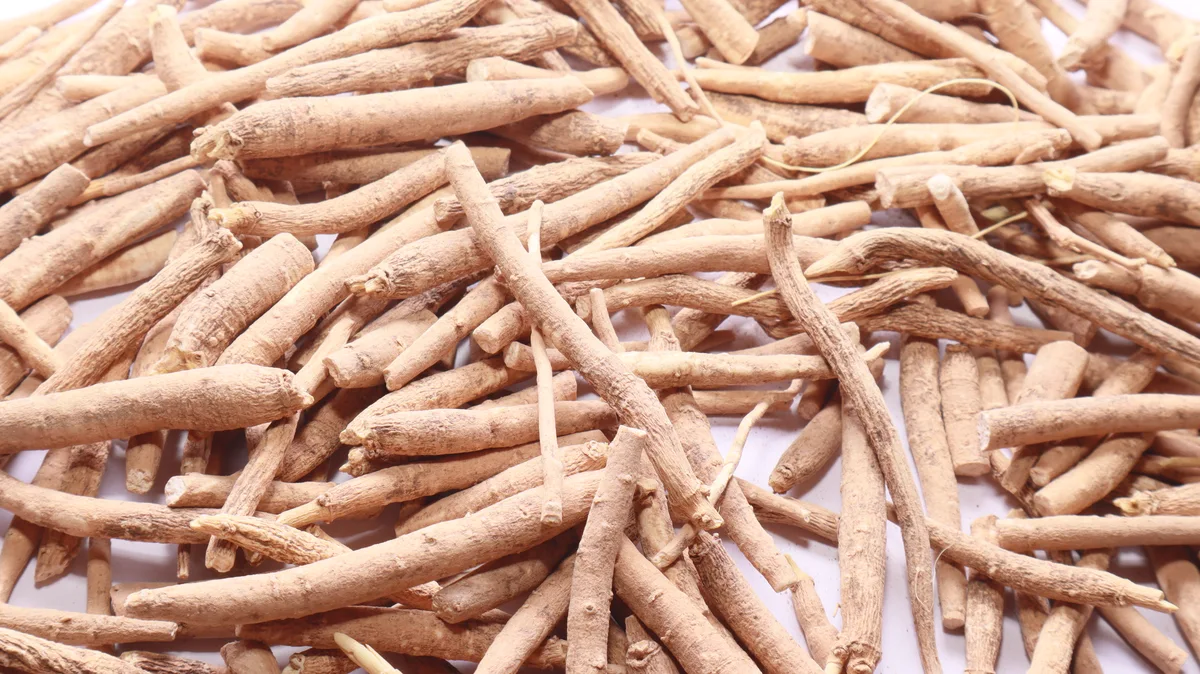
- Open documentary photograph of dried Ashwagandha roots
- Organic India ashwagandha capsule listing
- FSSAI food advertising and claims regulations
