Which Indian force does the search point to?
The likely match for “secret force of India made in 1960” is the Special Frontier Force, whose establishment a veteran dated to 1962 in an October 2023 account published by the Ladakh administration. The available public records support 1962 as an attributed year and leave the exact founding date unverified.
The wording of the search leaves two possibilities. A reader may remember the exact calendar year, or may be using “1960” loosely for the decade. The Ladakh account gives the second interpretation a concrete match. It prints the full name, Special Frontier Force, and connects that name with a year in the early 1960s. The word “secret” offers little help in distinguishing a military body from an intelligence organisation, since it can describe either in ordinary conversation.
Two other public records help anchor the identification. The Second Schedule to the Right to Information Act lists the Special Frontier Force of the Cabinet Secretariat. A 2014 government biography also records that General Dalbir Singh previously served as Inspector General of the Special Frontier Force under the Cabinet Secretariat. These references establish a consistent public identity across legal and biographical records. The establishment year comes from the veterans’ account.
The distinction matters when a brief answer travels into a timeline or an exhibit label. “Veterans’ account dates establishment to 1962” preserves the basis for the year even if a reader sees the line on its own. A date presented without attribution would give the impression that the original establishment record had been checked.
Where the 1962 date comes from
In October 2023, the Ladakh administration published an account of a delegation from the Special Frontier Force Ex-Servicemen Welfare Association in Leh. Retired Naib Subedar Tsultrim Gyatso led the delegation, and the account attributes the establishment year to him. The visit also involved Sainik Welfare Board and local community representatives. The setting explains why the name of the force and a short account of its history appear in a public record about veterans’ welfare.
The account supplies two dates with different uses. October 2023 dates the public record of the visit. The year 1962 dates the event Gyatso described. A government publication makes the attribution traceable to a named speaker and an identifiable occasion. Because the account was produced decades after the establishment it describes, it leaves room for a contemporaneous record to refine the history.
A reader trying to settle a disagreement over the date can start by checking the sentence that gives the year and identifying who is speaking. That step distinguishes the administration’s account of what a veteran said from a finding based on an order in an archive. The welfare association’s name identifies the delegation. It also explains why a search for the force may surface a civilian meeting record alongside legislation and official biographies.
How to read the Cabinet Secretariat listing
In the consolidated Right to Information Act, the Second Schedule places the Special Frontier Force of the Cabinet Secretariat at serial 8. The same schedule lists the Intelligence Bureau at serial 1 and the Research and Analysis Wing at serial 2. The latter entry includes the Aviation Research Centre, identified there as the Research and Analysis Wing’s technical wing. The full wording matters when a search result shortens several of these names or mentions them together.
The identifiers give a reader a way to check which organisation a passage means. If a note calls the Special Frontier Force another name for the Research and Analysis Wing, the schedule supplies separate entries and distinct designations. The entry for the Aviation Research Centre shows why it helps to read the whole line. Its relationship to the Research and Analysis Wing is stated within the wording of serial 2.
India Code and the Central Information Commission publish consolidated texts that agree on the designation at serial 8. That agreement helps verify how the law names the force. The schedule’s purpose is to identify organisations covered by Section 24. Questions about reporting relationships within or between those organisations require sources designed to establish those relationships. Entry numbers serve as locators within the schedule and convey no chronological order.
| Document | Date or edition | What it establishes |
|---|---|---|
| Ladakh veterans’ delegation account | 12 October 2023 | Records a veteran’s account placing the establishment in 1962 |
| Government profile of General Dalbir Singh | 2014 | Names a past Special Frontier Force appointment and places it under the Cabinet Secretariat |
| India Code consolidated Second Schedule | 4 May 2021 amendment reflected | Lists the Special Frontier Force of the Cabinet Secretariat at serial 8 |
India’s Research and Analysis Wing, history and public recordsHow India’s government works: President, Parliament and courts
What changed in the schedule in 2021
The India Code footnotes identify G.S.R. 319(E), dated 4 May 2021, as the notification that substituted entry 2, omitted former separate entry 7 and changed entry 8. The Central Information Commission’s consolidated text corroborates those footnotes. A reader comparing a printed copy from 2005 with a consolidated copy can therefore encounter different wording or entries even though both documents carry the title Right to Information Act, 2005.
The date beside the footnote belongs to the notification amending the schedule. When recording a date from the page, read the marker back to the exact entry and check the verb used in the footnote. Words such as “substituted” and “omitted” describe what happened to the legal text. This is especially helpful when a search preview displays the force’s name beside a date but leaves out the amendment wording.
To verify the designation for a fresh citation, find Section 24 and the Second Schedule in the latest consolidated India Code copy, then compare the wording and footnotes with the Central Information Commission copy. If the versions differ, identify the notification behind the more recent wording in the Official Gazette. Section 24 allows additions and omissions by notification and requires the notification to be laid before both Houses of Parliament. Record which version supplied the wording, since a later reader may find another consolidation.
What Section 24 says about access to records
Section 24(1) sets out an exclusion covering the central organisations in the Second Schedule and information they furnish to the central government. It also excepts information about allegations of corruption and human rights violations from that exclusion. For information concerning allegations of human rights violations, the published text requires Central Information Commission approval and gives a period of 45 days from receipt of the request.
The 45-day provision belongs to the human rights proviso. A reader encountering that number on its own should read the proviso with the preceding sentence to see which category it addresses. Likewise, the exclusion is a provision about application of the RTI Act. A publicly issued biography or an account of a veterans’ meeting can document the force’s identity even while the schedule governs access to records under the Act.
For historical research, the useful distinction is between a source that names an organisation and one that records the event being investigated. The schedule supplies the public statutory designation. A founding order, if publicly available, could supply the date and wording of the act of establishment. A dated statement by a participant or representative can support an attributed account. Keeping track of those roles prevents a citation to the statute from doing more work than the statute’s text can support.
Two uses of Frontier Force in one biography
The Press Information Bureau’s 2014 profile of General Dalbir Singh gives a concrete example of how similar institutional names can be confused. It identifies his original unit as 4/5 Gorkha Rifles (Frontier Force). In a separate career entry, it identifies his earlier appointment as Inspector General of the Special Frontier Force under the Cabinet Secretariat. The same person links the two passages, while the full names and the kinds of career entries distinguish them.
Suppose a photograph caption quotes only “Frontier Force” from the profile and identifies the unit as the Special Frontier Force. The relevant check is to read the surrounding career entry. The parenthetical phrase after “4/5 Gorkha Rifles” belongs to the unit name given in that passage. The Inspector General title belongs to the separate appointment. Restoring the full name in the caption resolves the ambiguity using the profile itself.
The year on the profile dates its publication. Its retrospective wording lets a reader say that the government had publicly identified the appointment by 2014. Establishing when Dalbir Singh held the post would require a source that dates the appointment. For the broader history, the profile’s contribution is the recorded title and the Cabinet Secretariat designation, which can be compared with the language used in the schedule.
How other Indian forces’ dates compare
The broader search for India’s special forces brings together names preserved in different kinds of public records. The National Security Guard has a statute with enactment and commencement dates. The Navy’s Marine Commando Force has a public account of when it was raised and what it was called at the time. The Air Force’s Garud history supplies a date for its first Flight. These records answer different questions, so a timeline is clearest when each date carries the event it describes.
| Name in public records | Date | Documented event |
|---|---|---|
| Special Frontier Force | 1962 | Establishment year attributed to retired Naib Subedar Tsultrim Gyatso in the Ladakh administration’s 2023 account |
| National Security Guard | 22 September and 16 October 1986 | Act 47 of 1986 was enacted on the first date and came into force on the second |
| Marine Commando Force (MARCOS) | February 1987 | Raised as the Indian Marine Special Force, according to a 2016 Ministry of Defence statement |
| Garud | 2005 | The Indian Air Force formed its first Garud Flight, according to a 2008 Ministry of Defence release |
The two National Security Guard dates illustrate why the event label earns its place. Someone checking when the Act came into force should use 16 October 1986. Someone checking when it was enacted should use 22 September. The statutory dates establish the legal chronology for that Act. The Second Schedule separately uses the plural form “National Security Guards” at serial 13, so a reader searching an exact phrase may encounter both forms in official materials.
For MARCOS, February 1987 dates the raising of the force under the name Indian Marine Special Force. The Ministry of Defence published that account on 12 July 2016. For Garud, the 2008 release dates formation of the first Flight to 2005, a milestone specific enough to use without inferring when other formative steps occurred. A Ministry of Defence ceremonial release dated 18 May 2024 offers a later check on the public use of the Garud name.
- Ladakh administration account of the SFF veterans’ delegation, October 2023
- Right to Information Act 2005, India Code, Section 24 and Second Schedule
- India Code, National Security Guard Act 1986
- Indian Navy’s dated historical statement about the Marine Commando Force
- Indian Air Force public Garud history and ceremonial release
What would establish an exact founding date?
An exact date would require a publicly accessible source that identifies the Special Frontier Force and connects a day, month and year to the act of establishment. A founding order or contemporaneous government record could provide that connection. An archival catalogue entry would help locate such a document, but the record itself would be needed to see whether the date marks signature, publication, commencement or another event. Those dates can carry different meanings even within a single document.
With a later account, check what the author cites and whether that source can be traced. Two publications repeating the same interview or public statement give a reader two paths to one underlying account. A separate record created around the time of establishment could corroborate the year independently. If it used a different name, the next question would be whether the record itself or another dated public document connects that name to the Special Frontier Force.
Different parts of the history call for different checks when an article is updated. A change to the statutory designation can be checked against a Gazette notification and the consolidated schedule. A newly published claim about the founding calls for scrutiny of the event and source behind its date. For an account limited to the available evidence, the precision of the wording should follow the precision of the record, which gives an attributed year for establishment.
Sources
- Ladakh administration account of the SFF veterans’ delegation, October 2023
- Right to Information Act 2005, India Code, Section 24 and Second Schedule
- Central Information Commission’s consolidated RTI text and 2021 footnotes
- Press Information Bureau public biographical profile of General Dalbir Singh
- India Code, National Security Guard Act 1986
- Indian Navy’s dated historical statement about the Marine Commando Force
- Indian Air Force public Garud history and ceremonial release
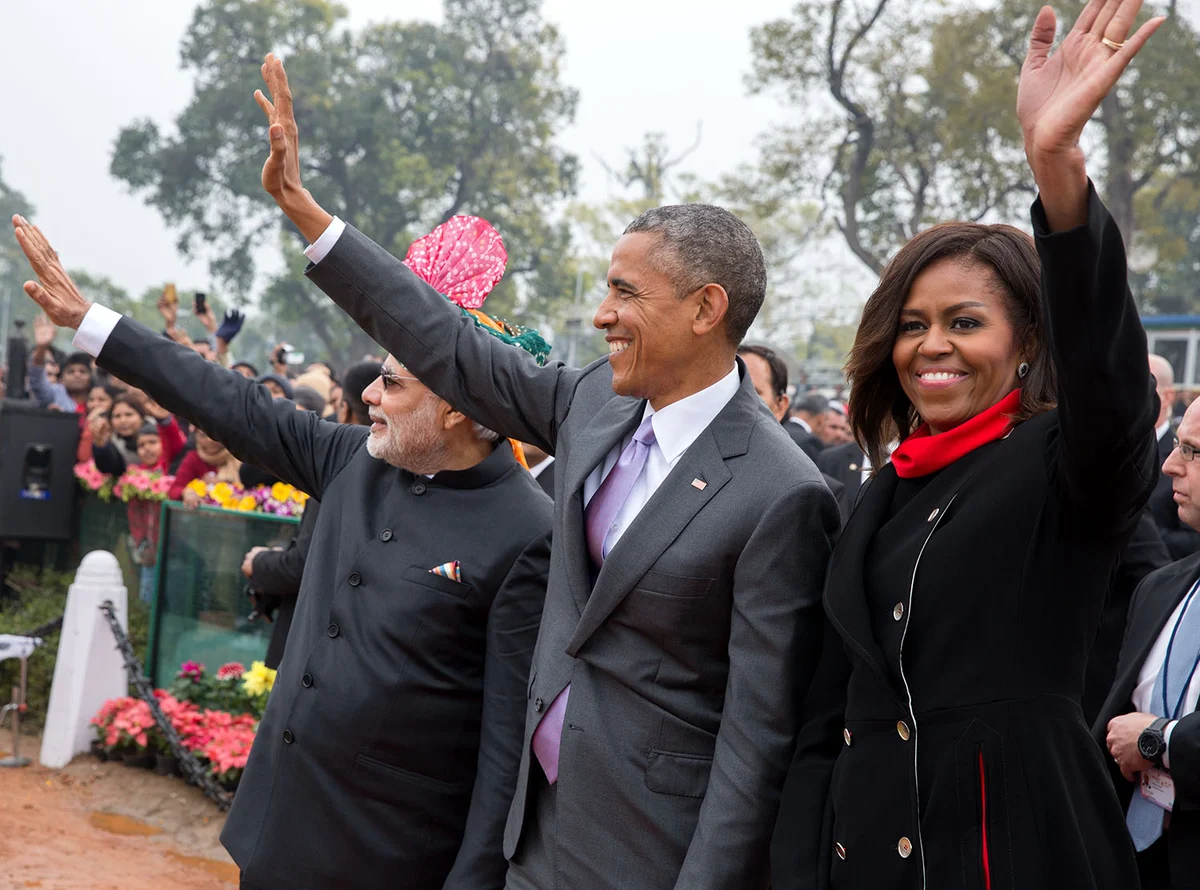
- Archival civilian-facing image from Republic Day 2015