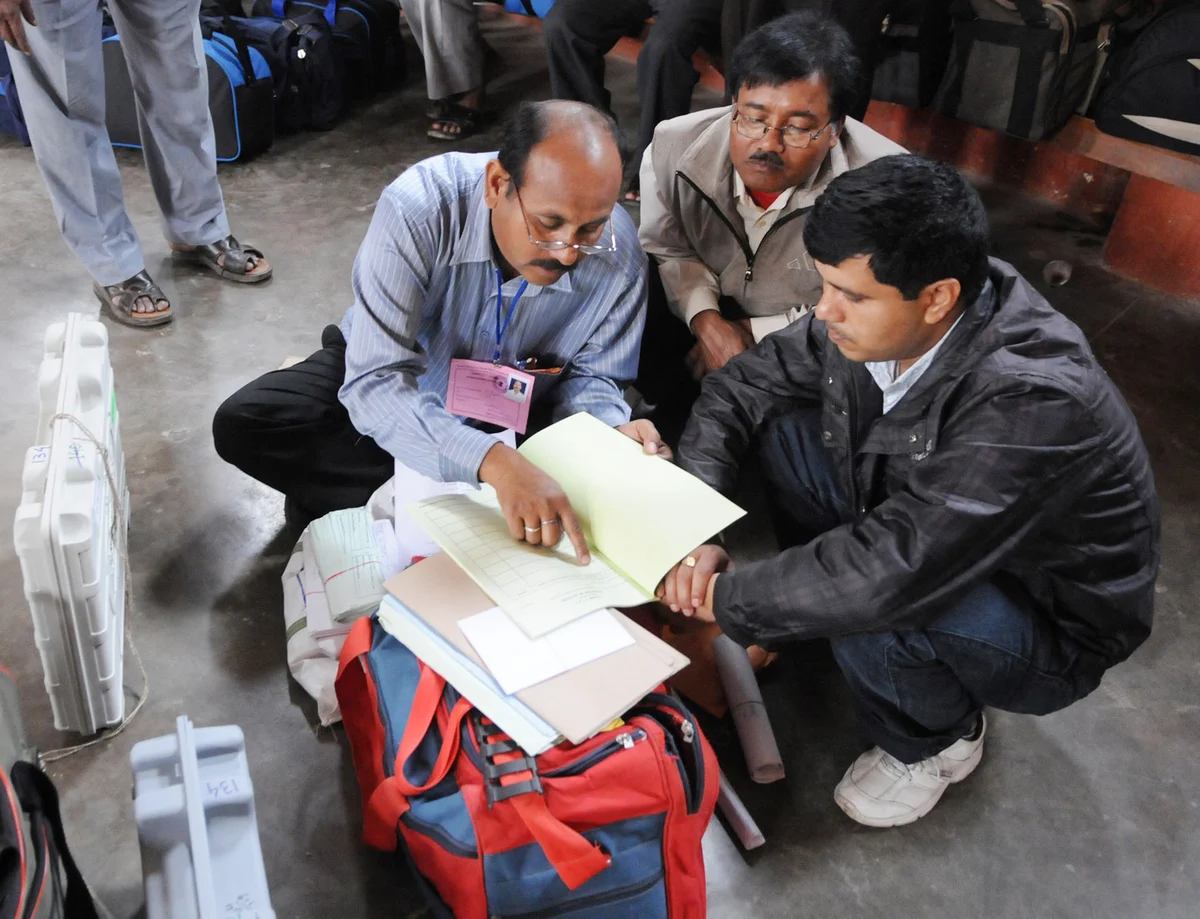
What SIR means
SIR means Special Intensive Revision of electoral rolls. The Election Commission of India issues orders defining which areas and stages the revision covers. Its signed 17 November 2026 order revised the timetable for seven jurisdictions, with final rolls scheduled for 22 December. Use the order for your state or territory and check the correct draft or final roll on the official voter portal.
An SIR order gives the abbreviation a specific administrative meaning. It identifies the jurisdictions covered and sets out a schedule with stages. A news headline may use the same three letters while leaving out the location or the cycle. Those details determine whether the headline is relevant to the roll you want to check.
People often encounter SIR while trying to answer two practical questions. The first is whether a revision applies where they are registered or want to check a roll. The second is whether a particular entry appears in the version of the roll published at that stage. The order answers the question about scope and timing. The published roll or an appropriately labelled official search helps answer the question about the entry.
The Commission also publishes materials for Special Summary Revision, abbreviated SSR. It treats SIR and SSR as different types of roll revision. If you have found a schedule headed Special Summary Revision, use it for the SSR it describes. When following up on an SIR announcement, match the full heading before relying on any dates or procedural instructions in the document.
Rule 25 of the Registration of Electors Rules distinguishes intensive preparation of the roll or relevant part afresh from summary revision of the existing roll and its amendments. The Representation of the People Act, 1950 authorises special revision and gives the Electoral Registration Officer functions for corrections and inclusion. Roll revision updates the voting register. Polling dates come from a separate election announcement.
- Election Commission of India via PIB, SIR Phase III announcement, 14 May 2026
- Election Commission of India, signed SIR phase order No. 23/2025-ERS (Vol. II), 14 May 2026
- India Code, Representation of the People Act 1950, sections 21–23
- India Code, Registration of Electors Rules 1960, rule 25
- Election Commission of India, signed Special Summary Revision order No. 23/2026-ERS, 15 October 2026
Check whether the order covers your area
Read the scope of the official order before reading its calendar. Start with the state or other jurisdiction named in the document, then read any more specific description of the area covered. Keep the cycle printed in the order alongside the place name. The same place can come up in coverage of different revisions, and the cycle tells you which schedule the document describes.
If you reached the document through a forwarded screenshot, look for the complete order before acting on a date. A crop can show a deadline while omitting the heading that establishes the revision type, or show a state name while omitting the part that defines its coverage. Check those details in the document itself. Use the schedule entries only after you can match the document to the roll you need.
A reader sees a forwarded message saying that an SIR draft is out and wants to check an entry in their home constituency. The underlying order identifies a different jurisdiction. It can establish the stage reached in the area it covers. To find out what is happening in the home constituency, the reader looks for an order whose coverage includes it and checks that order's cycle and schedule.
Use the area associated with the roll you want to inspect when you do this comparison. A person following news where they currently live may also be looking up an entry elsewhere. Matching the order to the roll in question keeps those two locations from getting mixed up.
The signed 17 November order applies to Andhra Pradesh, Haryana, Jharkhand, Maharashtra, Nagaland, Telangana and the National Capital Territory of Delhi. The ECI index posted the order on 19 November. This is a Phase III timetable for the specified process in those jurisdictions. Each earlier phase, later amendment or separate SSR programme needs to be read with its own coverage.
ASDD stands for absent, shifted, dead and duplicate in the state notice describing the ECI order. The November instruction sets an additional enumeration process for affected records. Being mentioned in a category or seeing a category label on the news does not establish an individual’s current eligibility or who will be included. Use the local official record or Electoral Registration Officer to verify the case.
| State or territory | ASDD forms distributed and collected | ASDD form disposal | Notice and disposal | Final roll | What the order says |
|---|---|---|---|---|---|
| Andhra Pradesh | 18–30 November 2026 | By 10 December 2026 | Through 15 December 2026 | 22 December 2026, scheduled | Dates in the signed 17 November order |
| Haryana | 18–30 November 2026 | By 10 December 2026 | Through 15 December 2026 | 22 December 2026, scheduled | Dates in the signed 17 November order |
| Jharkhand | 18–30 November 2026 | By 10 December 2026 | Through 15 December 2026 | 22 December 2026, scheduled | Dates in the signed 17 November order |
| Maharashtra | 18–30 November 2026 | By 10 December 2026 | Through 15 December 2026 | 22 December 2026, scheduled | Dates in the signed 17 November order |
| Nagaland | 18–30 November 2026 | By 10 December 2026 | Through 15 December 2026 | 22 December 2026, scheduled | Dates in the signed 17 November order |
| Telangana | 18–30 November 2026 | By 10 December 2026 | Through 15 December 2026 | 22 December 2026, scheduled | Dates in the signed 17 November order |
| National Capital Territory of Delhi | 18–30 November 2026 | By 10 December 2026 | Through 15 December 2026 | 22 December 2026, scheduled | Notice/disposal and final publication dates unchanged |
- Election Commission of India, signed SIR phase order No. 23/2025-ERS (Vol. II), 14 May 2026
- Election Commission of India signed order, 17 November 2026, ASDD enumeration and revised Phase III schedule
- Nagaland Directorate of Information and Public Relations, 20 November 2026 state update
- Election Commission of India, public announcements index checked 26 November 2026
Read the draft, claims and final-roll dates
Read the SIR schedule as a sequence of stages. Draft publication, the claims-and-objections period and final publication each serve a different purpose. A publication date tells you when a version of the roll is scheduled to appear. The claims-and-objections period identifies the window to consult when you need to raise an issue with the draft.
The draft is the version to inspect at the draft stage. If you spot a missing entry or a discrepancy, look up the claims-and-objections dates in the applicable schedule and check the official instructions for your situation. Read the start and end of the window in full. A prominent date in an announcement may refer to publication, while the dates relevant to raising an issue appear in another line of the schedule.
Once the final roll is published, check that version to see what it records. The draft remains useful if you want to compare what appeared at the two stages. For a comparison, keep the revision cycle and area constant and identify each document by its stage. A comparison using a draft from one cycle and a final roll from another leaves you with changes that could have occurred over a wider period.
A reader marks the draft publication date to check an entry and then notices a spelling discrepancy in the draft. They turn to the claims-and-objections window to find the relevant timing and consult the cycle's instructions about what to do. When the final version becomes available, they look up the entry again.
| Stage | Question it helps answer | What to check |
|---|---|---|
| Draft publication | When can I inspect the draft? | The publication notice and the draft for the covered area |
| Claims and objections | When can I raise an issue with the draft? | The opening and closing dates and the applicable official instructions |
| Final publication | When can I check what the final roll records? | The final publication notice and the matching roll |
For Maharashtra, the signed timeline gives 18–30 November for distribution and collection of the ASDD forms, disposal of those forms by 10 December, and notice and disposal through 15 December. It schedules final publication for 22 December. The 15 December date names a disposal stage in the signed order. Check the applicable filing instruction separately with your Electoral Registration Officer before relying on any date for a new claim.
The signed October Special Summary Revision order gives a different example. It schedules a draft on 12 November 2026, claims and objections from 12 November to 11 December, disposal by 28 December, and final publication on 4 January 2027, with 1 January 2027 as the qualifying date for that SSR. Kerala’s Chief Electoral Officer separately lists its SSR draft publication. Those dates are for that SSR programme and cannot replace the timetable in the seven-jurisdiction SIR order.
- Election Commission of India signed order, 17 November 2026, ASDD enumeration and revised Phase III schedule
- Nagaland Directorate of Information and Public Relations, 20 November 2026 state update
- Nagaland Directorate of Information and Public Relations, 23 November 2026 district circular account
- India Code, Registration of Electors Rules 1960, rule 25
- Election Commission of India, signed Special Summary Revision order No. 23/2026-ERS, 15 October 2026
- Chief Electoral Officer, Kerala, current SSR 2027 publications
Choose the right official search or download
The Election Commission of India's Voters' Services Portal provides voter-facing search and roll-download services. It also offers a link to search a previous SIR roll. Start by deciding which record you need. A lookup of an individual entry, a review of a published roll and a check of an earlier SIR roll are three different tasks, even if they all begin on the same portal.
If the question concerns a particular draft or final roll, look for a service or document that identifies the version. Compare the jurisdiction and any cycle or stage label on the result or download with the order you are using. When the search screen gives you too little information to identify the version, look for a labelled roll download or a publication notice for that stage. This gives you a way to tie the entry you find to the document you meant to inspect.
Use the previous SIR roll search when the question is historical. Example. A reader wants to see whether an entry appeared in an earlier SIR roll and also wants to check the outcome of a more recent revision. The earlier search addresses the first question. For the second, the reader checks the publication for the more recent cycle. An entry found in the earlier roll establishes what appeared in that earlier record.
Enter any details needed for a lookup directly in the official service. To keep track of a check for yourself, note the roll version, area and stage beside the result. Those labels matter if you return after another publication or if you compare an old download with a newly available one.
Use the ECI electoral search for a current name lookup. For a particular publication, open the official roll download for the correct state, constituency and stage. The ECINet portal also links a previous SIR search and offers a way to book a call with a Booth Level Officer. If one search result does not tell you which version it used, check the labelled roll PDF before drawing a conclusion about the record.
Follow up on a missing or different entry
A missing search result gives you a starting point for checking the record. Confirm that the service and location selections match the roll in question. Where the corresponding roll is available to download, inspect that version too. This is especially helpful if the search result provides little context about the edition or if the portal offers several ways to look up records.
If the published draft itself shows a discrepancy, describe the issue precisely before looking up the relevant instructions. A missing entry and an entry with a different spelling are different observations. Keep track of which version showed the issue. The claims-and-objections window belongs to the applicable draft process, so consult the schedule and instructions for that same area and cycle.
An entry appears when a reader searches a previous SIR roll, but they cannot locate it in a newly published draft. The reader checks that both records refer to the intended area, then verifies the draft using the matching published version where it is available. If the difference persists, the reader uses the current draft's notice to identify the relevant claims-and-objections window and the instructions that apply.
If the final roll has already appeared, identify the discrepancy in that version and look for the official instructions applicable at that point. The earlier schedule helps you establish which stage the issue arose in. A difference between published versions shows what each version records. Establishing the reason for a change or the status of a particular submission requires information about the individual case.
ECI gives 1950 for voter assistance and describes standard Form 6 for inclusion and Form 8 for changes in its general registration guidance. The Commission subsequently published separate SIR guidance for people omitted from the roll. For a current case, confirm the form, any required declaration and the filing stage with the officer responsible for your area. Use official services for any identifiers or supporting documents.
Verify a deadline or publication update
When a deadline matters, verify both the date and the event attached to it. Find the official order, confirm that it covers your jurisdiction and cycle, and locate the line for the stage you need. Then check for a subsequent official notice that explicitly refers to the same schedule. Read which stage the notice addresses and which area it covers before applying the update.
A schedule and a publication serve different purposes. The schedule gives you the dates to follow. To establish whether the relevant draft or final roll has appeared, look for the publication notice or the matching roll in the Commission's services. This distinction helps when a calendar entry has passed and the lookup you opened offers no clear indication of the version it is displaying.
A reader has saved a schedule and later sees a message claiming that a deadline has moved. They look for the official notice behind the message and compare its jurisdiction, cycle and stage with the saved schedule. If the notice changes a deadline for claims and objections, they use its stated coverage and wording to establish which window changed. They check the final publication date against the applicable official schedule and any notice addressing that stage.
If two official documents appear to give different dates, compare their issue details and read the wording around the dates. Look for an explicit amendment and check the scope of the change. If the documents leave the applicable deadline unclear, seek clarification through the contact channel identified in the relevant official notice and specify the jurisdiction, cycle and stage.
When is India’s next general election, and how is the PM chosen?
- Election Commission of India signed order, 17 November 2026, ASDD enumeration and revised Phase III schedule
- Nagaland Directorate of Information and Public Relations, 23 November 2026 district circular account
- Election Commission of India, public announcements index checked 26 November 2026
- Election Commission of India, signed Special Summary Revision order No. 23/2026-ERS, 15 October 2026
- Chief Electoral Officer, Kerala, current SSR 2027 publications
Sources
- Election Commission of India via PIB, SIR Phase III announcement, 14 May 2026
- Election Commission of India, signed SIR phase order No. 23/2025-ERS (Vol. II), 14 May 2026
- Election Commission of India signed order, 17 November 2026, ASDD enumeration and revised Phase III schedule
- Nagaland Directorate of Information and Public Relations, 20 November 2026 state update
- Nagaland Directorate of Information and Public Relations, 23 November 2026 district circular account
- Election Commission of India, public announcements index checked 26 November 2026
- India Code, Representation of the People Act 1950, sections 21–23
- India Code, Registration of Electors Rules 1960, rule 25
- Election Commission of India, signed Special Summary Revision order No. 23/2026-ERS, 15 October 2026
- Chief Electoral Officer, Kerala, current SSR 2027 publications
- Election Commission of India via PIB, decisions on roll revision, 26 September 2026
- Election Commission of India, Voters’ Service Portal and SIR 2026 tools
- Election Commission of India, voter registration help and telephone number
- Visual candidate — election officers consulting a voter list in Assam in 2011
