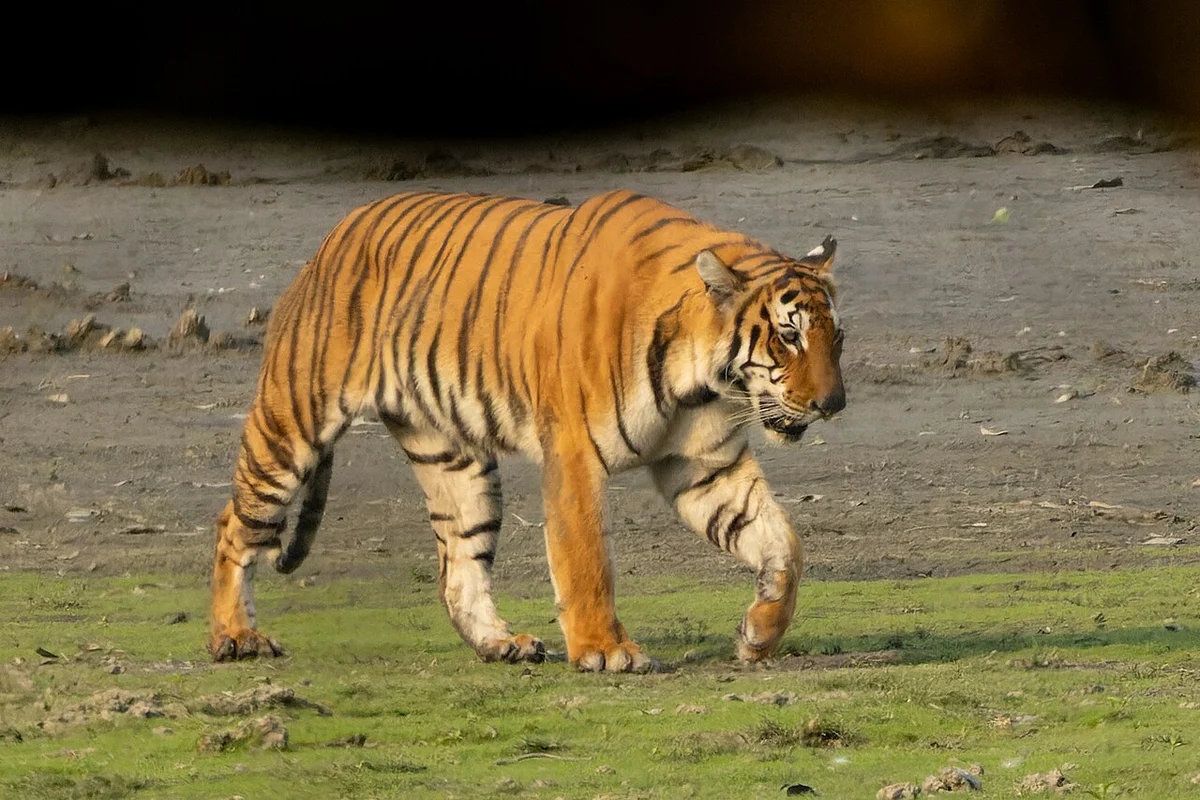
Where wild tigers live in India
Yes, wild tigers live in India, from the Himalayan foothills and forests of central and southern India to the Brahmaputra flood plains and the tidal mangroves of the Sundarbans. India’s latest completed national estimate put the population at 3,682 in the 2022 survey cycle, with an estimated range of 3,167–3,925.
The national survey groups tiger populations into five landscapes. Central India and the eastern Ghats had the largest published estimate, followed by the Western Ghats and the Shivalik–Gangetic landscape. The North Eastern Hills and Brahmaputra flood plains form another survey landscape, while the Sundarbans have their own entry. These names describe the geography of the survey and often span several states.
For places you can look up individually, start with Corbett in Uttarakhand, Kanha in Madhya Pradesh, Bandipur or Nagarahole in Karnataka, Kaziranga or Manas in Assam, and Sundarban Tiger Reserve in West Bengal. The National Tiger Conservation Authority, or NTCA, includes these in its notified reserve register and links to public booking pages where listed. Each destination has its own visitor arrangements.
If you are choosing a trip, first decide which habitat you want to visit and which part of India fits your itinerary. A forest reserve, a floodplain park and a tidal mangrove reserve can all answer the question of where tigers live. Each gives you a different journey and a different way to spend time in the landscape.
Read the habitat map by landscape
The five landscape totals below come from the published 2022 national table and add up to 3,682. Use the landscape names to get oriented at country scale, then look up individual reserves and their public entrances. Northern foothills, central and peninsular forests, northeastern floodplains and coastal mangroves give a clearer picture of tiger habitat than state labels alone.
| Survey landscape | Estimated tigers |
|---|---|
| Shivalik Hills and Gangetic Plains | 819 |
| Central Indian Highlands and Eastern Ghats | 1,439 |
| Western Ghats | 1,087 |
| North Eastern Hills and Brahmaputra Plains | 236 |
| Sundarbans | 101 |
A broad landscape label covers varied terrain. The Northeast entry, for instance, includes both hills and flood plains. At Manas, wooded Himalayan foothill slopes adjoin alluvial grasslands and tropical forest. Kaziranga offers a different setting within the northeast, in the Brahmaputra flood plains. On the coast, the Sundarbans show how far tiger habitat extends beyond the forest settings people often picture.
Read a landscape total at the same scale as its label. The 1,439 for Central India and the eastern Ghats applies across a large survey area. It cannot tell you how tigers are distributed around a particular park entrance. Likewise, the printed Northeast aggregate is the figure to use for that landscape. Adding the individual state rows in the annex produces a different total.
On a map, look for a year on any population layer and a label explaining what each line or marker represents. A reserve marker helps locate a destination. A boundary from an official record describes a designated area. Continuous occupation, individual animal locations and the part of a reserve reached on a public tour each require different evidence.
What changed between national tiger estimates
The comparable national estimates rose from 2,226 in 2014 to 2,967 in 2018 and 3,682 in 2022. The published ranges were 1,945–2,491 for 2014, 2,603–3,346 for 2018 and 3,167–3,925 for 2022. Those figures describe the national trend across three rounds. Changes at a particular reserve need evidence from that reserve and an understanding of which area each survey covered.
- 2006
- 1411 tigers
- 2010
- 1706 tigers
- 2014
- 2226 tigers
- 2018
- 2967 tigers
- 2022
- 3682 tigers
Two figures circulate for the latest completed cycle because the government reported an original minimum and a fuller population estimate. The minimum was 3,167. The fuller estimate was 3,682, and its published range starts at 3,167. Both figures refer to the 2022 cycle, whose fuller results were published in 2023. Use the fuller estimate when comparing with the equivalent 2014 and 2018 figures.
For a newer headline, check the environment ministry or NTCA release for a survey year, a national result and a published report or annex. The ministry’s 2025 review reported that the sixth estimation cycle had started. The 2022 cycle remains the latest completed result verified for this guide. A progress announcement gives you the status of the next round while the last completed report supplies the population figure.
Local monitoring answers a narrower question. A later count from Kaziranga covers named wildlife divisions and a particular survey. It sits alongside the national series on its own terms. Adding it to the national total would mix coverage and years.
Tiger reserves, national parks and visitor areas
The NTCA lists 58 notified tiger reserves across 18 tiger range states. Madhav in Madhya Pradesh appears as the 58th entry, with a 2025 listing. That register answers whether a place has formal tiger reserve status. To locate a destination that appears on a tourism directory, search the register by name and state, then follow the visitor information for the place you intend to enter.
A national park and a tiger reserve can share a familiar name while covering different areas. Reserve records can also distinguish core and buffer areas. If you are comparing two figures in square kilometres, first see whether each figure is for the entire reserve, its core, a national park or another designated area. Even within one destination, a heritage property may have its own boundary.
A public visitor circuit is a further layer. The practical details are the entrance or boarding point, the permitted tour area and the booking for your date. A register entry alone grants no access to a core area. Where an official booking page offers several entrances, use the one on the actual reservation to plan your journey and accommodation.
For a Rajasthan itinerary, the state tourism directory lists Ranthambore, Sariska and Keoladeo among its wildlife destinations. Use it to find places by name and consult the NTCA register for tiger reserve status. A broad parks directory serves travellers with many interests, so appearing next to a tiger destination carries little information about the wildlife at another listing.
Kaziranga for Brahmaputra floodplain wildlife
Kaziranga in Assam is a World Heritage national park where tigers share habitat with one-horned rhinos, elephants, wild buffalo and sloth bears. That breadth is a reason to choose it for a wildlife trip whose value extends beyond one species. A visit can make sense for someone who wants to see floodplain habitat even if a tiger never appears on the outing.
The NTCA’s July 2025 publication reported 148 individually identified adult tigers from Kaziranga’s 2024 Phase IV monitoring. The work covered the Eastern Assam, Nagaon and Biswanath Wildlife Divisions. Keep those divisions and the survey year with the figure. The monitoring footprint is wider than the view from any single tourist range, and the figure gives no odds of seeing a tiger on a drive.
Assam Forest identifies Kohora as Central and Bagori as Western. These are range names you may encounter while arranging a visit. If a hotel lists Kohora as its nearest entrance and your booking says Western, plan around Bagori for that outing. Matching the name to the reservation matters more for the journey than the distance to a general Kaziranga pin.
The Kaziranga booking site linked by NTCA returned an error during verification. If it is unavailable when you plan, confirm the opening of your chosen range, where to report, the departure time and the current total with Assam Forest or the reserve before committing to a transfer. The error leaves date-specific access and prices unresolved.
Manas for a foothill visit by land
Manas is an Assam option for seeing the meeting of wooded Himalayan foothills, alluvial grassland and tropical forest. Bansbari is the main central public tourism gateway. The park’s range material also names Bhuyanpara and Panbari. Use the gateway on your confirmed booking when working out where to stay or how early to leave, especially if your accommodation advertises access to Manas generally.
The operator’s published standard entry windows are 7–11 am and 1:30–3 pm, with exit before 5 pm. Its FAQ describes November through April as the preferred period. Use that information to sketch an itinerary, then confirm a dated booking and check local notices. The entry window covers a span of hours, while your reporting time depends on the arrangement you actually book.
The published standard adult admission is ₹100 for an Indian visitor and ₹600 for a foreign visitor. For two adults, one in each listed category, that comes to ₹700 in admission. The guide and other product charges are separate. If you are comparing that figure with a quote for a land-vehicle outing, ask for the total and what it includes before using the two prices to choose.
Manas Wildlife Sanctuary’s World Heritage description helps explain the landscape. The park and reserve visitor pages answer questions about the public circuit. Use the heritage description for the habitat and the operator’s current instructions for entry, timing and charges.
Sundarban Tiger Reserve for a boat visit
In West Bengal, public excursions in Sundarban Tiger Reserve use registered boats through a tidal mangrove landscape. The reserve names Canning as a rail approach and identifies Godkhali and Dhamakhali as boarding points selected by operators. Build the transfer around the boarding point in your booking. An arrival in Canning still leaves the onward trip to meet the boat.
For example, if a boat operator confirms Dhamakhali and a transfer quote says Godkhali, resolve the mismatch before paying for the transfer. Ask the boat operator for the named boarding point and reporting time for the date you are travelling. This gives the transfer provider a specific destination and allows you to check whether the connection works with your arrival.
The reserve’s travel and booking pages give conflicting guidance on whether foreign nationals need a separate special permit. For a traveller using a US or other foreign passport, confirm the applicable entry terms with the field director or a registered operator and give the intended travel date. Ask which documents the operator needs and which entry charges are included. A current tariff, ticket availability and weather status remain unverified.
Reserve rules prohibit drones and swimming and allow visitors to disembark only where tourism is open. If shore visits matter to your group, check which permitted stops the operator includes. The boat journey is the way to experience the mangrove habitat, and the 2022 landscape estimate of 101 supplies population context without forecasting what you will see from the water.
Choose a reserve and verify the details that affect your trip
Start with how much of a trip you can spend at a wildlife destination. Corbett, Kanha, Bandipur and Nagarahole are examples to look up when northern, central or southern India already anchors your route. In Assam, Kaziranga suits an interest in rhinos and floodplain wildlife, while Manas gives you a foothill setting. Choose the Sundarbans when the tidal waterways themselves are part of what you want to experience.
| Reserve | State | Public visitor example | What the reported figure means |
|---|---|---|---|
| Kaziranga | Assam | Kohora and Bagori are different public visitor ranges. | 148 individually identified adults in the 2024 local survey, no verified current booking tariff. |
| Manas | Assam | Public travel uses land-based visitor access. | Operator lists standard admission at ₹100 Indian and ₹600 foreign per adult, excluding separate charges. |
| Sundarban Tiger Reserve | West Bengal | Public excursions use registered boats. | Confirm current documentation because the reserve’s public pages differ on foreign-national permits. |
For a short visit, the actual reporting place can matter more than the reserve’s position on a country map. Check whether you can reach your gate or boat boarding point on time and whether you have a workable return connection. The park name is enough to begin comparing destinations. It is too broad for a driver or boat operator arranging a pickup.
Use the NTCA register to verify a reserve name and start looking for its booking page. For an actual trip, use the reserve or authorised operator’s dated confirmation for the matters below. Check a local notice close to departure if opening or access conditions can change.
- Confirm the date, reporting time and exact gate, range or boarding point.
- Check that the booked circuit is open and ask where any access changes will be posted.
- Get the full party price, including any separately charged guide, vehicle or boat.
- Confirm any nationality-specific document or permit requirements for your party.
A confirmed booking tells you where and when you can enter. For wildlife expectations, look at the habitat and the animals documented there. A national estimate, reserve listing or local monitoring report cannot tell you whether a tiger will be visible along the particular stretch you visit.
- Ministry of Culture | Kaziranga National Park
- MoEFCC — published tiger population landscape annex
- National Tiger Conservation Authority — notified tiger reserves and booking links
- NTCA Stripes — Kaziranga 2024 local monitoring
- Manas National Park and Tiger Reserve — visitor FAQ and ranges
- Sundarban Tiger Reserve — public water-based access
- Sundarban Tiger Reserve’s public booking instructions
Sources
- Press Information Bureau | Asiatic lions and national animal
- Ministry of Culture | Kaziranga National Park
- Rajasthan Tourism | Parks and wildlife
- MoEFCC Parliament reply — All India Tiger Estimation 2022 and prior cycles
- MoEFCC — published tiger population landscape annex
- National Tiger Conservation Authority — notified tiger reserves and booking links
- NTCA Stripes — Kaziranga 2024 local monitoring
- Manas National Park and Tiger Reserve — visitor FAQ and ranges
- Sundarban Tiger Reserve — public water-based access
- Wikimedia Commons — Bengal tiger by Tisha Mukherjee 81.jpg
- NTCA Status of Tigers 2022 technical report
- Environment Ministry 2025–26 Annual Report, national tiger series
- Assam Forest Department’s public Kaziranga range directions
- Sundarban Tiger Reserve’s public booking instructions
