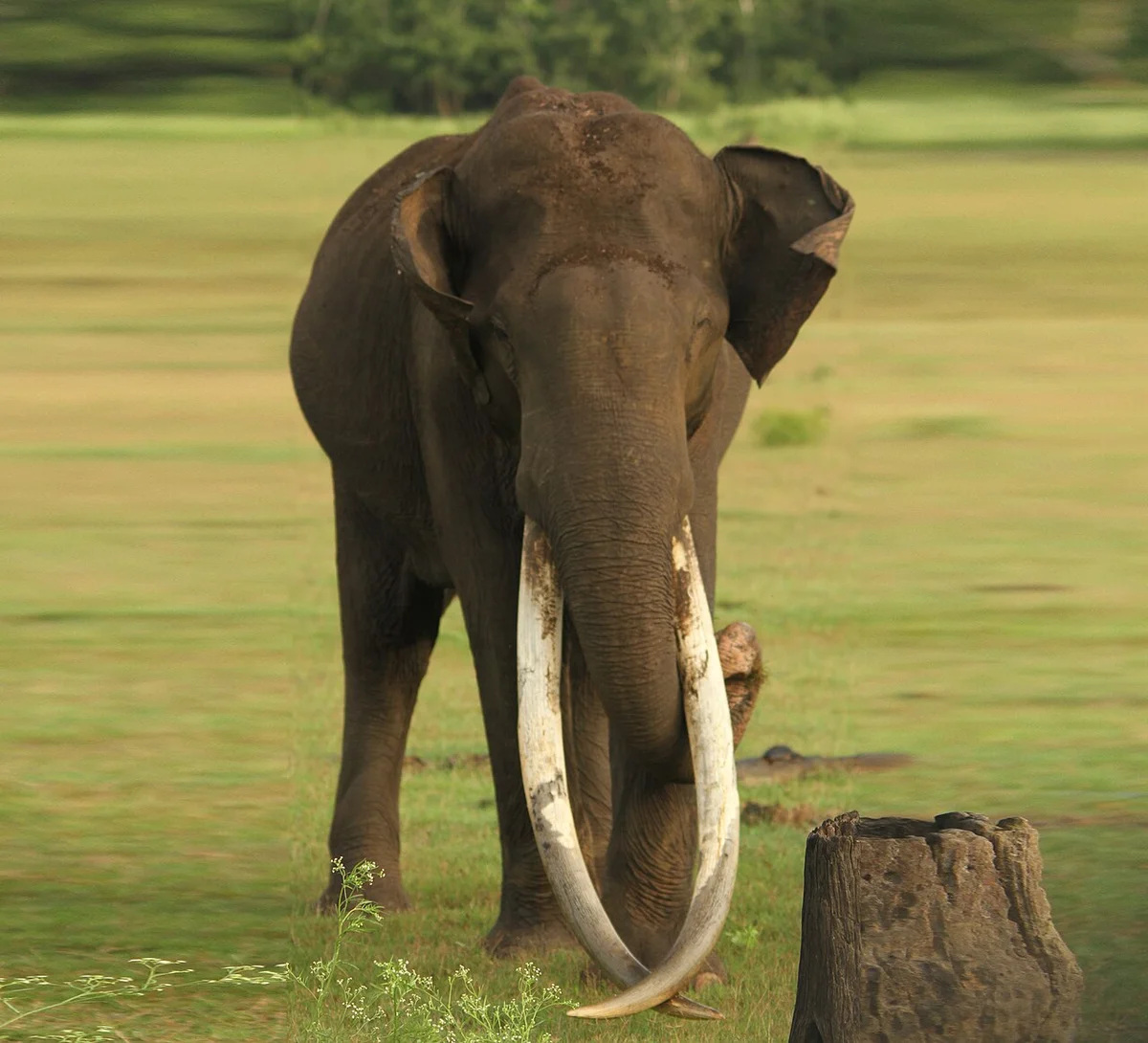
India’s four wild elephant landscapes
Wild Asian elephants in India live across four broad landscapes in the national assessment: the Western Ghats, the North Eastern Hills and Brahmaputra Flood Plains, the Shivalik Hills and Gangetic Plains, and Central India and Eastern Ghats. The 2021–25 assessment estimated 22,446 wild elephants nationwide, with the largest populations in the Western Ghats and the North Eastern Hills and Brahmaputra Flood Plains.
The four landscape estimates put the distribution in perspective. The Western Ghats accounted for just over half of the national point estimate. Together with the northeastern landscape, they accounted for roughly 82%. The Shivalik Hills and Gangetic Plains and the Central India and Eastern Ghats landscapes each had point estimates of around two thousand. These proportions give a national view of where elephant populations were concentrated during the study.
| Assessment landscape | Estimated elephants | 95% confidence interval |
|---|---|---|
| Western Ghats | 11,934 | 9,857–14,012 |
| North Eastern Hills and Brahmaputra Flood Plains | 6,559 | 5,444–7,680 |
| Shivalik Hills and Gangetic Plains | 2,062 | 1,700–2,425 |
| Central India and Eastern Ghats | 1,891 | 1,254–2,528 |
| India | 22,446 | 18,255–26,645 |
Project Elephant and the Wildlife Institute of India released the assessment on 14 October 2025. Its subject is the wild Asian elephant, Elephas maximus. The species is native to other countries as well, and the International Union for Conservation of Nature classified it as Endangered in its 2020 global assessment. India’s population estimate and the global conservation classification answer questions at different scales.
On a habitat map, the four names identify broad areas used to organise the assessment. Habitat within a landscape varies, and elephants use parts of it at different times. Treat a landscape label as regional context. The named parks in this guide provide a separate scale for planning, down to the protected area where an official visitor programme operates.
- Western Ghats
- 11934 estimated elephants
- North Eastern Hills and Brahmaputra Flood Plains
- 6559 estimated elephants
- Shivalik Hills and Gangetic Plains
- 2062 estimated elephants
- Central India and Eastern Ghats
- 1891 estimated elephants
How elephant numbers vary by state
Karnataka had a point estimate of 6,013 wild elephants in the 2021–25 assessment, with a 95% confidence interval of 4,792–7,235. The estimate was 3,136 for Tamil Nadu and 2,785 for Kerala. Assam’s estimate of 4,159, with an interval of 3,395–4,924, gives a sense of the scale of the northeastern population. Each figure covers a state row in the report, so it includes a much broader area than an individual park.
The report estimated 1,792 wild elephants in Uttarakhand, 912 in Odisha and 451 in Chhattisgarh. Those figures help place the northern and central-eastern populations alongside the larger southern and northeastern populations. When checking Uttarakhand, use the interval of 1,502–2,083 shown in both Table E.1 and Table 4.1. An executive-summary sentence gives a different lower bound, so the tables are the better reference for that row.
If you compare Tamil Nadu with Kerala, the point estimates put Tamil Nadu ahead by 351. The intervals run from 2,688 to 3,585 for Tamil Nadu and from 2,378 to 3,193 for Kerala. The published figures therefore support reporting the order of the point estimates. A firmer claim about the size of the difference would require an analysis designed to compare the two state estimates.
Some places need particular care when reading across the state and landscape tables. West Bengal appears under two assessment landscapes. A result from either landscape applies to the part of the state covered by that entry. The Central India and Eastern Ghats table also includes Maharashtra, with a western portion included in the grouping. Check the table heading and row together before transferring figures into a state chart or interpreting a map label.
| State | Estimated wild elephants | 95% interval lower bound | 95% interval upper bound |
|---|---|---|---|
| Karnataka | 6,013 | 4,792 | 7,235 |
| Assam | 4,159 | 3,395 | 4,924 |
| Tamil Nadu | 3,136 | 2,688 | 3,585 |
| Kerala | 2,785 | 2,378 | 3,193 |
| Uttarakhand | 1,792 | 1,502 | 2,083 |
| Odisha | 912 | 579 | 1,246 |
| Chhattisgarh | 451 | 297 | 606 |
What the national estimate measures
The researchers used genetic records from dung to identify individual elephants without handling the animals. A genetic profile can show that samples collected on different occasions came from the same elephant. Individual identities and repeat detections feed a spatial capture–recapture model, which estimates the population including animals the survey did not individually detect. At broader scales, the study combined ground survey information with remotely sensed habitat data.
One large number in the executive summary is easy to misread. The area-search genetic mark–recapture component collected 21,056 samples and identified 4,065 unique elephants after processing a subset. Those figures describe the samples collected and the individuals identified in that component. The national figure of 22,446 comes from the population estimation. Multiple samples can come from one animal, and some animals leave no sample that the team collects and identifies.
Read 22,446 alongside its published 95% confidence interval of 18,255–26,645. The four landscape point estimates add up to the national point estimate. For the uncertainty around the national result, use the interval the report publishes for India. Adding the lowest values from each landscape and repeating the process with the highest values produces a different calculation.
The figure of 29,964 that appears in some government material refers to 2017. A parliamentary reply on 24 July 2025 still cited it because the newer assessment was released in October. Project Elephant’s steering committee treats the 2021–25 study as a new baseline because the method changed. Keep 2017 as a dated historical figure. A percentage decline calculated from the two totals would combine the effects of different estimation methods with any real population change.
Habitat, reserves and corridors on a map
The environment ministry’s August 2026 World Elephant Day note reported 33 elephant reserves and 150 identified corridors alongside the national population estimate. Each figure describes a different feature of conservation. Elephant reserves are conservation areas, corridors are connections identified for movement, and the population estimate describes the animals across the assessment landscapes. The corridor figure belongs to the published inventory and is best read with its date.
Connections matter because elephants move through landscapes that also contain roads, power infrastructure and places where people live and work. Project Elephant supports habitat connectivity and efforts to reduce conflict in these shared areas. Elephants also disperse seeds and modify habitat, so maintaining room for movement supports ecological processes across the areas they use.
For a trip, switch from the broad habitat view to the official information for the protected area you want to visit. A national park, a tiger reserve, an elephant reserve and an assessment landscape can describe overlapping geography with different boundaries and purposes. A park can offer a bookable session within a much larger area of elephant habitat. The visitor programme specifies the parts of the protected area and the activities available through that booking.
Suppose an Assam itinerary includes Kaziranga and a map also marks an elephant corridor nearby. Keep Kaziranga’s official safari as the viewing option and use the corridor label to understand connectivity at the landscape scale. For visitor access, the National Tiger Conservation Authority directory is a starting point for listed reserves. Reserve and government booking pages give the current public options for a specific destination.
Official wildlife viewing in Assam, Kerala and Karnataka
Kaziranga National Park is an option for a managed safari in Assam. The World Heritage site protects northeastern floodplain habitat and supports Asian elephants alongside one-horned rhinos, tigers, wild buffalo and sloth bears. The Assam government’s Nagaon district site points visitors to the authorised public safari booking. Use that referral to find current session choices for your date and read the instructions attached to the session you select.
Periyar Tiger Reserve at Thekkady in Kerala offers wildlife boating through its official operator. This gives visitors a chance to look for wildlife from the boat, with sightings dependent on what is visible during the session. The operator asks visitors to bring their booking ID and describes a reserve bus transfer from the designated parking area. Check the current parking and transfer instructions alongside the boating session before arranging the rest of the day.
Bandipur in Karnataka also appears in the National Tiger Conservation Authority’s tiger reserve directory, which provides a public entry link. Use the link for the reserve’s own current visitor information. Karnataka’s high state estimate explains its prominence in the national distribution, but the number covers a broader area than Bandipur. The directory is useful here because it takes the reader from a state-level habitat question to an official point of entry for one reserve.
If your itinerary already puts you in Thekkady for a single afternoon, check whether a boating session and its required transfer fit the time you have. An available session that fits your travel plans gives you a concrete option. Choosing between Thekkady and Kaziranga by comparing Kerala’s and Assam’s population estimates would tell you little about what you might see from a particular boat or safari. All of these are wildlife outings with opportunistic sightings.
- Kaziranga — follow the Nagaon district government’s safari referral and check the bookable session for your date.
- Periyar — check boating availability, the designated parking location, reserve bus instructions and booking ID requirements.
- Bandipur — start from the National Tiger Conservation Authority’s directory and confirm the current entry arrangements with the reserve.
| State | Managed site | Official visitor option |
|---|---|---|
| Assam | Kaziranga National Park | Government-listed safari programmes |
| Kerala | Periyar Tiger Reserve | Reserve operator’s guided boating and booking information |
| Karnataka | Bandipur | Karnataka public-sector lodge’s managed safari option |
How to behave around wild elephants
Follow the reserve’s instructions and stay with your guide. Keep your distance from elephants and give the guide room to manage the encounter. Avoid feeding, approaching, crowding or chasing an animal. If an elephant comes into view while another group is already watching, follow staff directions on where to wait. Report an immediate concern to reserve staff and let them handle the response.
The advice also matters beyond the gate. Elephant habitat can extend into areas that people use every day, and forest staff and communities have roles in managing encounters there. Official conflict mitigation includes early alerts for communities, rapid response by trained forest officials, assistance to affected people, and efforts to reduce risk around power and transport infrastructure. A visitor’s role is to heed local guidance and pass concerns to the officials responsible for the area.
If you encounter an older report of human–elephant conflict while researching a destination, check which years and state it covers. The Wildlife Institute of India’s published state studies use different reporting windows. The Tamil Nadu study covers 2010–2025, while studies for Odisha and Karnataka cover 2000–2025. These reports help explain the long-term challenges of sharing habitat. For conditions affecting a visit on a particular date, look for current instructions from the reserve or local forest authorities.
Which details to check before booking
Use the official booking page for the date you intend to visit. Check whether the session is available, whether a temporary closure applies, and which entry or ticket requirements are listed. Read where the operator expects you to report. A booking’s meeting point can be different from the place where the wildlife activity starts, as Periyar’s parking and bus arrangements illustrate.
If you are arranging travel from outside India, keep the reserve name and the town or district in your notes. Periyar and Thekkady appear together in the boating information, while the Nagaon district government is a referral source for Kaziranga. Use the activity operator’s meeting instructions when making onward transport plans. Check the documents requested for your booking and keep the confirmation details available for the visit.
For a population figure, check the Wildlife Institute of India’s assessment release and the table in the report. Confirm the survey period, the geographic unit and the interval that belongs to the figure. For reserve and corridor totals, check the date of the ministry’s inventory or public note. For a session, use the operator’s current listing. Each source has a different update cycle, so the date that matters depends on whether you are checking a number, a map or a booking.
- Wildlife Institute of India official SAIEE 2021–25 release
- WII primary elephant report, Table E.1 and chapters 1–5
- Press Information Bureau 12 August 2026 World Elephant Day note
- National Tiger Conservation Authority reserve and public booking directory
- Periyar Tiger Reserve official boating operator
- Government of Assam public safari booking referral
Sources
- UNESCO | Kaziranga National Park
- Ministry of Culture | Kaziranga National Park
- Wildlife Institute of India official SAIEE 2021–25 release
- WII primary elephant report, Table E.1 and chapters 1–5
- Project Elephant 22nd steering committee comparability decision
- July 2025 government parliamentary reply with 2017 historical figure
- Press Information Bureau 12 August 2026 World Elephant Day note
- IUCN official global Red List assessment for Elephas maximus
- MoEFCC human–elephant conflict mitigation guidance
- WII Project Elephant 2026 state conflict reports
- National Tiger Conservation Authority reserve and public booking directory
- Periyar Tiger Reserve official boating operator
- Government of Assam public safari booking referral
- Existing rights-checked archive elephant photograph
