Start with the triangle and one additional region
For a first Odisha trip, the most straightforward loop is Bhubaneswar, Puri and Konark. It takes in the capital’s temples, caves and museums, Puri’s living religious quarter and beach, and the UNESCO Sun Temple at Konark. Allow three usable days for that core. With five, add a named gateway to Chilika. With seven or more, consider a separate forest or southern block after verifying its drive, lodging and access.
Odisha Tourism calls Bhubaneswar, Puri and Konark its eastern Golden Triangle. This differs geographically from India’s Delhi–Agra–Jaipur circuit of the same nickname. Use the three city names when searching for a tour or arranging a car. The third day can combine Konark with a coastal return if the site, daylight and onward journey fit.
The itinerary below treats the region’s visits as independent blocks. A museum and a monument can have different closing days. A lagoon outing uses a particular launch point, while forest parks require the relevant route or vehicle permission. Choose the part of the state you most want to see before adding a stop that turns a small loop into a long transfer.
| Usable time | Where to base the trip | Anchor visit or decision |
|---|---|---|
| 3 days | Bhubaneswar and Puri | Bhubaneswar culture, Puri temple quarter and the ASI site at Konark. |
| 5 days | Bhubaneswar, Puri and a Chilika gateway | Choose Satapada from Puri or Mangalajodi for a northern shore birding trip. |
| 7 days | Three-stop circuit plus one separate region | Choose north-coast Bhitarkanika, inland Similipal or a southern coast and hills block. |
| Forest-led trip | Base determined by the forest route | Confirm approved entry, permit, weather and return before booking. |
Bhubaneswar and the first day
Biju Patnaik International Airport is in Bhubaneswar and East Coast Railway labels the city station BBS. Puri’s train station is PUI. Keep the airport and station names distinct when arranging onward travel. If you fly late, staying in Bhubaneswar makes it easier to start the museum or caves after a night’s rest. If a direct train arrives in Puri during the day, run the triangle in the other direction and visit Bhubaneswar toward the end.
For a Bhubaneswar heritage day, choose one group of stops around temples or one museum and a separate cave visit. Odisha Tourism’s State Museum guide gives 10:00–17:00 with Monday and state public holiday closure. Its Udayagiri and Khandagiri Caves page gives 08:00–17:00 and an ASI admission charge. The rock-cut sites sit on twin hills, so allow for access needs between the roadway and the features you want to visit.
The capital’s temple circuit has a different schedule and visitor rules from museum sites. Verify the specific venue instead of transferring one temple’s rules to another one. If temple architecture is the priority, use the state tourism’s list to select Lingaraj, Mukteswar or Rajarani according to your interests and available access. If you visit the caves, take time to see the sculpted facades and site interpretation instead of using both hills as quick photo stops.
Puri and the road to Konark
Use Puri for the temple quarter and evening beach, or stay there to shorten the onward drive to Satapada. The state’s Jagannath Temple guide publishes 05:00–23:00, changing with rituals, and identifies a separate eligibility rule for entry. The managed Golden Beach lists ₹20 and 05:30–20:30. A general seafront walk, indoor temple visit and boat day each have different conditions and can be rearranged independently.
The state Golden Triangle tour illustrates a circuit including Puri and Konark, with nearby stops such as Chandrabhaga Beach or craft sites on some departures. If you drive, treat those additions as optional. Chandrabhaga and the archaeological site are separate stops. Check current road conditions, the ASI ticket window and the time you need to return before adding a beach or museum to a late afternoon visit.
At Konark, the Archaeological Survey of India publishes sunrise-to-sunset hours, free entry for children below 15 and dated-reference pricing by visitor class and payment channel. It lists ₹40 cash or ₹35 online for its published eligible category and ₹600 cash or ₹550 online for other foreign visitors. Confirm the current checkout amount and eligibility for your category. The archaeological museum has its own hours and admission arrangements.
What to look for at the Sun Temple
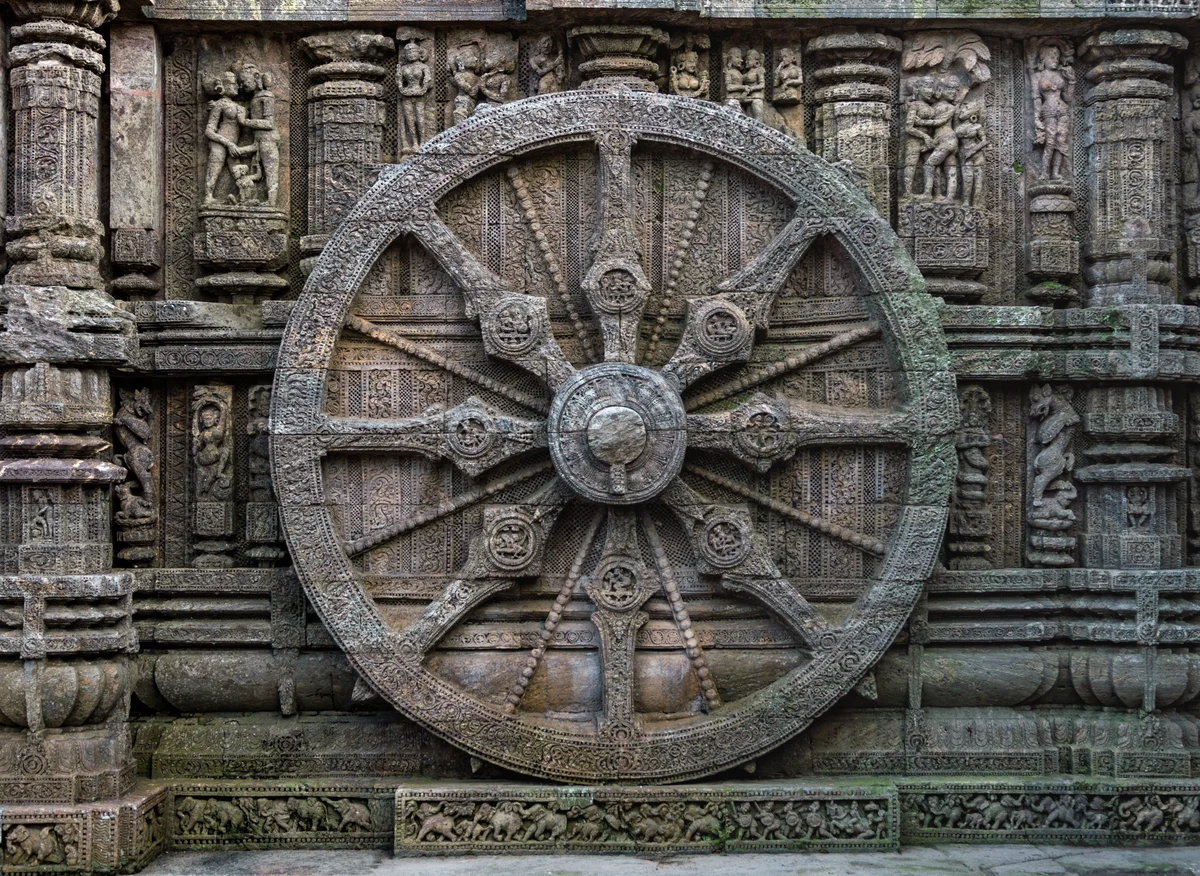
UNESCO dates the Sun Temple to the 13th-century kingdom of Narasimha Deva I and lists the property as inscribed in 1984. Its architecture represents Surya’s chariot with 24 carved wheels. The detailed statement identifies the wheels on the north and south sides at about three metres in diameter. Use the monument’s plan and the visible reliefs to appreciate the structure, since the surviving buildings and the original design differ.
The pyramidal jagamohana, or audience hall, is prominent in the complex. UNESCO distinguishes it from the principal sanctuary and from the dance hall platform. The ASI also describes smaller remains inside the enclosure. If you visit as a pair of architectural sites, note how the open-air Konark monument differs in use and walking route from the living temple complex in Puri.
Set aside a daylight visit for the Sun Temple rather than timing it by a nearby beach activity. Shorter winter days and queues affect usable time even when the official reference says sunrise to sunset. Photography with a group is easiest when everyone knows where to meet inside the public route. If you want an interpretation service or to visit the museum as well, confirm their current access separately.
Odisha Tourism’s programme lists Konark’s light-and-sound show separately under the name Arunodya. Its published sessions are 19:30 and 20:20 from March to November and 18:30 and 19:20 from December to February, with an indicated duration of roughly 40 to 45 minutes. Check the date, language, ticket and ride back. A daylight ticket to the archaeological site serves a different visit from an evening show reservation.
Pick one Chilika gateway for your first visit
Satapada, on the Puri district side of Chilika, is associated with Irrawaddy dolphin habitat and access to the lagoon’s sea-mouth landscape. Odisha Tourism lists 06:00–18:00 at the destination, with separate boat charges. A particular vessel or route needs the operator’s own departure and price. Allow enough time for the return to Puri even if your boat route is shortened.
Mangalajodi is a separate northern-side visit via Tangi. Odisha Tourism describes community-based conservation and traditional country boats in the shallows, with November to February as the preferred birding period. It lists 06:00–18:00 and no general entry fee while boating costs apply. Check the named meeting point and local departure, since a map result for Chilika can point to a different shore.
The two outings serve different interests. Choose Satapada for the coastal lagoon and potential dolphin viewing. Choose Mangalajodi for wetland birding and a quieter boat route, especially in the season the operator recommends. Neither guarantees wildlife. A reasonable five-day plan adds one of them alongside the core triangle and uses the remaining half day for a craft stop or a weather buffer.
Add a northern forest or a southern route
Bhitarkanika is a northern coastal mangrove destination. It should be planned as its own journey from a named base rather than tacked onto Konark. Use the forest authority and the operator to check boating, the entry point, tides or conditions that affect the selected tour. The list of national parks helps identify the designation and source area, while the visitor operator settles which gates and routes can be used.
Similipal is an inland protected landscape in Mayurbhanj. Odisha Tourism describes Jashipur as an access point and gives park information subject to forest rules. The national park’s final April 2025 notification concerns 845.70 square kilometres, while the wider tiger reserve is a separate area. If a property says it is near Similipal, verify which entry the booking uses and what time the gate or approved vehicle requires.
For a southern trip, Odisha Tourism’s longer route examples include Gopalpur and Daringbadi. A coastal stay and an inland hill outing make different driving demands and are best planned as separate blocks. If beach time and the core three stops already fill your week, use an extra day for one side of Chilika or for Raghurajpur before adding a long loop.
Odisha Tourism gives 08:00–17:00 as the usual Bhitarkanika window and lists a seasonal closure from 1 May through 31 July. The forestry authority’s current notice and route conditions govern the booked outing. EcoTour Odisha identifies Gupti and Khola as boat approaches to the Dangamal area and also describes a road approach via Rajnagar and Khola Gate, subject to the trip’s arrangements. Give your driver the facility name and actual check-in instructions.
- Odisha Tourism, eastern Golden Triangle and regional orientation
- Odisha Tourism, longer coastal and southern circuit
- Odisha Tourism, Similipal and forest access scope
- Odisha government, 24 April 2025 final Similipal declaration announcement
- Odisha Tourism, Bhitarkanika visiting season
- EcoTour Odisha, Dangamal Nature Camp access
Make the day plans hold up to actual transport
After choosing your main sites, put the fixed admissions and journeys on the itinerary first. For a museum, check the day of week and holiday list. For a boat or forest booking, verify the named operator and boarding point. Check the rail station on a train ticket and the airport on a flight booking. Put the rest of the day’s visits next to those points instead of treating a regional city label as a pickup promise.
If a rain or cyclone advisory applies, check the official weather and venue notice before starting a coastal or forest outing. Keep enough flexibility within the itinerary to move an outdoor visit. Bhubaneswar’s museum, parks and heritage sites can support different alternatives depending on the current opening day. The useful fallback has its own verified opening and return journey, just like the original plan.
For a five-day example, use the capital for the first two evenings, visit Konark while changing your base to Puri, spend a full day in Puri, and reserve the remaining day for Satapada if you have a confirmed departure. For Mangalajodi instead, place it on a Bhubaneswar-based day or confirm the road time from your actual lodging. Keep an evening train connection separate from any boat return.
- Odisha Tourism, eastern Golden Triangle and regional orientation
- East Coast Railway, BBS and PUI station identifiers
- Odisha Tourism, Odisha State Museum access
- Archaeological Survey of India, Konarak admission and site
- Odisha Tourism, Satapada
- Odisha Tourism, Mangalajodi community boat trips
- Odisha Tourism, Similipal and forest access scope
- India Meteorological Department, district warnings
Sources
- Odisha Tourism, eastern Golden Triangle and regional orientation
- Odisha Tourism, official Golden Triangle itinerary
- Odisha Tourism, longer coastal and southern circuit
- East Coast Railway, BBS and PUI station identifiers
- Odisha Tourism, Odisha State Museum access
- Odisha Tourism, Udayagiri and Khandagiri Caves
- Odisha Tourism, Shree Jagannath Temple
- Odisha Tourism, temple visitor rules
- Odisha Tourism, managed Puri Blue Flag Beach
- Archaeological Survey of India, Konarak admission and site
- UNESCO World Heritage Centre, Sun Temple at Konarak
- Odisha Tourism, Satapada
- Odisha Tourism, Mangalajodi community boat trips
- Odisha Tourism, Similipal and forest access scope
- Odisha government, 24 April 2025 final Similipal declaration announcement
- India Meteorological Department, district warnings
- Odisha Tourism, Konark light-and-sound show schedule
- Odisha Tourism, Bhitarkanika visiting season
- EcoTour Odisha, Dangamal Nature Camp access