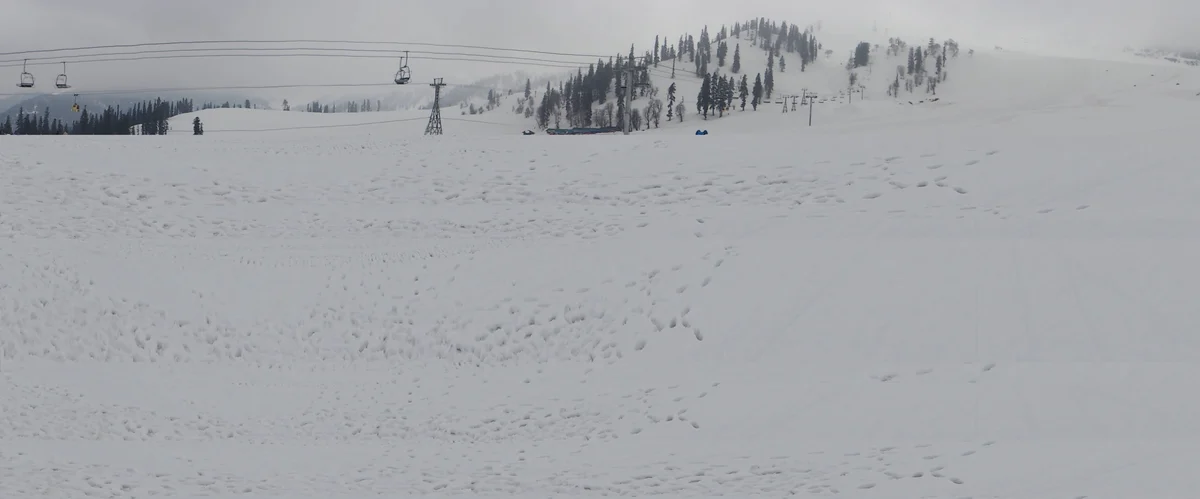
Where and when to look for snow in India
Yes, it snows in India, especially in the higher Himalayas, with winter snow destinations including Gulmarg in Kashmir, Solang near Manali in Himachal Pradesh and Auli in Uttarakhand. Use December to March as a starting window for Gulmarg skiing and January to March for snow on Auli’s ski slopes, then check the forecast and access for the exact place you want to visit.
India’s mountain zone sits alongside extensive plains, a desert region and a southern peninsula. A forecast for northern India can therefore cover very different terrain. Even within one mountain district, elevation and exposure matter. The India Meteorological Department’s Kullu climatology describes weather systems that brought snow to higher elevations and rain lower down. The conditions at your hotel and at the slope you plan to visit can differ during the same spell.
IMD uses January and February as winter in its national seasonal calendar. The Kullu district climatology describes a local winter running from November through March and records snow from December into April at different elevations. Each calendar answers a different question. The national one groups weather statistics, while the district report describes how the season unfolds across mountainous terrain.
Start with the experience you want. Seeing snow from town depends on visibility and the state of the higher slopes. Walking on snow requires cover at a spot you can reach. Seeing flakes fall requires precipitation at your elevation during your visit. A published ski season helps narrow the dates, and each of those experiences calls for its own local check.
| Destination | What the seasonal evidence describes | What to verify for your date |
|---|---|---|
| Gulmarg, Kashmir | Usual December–March ski window | Road from Srinagar and operation of the gondola phase you need |
| Manali town, Himachal Pradesh | Kullu district reports snow from December into April across different elevations | Forecast and recent ground conditions within town |
| Solang Nullah, Himachal Pradesh | Winter skiing at a separate meadow and slope area about 13 km from Manali | Road access beyond Manali and conditions at the meadow or slopes |
| Auli, Uttarakhand | Usual January–March snow period on ski slopes at about 2,500–3,050 m | Road or ropeway access from Joshimath |
| Tsomgo Lake, Sikkim | Winter lake ice and snow on surrounding high slopes | Protected-area permission, vehicle arrangements and road status |
| Sela Pass and lake, Arunachal Pradesh | High-pass winter conditions and seasonal lake ice | Access to the pass or lake separately from through travel to Tawang |
- National Portal of India | Physical features
- India Meteorological Department Chennai | Seasonal reference
- Climatology of Himachal Pradesh, state and Kullu district chapters — India Meteorological Department
- Gulmarg winter window and visitor geography — Directorate of Tourism Kashmir
- Auli — Chamoli district administration, Uttarakhand
- Tsomgo or Tshangu Lake — India Cine Hub and Sikkim Tourism permit authority
- Tawang district travel advisory and Sela winter context — Tawang District and Arunachal Tourism
Gulmarg’s meadow, gondola and road from Srinagar
The Directorate of Tourism Kashmir places Gulmarg in Baramulla district at about 2,650 metres, or roughly 8,700 feet. Its December to March ski window gives you a range of months to consider. Within the destination, the main meadow, lower road approach and upper gondola areas occupy different elevations. When a report says there is snow in Gulmarg, find out which of those places it describes.
The district describes road access from Srinagar and a gondola with two phases. Check road status through local advisories and phase operation with the gondola operator. The phase matters because it determines which part of the mountain your plans depend on. For a visit centred on the meadow, recent conditions at meadow level are more useful than a report from higher up.
IMD’s bulletin for the reporting interval ending at 08:30 IST on 23 January 2026 listed Gulmarg’s snow depth as 46.0 centimetres. In the same table, Kupwara recorded 27.0 centimetres, Pahalgam 18.0, Kukernag 17.0 and Qazi Gund 5.0. The spread shows how much a single set of observations can vary across the region. Each figure is a dated depth measurement, so it gives you a comparison for that reporting interval.
- Gulmarg
- 46 cm
- Kupwara
- 27 cm
- Pahalgam
- 18 cm
- Kukernag
- 17 cm
- Qazi Gund
- 5 cm
If you have one day out of Srinagar and want to spend it on the meadow, the road report and a current observation from the meadow help you decide whether the outing meets that goal. If the upper gondola is the reason for going, confirm the relevant phase before committing the day. A station depth or a view of the upper slopes leaves that decision open.
Manali town and the slopes at Solang
Himachal Tourism places Solang Nullah about 13 kilometres from Manali and describes winter skiing at its meadow and slopes. Kullu district identifies the turn near Palchan on the route from Manali. The distance is useful for locating Solang as a separate outing. Plan around the road and conditions at the meadow, since the distance alone gives little guidance on how the journey will go during a winter weather spell.
The Kullu climatology associates much of the district’s winter precipitation with passing western disturbances. During some of those weather systems, higher locations received snow while lower locations received rain. The district’s December into April snow record spans different elevations, including locations with occasional high-elevation snow outside the core winter. A report of April snow somewhere in Kullu therefore needs a location before it can help you plan a visit to Manali or Solang.
Suppose your family wants snow within reach of where you are staying and you are considering a hotel in Manali town. Look first for a recent observation from the part of town you would use. Snow at Solang could still make the hotel a workable base if everyone is willing to take the extra outing and the road is open. That changes the booking decision because your snow day now depends on an additional journey.
Use the local IMD outlook for weather in Kullu and the relevant district road advisory for access. When checking a report for Solang, look for the actual endpoint it describes. A road update covering the approach to Manali tells you about reaching your base. For the separate slopes outing, you need an update that covers the road beyond town and conditions at the destination.
Auli’s ski slopes and access from Joshimath
Chamoli district places Auli at around 2,500 to 3,050 metres, or roughly 8,200 to 10,000 feet, and gives January to March as the usual snow period on its ski slopes. The slope is the useful unit of comparison here. If your plan involves time on the snow, ask about the specific slope or visitor area you can reach. A photograph from one part of that elevation range may show conditions that differ from your arrival point.
The district guide identifies Joshimath as the access point and describes both road and ropeway links. Before building a day around either one, verify its status with the governing authority or operator. The district guide gives you the geography of the journey. An operating update tells you whether the connection you intend to use is available and where it will leave you.
If you are choosing between a January and a March visit, both fall within the district’s usual slope-snow period. The published window gives no month-by-month ranking. If your choice hinges on reaching a particular part of Auli by ropeway, check when the operator can confirm service for your dates and how much flexibility your booking allows. For a date close enough to have a forecast, use that forecast alongside a recent report from the slopes.
Tsomgo Lake from Gangtok
Tsomgo Lake, also called Changu, lies about 40 kilometres from Gangtok at around 3,753 metres, or roughly 12,300 feet. The government location record describes winter ice on the lake and snow on surrounding high slopes. Those are two features of the same landscape. If you want to see snow beside the road or near the lake, look for observations at the visitor area, since a view across to white slopes says little about the ground where you will stand.
Tsomgo is in a protected area. Sikkim Tourism says foreign visitors can visit in groups of two or more and apply through a registered travel agency. The department’s permit guidance also describes a certified guide and a vehicle pass tied to the protected-area permit. Ask a Sikkim-registered agency about the published requirements for your group and documents. The department’s separate Nathu La listing limits that pass to Indian nationals. A route on the same road can therefore involve different permissions.
If two people staying in Gangtok are travelling on Indian and US passports, the foreign visitor’s eligibility and agency arrangements may determine whether they can take the same excursion. Check both against the official guidance for Tsomgo. Once those arrangements are clear, check road status and seek a recent report from the lake area. A weather forecast for lower Gangtok covers the starting point of the journey.
Sela Pass, Sela Lake and the journey to Tawang
Tawang district puts the town at around 10,000 feet and Sela Pass at around 13,750 feet. Arunachal Tourism describes Sela Lake freezing in winter. If the lake is your reason for going, look for information about the old pass and the lake area. The lake’s seasonal ice, snow beside the road and road access are three different conditions, and the tourism description establishes only the seasonal lake feature.
The Government of India dedicated the Sela Tunnel on 9 March 2024 with the aim of providing an all-weather connection. A report about through travel to Tawang may therefore concern a different route from the one you need for a stop at the old pass. Ask which stretch the access report covers. Tawang district advises checking forecasts and roads and avoiding travel in heavy snowfall or severe weather.
If your itinerary is built around reaching Tawang, check the status of the through route first. If you also want to stop at Sela Lake, treat it as a separate stop whose feasibility depends on the old pass approach. This distinction lets you assess the town journey even when information about access to the lake is still pending.
How to check snow and access for your dates
Read the measurement label before comparing snow reports. Snowfall describes new snow during a stated interval. Snow depth measures the accumulation on the ground at observation time. Snow can remain after a storm, or fresh flakes can melt before the next measurement. For a visit aimed at walking on snow, recent ground conditions at the accessible spot matter. For a visit aimed at seeing flakes fall, consult the forecast for that place and time.
Check the weather type as well as the date and location. The 23 January 2026 IMD bulletin included a rain forecast for the northwest plains and separately recorded observed hail in parts of Jammu, Punjab and eastern Rajasthan. A winter report about white ground can be ambiguous on its own. Use the report’s precipitation label and confirm that its location matches the part of the destination you intend to visit.
As departure approaches, check the local IMD forecast and district warnings, then look up access for the final stretch of road or the specific lift you need. Read the timestamp on each update. A recent weather bulletin and an older road notice describe different moments. If the access update predates a new winter weather spell, seek a current notice from the district or operator before setting out.
- 23 January 2026 weather bulletin with station measurements — India Meteorological Department
- Snowfall, old snow and snow depth definitions — National Weather Service
- Gulmarg winter window and visitor geography — Directorate of Tourism Kashmir
- Manali and Solang Nullah — Himachal Tourism
- Auli — Chamoli district administration, Uttarakhand
- Tsomgo or Tshangu Lake — India Cine Hub and Sikkim Tourism permit authority
- Tawang district travel advisory and Sela winter context — Tawang District and Arunachal Tourism
- IMD district forecast and warning map
Sources
- National Portal of India | Physical features
- Himachal Tourism | Dharamshala
- India Meteorological Department Chennai | Seasonal reference
- Climatology of Himachal Pradesh, state and Kullu district chapters — India Meteorological Department
- 23 January 2026 weather bulletin with station measurements — India Meteorological Department
- Snowfall, old snow and snow depth definitions — National Weather Service
- Gulmarg winter window and visitor geography — Directorate of Tourism Kashmir
- Manali and Solang Nullah — Himachal Tourism
- Auli — Chamoli district administration, Uttarakhand
- Tsomgo or Tshangu Lake — India Cine Hub and Sikkim Tourism permit authority
- Tawang district travel advisory and Sela winter context — Tawang District and Arunachal Tourism
- Snow in Gulmarg, Kashmir — original photograph by Nitin Ticku
- Sikkim Tourism, destination guidance for Tsomgo and Nathu La
- Sikkim Tourism’s visitor and protected-area permit guidance
- Arunachal Tourism’s Tawang area guide
- Government of India, Sela Tunnel dedication on 9 March 2024
- IMD district forecast and warning map
