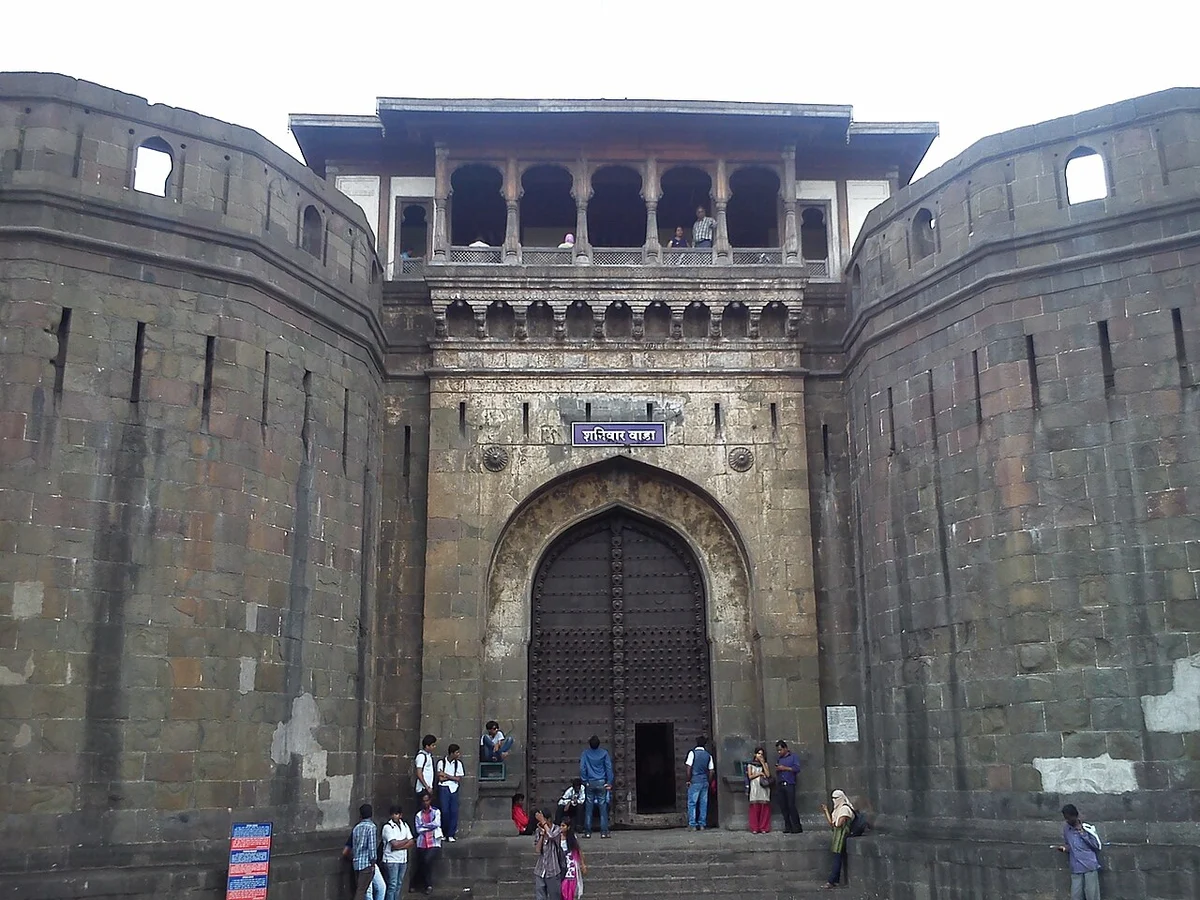
Where to start in Pune
For a first visit to Pune, India, spend one day in the old city around Shaniwar Wada, Dagdusheth Ganpati and the Raja Dinkar Kelkar Museum. If you have a second day, give Aga Khan Palace its own outing on Nagar Road in eastern Pune.
Start your map with the endpoint on your ticket. Pune Airport is PNQ, in Lohegaon, which you may also see written as Lohgaon. For a train arriving at Pune Junction, look for the station code PUNE. A ticket marked Pune still deserves a check of the full station or bus stop name, especially if you plan to transfer between intercity services. Use that exact name when arranging a pickup.
Next, pin the entrance or address of the first place you intend to visit. Delhi Darwaja is the main entrance to Shaniwar Wada. Dagdusheth Ganpati is on Shivaji Road in Budhwar Peth, and the Kelkar Museum is on Bajirao Road in Shukrawar Peth. Keeping all three pins visible gives you a route you can reorder around admission windows. Add Aga Khan Palace as a separate pin on Nagar Road with its own journey from wherever you are staying.
The state tourism guide covers Pune district as well as attractions in the city. If a place from that guide appeals to you, look up its exact location before adding it to the same day. A district listing tells you where to look for ideas. The city map tells you whether the stop fits between your first admission and your next fixed commitment.
| Journey | Pins to save | Detail to check |
|---|---|---|
| Airport arrival | Pune Airport (PNQ) and your destination entrance | Pickup or feeder boarding point |
| Train arrival and metro transfer | Pune Junction (PUNE), Pune Railway Station metro and District Court | Whether your destination requires changing corridors |
| Old-city sightseeing | Delhi Darwaja, Dagdusheth Ganpati and Raja Dinkar Kelkar Museum | Pedestrian route and entry windows |
| Eastern Pune outing | Aga Khan Palace on Nagar Road | Visitor entrance and return pickup |
| Site or interchange | Travel area | What the current source lists |
|---|---|---|
| Pune Airport (PNQ) | Lohegaon | Airport bus and taxi. Confirm ground transport on the chosen day. |
| Pune Railway Station metro | Railway gateway | Aqua corridor with transfer to Purple at District Court. |
| Old-city monuments and temple | Kasba Peth or Mandai side | Shaniwar Wada Delhi Darwaja and Dagdusheth on Shivaji Road. |
| Raja Dinkar Kelkar Museum | Old city | Public operator lists 10:00–17:30 and named holiday closures. |
| Aga Khan Palace | Nagar Road | Separate eastern outing with Gandhi memorials. |
Getting from Pune Airport into the city
Pune Airport has taxi and PMPML city bus options. For a taxi, give the driver the destination entrance or street address, especially if you are heading straight to a sight. For a city bus, use the boarding stop and destination to evaluate the journey. A service that gets you near your neighbourhood may still leave you with a final walk, so look at the distance from the actual drop-off to the address you need.
If the metro fits your onward journey, use Ramwadi as the point where the road leg meets the Aqua corridor. The airport has no direct metro or rail terminal. An older Pune Metro commuter guide describes feeder shuttle 19 between Ramwadi and the airport, and a Metro annual report also identifies the connection as a bus. Check that the feeder is running when you arrive and ask where it boards. The guide establishes the connection to look for. It cannot tell you when the next bus will turn up.
If you land late and have bags, compare a direct taxi with the complete bus-and-metro journey. Include the time to reach the airport boarding point and the wait at Ramwadi. Look up departures from Ramwadi in your direction on the operator’s current timetable. If the feeder timing is uncertain and you are working toward a fixed arrival, make your decision at the airport, where you can check the available road options before committing to a transfer.
Pune Junction and the metro corridors
Pune Railway Station metro is adjacent to Pune Junction and serves the Vanaz–Ramwadi Aqua corridor. District Court is where the Aqua corridor meets the PCMC–Swargate Purple corridor. Older directions may call that interchange Civil Court. Recognising both names helps you reconcile a saved set of directions with the current map, particularly when you are looking for the station at which to change trains.
For the old city, compare Kasba Peth and Mahatma Phule Mandai on the Purple corridor using the entrance of your first stop. Start from Pune Railway Station on Aqua, change at District Court, then take Purple toward Swargate for either station. Plot the walk from the metro station to the actual entrance before you choose where to get off. If you use a road transfer to Shaniwar Wada, the district puts Delhi Darwaja about 3–4 km by road from Pune Railway Station. That distance gives you a sense of scale while leaving journey time to the conditions on the day.
The railway station area has nearby city and state bus facilities. For an onward intercity bus, follow the boarding point printed on the bus ticket and check the route to that stop from your arrival platform or pickup point. If you plan to use metro for the connection, check the current timetable for each line in the direction you need. For an evening transfer, the useful departure is the one you can reach after allowing for the interchange.
Shaniwar Wada and Delhi Darwaja
Shaniwar Wada was the seat of the Peshwas and a political centre. The surviving gates and fortifications are the features to look for when you visit. Begin at Delhi Darwaja, the main entrance, and take time to look at the gateway and walls before moving through the site. For a driver drop-off or a rendezvous with someone arriving independently, the gate name is a more precise meeting point than the name of the fortification.
The Archaeological Survey of India lists Shaniwar Wada as a ticketed monument under its Mumbai Circle. You may see it spelled Shanwar Wada in the monument list. Government tourism lists 9:30 am to 5 pm and a Sunday closure, but Sunday admission, last entry and current prices still need confirmation. For a specific visit, look for the monument in ASI’s booking system and check whether the date is selectable. If the booking controls leave the question open, verify at the gate before planning the rest of the day around admission.
On a Sunday visit with uncertain fort admission, make the museum your first timed stop and keep Shaniwar Wada conditional. Check whether the museum’s own holiday exceptions affect your date before using that order. The district also mentions a light and music show at Shaniwar Wada. Treat it as a possible addition if you can confirm a performance for that evening before setting aside time for it.
Dagdusheth Ganpati and the Kelkar Museum
Shrimant Dagdusheth Halwai Ganpati is on Shivaji Road in Budhwar Peth. If you are going for darshan, use the trust’s darshan entries when picking a time. The trust lists daytime blocks from 8:15 am to 1:30 pm and 3:15 pm to 8 pm, with separate entries for worship ceremonies. The broader opening span differs between the trust’s schedule and its Marathi home page, so check the schedule for your date, particularly for an early or late visit. Allow the queue to determine whether you have time before your next stop.
The Raja Dinkar Kelkar Museum lists hours of 10 am to 5:30 pm. It identifies 26 January, 15 August, Anant Chaturdashi and the following day as holidays, and asks visitors to confirm precise festival timings. Save the full address for the approach through Shukrawar Peth. The museum is at 1377/78 Kamal Kunj, Bajirao Road, Natu Baag. Its visitor page names Shanipar and Abhinav Kala Vidyalaya as nearby bus stops.
The museum displays admission of ₹140 for an adult above 12 and ₹50 for a child below 12, with separate foreign visitor rates of ₹500 per adult and ₹100 per child. The published wording leaves the category for a visitor aged exactly 12 unclear. Check with the museum if that affects your plans. The museum also lists free admission for blind and differently abled visitors. For a visit that depends on step-free access, ask about access from the street to the galleries you want to see.
| Published category | Amount | Age or eligibility wording |
|---|---|---|
| Adult | ₹140 | Above 12 years |
| Child | ₹50 | Below 12 years |
| Foreign adult | ₹500 | Foreign adult category |
| Foreign child | ₹100 | Foreign child category |
The museum page uses above 12 and below 12 for the two Indian ticket categories and leaves the exact boundary unclear. If you are visiting with a 12-year-old, confirm the price with the operator. The day schedule also lists closures for 26 January, 15 August, Anant Chaturdashi and the following day, with festival adjustments separately possible.
Putting the old-city stops in order
With a clear morning and confirmed fort admission, start at Delhi Darwaja, continue to Dagdusheth Ganpati within a confirmed darshan window and put the Kelkar Museum last. This order gives you a way to fit the temple around its published midday break while keeping the museum’s displayed 5:30 pm close in view. If the temple queue pushes the museum too close to closing, go to the museum first and leave the temple for the later window.
For an early-afternoon arrival in central Pune, the museum can give the itinerary a better starting point. The gap between the temple’s published daytime darshan blocks runs from 1:30 pm to 3:15 pm. Use some of that interval for the museum and decide whether to continue to the temple when the afternoon block opens. Add the fort only if you have confirmed grounds admission and can still reach the gate before last entry. The published closing time alone leaves that decision unresolved.
Keep the old-city map at street scale. Compare the pedestrian route between the named entrances, then work back to a metro station or road pickup from the place where you expect to finish. Check walking directions on the day for diversions and crossings. If you are meeting someone after sightseeing, agree on a specific entrance or pick-up point and give yourself enough time to get there from inside the last site.
Aga Khan Palace and departure planning
Aga Khan Palace is on Nagar Road in eastern Pune, at Pune 411006. It has memorials to Kasturba Gandhi and Mahadev Desai and a documented connection to the imprisonment of members of the Gandhi group during the Quit India movement. Give the site time as a memorial visit. Check which galleries are open if seeing the indoor displays matters to you, and verify current gate hours, last entry and admission with the managing authority or the site before setting out.
On a second day, plan the palace journey from your accommodation and check the location of your return pickup before leaving. If you want to add another attraction from the state tourism guide, measure the second journey from Nagar Road to that place as well as the journey back. A place elsewhere in Pune district can change the scale of the day. Use the time available after the palace visit to judge whether the additional stop needs a day of its own.
If a departing flight makes Nagar Road appealing for your final outing, check palace admission first and work back from the time you need to be at PNQ. Plan where your bags will be during the visit, then account for the road journey from your pickup point to the airport. A train departure requires a separate calculation to the station on your ticket. If that journey includes metro, use the timetable for the actual travel direction and allow time to get from the metro exit to the railway platform.
Sources
- District Pune — How to reach Pune
- Maha Metro — Pune route map and station plan
- District Pune — Shaniwar Wada
- Raja Dinkar Kelkar Museum — Plan a Visit
- Shrimant Dagdusheth Halwai Ganpati Trust — Temple schedule
- District Pune — Aga Khan Palace and Gandhi memorial
- Wikimedia Commons — Shaniwar Wada Front View-Pune-Maharashtra-N-MH-M64.jpg
- Maharashtra Tourism | Pune district
- Pune Metro | Pune Railway Station metro stop
