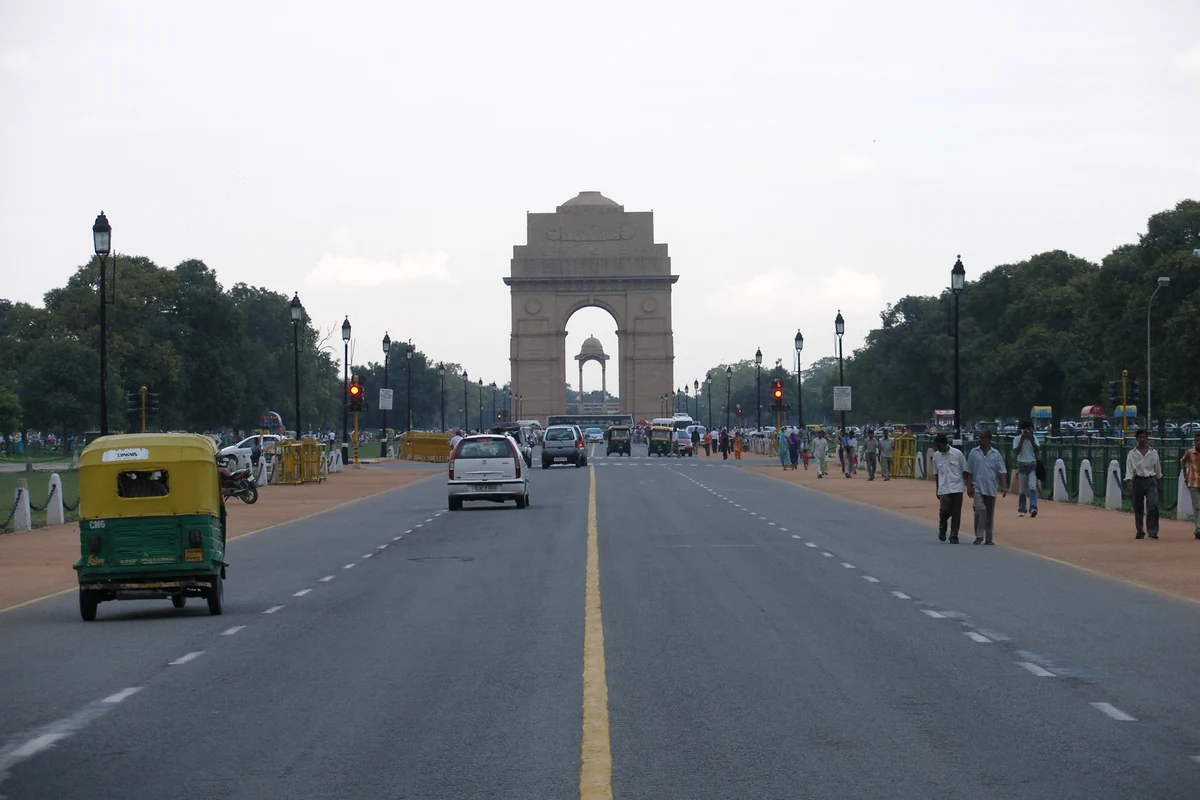
New Delhi is the capital of India
New Delhi is the capital of India. It lies within Delhi, the wider National Capital Territory, or NCT. The Embassy of India’s fact sheet names New Delhi as the capital. When a quiz, map legend or reference table asks for the national capital, use New Delhi. The broader name Delhi is still useful when you are looking for transport, metropolitan history or an address that may be outside the planned capital area.
For a map, open the Government of Delhi’s reference in the sources and find the central capital area inside the larger territory. A map can use different symbols for a city, a territory and a district. The star at a capital usually marks its general position. The visible outline around the territory covers suburbs, districts and landmarks beyond the streets that visitors associate with New Delhi. Check the map scale and its legend to know which type of feature you are looking at.
In ordinary speech, “Delhi” can refer to destinations across the metropolis. A train booking or taxi search calls for more precision than a quiz. If two labels appear on your map, use the specific venue, station, gate, neighborhood or address from the booking. Then match the result to the correct place. New Delhi on a country map answers the national-capital question. Its name on a form or ticket may be part of several more specific location labels.
Delhi, New Delhi district and the municipal area
The National Capital Territory of Delhi is the broad administrative area named in the Delhi government’s documents. The New Delhi Municipal Council describes three local bodies within the territory, including itself, the Municipal Corporation of Delhi and the Delhi Cantonment Board. Municipal boundaries matter for civic services, local streets and records. Ask which council covers an exact address when you need to submit a municipal request or find an official local notice.
New Delhi district is a separate administrative use of the name. The District Magistrate’s office publishes its own contact and location information. An address can carry a New Delhi postal label and still need a separate check of the municipal body, revenue district or service counter responsible for it. Start with the name of the service you need, then check the jurisdiction its official instructions use. A building’s mailing address alone may be too broad for that decision.
For a traveler, the useful distinction is between the place name on a map and the entry in a booking. Searching “New Delhi” may centre your map on the capital. Searching a full landmark name or address takes you closer to the door you need. Write down the exact arrival station, terminal or visitor entrance while you have the confirmation open. This becomes more important when you are meeting someone who is arriving elsewhere in Delhi.
| Name on the document | What it refers to | What to verify |
|---|---|---|
| New Delhi | India’s national capital | Use the full city name in a country-capital table |
| Delhi or NCT of Delhi | The broader National Capital Territory | Check district or local jurisdiction for an address within it |
| New Delhi district | A district administration within Delhi | Confirm the appropriate district service and office |
| New Delhi Municipal Council | A municipal body responsible for its own service area | Check the council’s jurisdiction for the specific premises |
| National Capital Region | A wider regional planning label | Check the actual city and state in local plans or bookings |
The Delhi National Capital Region is wider again. The National Capital Region Planning Board describes it as an interstate planning region with the entire National Capital Territory at its core and districts of Haryana, Uttar Pradesh and Rajasthan included. A property or conference venue can belong to the NCR while having a Haryana or Uttar Pradesh address. Look for the street address and the state on the venue’s own record.
The regional name matters most where a search groups places for convenience. For instance, a hotel description that says Delhi NCR may describe a property near a different office location than the one on your appointment letter. Compare the two map pins from the official addresses and check the transport for the actual weekday. If the trip starts with an airport transfer, include the terminal too.
Why the capital moved from Calcutta
The New Delhi Municipal Council dates the public announcement of the move from Calcutta, now Kolkata, to Delhi to 12 December 1911. That was the decision to establish a new administrative centre. Its location took additional planning. The council records that a committee considered several sites before officials selected Raisina Hill for the new capital. Keeping the announcement and construction separate makes the timeline easier to follow.
The council’s history names Edwin Lutyens and Herbert Baker among the planners. Their scheme arranged broad avenues and public spaces around major buildings, including the former Viceroy’s residence now called Rashtrapati Bhavan. Council records describe a civic institution beginning in 1916, while work was underway. Its early duties included sanitation for the people working on the construction. That practical detail puts ordinary city services on the same timeline as the larger architectural plan.
New Delhi opened in 1931. The elapsed time from the 1911 announcement shows why older references can use both dates without referring to the same event. Use 1911 for the announced transfer and 1931 for the opening of the planned capital. If your source is a dated photograph or travel account from the intervening years, read the place description before presenting it as a view of the completed capital.
This chronology is about the British Indian administrative move and the planned New Delhi that resulted. Delhi already contained settlements and historic places that long preceded that phase. A visitor can spend a morning looking at the planned government district and another part of the trip in an area with a different history. For an itinerary, the relationship between those places is more useful than grouping the entire trip under a single capital-building date.
Locate the capital’s public landmarks
On the Delhi government map, begin with the central area around the major government buildings. Rashtrapati Bhavan sits on the western side of the central planned ensemble around Raisina Hill. Parliament and the Central Secretariat form part of the broader government district described by the municipal council. Start there if a school map needs one anchor for the capital. If you are going to a specific visit or appointment, switch from the city map to the venue’s current directions.
The wider city contains landmarks associated with national events, including the Red Fort. Independence Day coverage from the Red Fort tells you where that event takes place. It is a different inquiry from the location of the planned government buildings. Use the Ministry of Defence’s official event information for Republic Day or Independence Day when what you need is a programme and venue for one edition. Use the Delhi map for orientation across the territory.
Place names cross city boundaries in everyday conversation too. If an itinerary says to meet someone “in Delhi,” ask for the map pin and a written place name that includes the locality. If a location is connected with an official event, the venue for spectators and the place named in a broadcast can answer different questions. Follow the published visitor instructions and the address on your own booking when deciding where to go.
India Independence Day on 15 AugustIndia Republic Day on 26 January
Visit Rashtrapati Bhavan using the right circuit
The President’s Secretariat’s booking site separates the main building, the museum and the Amrit Udyan gardens into different visit options. From a visitor’s point of view, choosing a circuit is the first booking decision. A slot for the museum gives you information about that visit. The main building and garden listings have their own operating dates, access information and availability.
Open the official visitor page for the circuit you want and read the notice for your date. Check whether a listed route has a scheduled closure, whether booking is required and which public entrance appears on your confirmation. People who need step-free access or a shorter route should confirm arrangements for the specific circuit and date. The official site can revise its instructions, and a previous visitor’s route may describe a different circuit.
Keep a copy of the circuit name, access instructions and admission time with your offline itinerary. If you plan to see more than one place in the central area, make the confirmed appointment the anchor for that day. Then plan nearby walks or museum visits around it. That keeps several distinct parts of the trip clear when the entire day is labelled New Delhi in your calendar.
Quick answers for references, forms and travel
For the question “Which city is the capital of India?”, write New Delhi. For a short geography note, add that it lies within the National Capital Territory of Delhi. If you are comparing Indian city names, use the actual capital on the line labelled national capital and give other cities their own roles. Kolkata appears in this history because the British administration announced a move away from Calcutta in 1911.
For a delivery or travel form, use the name and postal code for your destination. Do not replace a locality just to make it match a general map label. Verify any mandatory district field against the official service or the recipient’s full address. For a hotel booking, look for the street address, neighborhood and actual nearest station. The word Delhi in a hotel name is rarely enough to judge how long a morning transfer will take.
For a fact check, start from the reference that matches the question. The Embassy of India’s fact sheet supplies the official national capital. The New Delhi Municipal Council explains the city’s planning and local jurisdiction. The Delhi administration supplies a territory map and separate district details. Those sources together let you answer what the name means, locate the place, and choose the correct additional authority for a booking or civic service.
India PIN codes and address formatterHow to plan a trip to India
Sources
- Embassy of India | India fact sheet
- NDMC | History of the planned capital
- Government of Delhi | Delhi map
- NDMC | Municipal introduction
- District New Delhi | District administration
- President’s Secretariat | Official visitor circuits
- Ministry of Defence | Rashtraparv
- National Capital Region Planning Board | Constituent areas