Compare two drinks by volume
Enter the payable total for each pack, its number of containers and the volume on one label. One litre equals 1,000 mL.
Price table + shopping guide
Compare dated wholesale and retail catalogue examples for Sprite and Thums Up, and calculate the price per litre for two offers.
Open the Hyperpure Mumbai Sprite pack listingEnter the payable total for each pack, its number of containers and the volume on one label. One litre equals 1,000 mL.
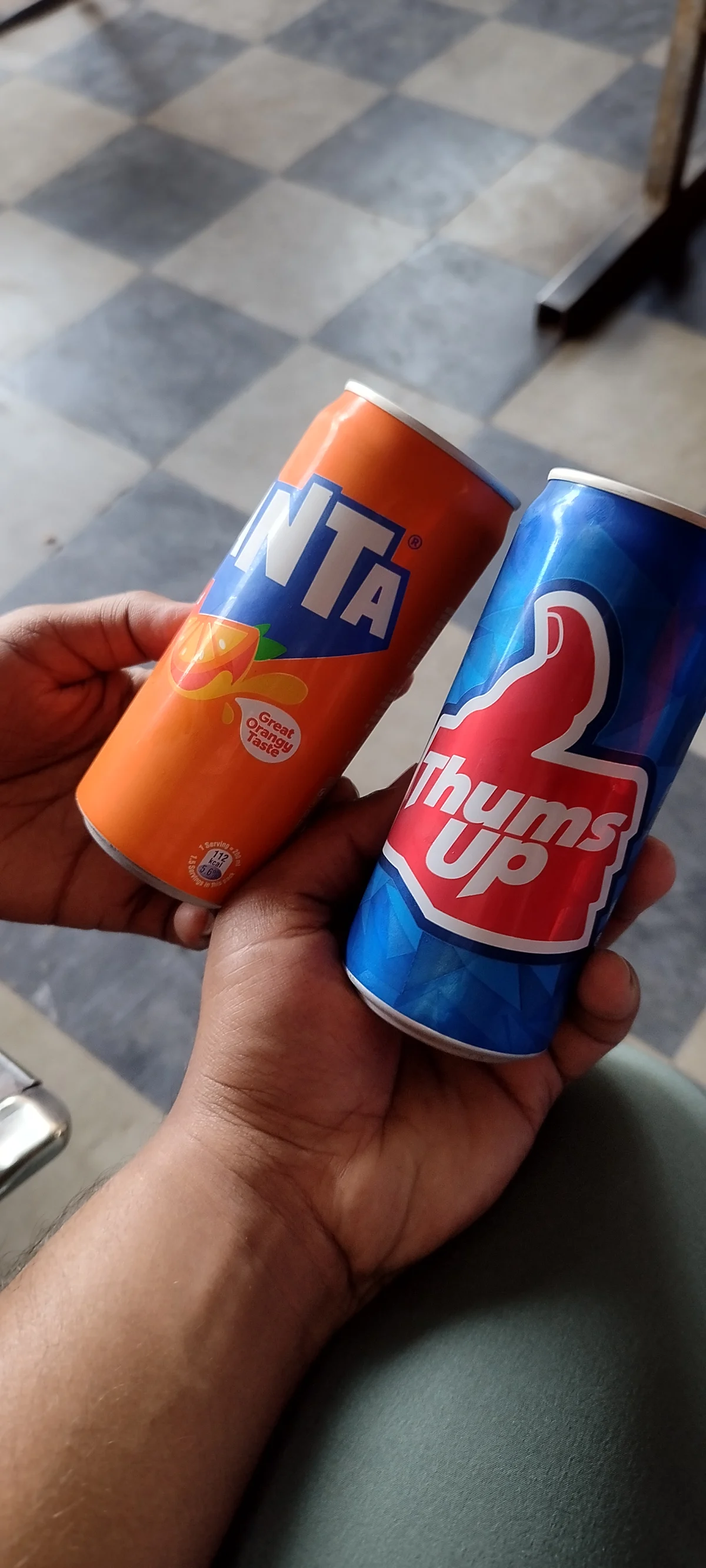
The two dedicated Hyperpure Mumbai wholesale catalogue records checked show ₹511 for 28 Sprite bottles and ₹519.40 for 28 Thums Up bottles, both at 250 mL each. That works out to ₹73 and ₹74.20 per litre. This is a comparison of displayed catalogue examples. A seller can show different prices by territory, search session and quantity, so use the payable amount from your own shop or order in the calculator.
Each Hyperpure carton contains seven litres in total. Because the seller, bottle size and bottle count match, the comparison requires no adjustment for pack format. The displayed difference is ₹8.40 across one carton, or ₹1.20 per litre. That makes the two cartons easy to compare even if you usually think in servings or are planning a purchase by total volume.
| Catalogue and product | Pack | Catalogue total | Per container | Per litre |
|---|---|---|---|---|
| Hyperpure Mumbai Sprite | 28 × 250 mL | ₹511.00 | ₹18.25 | ₹73.00 |
| Hyperpure Mumbai Thums Up | 28 × 250 mL | ₹519.40 | ₹18.55 | ₹74.20 |
| Hyperpure general catalogue Thums Up | 24 × 750 mL | ₹770.00 | ₹32.08 | ₹42.78 |
| BigBasket public retail Thums Up product card | 1 × 750 mL | ₹38.00 | ₹38.00 | ₹50.67 |
The table uses the displayed one-carton prices throughout. Treat the figures as a catalogue comparison. A purchase comparison starts once you know the price for your quantity and location and have accounted for any order costs that apply. A small difference between catalogue prices can disappear when the two options involve different sellers or fulfilment arrangements.
If you searched for cheap soda, decide which drinks belong in your comparison before collecting prices. These listings cover Sprite and Thums Up, two branded soft drinks. A search for plain carbonated water or a mixer calls for its own set of products. Likewise, if you are buying for people who have asked for a specific drink, compare offers for that drink first. The lower carton figure only helps if both drinks are acceptable.
The wholesale pages are specific to Mumbai and the two products. Other Hyperpure cards in the same catalogue can display different amounts for similarly labelled products or packs. The two dedicated pages support the figures used here. Local delivery, buyer eligibility, availability and final totals were not checked against a signed-in checkout. The seller link lets you check the pack before relying on the example in a purchase.
Read the bottle count and the net quantity per bottle from the listing or pack. A label of 28 × 250 mL means 28 individual bottles with 250 mL each. Multiply the two numbers to get 7,000 mL, then divide by 1,000 to get seven litres. Divide the carton price by seven for the price per litre and by 28 for the price per bottle.
In the checked Sprite listing, ₹511 divided by 28 gives ₹18.25 per bottle. A litre contains four 250 mL portions, so four times ₹18.25 gives ₹73 per litre. The same calculation takes the Thums Up listing from ₹519.40 per carton to ₹18.55 per bottle and ₹74.20 per litre. You can check your arithmetic by multiplying the per-litre figure by seven to recover the carton price.
When bottle sizes differ, calculate the price per litre directly from the total price and total volume. A cheaper bottle may hold less drink, so its lower price can come with a higher cost per litre. Keep the full precision until the final step. Rounding a small bottle's unit price first can introduce a discrepancy when you multiply back up to a large pack.
Price per 250 mL can also be convenient when comparing what you will pour from a larger bottle with what you get from an individual bottle. Divide the per-litre price by four to calculate it. Write the result as a price per 250 mL portion so anyone reading your notes can tell whether the figure is a serving calculation or the actual price of a sealed bottle.
Packaged commodity declarations include the retail sale price and net quantity under India's Legal Metrology rules. Use the declared net quantity for the volume calculation. Record the maximum retail price, or MRP, and the seller's price in separate fields so you can see which number describes the pack and which describes the offer you are comparing.
The Mumbai Sprite listing states an MRP of ₹20 per 250 mL bottle. Multiplying that declaration by 28 gives ₹560 for the same number of bottles at the stated MRP. The displayed one-carton price is ₹511, a difference of ₹49 or ₹1.75 per bottle against that reference. To compare with another seller, get that seller's offer for the same quantity. The ₹560 calculation alone tells you nothing about what another shop would charge.
The Sprite listing also shows separate tiers for larger orders. Read the quantity attached to each displayed price and select the tier for the order you intend to place. Where two sellers require different quantities to reach their advertised rates, write down the total outlay as well as the rate. A lower rate can require you to commit more money and buy more bottles than you will use.
Check the MRP printed on the actual container if you want to compare a local shelf price against the declaration. Match the exact pack in your hand to the price sign or checkout line. A sign can sit beside several sizes or variants, and applying it to the wrong bottle changes both the apparent difference from MRP and your cost per litre.
In the dedicated Mumbai Sprite listing, the shown quantity rates were ₹17.85 each when buying at least 56 bottles and ₹17.70 each from 140. The dedicated Thums Up listing shows ₹18.40 each from 56 and ₹18.20 each from 112. Those pack tiers differ. For example, the 140-bottle Sprite rate applies to a larger 35-litre order and represents a displayed basket of ₹2,478 before any other applicable costs.
Start with the quantity you expect to use and the way you plan to serve it. One bottle for immediate use, several drinks to share at home and sealed portions for a gathering are different purchases. Record the amount you must pay to get enough drink for your occasion. The price per litre then tells you what you are paying for the volume within that purchase.
Worked example. Suppose you need 20 sealed 250 mL bottles and the only Sprite wholesale option open to you is the checked carton, with no extra charges. You would spend ₹511 and have eight bottles left. A shop that will sell exactly 20 would cost less in total if its price is below ₹25.55 per bottle, since that figure multiplied by 20 equals ₹511. The threshold comes from the checked carton price and is no claim about local shop prices.
If you will use the eight spare bottles later, include them when judging value. In that case the 28 bottles still cost ₹18.25 each before any order charges, and the shop's single-bottle price is the more relevant comparison. If the spare bottles are unlikely to be used, the ₹511 outlay has to be justified by the 20 bottles you need.
Do the calculation again if the headcount changes or you need two flavours. Having enough litres in one carton may still leave you short of the mix you want. Ask what quantities each seller will supply by flavour, then compare two complete orders that meet the same need. This prevents a low price on one line from deciding the cost of the whole purchase.
For a shared meal, compare a large bottle with smaller bottles by volume and by how much drink you expect people to finish. Where everyone wants a sealed serving, count the containers as well. One two-litre bottle and eight 250 mL bottles hold the same volume, but one format needs cups and a place to pour. If you already have cups, record that before assigning any serving cost.
Worked example. Suppose you are comparing those two formats for eight people and both drinks are acceptable. Multiply the shop's price for one 250 mL bottle by eight and place it beside the two-litre bottle's price. Add any cups you would actually need to buy to the larger bottle option. If you expect to serve less than two litres, also check whether buying fewer small bottles would meet the need at a lower total cost.
A returnable glass option, if available, needs two figures. Ask how much you pay when you collect the drink and how much you get back when you return the bottle. Record any deposit separately. Include it in the cash needed for the purchase and subtract the refunded amount when calculating the eventual cost if you expect to complete the return.
Match serving conditions as well as volume. If you need a cold drink right away, verify that the quoted price applies to a chilled bottle you can collect or receive in time. If you are buying for later and can chill the drink yourself, an ambient shelf price is usable. Record the condition with the quote so your comparison reflects the options you would actually choose.
The Hyperpure general catalogue showed a separate 24-bottle Thums Up pack at ₹770. The 750 mL bottles make 18 litres, so the listed carton gives about ₹42.78 per litre. BigBasket’s indexed consumer product card showed one 750 mL bottle at ₹38, or about ₹50.67 per litre. These general catalogue examples were not checked at one common delivery postcode. The smaller individual purchase has a far smaller cash outlay, and the bigger wholesale pack has a lower displayed cost per litre.
Use the payable amount for the order when comparing sellers. For a delivery order, check the total at the stage where your delivery location and quantity are set. Include any applicable fee or tax that changes the amount due. Confirm that the seller will accept your order at that quantity and location. A displayed catalogue price gives you a starting figure while these details are being checked.
Worked example. Suppose both Mumbai carton prices are available to you and you are comparing complete offers for one carton of either drink. The displayed difference is ₹8.40. If the extra charges on the Sprite order exceed those on the Thums Up order by more than ₹8.40, Thums Up comes out cheaper. A difference of exactly ₹8.40 in those charges makes the totals equal.
Count a discount when you can apply it to the purchase you intend to make. Check whether it requires a particular payment method, a minimum basket value or a larger quantity of the drink. If you would add an item solely to qualify, compare the whole basket before and after the discount. The advertised saving can be smaller than the amount you add to the order.
For drinks bought as part of a planned grocery order, compare how that order's total changes when you add the drinks. For a separate delivery, use the total for the drinks order on its own. This distinction matters when there is a shared charge or adding the carton changes whether the basket qualifies for a discount. It gives you a cost tied to the decision you are making.
The Department of Consumer Affairs describes the declared maximum retail price as inclusive of taxes, including GST. Keep that printed figure and the actual payable total separate. If a price shown in a purchasing account has additional lines that affect the basket, identify the nature of each charge before entering the total you can actually pay. Use the unit-cost calculator when two offers differ in volume, container count or payable amount.
Collect local prices for the same brand, variant, bottle size and purchase quantity where you can. A shop quote for one bottle and a wholesale listing for a carton can both be useful, provided you record how many bottles you have to buy at each price. Mark the city or delivery area, the seller and when you saw the offer so you can refresh it when you are ready to buy.
At a shop, match the shelf label to the container and check the billed amount if you buy it. Online, select the delivery location and quantity before reading the final price. If the seller only has a substitute size or a different pack count, recalculate the unit price using the replacement's net quantity. Where the label and checkout show different product details, ask the seller to confirm which pack is being supplied.
For a recurring purchase, keep each quote with its own observation date and update the figures that affect the current decision. A price increase on the same pack and a smaller pack at the old price can both raise the cost per litre. Recording the price and volume together lets you see either change, even if the front of the pack looks familiar.
Keep the conclusion as local as the evidence. If your quotes cover two nearby shops and the same bottle, you can identify the cheaper of those offers for your purchase. Comparing prices across cities would require matching observations from those places, with the sales channel and pack sizes recorded. The two Mumbai wholesale listings support their own comparison and leave that broader question open.
McDonald’s India menu: regional burgers, prices and allergen checks