Find the country statement on the tin
To tell where butter cookies were made, look for a country-of-origin declaration or wording such as “Made in India” on the specific tin or its retail packaging. Danish-style butter cookies can be made in India, as the Allied holiday tin and the Unibic 375 g listing show, while Royal Dansk says its own cookies are made in Denmark.
Turn the tin over and read the base, back and sides. Check the retail carton if the tin came in one. The country may appear in a small block of text with the importer and other company details, so read the complete phrase that names it. An address ending in India tells you where the named company or office is listed. “Country of origin: India” makes a statement about the product.
Keep the origin wording and the product details together when you take a photo or make a note. Record the brand, product name and net weight, then look for a unit barcode or item number. A close-up of the country line is easy to read later, but a second photo showing which tin it came from makes it useful for comparing an online listing or following up with the seller.
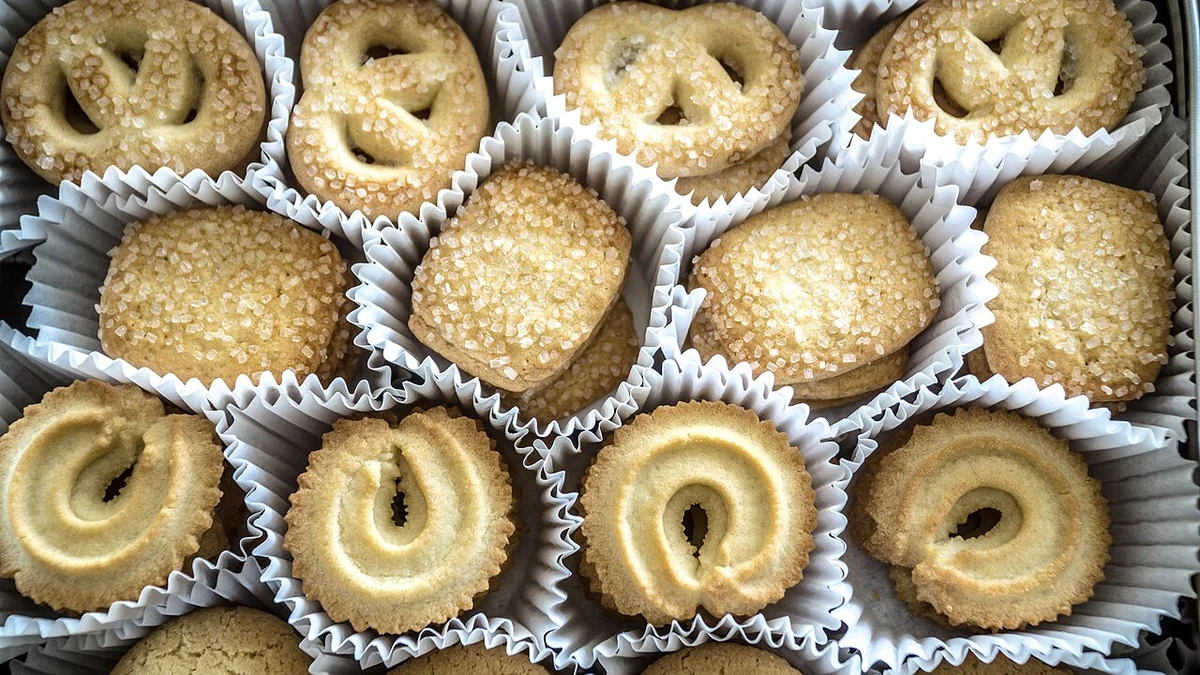
A search for Christmas cookies made in India can surface tins grouped by their seasonal artwork. Start with the result that shows the full product details, then look beyond the holiday design to identify the actual assortment. The front panel can tell you the flavour or style and help you recognise the package. If it is the only image available, the manufacturing country may still be unresolved.
- FDA: Country-of-Origin Labeling Compliance Policy
- Food Safety and Standards Authority of India: Labelling and Display Regulations
- eCFR 19 CFR 134.11 | U.S. imported-product origin marking
- Allied International | Cambridge and Thames holiday tin no. 95368
- Allied International | Danish Style Butter Cookies tin no. 97471
- Royal Dansk | Manufacturer history and country statement
- JioMart | Unibic 375 g Danish Butter Cookies public product information
Read the role beside each company address
A single package can list several businesses because different parties make, pack, import, market or distribute the cookies. Read the role immediately before each name. “Manufactured by” identifies the named manufacturer. “Imported by” identifies the business that brought the product into the market, and “Distributed by” identifies the party responsible for distribution. Each role carries its own information, even when the addresses are printed together.
The Unibic 375 g listing illustrates the distinction. JioMart gives India in its country-of-origin field and separately lists a manufacturer entry in Bengaluru. Use the origin field to answer the country question. If you need the production site for a particular tin, ask for the manufacturing unit associated with its batch. The Bengaluru listing alone leaves the location of that unit unresolved.
Packing information deserves the same attention. A company may pack or repack a product in a country different from the one shown in its origin statement. The FDA's policy discussion treats origin marking and distributor details as separate matters and explains why repacking alone is insufficient to assume an origin change. Keep the wording exactly as printed when asking a company to clarify it, especially if the package names more than one country.
If a seller sends a close-up with a company address and the left edge has been cropped, ask for the full panel. A missing “Marketed by” or “Manufactured by” can change what the address tells you. The full panel also gives you a chance to find a separate country line before trying to infer anything from the company details.
Compare documented Danish-style and Danish-made cookies
Allied International's catalogue identifies item 95368 as a Danish-style holiday assortment offered in six Christmas tin designs. Its specification lists India as the country of origin. The specification for item 97471, a separate Danish-style butter cookie tin, lists Malaysia. Both tins contain 12 oz, or 340 g. A search result that shows only “Danish Style Butter Cookies” and the weight could therefore fit either item.
| Product or supplier | Identifier and package | Origin in the source | Evidence scope | See the source |
|---|---|---|---|---|
| Allied Danish Style Christmas assortments | 95368, 12 oz / 340 g, UPC 035549953685 | India | Distributor specification for the holiday product. | Allied India-origin holiday tin specification |
| Allied Danish Style Butter Cookies | 97471, 12 oz / 340 g, UPC 035549974710 | Malaysia | Separate distributor product specification. | Allied Malaysia-origin tin specification |
| Royal Dansk Danish Butter Cookies | Royal Dansk manufacturer line | Denmark | Brand states its cookies are made in Denmark. | Royal Dansk origin statement |
| Unibic Danish Butter Cookies | 375 g tin, JioMart article 494359036 | India | India retailer’s own article information and manufacturer field. | JioMart Unibic article information |
| Yavatmal Danish-style butter cookies | Exporter reference 401 | India | Exporter statement. Confirm retail pack identifier for your market. | Yavatmal REF 401 producer record |
If a shop shows you a 12 oz holiday tin and you want the one Allied documents as India-made, match the unit UPC to 035549953685. Allied's specification distinguishes the UPC printed for an individual tin from the UPC used for a shipping case. Ask for the code on the unit you would receive if the photo shows a case label. Once you have matched the item, check the origin wording on the tin if the seller can show it.
Royal Dansk describes its blue tin and says its cookies are made in Denmark. That statement applies to the named brand. A blue tin from another brand still needs its own origin check. Yavatmal Trading, meanwhile, explicitly describes REF 401 as made in India and offers trade, retail and pack-to-order formats. Its record helps identify an India-made product for a buying enquiry, while the pack offered and local stock require confirmation from the supplier.
- Allied International | Cambridge and Thames holiday tin no. 95368
- Allied International | Danish Style Butter Cookies tin no. 97471
- Royal Dansk | Manufacturer history and country statement
- JioMart | Unibic 375 g Danish Butter Cookies public product information
- Yavatmal Trading LLP | India-made Danish-style butter cookies, REF 401
- Allied International | Cookies and Wafers current product catalogue
Distinguish a product code from a batch code
Use a unit UPC, distributor item number or retailer article ID to match a tin to the corresponding kind of product record. The JioMart article ID identifies the retailer's Unibic entry. Allied's item numbers identify the entries in its own range. The two Allied origins are documented against different item numbers and different unit UPCs, so the specifications support a comparison between two products. They provide no evidence that one product switched countries between batches.
| Label field | Use it to identify | Where the field stops |
|---|---|---|
| Made in / Product of | Declared country for the food | Look on the actual pack and match the product size and name. |
| Manufactured by | Named manufacturing company | A registered company address can differ from a specific factory. |
| Imported by / distributed by | Importer or distributor for a given sales market | An address in the sales market does not identify production location. |
| Unit UPC | Specific retail-trade identifier | It can distinguish package examples. It does not encode a reliable country of manufacture. |
| Lot / batch and date marks | Specific production or handling batch for a supplier query or notice | Ask the named company to interpret its own codes. |
A lot or batch code identifies a production grouping and helps a company narrow a question about a particular package. Copy the entire code, including any letters or leading zeroes, and take the best-before date from its own field. Origin appears as a country declaration or manufacturing statement. Avoid reading country or factory information into the opening digits of the UPC or into an unfamiliar batch code.
If two tins have the same unit UPC but carry different batch codes, keep a separate photo of the origin line and batch details from each. With those records, you can say what each package declares and ask the company about any discrepancy. If one tin lacks a readable origin line, the photos still give the company enough identifiers to investigate without assuming both tins came from the same production run.
The batch code also matters if the question began with a U.S. recall or safety alert. Use the FDA's official lookup and compare every identifier the notice provides, including the brand or supplier, description, size, UPC, lot and best-before date where listed. The FDA points readers to enforcement reports because its public notices do not cover every recall. A country match alone cannot establish whether your tin falls within a notice.
- Food Safety and Standards Authority of India: Labelling and Display Regulations
- Allied International | Cambridge and Thames holiday tin no. 95368
- Allied International | Danish Style Butter Cookies tin no. 97471
- JioMart | Unibic 375 g Danish Butter Cookies public product information
- U.S. FDA | Food recall and safety alert lookup
Check the rules for the market where the tin is sold
In India, the Food Safety and Standards Authority of India's Labelling and Display Regulations require a country-of-origin declaration for imported food where the provisions apply. The Version VIII compilation, dated 9 September 2025, covers company roles and batch identification as well. An imported tin can carry an Indian importer address alongside the origin declaration. If you see only the address in a retailer's transcription, ask for a package image with the full declaration.
For goods imported into the United States, the Customs rule generally requires the English name of the origin country on the article or container, subject to applicable exceptions. The marking may be on the base, back, side or applicable outer package. The FDA discusses that Customs requirement separately from its own policy on misleading food labels. A U.S. distributor line names a business involved in sale or distribution and may appear on a tin made overseas.
In the European Union, Regulation 1169/2011 addresses when origin or provenance is mandatory, including where omission would mislead. The regulation separately addresses the identification of the responsible food business operator. A company's EU address on a tin answers that second question. To establish where the cookies were made, look for a country statement or obtain a product-specific answer from the company.
Use the country of sale to choose which official text to consult. For a question about an Indian import label, look up the latest FSSAI compilation and subsequent amendments and check the provisions that cover the package. For a U.S. import marking question, check the current text of 19 CFR 134.11. Differences in display and packaging rules matter when comparing two photos of a product sold in different markets.
Verify the tin currently on sale
When buying online, ask the seller for photos of a unit from the stock they would ship. Request a view that identifies the tin and close-ups that show the origin statement and product code. A public catalogue or retailer record can establish what the publisher says about an item, but the label on available stock can answer the narrower question about the actual purchase. This matters especially for listings that reuse product photographs across seasonal designs.
For the Unibic 375 g tin, quote article ID 494359036 when asking JioMart about the listing. Ask whether the current stock's label also gives India as the origin, and request a photo if the answer refers only to the website entry. If a reply gives an address, ask the seller to transcribe the country statement in full. That small distinction makes the reply usable even when the retailer cannot provide a clear photo.
For Allied's holiday item, find 95368 in the distributor's cookies and wafers catalogue and open the specification for that item. Match the item number, unit UPC and net weight before reading the country field. If the seller quotes a different identifier, use the document for that identifier. For an enquiry about REF 401, ask Yavatmal Trading to provide the label for the pack size and format on offer.
If a package declaration and a matching online record disagree, send the seller or the company named on the pack both pieces of evidence. Include the batch code if you have it and ask which origin applies to that batch. Record the answer at the level the evidence supports. You might be able to confirm a catalogue item's stated country while the seller's current stock remains unverified. If origin determines whether you buy, wait for confirmation tied to the unit on offer.
Galletas de la India, cómo comprobar el origen en la etiquetaShopping platforms in India, returns, delivery and seller rules
- Food Safety and Standards Authority of India: Labelling and Display Regulations
- Allied International | Cambridge and Thames holiday tin no. 95368
- Allied International | Danish Style Butter Cookies tin no. 97471
- Royal Dansk | Manufacturer history and country statement
- JioMart | Unibic 375 g Danish Butter Cookies public product information
- Yavatmal Trading LLP | India-made Danish-style butter cookies, REF 401
- Allied International | Cookies and Wafers current product catalogue
- U.S. FDA | Food recall and safety alert lookup
Sources
- FDA: Country-of-Origin Labeling Compliance Policy
- Food Safety and Standards Authority of India: Labelling and Display Regulations
- EUR-Lex: Regulation 1169/2011
- eCFR 19 CFR 134.11 | U.S. imported-product origin marking
- Allied International | Cambridge and Thames holiday tin no. 95368
- Allied International | Danish Style Butter Cookies tin no. 97471
- Royal Dansk | Manufacturer history and country statement
- JioMart | Unibic 375 g Danish Butter Cookies public product information
- Yavatmal Trading LLP | India-made Danish-style butter cookies, REF 401
- U.S. FDA | Food recall and safety alert lookup
- Allied International | Cookies and Wafers current product catalogue
- Wikimedia Commons | sdnet01 Danish butter cookie arrangement
