Calculate the listed price per unit of area
Enter one price and the area quoted for the same property. Keep the area basis when comparing offers.
Guide + portal comparison
Calculate price per square foot, compare published Narela listings and verify the applicable project and deed records.
Open the DDA November housing scheme and official circularsEnter one price and the area quoted for the same property. Keep the area basis when comparing offers.
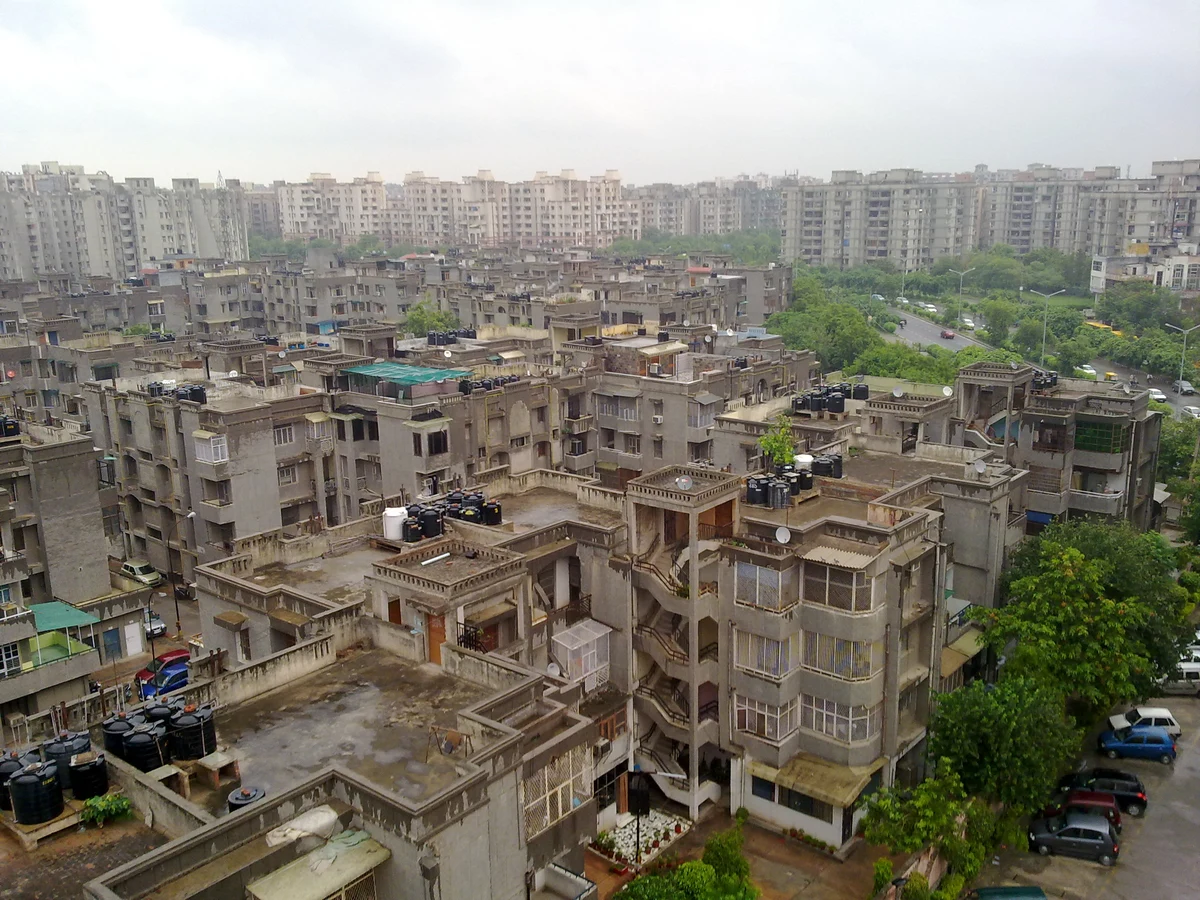
Find houses for sale in India by searching Magicbricks and NoBroker for a specific locality and property type, and check the local housing authority if you are interested in an official scheme. Before paying, match the address and project phase to the relevant regulator’s records where applicable, then have a local conveyancing professional review the seller’s documents.
Start with the smallest area you would genuinely consider living in. Search by locality, then narrow by sector, pocket, project or street as you learn the names used in advertisements. Choose whether you want an independent house or a flat, and whether you can wait for construction or need somewhere ready to occupy. The Narela portal examples below are flats. If you want a house with land, record the plot area as a separate field and identify exactly which parcel the seller says comes with the building.
Use Magicbricks to narrow a locality search by resale, ready-to-move or owner listings where those options appear. Use NoBroker as a second source of asking prices and owner listings. If a home appears on both, compare the pocket, phase, area and floor before counting it twice. Keep the date you saw each advertisement and flag any missing field. A listing with an incomplete address can still be a lead, but keep it out of your price comparison until you can locate the property.
| Starting point | What you can check | What to confirm next |
|---|---|---|
| Magicbricks | Local asking prices and resale, ready-to-move or owner results | Exact unit, area definition and current ask |
| NoBroker | Another set of local advertisements and owner listings | Exact address, seller authority and area basis |
| Housing authority scheme page | Published offer terms, flat schedules and corrections | Current availability and flat-specific amount |
| State or Union Territory RERA portal | Project, phase, promoter and regulatory records where applicable | Unit documents and transaction-specific checks |
Use the calculator when two listings use different price or area units. Enter a rupee, lakh or crore amount, pair it with the area shown for the exact property and select the area basis. The output gives rupees per square foot and per square metre. Compare like area bases before interpreting the result. A lower displayed amount per square foot may reflect a larger denominator instead of a cheaper equivalent home.
Write down the asking price, the advertised area and the exact label attached to it. Magicbricks cards in the Narela search used carpet, super or covered area. Under the Real Estate (Regulation and Development) Act, 2016, carpet area includes the space occupied by internal partition walls and excludes external walls, service shafts, exclusive balconies and verandahs, and exclusive open terraces. For a project with filings, look for the unit’s carpet area and any separately stated balcony or terrace area. Keep unlabelled figures as listing area until you have a document that identifies the measurement.
A Magicbricks resale advertisement for DDA Housing Project Pocket 4 & 5 in Sector G7/G8, Narela, asked ₹64 lakh and labelled 750 sq ft as carpet area. Dividing the ask by that figure gives about ₹8,533 per advertised carpet sq ft. The card displayed ₹8,258 per sq ft without explaining its denominator. That difference is a reason to confirm the floor plan and area before relying on either rate. Keep both the seller’s quoted price and the calculation you can reproduce.
A NoBroker advertisement for DDA Flats in Sector A10, Narela, showed ₹70 lakh for 850 sq ft, or about ₹8,235 per listing sq ft. The card gave no carpet-area basis. Another Sector A7 advertisement showed the same ₹70 lakh ask for 1,077 sq ft. Those two figures can guide questions for the sellers. Ranking either home against the Magicbricks resale by price per carpet sq ft requires comparable area documents. Check the current ask and whether the home is still being offered before arranging a visit.
Two advertisements in Narela illustrate the issue. The Magicbricks result for a ready-to-move resale in Sector G7/G8’s Pocket 4 and 5 says ₹64 lakh and 750 square feet of carpet area. That calculates to approximately ₹8,533.33 per carpet square foot. The same card shows ₹8,258 for its rate, with the denominator unexplained in the visible result. The arithmetic above uses only the quoted price and the explicitly labelled carpet figures.
A separate NoBroker result for DDA Flats in Sector A10 said ₹70 lakh and 850 square feet, giving approximately ₹8,235.29 per square foot. The public result did not show whether the area was carpet, plinth or another basis. Choose Unspecified if entering it in the calculator. Both are asking snapshots from the November check and describe separate properties. Neither establishes a sale price or the condition or availability of a specific flat today.
| Listing source | Ask and location | Area and calculated rate |
|---|---|---|
| Magicbricks | ₹64 lakh, Sector G7/G8 Pocket 4 and 5 | 750 sq ft labelled carpet. About ₹8,533.33 per carpet sq ft. |
| NoBroker | ₹70 lakh, Sector A10 | 850 sq ft with basis unspecified. About ₹8,235.29 per stated sq ft. |
Delhi Development Authority’s Khushhaal Pariwaar Yojana 2026 shows how to read an official offer. The 3 November announcement listed 296 units in Narela Pockets 1B and 1C, Sector A1–A4, at ₹67.03–67.41 lakh with approximate plinth areas of 114.05–114.69 m². The 13 November correction left those rows unchanged. The advertised Sector A7 and A10 resales are in different sectors. A comparison based simply on the DDA name and Narela locality would combine different properties and area measures.
The same correction increased Loknayakpuram’s offer from 132 to 162 units, using the original annex count as its baseline. The original annex quoted ₹114–119 lakh and 134.25–140.45 m². The correction gave no combined price or area range for the expanded offer, so check any added flat against its own details. For Jahangirpuri, use the corrected range of ₹45.50–113.96 lakh and the corrected offer count of 16. One flat was withdrawn, so consult the remaining flat rows for their areas.
The scheme’s approximate plinth area includes common area. Its tentative disposal price reflects applicable discounts and can vary by flat. Maintenance, water connection and conversion charges are excluded where applicable. The original schedule distinguished the ₹4 lakh MIG booking amount from the ₹2,500 registration fee. Find the latest circular and Flat Details on DDA Awaas before relying on a figure. The public circulars are readable without booking, and the published offer counts describe what was announced. Confirm availability and the applicable charges for the specific flat separately.
The DDA corrigendum of 13 November 2026 gives Jahangirpuri 16 offered units and a revised ₹45.50–113.96 lakh range, with one unit withdrawn. It adds 30 Loknayakpuram units to the annexure baseline of 132, giving 162. The correction does not restate an aggregate price range for that expanded group. In the unchanged Narela offer the original annexure gives 296 announced units, ₹67.03–67.41 lakh and plinth areas of 114.05–114.69 square metres. Keep offered quantities separate from stock still available to book.
| Locality | Published offer amount or status | Published quantity |
|---|---|---|
| Jahangirpuri | Corrected ₹45.50–113.96 lakh | 16 offered in correction. |
| Loknayakpuram | Original amount ₹114–119 lakh. Corrected total adds units, so check each expanded entry. | 162 in correction. |
| Narela Pockets 1B and 1C | ₹67.03–67.41 lakh, approximate plinth area 114.05–114.69 m² | 296 in original annexure, unchanged by this correction. |
Use the state or Union Territory where the property sits. A listing described as Delhi NCR might be in Delhi NCT, Gautam Buddha Nagar in Uttar Pradesh, or Gurugram or Faridabad in Haryana. For a Greater Noida address in Gautam Buddha Nagar, start with Uttar Pradesh RERA’s district index and open the corresponding project details or certificate. Haryana’s public search offers a district search and a builder-and-district search. Confirm the project address and registering authority on the result before using it.
Delhi’s public registered-project list shows the district, project, promoter, registration number, validity date and project type. Match those fields to the advertisement and check the exact phase. The Act allows phase-wise registration, so towers marketed together can require separate lookups. In Delhi, check extensions, lapses, and revoked, suspended or rejected projects through the relevant menus. Check the agent separately if one is involved. If you need a more targeted Delhi search, the public project form accepts identifying fields and uses a CAPTCHA.
In Maharashtra, MahaRERA’s public search supports project name or registration number and offers a separate revoked-project view. Open View Details to follow the project into its filings, where a further verification step may appear. Treat the result card’s last-modified date as a clue about the portal entry and check the dates on individual documents. If a search draws a blank, recheck the spelling, promoter, phase and jurisdiction. Registration has statutory exceptions, so ask the relevant authority about applicability before drawing a conclusion from an absent record.
For Delhi NCT, use Delhi RERA’s registered-project search and match project name, phase, promoter, district and registration number. Look up status, validity and separate extension or lapsed records. A Noida address in Gautam Buddha Nagar belongs in the Uttar Pradesh regulator’s district route. For Gurugram or Faridabad use the relevant Haryana project search, and for Maharashtra use MahaRERA. A provider grouping locations together under NCR does not change the authorities for individual addresses.
Slums and urban housing in India: Census data, Dharavi and PMAY-UCost of living in India: a Delhi budget calculator and price benchmarks
Project records answer questions about the development. For a particular resale, ask for the document details that identify the unit or parcel and the seller’s claimed interest. In Delhi, NGDRS labels its two public searches “DORIS Period (Before Jan 2024)” and “NGDRS Period (After Jan 2024).” If the document date falls around that boundary, use the portal’s officer directory to confirm which route applies. Delhi Revenue also points to a legacy search for records from 2002 onward and archives for records before 1993. Confirm the responsible Sub-Registrar when the district or office has changed.
In Maharashtra, use the parcel’s identifiers to choose the appropriate land-record route. Mahabhumi distinguishes view-only records from digitally signed records, including the 7/12 extract, 8A, mutation entries and Property Cards. For an urban property where the City Survey Number applies, use that identifier to find the corresponding record. Registration searches serve a separate purpose. Maharashtra IGR’s guidance describes searches for computerised registered documents by property or document number and distinguishes records from 2002 onward. Confirm the current search or copy service with the registration authority if its public route is unavailable.
Give the conveyancing professional the exact address, the seller’s documents and any official records you located. Ask them to assess the chain of title, the seller’s authority to transfer the property, any current encumbrances, and which permissions or approvals apply to the transaction. For a flat, identify the unit and building clearly enough to check relevant occupancy documents. For an independent house, make sure the parcel described in the records is the land you inspected. Resolve gaps in the documents before committing money.
Delhi’s NGDRS portal points to its own citizen e-search and a DORIS-period e-search for earlier records. Use the portal labels and the local registration office for the precise deed date and cutover. Maharashtra gives distinct land and property records through Mahabhumi, including signed property card and record-of-rights service options. A deed reference and a current RERA project result address different questions. The quoted flat details, ownership history and approvals require records for the actual unit and project phase.
Keep track of what each price figure measures. Magicbricks showed a ₹55.6 lakh mean and ₹60 lakh median for its checked Narela listing view. Those figures describe advertisements in that view, and the mix can change as listings are added, removed or filtered. Delhi’s e-valuation service provides an administrative value. A registered instrument can record the consideration for a specific transaction. When a seller quotes a nearby sale as a benchmark, ask which property sold, when it sold and how its size was measured.
For broad trends, compare indexes over the same period and check what went into them. For October–December 2025, National Housing Bank reported a 5.0% year-on-year rise across 50 cities using lender assessment prices. RBI’s registered-transaction measure rose 3.6% across its 18-city panel for the same quarter. The panels and underlying observations differ, so the gap gives no estimate of how much a seller might negotiate. On the same NHB measure, Bengaluru rose 12.7% year on year and Mumbai 3.7%. Those percentages describe changes in their respective indexes.
RBI’s April–June 2026 release put its aggregate at 117.5, with a 2022–23 base of 100, up 1.1% from the previous quarter and 3.6% from a year earlier. For a city series, use RBI’s Database on Indian Economy under Statistics, Real Sector, then Prices & Wages. Check the geography because Delhi, Ghaziabad and Gautam Buddha Nagar are separate in the series. Use that history to understand the direction of the covered market. To compare two actual homes, give greater weight to their exact location, condition, documented area and current asking terms.
In the Oct–Dec 2025 comparison quarter, NHB’s 50-city assessment-price index rose 5.0% year over year using lender valuation data. RBI’s 18-city registered-transaction series reported 3.6% year over year for the same quarter. Those are separate series, with different sources and city panels. The June 2026 quarter RBI index was 117.5 on the 2022–23 base, up 3.6% year over year. None of those changes gives an asking rate for an individual Narela advertisement.
