Estimate a Delhi sale deed and purchase total
Use the published ordinary sale schedule for one buyer in Delhi. Enter the applicable circle-rate value as an amount in rupees. Add any other charges you have already confirmed.
Comparison table + calculator
Compare dated Delhi flat offers, check which prices and floor areas are comparable, and estimate what you would pay beyond the agreed price.
Read the original DDA housing offer circularUse the published ordinary sale schedule for one buyer in Delhi. Enter the applicable circle-rate value as an amount in rupees. Add any other charges you have already confirmed.
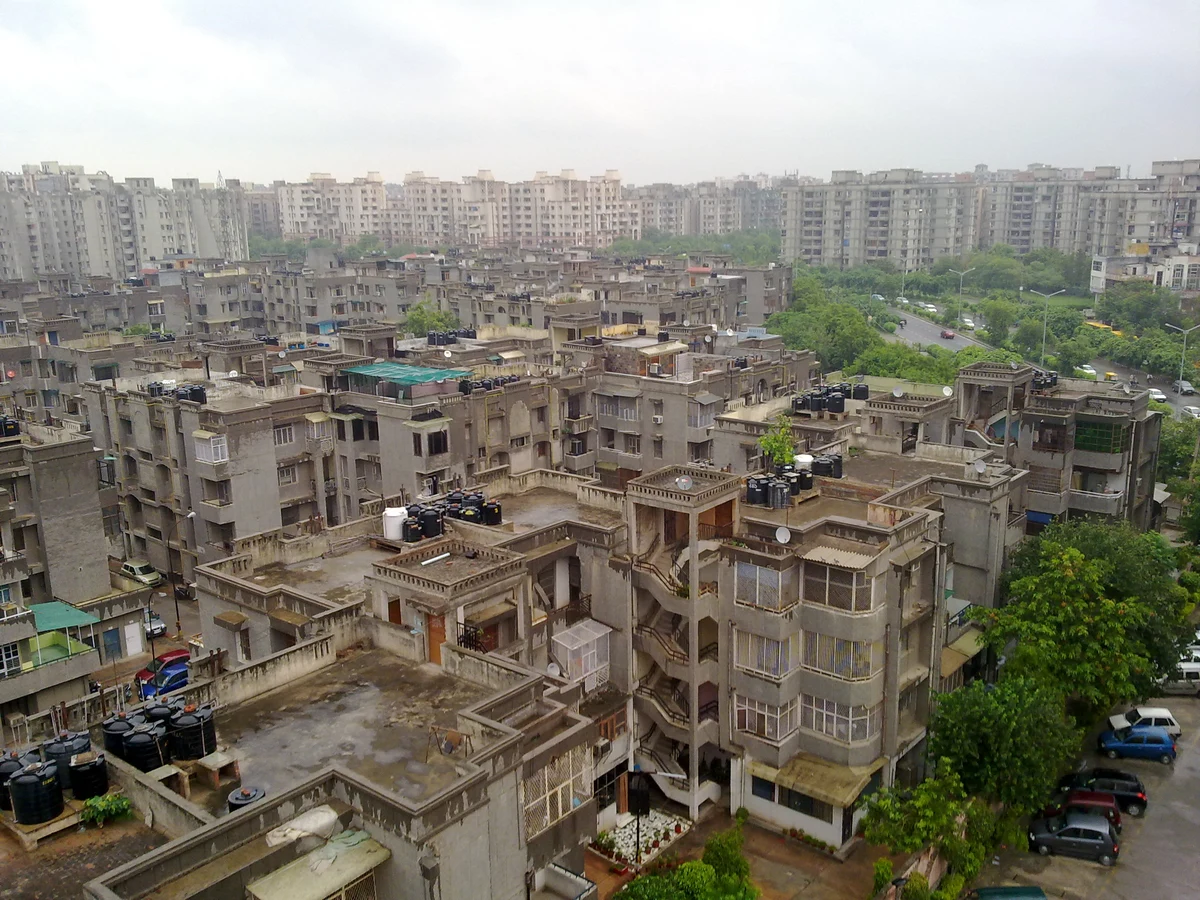
A home price in India depends on the locality and dwelling type, and the national house price index cannot give you a purchase price in rupees. As a concrete benchmark, the Delhi Development Authority’s 3 November 2026 circular quoted ₹67.03–67.41 lakh for specified Narela flats, while two Loknayakpuram flats added in its 13 November corrigendum were priced at ₹1,14,70,615 and ₹1,19,91,811.
Those figures are dated public housing offers. Their value is that each has a named locality, a defined dwelling category and a published size basis. They give a buyer a way to read a quote and compare its components. A private resale budget needs recent evidence from the locality where you would buy, ideally for the same kind of property and with a similar amount of usable space.
Define the purchase before collecting prices. Specify the city and locality, whether you want an apartment or an independent house, and whether you are considering a completed home or an under-construction one. For an independent house, record whether the quoted amount covers both the land and the building. For a plot, use the land area and record separately whether your budget includes future construction. One lakh is ₹1,00,000 and one crore is ₹1,00,00,000. Converting all quotes to rupees before doing the arithmetic helps when a shortlist mixes lakh figures with exact amounts.
The DDA examples below cover middle-income group flats in two localities. The Narela figure is a tentative after-discount range for the specified pockets. Each Loknayakpuram row pairs the price with the published area for that particular offer. All three rows use plinth area, which the DDA circular describes as including common area. Use the flat-specific carpet area if you want to compare the size of the indoor space with another development.
| Locality | Notice date | Plinth area | Published offer price |
|---|---|---|---|
| Narela, Pockets 1B/1C, Sector A1–A4 | 3 November 2026 | 114.05–114.69 sq m | ₹67.03–67.41 lakh |
| Loknayakpuram, Pocket E | 13 November 2026 | 134.259 sq m | ₹1,14,70,615 |
| Loknayakpuram, Pocket E | 13 November 2026 | 140.455 sq m | ₹1,19,91,811 |
Within Pocket E, the larger example adds 6.196 square metres of plinth area and costs ₹5,21,196 more at the published price. That gives you a specific difference to assess. Ask for the two floor plans and carpet areas to see where the extra space falls. The published area increase alone gives no way to tell how much of it you would gain inside the flat.
Check the original circular alongside later amendments before using an older brochure to set a budget. The 13 November corrigendum revised the Jahangirpuri price range to ₹45.50–113.96 lakh and added Loknayakpuram units. Check current availability and the demand letter for the exact flat. The circular excludes maintenance, water connection and any applicable conversion charges from its tentative disposal pricing. Check the applicable terms for each of those amounts and for GST.
For a Maharashtra public housing search, identify the MHADA board and the particular round first. The 18 November 2026 Nashik Board advertisement and booklet concern Nashik. The Mumbai Board’s March 2026 lottery results cover that earlier round, with categories including under-construction and scattered tenements. Use the relevant scheme booklet to check eligibility, price and deposit separately, then consult the current official status for the unit or round.
Ask for the area figure and its definition in writing. Under section 2(k) of the Real Estate (Regulation and Development) Act, apartment carpet area includes internal partition walls and excludes external walls, service shafts, exclusive balcony or verandah space and exclusive open terrace space. A quote may instead use plinth or super built-up area. Keep the source label beside the number, especially when a listing gives several measurements or a quoted rate omits the denominator.
For instance, if one seller quotes price per square foot of carpet area and another supplies only a total price and a plinth area, keep the second home in your total-price comparison. Leave its carpet-area rate blank until you obtain the underlying measurement. Once you have both carpet figures, divide each property’s price by its own carpet area in square feet. For a measurement in square metres, multiply by about 10.7639 to convert it to square feet. The area definition stays the same after the conversion.
A 2 BHK label describes the bedroom, hall and kitchen arrangement and leaves the floor area open. Compare the stated usable space and room layout before deciding what a higher price buys. For a registered development, look up the project number with the relevant state or union territory RERA authority and check accessible disclosures against the seller’s documents. If you are comparing an apartment with an independent house, keep the total prices visible and show building and plot measurements separately. A rate per square foot of land answers a different budgeting question from a rate per square foot of apartment carpet area.
A listing tells you what a seller is asking at a particular point in time. Record the date, area basis, dwelling type and any named inclusions, then check whether the seller still stands by the quote. Several listings can help you see what is on offer in your chosen locality. Look for duplicate advertisements for the same flat before counting them as separate observations. A developer’s published base price may leave floor-rise, parking or government dues to be added separately.
A registered transaction is evidence of a recorded sale. Its value as a comparable depends on whether you can identify the property, its area basis and when it sold. A locality-level transaction source with those fields can help you test whether a current asking price is in line with recorded sales of similar homes. A public authority’s offer price belongs in a separate field because it describes the terms of a scheme. An institutional lender assessment has its own valuation basis and serves a different purpose from the seller’s quote.
A circle or guidance value is an official valuation to check when estimating charges under the applicable local rules. Keep it beside the agreed consideration in your worksheet, with its own label and source. For a project you found through a portal, use the official RERA directory to locate the relevant authority and check the project name, builder and published timelines where available. Check sale evidence and ownership through the appropriate local records. The project search establishes which development the disclosures concern.
The Reserve Bank of India’s April–June 2026 release, published on 24 August 2026, reported an All-India House Price Index of 117.5 on a 2022–23 base. The index rose 1.1% from the previous quarter and 3.6% from a year earlier. It draws on transaction-level data supplied by registration authorities for 18 cities, including Mumbai, Delhi, Pune, Bengaluru, Hyderabad and Chennai. Use it to describe broad price movement in that coverage. A rupee estimate still needs prices for comparable homes.
NHB RESIDEX has series with different valuation bases. Its institutional assessment series uses lenders’ assessment prices. Its under-construction market series surveys unsold properties and describes a base developer price that can exclude extras. In the 50-city assessed series for October–December 2025, the annual increase was 5.0% for the composite, 12.7% in Bengaluru, 8.2% in Chennai and 3.7% in Mumbai. Those figures compare how fast assessed prices moved over the same period. To decide which city is cheaper for a specific dwelling, obtain prices in rupees on a common basis.
To update the RBI comparison, check its release directory and find the comparable city series in the Database on Indian Economy under Statistics, Real Sector, then Prices & Wages. Record the observed quarter, series base and any revision date alongside the number. NHB’s archive lists its June 2026 edition dated 8 September 2026. Its detailed figures and coverage still need checking against the official release. Keep each observation tied to its own source and period, and compare rates within a series with consistent coverage and methodology.
| Published number | Value | Scope |
|---|---|---|
| Composite index | 117.5 | 2022–23 base, transaction records across 18 named cities |
| Quarter-on-quarter change | +1.1% | April–June 2026 compared with January–March 2026 |
| Year-on-year change | +3.6% | April–June 2026 compared with April–June 2025 |
Slums and urban housing in India: Census data, Dharavi and PMAY-UIndia’s mixed economy, GDP, income and poverty explained
Start your calculation with the agreed price. Enter the valuation used for duties and the verified local rates separately, then add registration, any confirmed GST and any separately payable amounts. Keep a line for each charge so that parking, maintenance or a connection fee already in the quote appears only once. Brokerage or an inspection can also be entered as separate amounts when relevant. Keep unconfirmed charges visible as pending so that the calculated subtotal remains intelligible.
For a worked example, take an ordinary sale deed in the National Capital Territory of Delhi with a ₹60,00,000 agreed price, a ₹65,00,000 applicable circle value and a single buyer in the published 4% stamp duty category. Delhi Revenue’s published information uses the higher figure for both stamp duty and the 1% registration charge. On ₹65,00,000, that gives ₹2,60,000 in duty and ₹65,000 for registration. Include the ₹100 pasting fee and the charges total ₹3,25,100. Add that to the agreed price to reach ₹63,25,100 before any other applicable costs.
Use the official local schedule or calculator for the property and deed you are considering. Delhi Revenue also publishes a 6% stamp duty category. Joint ownership, exemptions and different instruments can need separate checks. For GST, confirm the treatment for the transaction before entering a figure. Completion or first occupancy and when the consideration is received can matter. A housing notice that quotes a price excluding GST leaves the applicability question to be checked separately.
Once you have the estimated total, build a payment schedule from the documents you actually receive. Record the amount due at booking, whether it is credited toward the agreed price, and when the remaining payments fall due. Put any financing in a separate column and use the proposed disbursement dates to calculate what you would need to pay from your own funds at each stage. For a DDA offer, check those amounts and dates against the current demand letter for the selected flat.
| Input or cost | Value | Explanation |
|---|---|---|
| Agreed purchase price | ₹60,00,000 | Actual consideration in the example |
| Applicable circle-rate value | ₹65,00,000 | Higher value is the basis for both rates |
| Stamp duty | ₹2,60,000 | 4% of ₹65,00,000 in this buyer category |
| Registration | ₹65,000 | 1% of ₹65,00,000 |
| Pasting fee | ₹100 | Included in the simplified published schedule |
| Purchase total | ₹63,25,100 | Agreed price plus the three charges before other independently applicable costs |
