How to choose your first recording
Start with Hindustani vocal music from North India and a Carnatic concert from the South, then follow regional examples such as Manipur’s Sankirtana, Rajasthan’s Kalbelia songs and dances, and a Bengali Baul song. For a first listening session, choose Geetha Raja’s seven-and-a-half-minute Melukovayya for a compact classical performance, or the Sankirtana documentary to hear music alongside dance and collective worship.
Read each regional label alongside the language, performers and occasion. A concert can include several languages, and a regional tradition can be performed far from the place with which it is associated. An archive may also use a country field to describe a particular item. These details answer different questions, from where this performance happened to which musical practice the performers are drawing on.
The sources also determine what you can compare. A concert recording lets you follow successive musical decisions within one performance. A nomination documentary brings several practices into view through edited scenes. A catalogue entry can give you a title, performer and running time, while a dated programme establishes that an item was scheduled. Choose the source that answers the question you bring to the music.
| Recording or film | Tradition or context | Time or edition | What to listen for |
|---|---|---|---|
| Alap and Dhrupad | Hindustani | 29:40, Smithsonian 1971 edition | Dagar brothers on voices. Hear the prelude before pakhava accompaniment. |
| Alap and Khyal | Hindustani | 22:52, same Smithsonian edition | Robin Kumar Chatterjee on vocals with credited sarangi, tabla and tanpura. |
| Melukovayya, Geetha Raja | Carnatic | 00:00–07:36 of the 2005 concert | Raga Bowli and five-beat Khanda Chapu in a Telugu kriti. |
| Maal Marugane, Geetha Raja | Carnatic | 27:16–1:05:05 of the 2005 concert | Tamil text and extended ragam–tanam–pallavi in Shanmukhapriya. |
| Ĉakkanirāja pallavi, Ranganayaki Rajagopalan | Carnatic | 6:05, disc 2 track 214 | Karaikudi vina and mridangam. The same disc includes a separate percussion solo. |
| Sankirtana of Manipur | Devotional and ritual | 2009 nomination film | Group singing, drumming and movement during Vaishnava performance. |
| Buddhist chanting of Ladakh | Devotional and ritual | 10:05, UNESCO official film | Recitation and instrumental accompaniment in documented ritual settings. |
| Kalbelia songs and dances of Rajasthan | Folk | 9:38, 2009 nomination film | Oral performance, wind instrument and frame percussion. |
| Baul Song, Purna Chandra Das | Folk | 5:12, Smithsonian label | Bengali voice with tabla in the label record. |
| Aayega Aanewala from Mahal | Film | 1949 Hindi film song | Lata Mangeshkar’s voice. The film archive documents the song’s narrative recurrence. |
| Naatu Naatu from RRR | Film | 2021 Telugu single, 2023 award | The label credits Rahul Sipligunj and Kaala Bhairava. The Academy credits the composer and lyricist. |
- UNESCO: Sankirtana of Manipur
- Sangeet Natak Akademi: National Inventory of Intangible Cultural Heritage
- Smithsonian Folkways: North India, Vocal Music, Dhrupad and Khyal (UNES08076)
- Smithsonian National Museum of Asian Art: Geetha Raja, South Indian classical music
- UNESCO: Kalbelia folk songs and dances of Rajasthan
- Smithsonian Folkways: Baul Song, Purna Chandra Das (UNES08077_101)
- National Film Archive of India: Mahal (1949), collection record
- Academy Awards: Naatu Naatu, 95th Oscars winner
- Smithsonian Folkways: Ranganayaki Rajagopalan, Continuity in the Karaikudi Vina Style (UNES08311)
- UNESCO documentary of Manipuri Sankirtana
- UNESCO documentary of Kalbelia songs and dances
North India through dhrupad and khyal
Smithsonian Folkways’ North India, Vocal Music, Dhrupad and Khyal puts two Hindustani vocal forms on the same album. Alap and Dhrupad runs 29:40 and features Mohinuddin Dagar and Aminuddin Dagar. Raja Chhatrapati Singh is credited on pakhava and Suraya Dagar on tanpura. Alap and Khyal runs 22:52 and features Robin Kumar Chatterjee with Nazir Ahmad on sarangi, Kedarnath Bhatt on tabla and P. S. Rajvedi on tanpura.
Begin with the extended prelude of each track. The tanpura appears in both sets of credits, giving you a common point of reference as you listen for the shape of the vocal phrases. Then move further into each performance and compare how the voice sits with the accompaniment. The pakhava credit gives you a place to start with the dhrupad track. In the khyal, listen separately for the sarangi and tabla.
Keep the scale of that comparison in view. The album gives you two particular performances, and several things change at once, including the singers, ensemble and vocal form. Describe an audible difference in terms of the track where you hear it. When dating the Dagar performance, use the label’s editorial note, which gives 1965, and retain 1971 as the album’s release year.
The Music Academy Madras archive widens the geographical picture. Its programme for 23 December 1941 lists Srimati Vasundara Devi & Party under Hindustani Music. That entry documents Hindustani programming in Madras and gives you a dated example of how concert activity can cross the regions used to organise listening guides. Use the programme for that historical point and the Folkways catalogue for credited audio.
South Indian Carnatic singing and vina
The Smithsonian National Museum of Asian Art hosts Geetha Raja’s complete 2005 Freer concert, recorded in Washington, DC. Raja sings with Radhika Mani on violin and Dattatreya Sharma on mridangam. The programme gives you Telugu, Tamil and Sanskrit lyrics within a single South Indian classical concert. Its time codes and artist notes let you compare items with the same performers and recording conditions.
Play Melukovayya from 00:00 to 07:36. A brief alapana leads into a Telugu kriti, a composition by Tyagaraja. Raja’s notes identify the raga as Bowli and the tala as Khanda Chapu. Listen to the opening for characteristic melodic phrases, which help define a raga. When the composition begins, try following the five-beat rhythmic cycle in groups of two and three.
For more time with melodic development, play Maal Marugane from 27:16 to 1:05:05. This extended ragam–tanam–pallavi uses raga Shanmukhapriya and Tamil text. Follow the unfolding melody, then notice how the violin responds and where the text enters. Comparing those points with Melukovayya lets you hear how much space the two performances give to exposition and improvisation within the same concert.
For a Carnatic instrumental example, turn to Ranganayaki Rajagopalan’s Continuity in the Karaikudi Vina Style. The 2014 Folkways edition documents a lineage associated with Karaikudi, Tamil Nadu. Rajagopalan plays vina and Srimushnam Raja Rao plays mridangam. On disc two, the 6:05 Ĉakkanirāja pallavi segment and the 5:07 tani āvartana give you a composition segment and a drum solo to compare. Richard K. Wolf’s liner notes explain where each falls in the larger progression from improvisation through composition to the percussion feature.
Manipur and Assam through devotional performance
In the Vaishnava communities of the Manipur plains described in the UNESCO nomination, Sankirtana brings singing, drumming and dance together to narrate Krishna’s life and mark festivals and life-cycle occasions. UNESCO inscribed it in 2013. One example in the nomination describes two drummers and about ten singer-dancers with seated devotees around them. That arrangement gives you a concrete way to watch how performers move and direct sound within the gathering.
The 2009 Sangeet Natak Akademi nomination film is the starting point for watching and listening. It documents several practices, so pay attention to changes in setting and ensemble from scene to scene. Within a continuous passage, follow the drummers as the dancers move and listen for the relation between sung phrases and rhythmic gestures. The image preserves spatial relationships that an audio excerpt alone would leave ambiguous.
In Assam, the Sangeet Natak Akademi’s Sattriya inventory record locates the composite tradition of music, dance and theatre in the Brahmaputra Valley and parts of the Barak Valley. It traces the repertory to Sattras and to devotional work associated with Sankaradeva and later practitioners. The repertory includes compositions in Brajavali and Assamese, which give you more precise terms to look for in a programme than a regional label alone.
For an Assam listening lead, the Akademi’s 2016 activity report documents Borgeet performances, including a group from Sattriya Sangeet Mahavidyalay, Diphu. The public video in the inventory could not be verified for playback. Use the report to identify the repertory and performers for a recording search. Before choosing a result, check for institutional credits and enough programme detail to establish what the recording contains.
Chanting in Ladakh and oral transmission
The Ladakh example centres on group recitation of sacred Buddhist texts. UNESCO’s 2012 inscription decision describes chanting in monasteries, villages and other settings. Occasions vary with ritual and school, and bells, drums, cymbals and trumpets can accompany the voices. Those instruments give you several sounds to listen for, with the text and the collective delivery providing the focus across the settings described.
Find the 10:05 nomination documentary credited to the Central Institute of Buddhist Studies. The documentary dates to 2009 and UNESCO issued its official playback version on 5 December 2012. The institutional credit identifies the documentary. For a particular passage, use the scene’s own identification where it supplies one, especially if you want to attribute the chanting to a named monastery or group.
UNESCO’s entry on Vedic chanting gives you a second question to bring to oral traditions. It describes taught techniques for preserving pitch accents and pronunciation. In the Ladakh documentary, the readily observable comparison is how group delivery and instrumental accompaniment vary in the scenes shown. For Vedic chanting, the documented teaching methods direct attention to the way the spoken text is transmitted, including details of pitch and articulation.
Kalbelia performance in Rajasthan and Baul song in Bengal
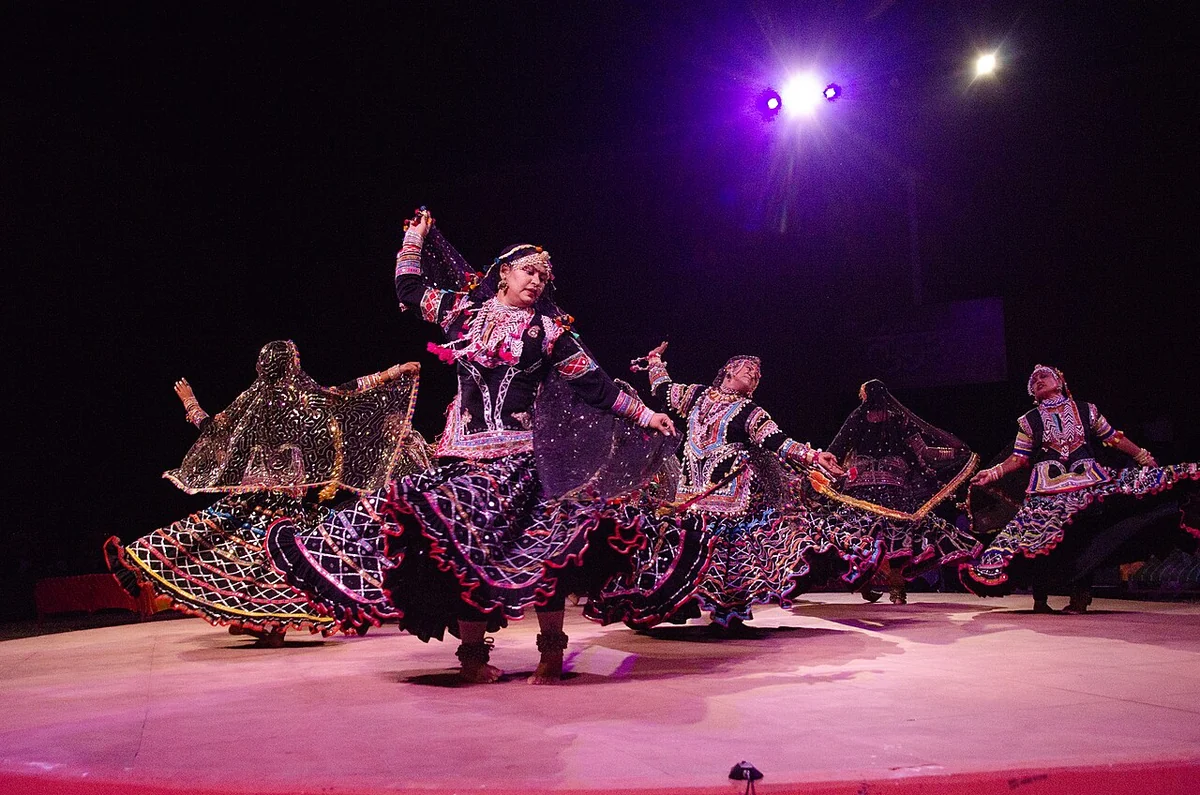
UNESCO’s Kalbelia nomination describes an oral tradition of songs and dances among Kalbelia communities in Rajasthan. It includes improvisation, stories and special performances for Holi. UNESCO inscribed the element in 2010. The nomination identifies the khanjari as frame percussion and the poongi as a wind instrument. Listen for the contrasting sounds of those instruments as you watch how the dance relates to the accompaniment.
The West Zone Cultural Centre’s 2009 nomination film runs 9:38 in the UNESCO archive. Use that credit to identify the film when looking it up. The documented association with Udaipur gives the source a geographical reference, while a caption or film credit is needed to place a particular scene. The nomination’s account of Holi gives you a documented performance context to read about alongside the film.
For Bengal, Smithsonian Folkways’ Baul Song is a 5:12 example from a Bengal folk music album released in 1972. The track credits Purna Chandra Das as lead vocalist, identifies the language as Bengali and lists a tabla player whose name is unspecified. Its catalogue gives India as the country for this recording. Baul traditions extend across historic Bengal, so the country field is useful for identifying this particular selection while the Bengali language places it in a wider musical setting.
Hindi and Telugu film songs in context
In the Hindi film Mahal from 1949, Lata Mangeshkar’s Aayega Aanewala recurs as a musical association in the narrative. The National Film Archive of India credits Khemchand Prakash for composition and Nakshab for lyrics, with Kamal Amrohi directing and Bombay Talkies producing. Use Saregama’s official compilation for the song and the archive’s collection record for film personnel. When watching the film, listen for what the song brings back to mind each time it returns.
For a Telugu film example, choose Naatu Naatu from RRR. The official Telugu lyric video credits Rahul Sipligunj and Kaala Bhairava as singers. The Academy credits M. M. Keeravaani for music and Chandrabose for lyrics. The single was released in 2021 and the song won Original Song at the 2023 Oscars. Each source identifies a different part of the song’s history, from commercial release to the award.
Choose the version according to what you want to hear. The lyric video is useful for following the vocal performance and identifying the Telugu release. A song compilation lets you find Aayega Aanewala directly, while the film supplies the scenes needed to hear its recurrence in context. When an upload’s credits differ from an institutional record, use the film archive or award record for the roles it explicitly documents.
North and South India compared by geography, language and food
How to verify a recording or heritage entry
Check playback on the institution’s current item page by matching the title, performers and duration before pressing play. At Folkways, the album and track entries help distinguish similarly named items and identify the access options offered for that edition. For Geetha Raja, use the museum’s time-coded programme to locate the exact passage. For nomination films, the institutional credit and running time help distinguish the documentary from excerpts and reposts.
For heritage status, start with the National Inventory of Intangible Cultural Heritage, which brings together entries submitted by practitioners and stakeholders. Check the status field, then match any claimed UNESCO inscription year to the relevant UNESCO decision or element record. The inventory gives you leads for music, ritual and composite performance traditions. Entry descriptions are most useful when they identify the community, setting and occasion.
Keep a recording’s identifiers with any listening notes you save. For Baul Song, the singer, 5:12 duration and Folkways track code UNES08077_101 specify the example more precisely than its title. For a documentary, keep the credited institution and production year alongside any later publication date. If a recording becomes unavailable, those details give you a way to check whether a replacement is the same performance.
- Sangeet Natak Akademi: National Inventory of Intangible Cultural Heritage
- Smithsonian Folkways: North India, Vocal Music, Dhrupad and Khyal (UNES08076)
- Smithsonian National Museum of Asian Art: Geetha Raja, South Indian classical music
- Smithsonian Folkways: Ranganayaki Rajagopalan, Continuity in the Karaikudi Vina Style (UNES08311)
- UNESCO: Buddhist chanting of Ladakh, decision 7.COM 11.16 and nomination file 00839
- UNESCO: Kalbelia folk songs and dances of Rajasthan
- Sangeet Natak Akademi: Sattriya Music, Dance and Theatre inventory record
- Smithsonian Folkways: Baul Song, Purna Chandra Das (UNES08077_101)
- National Film Archive of India: Mahal (1949), collection record
- Academy Awards: Naatu Naatu, 95th Oscars winner
Sources
- UNESCO: Sankirtana of Manipur
- UNESCO: Tradition of Vedic Chanting
- Sangeet Natak Akademi: Pan-Indian Intangible Cultural Heritage Inventory
- Sangeet Natak Akademi: National Inventory of Intangible Cultural Heritage
- Smithsonian Folkways: North India, Vocal Music, Dhrupad and Khyal (UNES08076)
- Smithsonian National Museum of Asian Art: Geetha Raja, South Indian classical music
- Smithsonian Folkways: Ranganayaki Rajagopalan, Continuity in the Karaikudi Vina Style (UNES08311)
- Music Academy Madras: annual conference and concerts, 1940–1950
- UNESCO: Buddhist chanting of Ladakh, decision 7.COM 11.16 and nomination file 00839
- UNESCO: Kalbelia folk songs and dances of Rajasthan
- Sangeet Natak Akademi: Sattriya Music, Dance and Theatre inventory record
- Smithsonian Folkways: Baul Song, Purna Chandra Das (UNES08077_101)
- National Film Archive of India: Mahal (1949), collection record
- Academy Awards: Naatu Naatu, 95th Oscars winner
- Wikimedia Commons: Kalbelia dancers group
- Telugu record label single release in 2021
- UNESCO documentary of Manipuri Sankirtana
- UNESCO documentary of Kalbelia songs and dances
