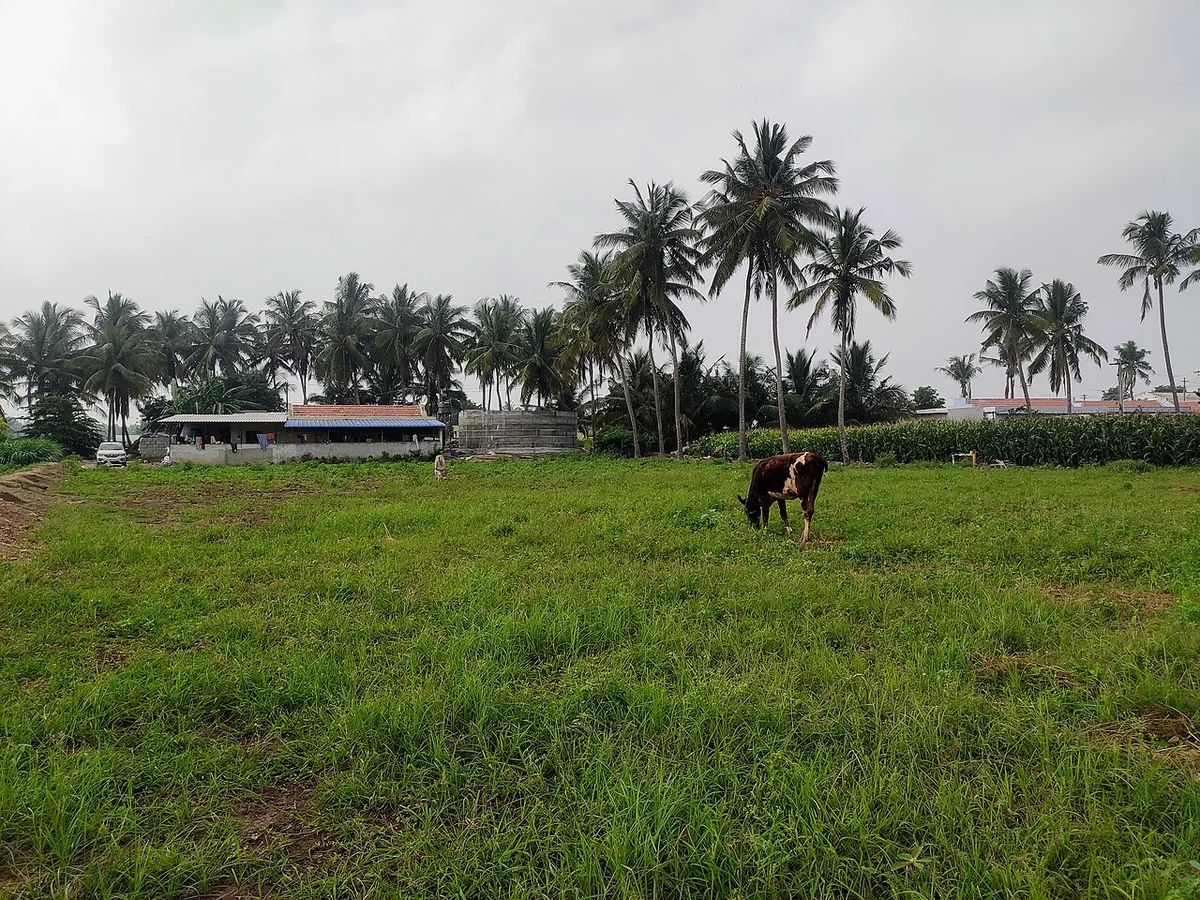
Why cows matter in India
Cows are important in India as dairy animals and as animals honored in Hindu observances, including Govardhan Puja in Chhattisgarh and Mattu Pongal in Tamil Nadu. Their treatment in law depends on the jurisdiction and animal category, and India’s Constitution sets out a Directive Principle on cattle preservation and slaughter.
The familiar phrase “sacred cow” captures one part of the story. Honoring cattle can be a form of worship and a way of recognizing their place in agricultural life. The Chhattisgarh and Tamil Nadu examples show how that recognition takes different forms and belongs to different festival calendars. A ritual description tells you something about the occasion and community it describes. The details of an individual household’s beliefs or customs require evidence from that household or community.
Everyday language can also blur which animals people mean. In ordinary English, a cow is female cattle, while cattle includes males and younger animals. Buffalo belong to a separate category in Indian livestock and dairy statistics, and an observance described as honoring cattle can have a wider focus than adult female cows. Those distinctions matter when a population number, a dairy statistic or a phrase from a festival guide gets shortened to “cows in India.”
How many cows India counted
The release for India’s 20th Livestock Census, published on 16 October 2019, reported 145.12 million female cattle within a total of 192.49 million cattle. It separately reported 109.85 million buffalo. The broad total of 302.79 million bovines included cattle, buffalo, mithun and yak. Female cattle is the statistical category to use when quoting the 145.12 million figure. A question specifically about mature females calls for an age breakdown.
| Category | Millions of animals | What the count includes |
|---|---|---|
| Female cattle | 145.12 | Female cattle of all ages |
| All cattle | 192.49 | Female and male cattle, including young stock |
| Buffalo | 109.85 | Buffalo separately counted |
| All bovines | 302.79 | Includes cattle, buffalo, mithun and yak |
If you come across a headline saying India had about 193 million cows, the number is close to the census total for all cattle. To answer a question about female cattle, use the census’s 145.12 million figure and keep the year with it. The difference changes what the reader can infer. A total for both sexes says something about the size of the cattle population, while a count of female cattle still includes animals outside the group producing milk.
There is a geographic wrinkle within the published figures. The 2019 summary used numbers from the 19th census for Delhi. Keep that qualification in view if you are comparing figures for Delhi with figures elsewhere or trying to match the census summary with a municipal report. The original release gives the scope of the national headline, while a more specific table is the place to look for the animal category and area you actually need.
India launched the 21st Livestock Census on 25 October 2024. To see whether newer figures can replace the 2019 count, look in the Department of Animal Husbandry and Dairying’s public publications index for final all-India results. Check the census round, geographic coverage and table heading before quoting a number. A launch notice gives the start of the exercise. A final results table supplies the count and its definition.
How much milk comes from cows
India produced 247.87 million tonnes of milk in 2024–25, up from 146.31 million tonnes in 2014–15, according to the Press Information Bureau’s National Milk Day backgrounder of 25 November 2026. Both are fiscal-period totals for milk from all reported animal sources. To find the share from cows, use the species breakdown in the Department of Animal Husbandry and Dairying’s Basic Animal Husbandry Statistics 2025, which covers a March 2024 to February 2025 sample-survey year.
- Cattle
- 53.53 percent
- Buffalo
- 43.15 percent
- Goat
- 3.32 percent
Cattle accounted for just over half of national milk output, and buffalo supplied more than two fifths. The cattle share combines four published categories. Crossbred cattle alone accounted for 30.80% of all milk output, followed by indigenous cattle at 11.20%, non-descript cattle at 9.64% and exotic cattle at 1.89%. These percentages describe where the milk came from. Comparing how much milk animals produce on average would require a corresponding count of animals in milk for each group and period.
For a shopper trying to tell what is in a packet, the national breakdown explains why buffalo milk matters alongside cow milk. The packet’s own description or the producer’s product information is the place to check its source. A national percentage pools production across the country, so it cannot tell you which animal supplied a particular product or how much of the milk available in a particular town comes from each source.
The four cattle components add to 53.53 percentage points using the values printed in the report. This is a share of the milk volume. The 2019 census counted animals in a different period and across different categories. A reader making a chart can keep the milk and headcount tables on separate axes and note the sampling period in the milk chart’s title.
What a dairy visit in Anand can show you
In Anand, Gujarat, Amul Dairy offers a public plant visit through its booking portal. The operator is the Kaira District Co-operative Milk Producers’ Union, which describes a structure in which village dairy societies affiliate with their district union. That structure gives the visit an agricultural context. Milk originates on farms, and the cooperative brings village societies into a district organization that can collect and process what producers supply.
The distinction between a village society and a processing plant matters if you want to see a particular part of dairying. A plant visit is an opportunity to learn about organization, collection and processing. A visit focused on how cattle are kept or how milk is collected on a farm would require a host who offers that access. The fact that farmers participate in a cooperative carries no public invitation to their premises, and the plant booking covers the facility identified by the operator.
Check the listing for Amul Dairy in Popati Nagar, Anand, on the operator’s booking portal. The name and locality help identify the facility when an itinerary refers broadly to an Amul visit. Use the listing to confirm availability and any requirements for groups before arranging travel around the stop. If the booking information describes a plant tour, plan around the parts of the visit the operator actually lists.
How cattle are honored in Chhattisgarh and Tamil Nadu
In Chhattisgarh, Incredible India describes the Diwali period under the names Devari Tihar and Surhutti Tihar. Its account includes Govardhan Puja and Maatar, with examples of decorated cattle and figures representing Govardhan, Krishna, cowherds and cattle. The figures help explain the context of worship. Cattle appear as part of a scene that includes Krishna and cowherds, alongside practices involving the animals themselves. Attribute those details to the Chhattisgarh account, since they describe observances in a particular region.
Tamil Nadu offers a distinct example with Mattu Pongal, the third day of the four-day Tamil harvest festival of Pongal. The tourism profile identifies honoring cattle as the day’s theme. Its place in a harvest festival gives readers a way to understand that recognition in the context of farming. The figures documented in the Chhattisgarh account belong to that account. For a description of a particular Mattu Pongal celebration, look to sources from the community holding it.
If a listing near Coimbatore advertises a Pongal programme, check whether it identifies Mattu Pongal and says what visitors can attend. The festival profile explains the sequence and theme, while the organizer can confirm the date, venue and access for a particular gathering. A public programme may have a different schedule from a household observance. Where visitors are welcome, give participants and animals room and ask before photographing a person or ceremony.
What the Constitution says about cattle
Article 48 of the Constitution of India appears among the Directive Principles of State Policy. It addresses the organization of agriculture and animal husbandry, the preservation and improvement of breeds, and steps against the slaughter of specified cattle. Those elements place the provision within agricultural and animal husbandry policy. For a question about a current restriction in a specific place, the relevant state or territory’s legislation and rules supply the detail.
The animal category matters as much as the place. When a headline uses “cow slaughter” as shorthand, the underlying law’s definitions determine which animals the provision covers. To check a claim, identify the jurisdiction and activity being discussed, then look up the current provision and read it with its definitions, applicable rules and amendments. A quotation from Article 48 explains the constitutional context. A quotation from a state law needs enough context to show which animals and activities fall within it.
What cattle on Chennai streets tell you
Greater Chennai Corporation lists stray cattle among the responsibilities of its veterinary service. It records 4,237 cattle taken into municipal care in 2023 and 2,827 in 2024. These are figures for the corporation’s operations. They tell you how many cattle the municipal service recorded taking in during each year. The lower figure documents a change in recorded activity, and establishing a change in the number of cattle on the streets would require a population measure.
An animal’s presence in a public space tells you where it is at that moment. Ownership and the circumstances that brought it there are separate questions. If cattle are blocking a road or footpath, leave the animals room and report the location to the civic authority responsible for that stretch. Inside the Greater Chennai Corporation area, the corporation’s public grievance service lists 1913 as its general municipal number. Check the current grievance listing for the service route.
A street address is more useful than the name of the nearest large city when identifying the responsible office. In New Delhi, the New Delhi Municipal Council publishes cattle services for its own area. Start with the municipality that covers the actual location and check its veterinary, public health or grievance information. For a report about an obstruction, give the street or a nearby landmark and describe where the animal is standing so the local service can find it.
Sources
- Legislative Department: Constitution of India, Article 48
- Department of Animal Husbandry and Dairying: Basic Animal Husbandry Statistics
- Department of Animal Husbandry and Dairying — 20th Livestock Census release, 16 October 2019
- Press Information Bureau — National Milk Day 2026 dairy backgrounder
- Amul Dairy — Anand cooperative and public plant visit
- Incredible India — Govardhan Puja and Maatar in Chhattisgarh
- Incredible India — Mattu Pongal in Tamil Nadu
- Greater Chennai Corporation — Veterinary service and civic complaints
- Image — Cow in Chennai photographed by Snapdragon66
- Image — Cattle grazing near Coimbatore by Deadrat

