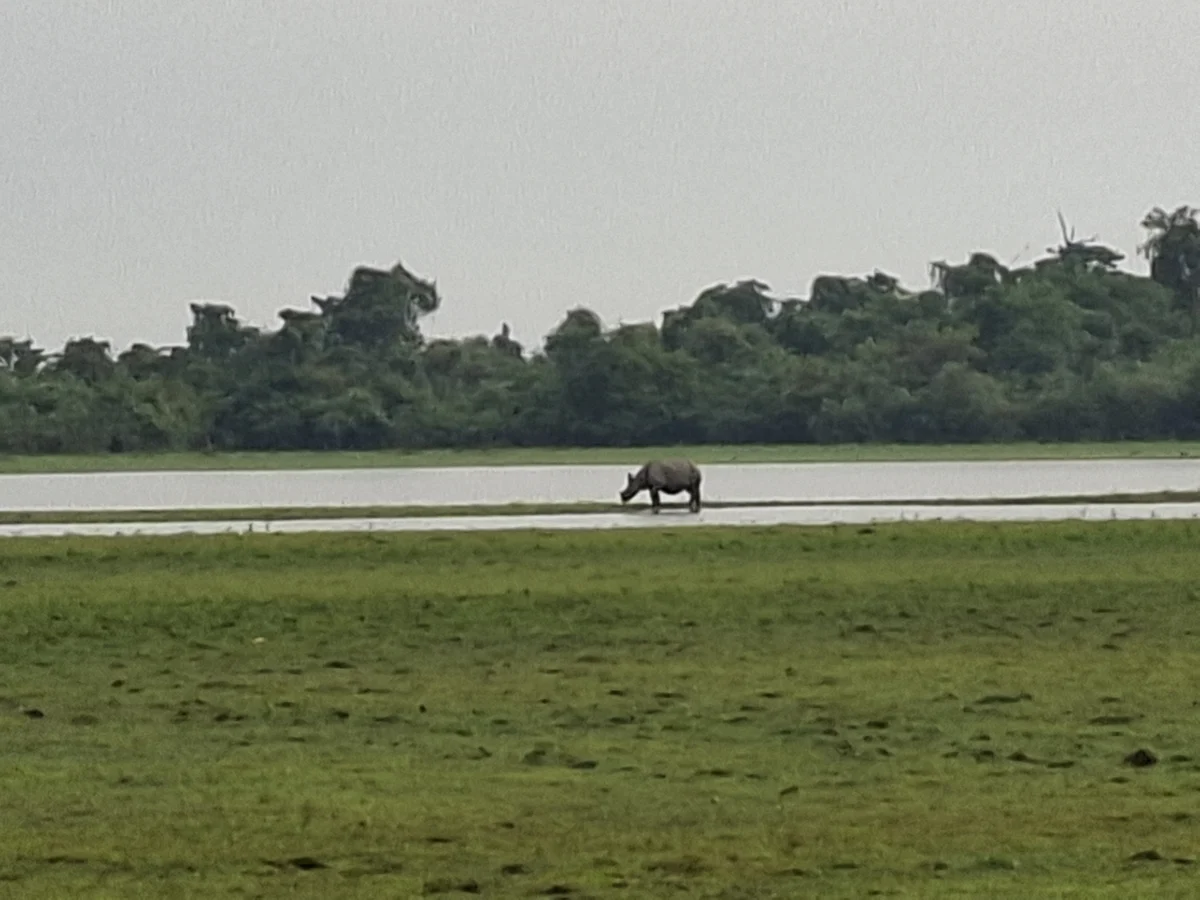
Where to look for wildlife in India
For Indian one-horned rhinoceroses, start with Kaziranga National Park in Assam, and for Asiatic lions, start with Gir in Gujarat. For tigers, use the national assessment to understand their presence across India and check individual park records to decide where to visit.
You can also start with the landscape you want to see. Kaziranga is a northeastern floodplain with records of several large mammals. Rajasthan's Desert National Park brings together dunes, rocky terrain and dry salt-lake beds. Those descriptions help you choose between two landscapes even if you have yet to settle on a particular animal.
Keep the area attached to every count. The verified Kaziranga figure is 2,613 rhinos in that Assam park in 2022. Gujarat’s 2025 exercise estimated 891 Asiatic lions across 11 Saurashtra districts. The tiger number is a national estimate from the 2022 field cycle. Each geography matters when choosing where to visit or comparing numbers across years.
Example for a first visit to India. If your trip already includes Assam and your priority is a one-horned rhinoceros, Kaziranga is a grounded place to investigate. If your trip includes Gujarat and your priority is an Asiatic lion, start with Gir and find out which visitor offer fits your plans. A park name helps you choose a destination. For an itinerary, you also need the specific entrance or reporting point for the visit you plan to book.
- National Tiger Conservation Authority: All India Tiger Estimation Overview
- UNESCO | Kaziranga National Park
- Ministry of Culture | Kaziranga National Park
- Press Information Bureau | Asiatic lions and national animal
- Rajasthan Tourism | Parks and wildlife
- Gujarat Forest Department 16th Asiatic lion population estimation
- Verified Kaziranga rhino count and year
Compare parks, landscapes and wildlife records
| Place or record | What the source establishes | What to verify for a visit |
|---|---|---|
| Kaziranga National Park, Assam | Northeastern floodplain and World Heritage park with one-horned rhinoceroses, tigers, elephants, wild buffalo and sloth bears | Current visitor entrance, available visit options and permit requirements |
| Gir forest and Greater Gir, Gujarat | 2025 Gujarat estimate counted 891 Asiatic lions across 11 Saurashtra districts | The offer name, its reporting point and the applicable booking conditions |
| Desert National Park, Rajasthan | Dunes, rocky terrain, dry salt-lake beds and documented great Indian bustard habitat | Which landscapes visitors can access and which species local conservation records document |
| Ranthambore, Rajasthan | Tiger reserve and named destination under Sawai Madhopur | Reserve, assigned gate or zone and departure time |
| Sariska, Rajasthan | Rajasthan permit directory separates Sariska Gate and Tehla Gate | Use the gate printed on the actual permit |
| Keoladeo, Rajasthan | Forest Department lists sunrise to sunset and entrance guide and cycle services | Park counter and guide or cycle availability |
| National tiger assessment, India | The 2022 cycle identified individual tigers and produced a separate total estimate | Park-level wildlife information and current visitor access |
Start with the row that answers the question you actually have. A park description can help you choose a landscape. A species record can help you narrow the search to a place. A national assessment can tell you how a population figure was reported. The same source can be strong on one question and leave the others open.
The Rajasthan directory illustrates how to use a list of destinations. It puts Desert National Park, Ranthambore, Sariska and Keoladeo within a single state-level search. Use each name to look up the corresponding site's habitat, wildlife and access information. Keep the dunes and salt-lake beds attached to Desert National Park, where the source describes them.
Example for a short Rajasthan itinerary. If the experience you want is seeing dunes and dry salt-lake terrain, Desert National Park has the landscape description that supports your shortlist. If the trip depends on seeing a particular animal, look for a park-specific species record and check what part of the park visitors can enter. Those two checks help you decide whether the destination suits that trip.
- National Tiger Conservation Authority: Assessment Reports
- National Tiger Conservation Authority: All India Tiger Estimation Overview
- UNESCO | Kaziranga National Park
- Ministry of Culture | Kaziranga National Park
- Gujarat Forest Department | Gir brochure
- Press Information Bureau | Asiatic lions and national animal
- Rajasthan Tourism | Parks and wildlife
Kaziranga for rhinos and floodplain wildlife
Kaziranga National Park in Assam is the clearest park-level match here for the Indian one-horned rhinoceros. UNESCO describes Kaziranga as an important northeastern Indian floodplain and credits the park with helping bring the rhinoceros back from the edge of extinction in the early twentieth century. India's Ministry of Culture identifies Kaziranga as a World Heritage site and records several other large mammals there.
The Ministry of Culture lists tigers, elephants, wild buffalo and sloth bears alongside the rhino. That gives you several animals to read about before a visit and helps explain the range of wildlife associated with the park. Treat each entry as a record of presence. The list gives no basis for putting the five mammals in order of how often visitors encounter them.
The conservation history answers a different question from a current population count. Kaziranga's role in the rhino's recovery explains why the park matters to the species. To find out how many rhinos a recent survey reported, look for the survey date, the area covered and the measure published. Those details matter when one record describes Kaziranga and another may cover a wider area.
Example for an Assam visit. If rhinos are your main interest and elephants would also make the outing worthwhile, the park record supports shortlisting Kaziranga for both. Before settling on a booking, check which visitor areas are open on your intended date and where that specific visit starts. The park's wildlife list applies at park scale, so use current visitor information for decisions about where you can go.
The government’s park-specific 2022 count reports 2,613 greater one-horned rhinos at Kaziranga. The International Rhino Foundation’s 2026 report estimates 4,075 across the species’ range. The range-wide and park-specific figures describe different places and reference years. The Forest Department’s access directory lists Agaratoli for Eastern, Kohora for Central, Bagori for Western, Ghorakati for Burapahar and Biswanath for Northern. Match the range and meeting point to your permit, since seasonal access can vary.
India’s climate by region: monthly rainfall and temperature charts
Gir for Asiatic lions and choosing a safari
Gujarat’s Forest Department estimated 891 Asiatic lions in its 10–13 May 2025 survey, up from 674 in the 2020 estimate. The survey covered about 35,000 square kilometres across 11 districts in Saurashtra. It included both core areas and populations in places such as Barda Wildlife Sanctuary and the areas around Jetpur and Babra–Jasdan. The count covers a wider landscape than the area an individual visitor permit allows you to enter.
The Gujarat Forest Department distinguishes three visitor offers in its Gir brochure. They are the Gir Jungle Safari, the Gir Interpretation Zone at Devaliya and the Ambardi Interpretation Zone near Dhari. Search by the full name of the offer when you check location and access. The name Gir on its own leaves room to confuse bookings or make transport plans for a different starting point.
The brochure directs visitors to book safari permits online. Check the current forest department information for the particular offer and date you're considering. Before arranging a pickup, confirm the reporting location and any instructions attached to the booking. Use the current booking information for availability and conditions.
Example for a traveller comparing Gir Jungle Safari with the Gir Interpretation Zone at Devaliya. Put the two full names next to each other and check the booking entry and reporting point for each. If someone recommends a visit using only the name Gir, ask which offer they mean before using their description to plan your own trip. Use a conservation source separately to check any claim about where lions live beyond the area you can visit.
The Gujarat permit operator lists Gir Jungle Safari’s annual closure from 16 June to 15 October. Devalia Safari Park lists a Wednesday closure and a separate reception point, while Ambardi Safari Park in Dhari lists a Tuesday closure. Ambardi directs booked visitors to its own reception with the printed e-permit and original identification. Compare the exact offer and date before choosing a hotel pickup. The three departures can involve different starting points and travel times.
- Gujarat Forest Department | Gir brochure
- Press Information Bureau | Asiatic lions and national animal
- Gujarat Forest Department 16th Asiatic lion population estimation
- Gir current permit operator, booking and closures
- Gir and Devaliya operator’s practical boarding distinction
- Ambardi Safari Park closure and separate reception
Tigers and how to read the national estimate
The Indian Board for Wildlife chose the tiger as India's national animal in 1972. That designation answers a common question about India's wildlife. For information on how many tigers the country supports, consult the National Tiger Conservation Authority, which organises its assessments by survey cycle and publishes national summaries alongside more detailed reports.
In the 2022 cycle, the assessment surveyed 20 states and identified 3,080 individual tigers. The resulting total estimate was 3,682. Use the figure that matches your question and keep its label. The number of individuals identified and the estimated total describe different measures from the same survey cycle.
Example for checking two tiger figures. If one reference gives 3,080 and another gives 3,682 for the 2022 cycle, look for the words that accompany each number in the assessment. A reference to identified individuals points to the first figure. A reference to the estimated total points to the second. To compare across cycles, find the equivalent measure in each report and check the coverage and methods before interpreting the difference.
For a trip, work at park scale. Check a conservation or park source for local tiger records and then consult the park's visitor information for the parts open on your date. A national estimate has no per-visit sighting information. Even a park-level record leaves a separate question about how much of the documented habitat a visitor can see on a booked outing.
The ministry gives the 2022 central estimate as 3,682 with an estimated range of 3,167–3,925. The 2022 cycle remains the newest completed national assessment on NTCA’s reports page as checked. The agency separately documented preparations for the 2026 cycle. The new cycle’s launch does not supply the result of its fieldwork. For a trend statement, use matching measures from the completed publications.
Desert National Park and other Rajasthan wildlife sites
Desert National Park is a starting point if you're searching for nature in Rajasthan by terrain. The state tourism directory describes dunes, rocky ground and dry salt-lake beds within the park. The mix is useful when comparing landscapes because the word desert alone gives little sense of the different surfaces and features the park contains.
For a wildlife search, follow the terrain description with a park-specific species source. Look for an official park profile, management document or conservation survey that names the animal and the area where it was recorded. A source that gives a season or survey period can help you judge whether the observation answers your question about a particular time of year.
Rajasthan Tourism also lists Ranthambore, Sariska and Keoladeo. If you're comparing those destinations, check each one on its own terms. Record the site's full name, the habitat described for it, the wildlife relevant to your plans and the access information that applies to your dates. This keeps a state-level shortlist useful when you move from discovery to planning.
Example for a landscape-led outing. If you have time for one Rajasthan park and want to see dry salt-lake terrain, use the description of Desert National Park to focus your search. Then verify which visitor area includes the feature you're interested in. If the current visitor information gives only the park name, check with the responsible visitor office before choosing a departure point or arranging transport.
Rajasthan Tourism identifies Desert National Park as habitat for the great Indian bustard. For Keoladeo at Bharatpur, the Forest Department lists sunrise-to-sunset access and a ticket counter, plus registered nature guides, cycle rickshaws and cycles at the entrance. For a tiger-reserve booking, use the Rajasthan Forest Department’s specific permit listing. It separates Sariska Gate and Tehla Gate, so the gate on your permit is the pickup detail that matters.
Deserts of India: the Thar, Rajasthan and the Himalayan cold desertGetting around India by train, bus, car and plane
Verify species range, park access and survey dates
If your search started with animals native to India, check what kind of range a species source describes. A park record establishes presence in that park. A native-range account answers where the species occurs naturally and can cover a wider area. If you're asking whether a species is endemic to a place, look for a source that addresses its entire natural range. Kaziranga is a concrete starting point for the one-horned rhinoceros, while the historical Gir record gives you a dated starting point for the Asiatic lion.
Use the date that belongs to the claim. For a tiger figure, look for the survey cycle on the National Tiger Conservation Authority's assessment index and open the corresponding report. For a historical range statement, retain the date of the original government record. For a visit, use the date you plan to go and check the responsible authority's current notices or booking information for that day.
Example for checking a possible access change. If a general park description shows the place you want to visit and a booking search shows no option for your date, check the named offer, the date and any park notices. If the reason is still unclear, contact the park or the booking authority listed in its current visitor information. Ask about the specific offer and reporting location so the answer applies to your itinerary.
- For a species record, note the animal's full name, the area covered and the date of the record.
- For a population figure, record the survey cycle, geographic coverage and whether the number is an estimate or a count of identified individuals.
- For a booking, match the full visitor offer name, date and reporting point to the current official information.
Sources
- National Tiger Conservation Authority: Assessment Reports
- National Tiger Conservation Authority: All India Tiger Estimation Overview
- UNESCO | Kaziranga National Park
- Ministry of Culture | Kaziranga National Park
- Gujarat Forest Department | Gir brochure
- Press Information Bureau | Asiatic lions and national animal
- Rajasthan Tourism | Parks and wildlife
- Gujarat Forest Department 16th Asiatic lion population estimation
- NTCA launch notice for 2026 All India Tiger Estimation
- Ministry 2026 response on national wildlife estimates
- Verified Kaziranga rhino count and year
- International Rhino Foundation 2026 rhino report
- Assam Forest official Kaziranga range access
- Gir current permit operator, booking and closures
- Gir and Devaliya operator’s practical boarding distinction
- Rajasthan Desert National Park habitat and species
- Rajasthan Forestry Keoladeo hours and main entrance services
- Ambardi Safari Park closure and separate reception
- Rajasthan Forest Department permit directory and gates
- Rajasthan Forest Department Ranthambore permit instructions