When Robert De Niro appeared in Goa
Robert De Niro appeared at the THiNK Festival at Grand Hyatt in Bambolim, Goa, India, in November 2013. He joined Amitabh Bachchan onstage on Friday, 8 November, and took part in his own conversation with moderator Shoma Chaudhury on Sunday, 10 November.
The organiser dates the festival to 8–10 November 2013. That range describes the edition as a whole. The Friday photograph and contemporary coverage place De Niro at Bachchan’s session on the opening day, while a separate report from Sunday places him at the Chaudhury conversation on the closing day. These records establish two appearances on specific dates. They leave his arrival, departure and whereabouts between sessions open.
Bambolim is the locality to use when identifying the venue, with Goa as the state and India as the country. Use the hotel name as part of the historical venue identification. That combination is also useful when searching an archive that indexes photographs by locality while a newspaper headline uses the better-known state name.
The two programme times below use Indian Standard Time, UTC+05:30. Both refer to the listed start of the named session. The Friday time belongs to the Bachchan session as a whole, and the available records give no minute for De Niro’s onstage appearance. On Sunday the listing supplies a start time for De Niro’s own session, while the on-site coverage independently confirms that the conversation took place.
| Date in Goa | Programme entry and scheduled start (IST) | Documented role |
|---|---|---|
| Friday, 8 November 2013 | The Hermit & The Emperor, 18:35 | Joined Amitabh Bachchan onstage during Bachchan’s session |
| Sunday, 10 November 2013 | The Master and His Masks: The Extraordinary Journey of a Creative Brain, 12:45 | Featured guest in conversation with Shoma Chaudhury |
| Date | Scheduled local time | Programme entry | What confirms De Niro’s role |
|---|---|---|---|
| Friday 8 November 2013 | 18:35 IST | The Hermit & The Emperor, Amitabh Bachchan session | Organizer photographs and contemporary reporting place De Niro onstage as a guest. |
| Sunday 10 November 2013 | 12:45 IST | The Master and His Masks, De Niro in conversation with Shoma Chaudhury | Programme, moderator’s archive and reporting identify the completed interview. |
The Friday appearance with Amitabh Bachchan
The Friday session was titled The Hermit & The Emperor. The official schedule lists Amitabh Bachchan as the speaker. The organiser’s archive places De Niro alongside Bachchan and Tarun Tejpal in a photograph captioned for that session on 8 November. Hindustan Times adds a detail about what happened onstage. Its account says De Niro and Bachchan embraced, corroborating the appearance through a contemporary report as well as the organiser’s photograph.
Those records support a specific description of the occasion. De Niro joined Bachchan onstage at Bachchan’s THiNK session in Bambolim. The photograph identifies the people shown together, and the programme establishes whose session it was. The evidence gives much less detail about De Niro’s participation across the full session. A description of the embrace can stay precise without assigning him a speaking slot, a discussion topic or a length of time onstage.
If you are checking a clipping that describes a De Niro and Bachchan event in Goa, search for The Hermit & The Emperor first. Match the names in the image caption and use the date on the festival record to place the image. The reporting about the embrace is particularly helpful if the clipping has lost its caption or uses a broad headline about the festival. The combination of session title, people and day makes a more reliable match than the conjunction of two actors’ names alone.
The listed 18:35 start is useful for reconstructing the Friday programme. For a caption or a timeline of what people did, the day is the supported level of precision for the onstage moment.
The theatre programme lists 18:35 for the start of the Bachchan session. Use that time when reconstructing the day’s programme. The archive photo identifies De Niro’s stage moment during the session without a separate minute-by-minute timestamp.
De Niro’s Sunday conversation with Shoma Chaudhury
On Sunday the programme gave De Niro a conversation of his own, titled The Master and His Masks: The Extraordinary Journey of a Creative Brain. It lists Shoma Chaudhury as moderator and 12:45 IST as the scheduled start on 10 November. The festival also published a dedicated profile for De Niro. That profile identifies him as a festival guest, and the programme supplies the details of the particular session.
Hindustan Times reported from the Sunday discussion, giving an account of what De Niro said about his work. A contemporary event photograph also identifies him with Chaudhury in Bambolim on 10 November. Together those records support writing about the conversation as an event that happened. The programme is still the appropriate source for the advertised hour, which can accompany the event date in a chronology if it is clearly marked as scheduled.
The full programme title is the best identifier when you want to match a festival listing to the recording. Chaudhury’s archive uses the shorter The Master and His Masks for the 2013 conversation. Searching under that shorter title is useful when the subtitle is absent from a catalogue, a video label or a reference in another article. The moderator’s name helps resolve the match if only part of the title is visible.
The session can be described as a moderated conversation about acting and filmmaking. A reference to its duration would need separate evidence. Even a playable video would establish the length of the available recording first. Use the recording’s duration as the event’s running time only if the source establishes that it preserves the full session.
What De Niro discussed about acting
The contemporary account describes De Niro discussing restraint in acting, improvisation in Taxi Driver and his work with director Martin Scorsese. These three subjects give the Sunday conversation a more useful description than a general label about his film career. They tell a reader looking for the session why it may interest them, and they provide search terms for finding the newspaper account when the official event title is unfamiliar.
Restraint is the clearest way into the acting discussion as reported by Hindustan Times. It concerns how much a performer needs to do to convey something on screen. The Taxi Driver material gives the discussion a particular film credit to work from, and the coverage identifies improvisation as part of that discussion. His comments on working with Scorsese bring in the relationship between actor and director. The report supports those subjects at that level of detail.
A short account can attribute all three topics directly to the reporting. That is enough to describe what the audience heard without writing a reconstructed exchange between De Niro and Chaudhury. The reporter’s selection offers evidence of topics covered, while questions about the sequence of remarks, the exact wording or the context of a particular answer call for the recording itself.
If you are tracing a claim about a particular Taxi Driver line, begin with the contemporary article to establish whether it actually discusses that line. If the line matters to the point you are making, use the original event recording, if playable, to check the words and the surrounding exchange. The festival programme establishes who was billed to speak and cannot resolve a question about the contents of an answer.
How to find and verify the festival recording
Shoma Chaudhury’s archive of THiNK videos identifies the 2013 conversation under The Master and His Masks. It is the natural starting point for someone who wants to listen to the exchange with its moderator and questions intact. Use the organiser’s programme to match the session title and the contemporary Sunday report to confirm the setting and the date of the appearance.
The archive entry and the player answer separate questions. The entry identifies what the moderator catalogued. Opening the player establishes whether a reader can watch that material now. If playback starts, check that it is the De Niro conversation, that the audio is intelligible and that the passage of interest is present. If there is only a title or a player error, the archive still has value as a reference to the recording.
If you find a short clip labelled as De Niro at THiNK, use the identities of the people visible and the conversation around the excerpt to match it to the archive. A clip showing Chaudhury moderating can help identify the Sunday conversation. The number displayed on a clip’s playback bar measures the clip, so a timestamp is most useful when you can tie it to a named version of the recording.
Treat playback as a changing detail. Recheck it whenever a viewing reference is published or refreshed. If it fails at that check, drop the claim that the video is currently watchable and retain the catalogue reference and the contemporary account. The November 2013 dates remain usable as historical dates. A change in the condition of the player affects what readers can access today.
How to identify a photograph of the Goa appearance
Start with the original caption when deciding whether a photograph belongs to the Goa visit. The festival archive identifies De Niro, Bachchan and Tejpal together at the Friday session on 8 November. The contemporary photo record associated with the Sunday coverage identifies De Niro and Chaudhury in Bambolim on 10 November. Those descriptions anchor the photographs to separate occasions and give a reader enough context to understand who is pictured and why.
A photograph can serve as evidence of an appearance even when permission to reproduce it remains unresolved. The organiser’s checked archive pages supplied no open reuse grant for their images. The contemporary photo record can help establish the date and subjects, with any publication use depending on its licensing terms. A still taken from the recording also needs a basis for reuse. The supplied record establishes no licence for event footage or screenshots.
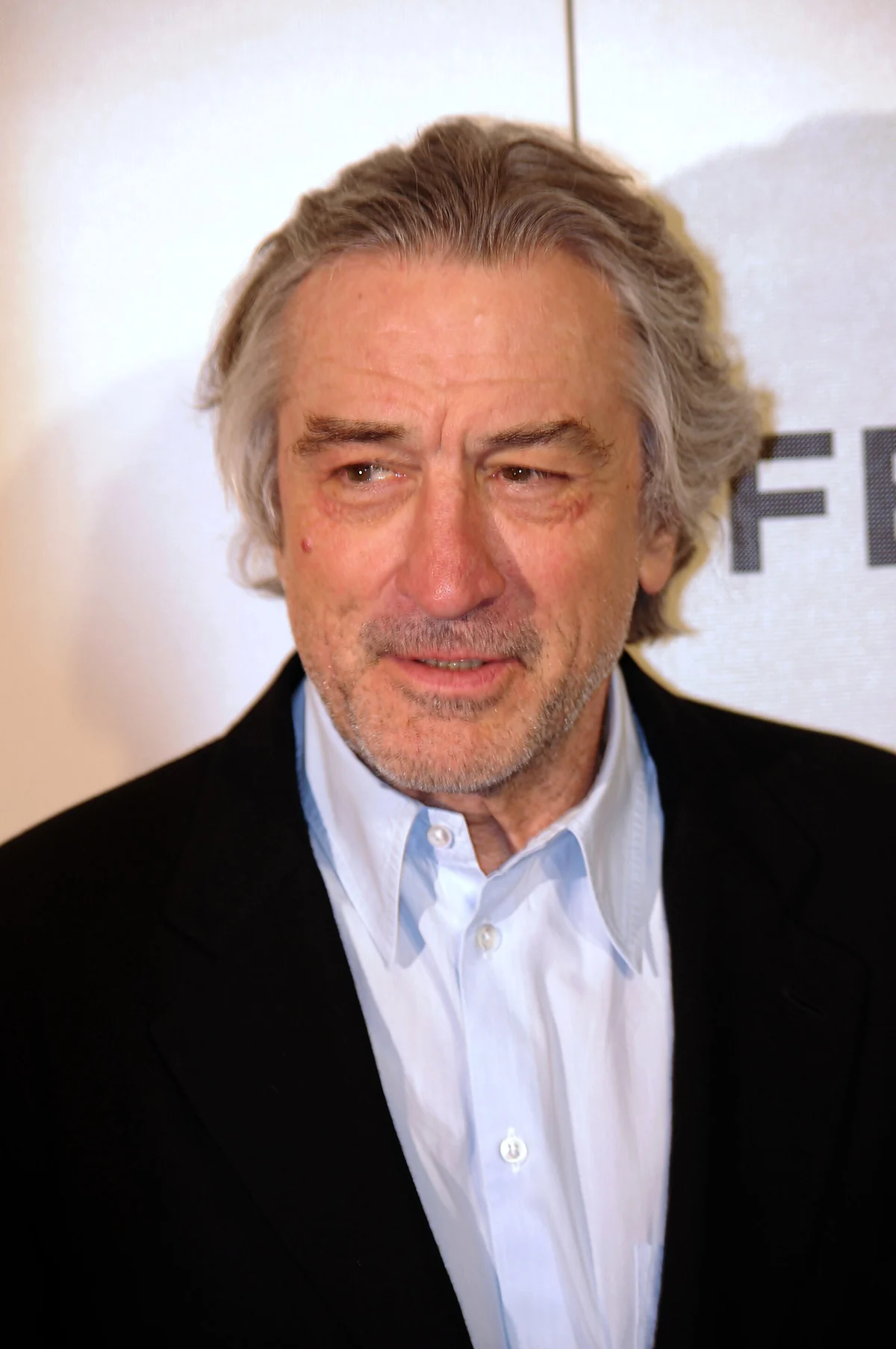
David Shankbone’s photograph on Wikimedia Commons offers an archival portrait with a Creative Commons Attribution 3.0 licence. Its subject is De Niro at the premiere of The Bang Bang Club during the Tribeca Film Festival in New York on 24 April 2011. A caption that includes New York, April 2011, Shankbone’s credit and the licence keeps the identification clear if the portrait accompanies a story about Goa.
If a picture arrives with a generic caption about De Niro at a film festival, check the original file record before attaching a Goa date. A match to the Tribeca portrait gives the picture a documented occasion two years earlier. For an image intended to show the meeting with Bachchan or the conversation with Chaudhury, verify the event caption and the right to publish that specific frame.
What the Goa records establish about the India visit
The searchable phrase Robert De Niro India can lead to questions broader than the festival record answers. The evidence here places him in India for THiNK appearances on two dates and describes his role at each. It does not establish whether this was his first visit to India, how many visits he made or whether he had another engagement during the same trip. Those claims each need evidence beyond the Goa programme and accounts of the two sessions.
If you encounter a claim that De Niro went on to a different Indian city during the trip, look for a named organisation’s dated event record or first-hand reporting that identifies him there. A photograph with a contemporaneous caption that names the place and date may also support a specific appearance. An announcement can establish that an engagement was planned. For a sentence saying he attended, look for a record generated at or after the event that documents his presence.
The word festival on its own is too broad to identify a photograph, video or news item. Pair THiNK with the year and Bambolim when checking whether a source relates to this edition. Then compare the date and the other people named. Bachchan points to the documented Friday appearance, while Chaudhury and The Master and His Masks identify the Sunday conversation in the supplied records.
The dates also determine how this belongs in an events calendar. Index it by the November 2013 dates and keep it available as a past-event reference. Any future appearance would need a current announcement naming De Niro and giving the edition, date and venue. The historical speaker profile remains evidence of his role in 2013.
India events calendar: announced festivals and tentative dates
- THiNK Festival: 2013 Festival Archive
- THiNK Festival: 2013 Sessions
- THiNK Festival: Robert De Niro Speaker Record
- Shoma Chaudhury — participant's archive of THiNK recordings
- Hindustan Times — dated reporting from De Niro's Sunday Goa session
- Hindustan Times — contemporaneous reporting of the Bachchan appearance
Sources
- THiNK Festival: 2013 Festival Archive
- THiNK Festival: 2013 Sessions
- THiNK Festival: Robert De Niro Speaker Record
- Shoma Chaudhury — participant's archive of THiNK recordings
- Hindustan Times — dated reporting from De Niro's Sunday Goa session
- Hindustan Times — contemporaneous reporting of the Bachchan appearance
- Wikimedia Commons — David Shankbone's Robert De Niro Tribeca photograph
