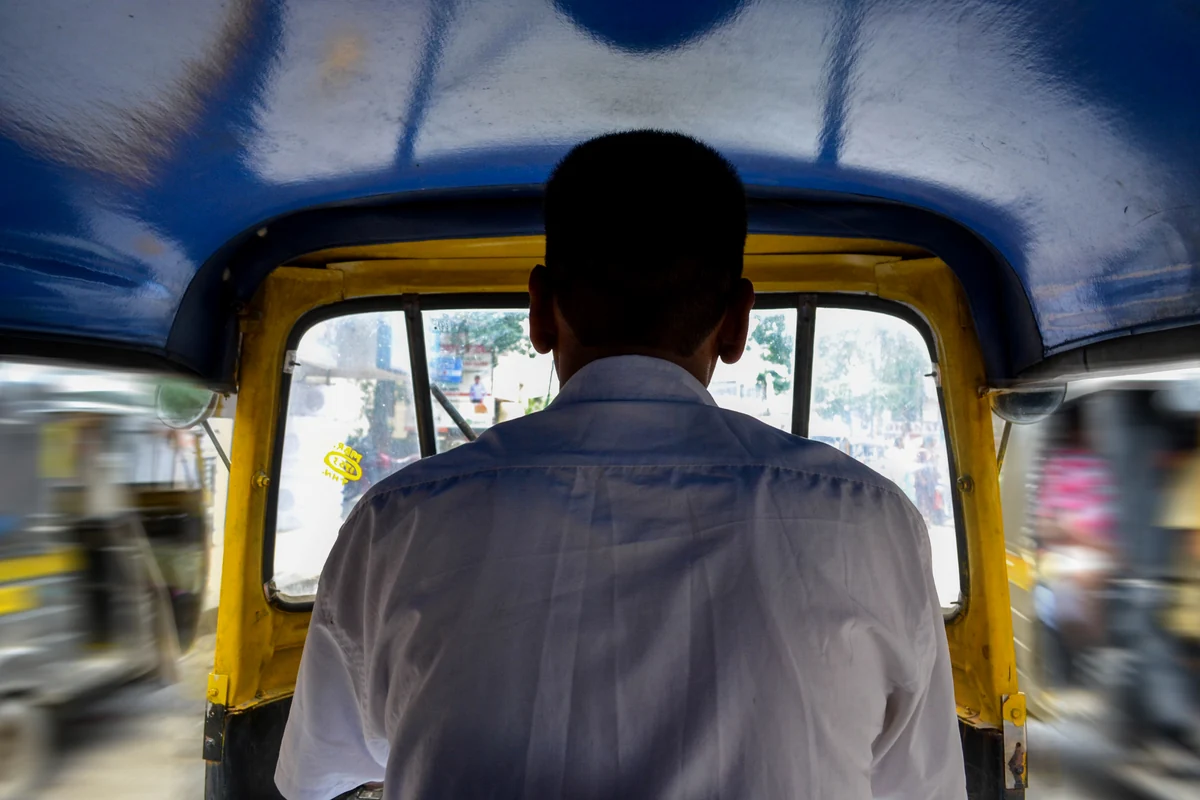
Check traffic for the journey you are making
For traffic in India right now, open a live map to your exact route and check the local traffic authority for closures, diversions and access restrictions. For an airport transfer or another time-sensitive journey, compare the road trip with a verified public transport option from your terminal or starting point.
Start with the address or entrance you actually need, the direction you will travel and the time you expect to pass through. A road estimate is useful for deciding when to leave. An advisory can change where you are able to get in or out, even when the estimate looks comfortable. If the two disagree about a street covered by an order, follow the posted signs and officers’ directions, and use a permitted approach.
For a future trip, use the current map to understand the route and check notices for the date you plan to travel. In Delhi and Mumbai, the traffic police publish notices that can be scoped to an event, a street or a set of junctions. Bengaluru Traffic Police offers traffic and event alerts through ASTraM. On an intercity journey, check the city streets at both ends as well as the National Highway segment in between.
Work backward from the time your flight, train or appointment requires you to be inside. Allow for the walk from the drop-off point or station and any terminal procedures. Make your final traffic check close enough to departure that it can still change your choice of mode, departure time or pickup point.
| Jurisdiction | Official channel | Use it for | Time or context to check |
|---|---|---|---|
| Delhi | Delhi Traffic Police advisories | Police alerts, named road restrictions and traffic orders | Read the effective dates and precise segment |
| Mumbai | Mumbai Traffic Police public notices | Order number, one-way rule and event diversion notice | Check the signed order and whether it is still in effect |
| Bengaluru | Bengaluru Traffic Police ASTraM | Traffic and event-alert information on the official app listing | Use the alert and the time that the authority shows |
| National Highways | NHAI Rajmargyatra | Highway toll, route and facility information | Check the exact highway and direction |
Delhi and NCR road advisories
Delhi Traffic Police posts advance advisories for construction, events and regulatory restrictions. Its listing for the India International Trade Fair at Bharat Mandapam, November 14–27, 2026, illustrates how to search when your destination is near a major venue. Look for the venue name and travel date, then open the advisory and read the affected road segments and any daily operating windows. The dates identify the event period. The notice is the place to check which approaches are affected and when.
Street access can depend on both the vehicle and the block. The police advisory listing gives a 9 a.m.–9 p.m. motorized-vehicle entry restriction for main Chandni Chowk Road. Before arranging a doorstep drop-off, open the underlying notice and confirm its boundaries, the vehicle category and any exceptions. If your destination falls inside the restricted segment during those hours, ask the property which permitted drop-off works for its entrance and check the remaining walk with your luggage.
For pollution-related measures in Delhi–NCR, consult the Commission for Air Quality Management. Its signed November 2, 2026 Stage II invocation cites the revised Graded Response Action Plan schedule dated September 29. To check which stage applies to your journey, read the latest invocation and any subsequent revocation or replacement, then inspect the measures that apply to your vehicle and route. A dated order remains useful for understanding how the system works, while the later orders determine whether those measures still apply.
Mumbai notices for one-way streets and event restrictions
Use Mumbai Traffic Police’s public notice index to find the order by locality, road or traffic division. The index gives the notification number and start date, along with an end date or the wording “Till Next Order” where applicable. A November 23, 2026 entry, numbered 234/DCP/East/Traff/Temp/2026, concerns a one-way arrangement and an alternative route in Mulund division. Open the signed order to establish the direction of travel and check later notices for revisions or withdrawal.
The Santacruz Traffic Division’s Juhu Chowpatty Chhath Puja order shows how tightly a restriction can be bounded. It ran from 2 p.m. on November 15, 2026 until 11 a.m. on November 16 and applied to named local segments. For any overnight order, read both dates with their times. The restriction can still apply the next morning after the calendar date in the notice heading has passed. Match the junctions in the order against the turns your journey requires.
If you are booking a car from a hotel on a street subject to a temporary one-way order, check the driver’s approach separately from the direction you will leave. The street may allow the outbound leg even if the app suggests an inbound turn covered by the order. Confirm the pickup with the hotel, and if the vehicle must meet you elsewhere, use a specific permitted entrance or landmark so that both you and the driver have the same destination.
Bengaluru alerts and airport bus checks
Bengaluru Traffic Police’s ASTraM Android app lists traffic updates, event alerts and congestion notifications. Use the alerts to see whether a disruption falls on the roads you expect to use, then check your trip in a live map for an estimate from your own starting point. When you open an alert, look for the affected direction and the time it was issued. An event notice can help you plan before travel, while a congestion notification is most useful when it is recent enough to affect your departure.
For an airport trip, BMTC operates Vayu Vajra. Karnataka Tourism’s transport directory identifies the service and operator. Obtain the current route, boarding point, departures, fares and airport stop from BMTC for your date and direction. A published departure answers when a bus is scheduled to leave its starting point. If you board farther along the route, verify what information the operator gives for that stop and allow for the road portion of the trip.
If you are choosing between a car from your hotel and Vayu Vajra, compare the walk to the bus stop, the wait for a usable departure and the distance from the airport stop to your terminal entrance. The bus also travels on the road, so a disruption that affects both routes may influence your departure time whichever option you choose. Check whether the two routes actually share the affected segment before assuming the same delay.
Compare airport rail with a road transfer
Start with the terminal on the booking and the final address in the city. Delhi Metro’s Airport Metro Express serves IGI Airport T3 and New Delhi on the Orange Line. Mumbai’s airport transport directory lists separate CSMIA Airport T1 and T2 stations. Metro Line 3 fully opened in October 2025. That opening establishes the route’s availability as an option to investigate. Use the current operator timetable and station information to confirm whether it works at your arrival time.
| Airport starting point | Service to check | Where to verify the trip |
|---|---|---|
| Delhi IGI Airport T3 | Airport Metro Express to New Delhi | DMRC current map and timetable for station access, departures and service hours |
| Mumbai CSMIA T1 | Metro Line 3 from CSMIA Airport T1 station | CSMIA transport directory and current Line 3 operator information for the T1 entrance and departures |
| Mumbai CSMIA T2 | Metro Line 3 from CSMIA Airport T2 station | CSMIA transport directory and current Line 3 operator information for the T2 entrance and departures |
| Bengaluru airport | BMTC Vayu Vajra airport bus | BMTC for the boarding point, route, fare and timetable |
Compare each option from the point at which you can actually leave the terminal. Include the walk to the station or pickup area, the wait, any transfer and the last leg to the address. The train can remove the main road segment from the trip. A car can be simpler when the rail journey leaves a long final leg or when several bags make a transfer difficult. Check the whole journey before assigning an advantage to either option.
For a late arrival at Delhi T3 with a destination near New Delhi station, check the final Airport Metro Express departure you can reach after collecting bags and walking to the airport station. Base that calculation on when you could be at the platform. If the remaining margin is too short to rely on the departure, plan for a road pickup and check the terminal’s pickup instructions.
Plan city approaches and National Highway stops separately
For an intercity road trip, identify the National Highway stretch shown in your route, along with the streets used to enter and leave it. NHAI’s Rajmargyatra app provides information about National Highway toll plazas and nearby services, plus route notifications. Use it to locate facilities for the highway part of your trip. Consult the applicable traffic police notices for city construction, event diversions and restrictions that affect the approaches.
A facility shown along a corridor may require a different approach depending on direction of travel. If a rest stop matters to the timing of the trip, check that your route can reach the entrance from your carriageway and that the facility will be open. Do the same for a planned fuel stop. For a named stretch, check recent official operator notices before relying on any listed facility or route arrangement, particularly where a junction change could affect how you reach it.
If a driver offers two routes, one with a shorter highway leg and one that uses a different city approach, compare the full door-to-door journeys. Check whether either approach crosses a street covered by a municipal order and whether the proposed stop fits the chosen direction of travel. An attractive highway estimate can lose its value if getting onto the road requires an extra city leg. Set the departure around the full trip and follow signed diversions when an approach changes.
Choose the right channel for a breakdown or emergency
Use 1033 for incidents, emergencies and breakdowns on a National Highway. NHAI’s November 25, 2026 incident management announcement identifies it as the highway helpline. India’s nationwide emergency number is 112, which covers police, health, fire and other emergency needs. If someone needs urgent medical or fire assistance, call 112. For a breakdown on a National Highway that requires highway assistance, use 1033.
When seeking help, give the road name or number if you know it, your direction of travel and a nearby marker, junction or recognizable landmark. Describe what has happened and say whether anyone is injured. The direction matters on a divided highway because the same location name can refer to either side. Share the best location information you already have and follow the responder’s instructions.
The November 25 announcement describes pre-opening incident management guidelines that cover resources such as ambulances, patrol vehicles and tow-away cranes. Check with the responder or the operator of the affected stretch for information about assistance at your location and expected timing. If a pickup or onward booking depends on when the incident clears, keep that booking flexible while you wait for a location-specific update. For routine delays or event restrictions, use the traffic authority’s public updates.
When the choice is whether to drive yourself
Decide whether you can and want to drive before comparing route estimates. India’s Motor Vehicles Act, 1988 establishes the national framework for licensing, vehicle operation and driving offenses. Local rules, signs and road conditions also apply to the journey. UK Foreign, Commonwealth and Development Office visitor guidance discusses licence and insurance arrangements and road travel risks. Use current official requirements and the rental provider’s written terms to verify what applies to your documents and the vehicle you would collect.
If you need a car for a later leg but your first stop is a hotel near an airport rail station, compare collecting the rental immediately with collecting it after that stay. Immediate collection adds the trip from the rental desk, driving to the hotel entrance and parking. Later collection adds a separate journey to the rental desk. Check collection hours and location and ask the hotel which entrance drivers use. Those details may settle the decision before the road estimate does.
With a hired driver, give the property name, the precise entrance and the time you need to reach it. Where a municipal restriction applies, confirm that the proposed pickup or drop-off is permitted for that vehicle at that hour. Ask the property for its current instructions if it uses several entrances or shares a frontage with a venue. A clear meeting point is especially useful when you are arriving with luggage or arranging a pickup on an unfamiliar street.
Sources
- Delhi Traffic Police official traffic advisory directory
- Mumbai Traffic Police public notifications and date-scoped order example
- Bengaluru Traffic Police official public ASTraM app
- National Highways Authority of India Rajmargyatra and highway service information
- November 25, 2026 NHAI incident management announcement and national emergency scope
- Public transport alternatives for two airport-to-city corridors
- Existing licensed Mumbai street traffic photograph
- India Code | Motor Vehicles Act, 1988
- UK FCDO | India road travel advice
- Ministry of Home Affairs nationwide 112 Emergency Response Support System
