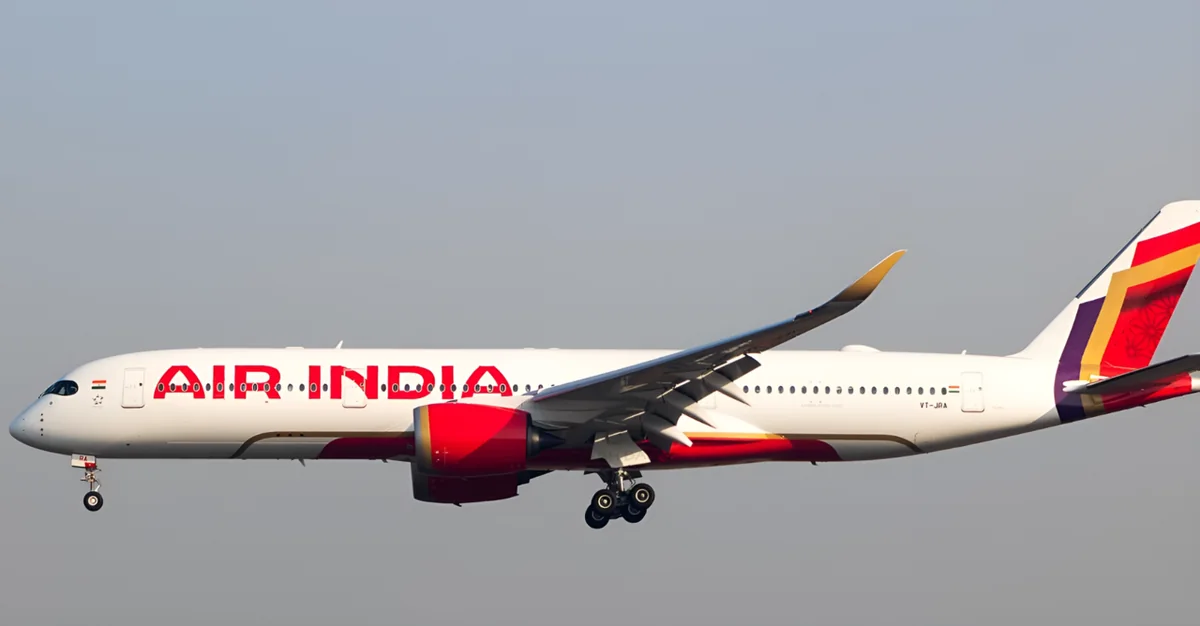
Start with the aircraft and cabin
For a full-flat bed and direct aisle access, look for Air India Business on the A350-900 or the new Boeing 787-9 built for Air India. For extra space at a lower cabin tier, compare their 38-inch Premium Economy seats and confirm the layout on your exact flight before paying.
The aircraft and configuration matter because the cabin name tells you only part of what you are buying. The A350-900 has Business, Premium Economy and Economy. The upgraded 777-300ER that Air India identified for its restored Mumbai–New York services has First, Business and Economy. On the 787-8, the airline documented its first conversion from two cabins to three in April 2026, so the presence of Premium Economy depends on the aircraft assigned to the flight.
Start with the physical features that matter most to you, whether that is a flat bed, an aisle seat you can reach directly, or two seats together by the window. The carrier’s seat maps and specifications can establish those features for an identified configuration. A review of how well someone slept, how the crew handled meal service, or how well the seat had been maintained needs a dated account from the same cabin and configuration. Use the table to narrow your search, then open the map for the departure you are considering.
| Aircraft and configuration | First or Business | Premium Economy | Economy |
|---|---|---|---|
| Airbus A350-900 | 28 Business seats in 1-2-1, with a 79-inch full-flat bed | 24 seats in 2-4-2, with 38-inch pitch | 264 seats in 3-3-3, with 31-inch pitch |
| New Boeing 787-9 built for Air India | 30 full-flat Business seats in 1-2-1 | 28 seats in 2-3-2, with 38-inch pitch | 238 seats in 3-3-3 |
| First documented retrofitted Boeing 787-8 | Seats aligned with the new 787-9 product | Added as part of the three-cabin retrofit | Part of the three-cabin retrofit |
| Upgraded Boeing 777-300ER in the November 2026 New York report | Eight First suites and 40 flat Business seats | Absent from the reported configuration | 280 seats |
New 787-9 versus retrofitted 787-8
Air India’s specifications for the new 787-9 built for the airline show 30 Business seats, 28 Premium Economy seats and 238 Economy seats. Business has fully flat seats in 1-2-1, giving each passenger direct aisle access. Air India qualifies some Business suite features as subject to regulatory approval. If a suite door matters to your booking, look for confirmation that the feature is available on the specific product you are buying. A four-across layout establishes aisle access on this configuration by itself.
The 787-9’s Premium Economy layout gives a solo traveller a concrete way to choose between two cabins that both advertise 38 inches of pitch. In the 787-9’s 2-3-2 arrangement, the middle block has one seat without direct aisle access. In the A350’s 2-4-2 arrangement, the middle block has two. Both have window-side pairs. If you are choosing between departures and only the centre block is available, the map shows whether you can still select an aisle and whether the layout difference affects your actual booking.
Air India’s April 2026 announcement establishes that the first retrofitted 787-8 received a third cabin and seats and entertainment aligned with the new 787-9 product. The announcement documents one completed aircraft at that point in the programme. A 787-8 listing alone gives you too little information to apply those specifications to your flight. Look for Premium Economy in the cabin selector and inspect the Business seat map. If the cabin is absent from the fare results, check the map as well, since a cabin selector tells you which fares are on sale for that search.
777 First and Business on the New York services
Air India’s 15 November 2026 report on restored nonstop services gives a dated comparison for both John F. Kennedy International Airport and Newark Liberty International Airport. The carrier reported using the A350-900 from Delhi to both airports and the upgraded 777-300ER from Mumbai to both. On the Delhi flights the reported cabin choice was Business, Premium Economy or Economy. On the Mumbai flights it was First, Business or Economy. The report describes the aircraft associated with the restoration, so use the dated availability and seat map for your own trip.
The Mumbai configuration described in that report has eight First suites, 40 flat Business seats and 280 Economy seats. The report establishes a flat Business seat on that configuration. To judge how easily you could reach the aisle from an available seat, open the Business map for the flight and look at the seat’s position. Apply the same care to other 777-300ER listings, since the type designation is shared by aircraft with different interiors.
Suppose both Delhi and Mumbai already work for your trip and you want more space than Economy. Check whether the Delhi departure still sells A350 Premium Economy before comparing the Mumbai Economy and Business fares. The three options can put different cabin layouts within reach even when the US airport is the same. If you are specifically shopping for First, start with the reported Mumbai configuration and confirm that First appears on your dated flight. If New York airport choice affects your onward trip, keep the actual arrival airport in the comparison as well.
Compare the fare with what you can use
Compare the full prices for the same passengers, flight and date, and include any seat-selection charge shown at booking. A Premium Economy fare is easier to assess once you know which seats you can select and what the fare includes for luggage. For Business, identify the feature you would pay most to secure, such as a flat bed on an overnight sector. When considering a reward or a paid upgrade, read the offer for the cabin it confirms and which flight segments it covers. A headline cabin on a connecting itinerary can leave you evaluating the wrong sector.
On Air India-operated domestic flights, published Economy checked allowances are 15 kg for Basic or Value, 20 kg for Classic and 25 kg for Flex. Basic is restricted to select domestic passengers. Premium Economy Value also carries 15 kg, and Premium Economy Flex carries 25 kg. If you are comparing Economy Flex with Premium Economy Value for a domestic trip and have a 20 kg checked case, the Economy fare covers that weight under the published table. Use the booking’s baggage terms to price the case on the Premium Economy fare before assigning a value to the seat upgrade.
For the USA and Canada, the carrier’s table shows one or two 23 kg checked pieces in Economy depending on fare, two 23 kg pieces in Premium Economy, and two 32 kg pieces in Business and First. Those are per-piece limits. Check the geographic fare table and what the booking displays for each sector. Air India says its issued e-ticket prevails if the baggage calculator gives a different result, so keep the ticket handy when checking what you purchased.
Check who operates each flight and which baggage policy applies
Read the operating-carrier line for every segment, especially when an Air India booking includes Air India Express. On Air India, the standard free cabin bag is one piece up to 7 kg in Economy and Premium Economy or 10 kg in Business and First, with outer dimensions up to 55 × 40 × 20 cm. A qualifying under-seat personal item has its own published 3 kg and 40 × 30 × 20 cm limits. Direct Air India Express bookings describe 7 kg total across the cabin bag and personal item, with different dimensions. Its Xpress Lite fare includes zero free checked baggage.
Air India publishes separate terms for specified Air India Express codeshares ticketed by Air India. On those covered journeys, the cabin allowance follows Air India’s cabin and class policy and checked baggage follows its fare rules. The same terms restrict advance seat selection on the Express segment until its check-in window, exclude paid Business and Premium Economy upgrades, and rule out pre-purchasing extra baggage. For other carrier combinations, Air India’s general carry-on guidance calls for the strictest applicable rule. Identify the ticketed arrangement before relying on the allowance or seat-selection options.
On an Air India domestic-to-international connection, the ticket structure can also change the checked allowance. Air India applies the international sector allowance to domestic and international sectors on the same ticket. Its separate-ticket provision says the domestic-to-international free allowance may apply within 24 hours if both flights are Air India-operated. Confirm the weight allowance and whether the bag can be tagged through as separate questions. The published weight provision gives you no basis to assume that the connection includes through-tagging or rebooking protection.
| Booking and cabin | Free main or combined weight | Published size limits | Personal item and what to check |
|---|---|---|---|
| Air India-operated, Economy or Premium Economy | 7 kg main bag | 55 × 40 × 20 cm main bag | Qualifying item up to 3 kg and 40 × 30 × 20 cm under seat |
| Air India-operated, Business or First | 10 kg main bag | 55 × 40 × 20 cm main bag | Qualifying item up to 3 kg and 40 × 30 × 20 cm under seat |
| Specified Air India Express codeshare sold by Air India | Air India cabin and class rule | Air India size limits for covered ticket | Confirm the partnership scope, cabin and e-ticket |
| Air India Express direct booking | 7 kg combined cabin and personal items | Main 56 × 36 × 23 cm, personal 40 × 30 × 10 cm | Check fee-based options and ticket. Xpress Lite includes zero free checked baggage. |
Air India’s standard personal-item section separately allows a combined personal and infant cabin-item allowance up to 5 kg when travelling with an infant. Its published paid excess provision allows a main cabin bag up to 12 kg subject to conditions. The posted amounts are ₹3,000 on domestic flights and US$75 on international flights. An item above that ceiling must be checked under the applicable rules. Refer to your carrier’s current terms for accessibility items and for any restrictions applying to the exact trip.
Verify the seat map before payment and after changes
Search for the exact date, flight number and airports in the booking flow and confirm the operator. Open the seat map for the cabin you would buy and compare its row layout with the carrier’s configuration guide. Pay attention to the cabin names above and below it as well. A map showing First, Business and Economy tells you something different from a map showing Business, Premium Economy and Economy, even when the search results describe both departures as upgraded.
If the aircraft label and the layout are hard to reconcile, ask the operating airline which configuration is currently assigned and which seats are available in your cabin. A route announcement helps identify what to look for, while the booking reflects the assignment offered for your departure at the time you search. After purchase, reopen the booking if the airline sends a schedule or seat change, and check again when check-in opens. If the plane or seat has changed, confirm the replacement layout and ask what options your fare provides before changing the booking yourself.
When a review influences your choice, check its flight date, route, aircraft configuration and cabin against your own itinerary. A dated A350 Business report can help you interpret the seat and storage on that layout. Its meal or crew account describes that reported flight. For a detail specific to your reservation, such as baggage on the issued ticket or the cabin confirmed for an upgrade, check the current terms attached to the booking. Keep the available seat and the confirmed cabin in view when deciding whether the price difference buys the feature you want.
Flights from India and official airport flight statusFlights to India from the USA
- Air India baggage calculator and issued e-ticket precedence
- Air India A350-900 official cabin layout and seat measurements
- Air India made-for-Air India Boeing 787-9 specifications
- Air India first retrofitted Boeing 787-8, April 2026
- Air India restored nonstop Delhi/Mumbai to New York routes, 15 November 2026
- Air India | Upgraded cabin and route guide
Sources
- Air India official cabin baggage and specific exceptions
- Air India checked allowance by ticket and fare family
- Air India baggage calculator and issued e-ticket precedence
- Air India Express direct-booking baggage and Xpress Lite
- Air India-ticketed Air India Express codeshare terms
- Air India A350-900 official cabin layout and seat measurements
- Air India made-for-Air India Boeing 787-9 specifications
- Air India first retrofitted Boeing 787-8, April 2026
- Air India restored nonstop Delhi/Mumbai to New York routes, 15 November 2026
- Wikimedia Commons Air India Airbus A350-900 VT-JRA at Delhi
- Air India | Airbus A350-900 cabin specifications
- Air India | Upgraded cabin and route guide
