What the public record can tell you before booking
The public record supports a qualified answer about Air India’s safety. It documents the fatal AI171 crash and follow-up inspections of Air India’s Dreamliners, while the cause remained unresolved in the available public investigation record and the evidence cannot quantify the risk of the flight you are considering.
Start with the operating carrier on your itinerary. Air India and Air India Express have separate operator records, so the name you see in a search result is only a starting point. Once you know which airline operates each leg, look at the severity of the events you find, whether investigators have reached final conclusions, and what the regulator documented about any follow-up.
A fatal accident carries substantial weight in any reading of an airline’s history. A numerical comparison with another airline would also require comparable counts of events and flights over the same period. A few published reports give you examples to examine. Even a carefully assembled list of those reports leaves out the flight totals and consistent reporting criteria needed to estimate a rate.
For a booking decision, it can help to identify which fact would change your choice. If your concern is what investigators concluded about AI171, check the report’s publication status. If your concern is how India’s regulator responded, read the dated inspection results. If the unresolved investigation is enough to make you prefer a different operator, that is a travel preference the available evidence leaves room for.
- AAIB official preliminary report for AI171, release dated 12 July 2025
- DGCA 17 June 2025 fleet inspection progress
- Parliamentary answer on DGCA Dreamliner checks, 18 August 2025
- AAIB interim statement at one year, 12 June 2026
- AAIB final report for Air India Express IX1344 at Kozhikode
- Air India operator statement on IOSA and safety management, 19 November 2026
What investigators have established about AI171
Air India flight AI171 crashed shortly after taking off from Ahmedabad for London Gatwick on 12 June 2025. The aircraft was a Boeing 787-8 registered VT-ANB. India’s Aircraft Accident Investigation Bureau, or AAIB, recorded 229 passengers and 12 crew members killed on board, 19 people killed on the ground, and one passenger who survived with serious injuries.
India leads the investigation under the international framework in ICAO Annex 13. The Ministry of Civil Aviation said the AAIB formed a multidisciplinary team on 13 June. The US National Transportation Safety Board participated under the framework for the state where the aircraft was designed and manufactured. Its public case number is DCA25WA232. For the publication status of the lead investigation, use the Indian bureau’s records.
The 12 July 2025 preliminary report records factual information gathered at that stage. The AAIB said in February 2026 that the inquiry was ongoing and had reached no final conclusions. At the one-year mark, it said it was evaluating several categories of evidence and that the final report would follow completion of the investigation and international review and consultation.
The preliminary report said the AAIB had issued no safety recommendation to aircraft or engine operators at that stage. The statement is limited to that release and the bureau’s own recommendations. India’s aviation regulator separately ordered fleet checks. The public AAIB index still carried the preliminary report for VT-ANB in the available record, and a public final report and publication date could not be confirmed.
| Date | Record type | What the source establishes |
|---|---|---|
| 12 June 2025 | Occurrence | Date of the accident involving Air India flight AI171 from Ahmedabad to London Gatwick |
| 26 June 2025 | Ministry status note | Identifies the AAIB as the investigator and describes the investigation team |
| 12 July 2025 | AAIB preliminary report | Publishes initial factual material about the accident |
| 12 February 2026 | AAIB clarification | Describes an ongoing inquiry without final conclusions at that date |
| 12 June 2026 | AAIB interim progress statement | Describes evidence evaluation and the international review process |
| 26 November 2026 | Public report index check | No final AI171 report could be confirmed on the public official index |
How the Dreamliner inspections progressed
India’s Directorate General of Civil Aviation, or DGCA, oversees areas including air transport and airworthiness. After AI171, authorities directed additional checks on Air India’s Boeing 787-8 and 787-9 aircraft with the specified GEnx engines. The June progress update and August parliamentary answer document different stages of that work. Read each count with its date, fleet scope and explanation for aircraft that were unavailable.
| Date | Authority or record | What it establishes |
|---|---|---|
| 12 June 2025 | AAIB preliminary report | AI171 crashed after takeoff from Ahmedabad on a flight to London Gatwick. |
| 13 June 2025 | Ministry direction | Additional checks targeted Air India 787-8 and 787-9 aircraft with the specified GEnx engines. |
| 17 June 2025 | DGCA progress update | At 15:00, the regulator reported 24 checks complete in a programme covering 33 aircraft. |
| 12 July 2025 | AAIB preliminary report release | The bureau published its initial factual account of AI171. |
| 18 August 2025 | Rajya Sabha answer to Unstarred Question 2731 | The ministry reported 31 operational aircraft inspected, minor findings in eight, and two aircraft in scheduled maintenance. |
| 12 February 2026 | AAIB clarification | The bureau said it had reached no final conclusions. |
| 12 June 2026 | AAIB interim statement | The bureau reported ongoing evidence evaluation and described the remaining international review and consultation. |
In June the DGCA said the surveillance it described had identified no major safety concerns. It separately raised maintenance-related delays. Both details belong in the same reading of the update. Its assessment applied to the surveillance described in that release, and the delays were a separate issue the regulator raised while reporting the inspection work.
By the August parliamentary answer, the ministry reported that all 31 operational Dreamliners in the 33-aircraft group had been inspected. It described the findings on eight aircraft as minor and said the affected aircraft returned to service after rectification. The other two were in scheduled maintenance. The answer also described regular DGCA audits, spot checks and maintenance oversight alongside the special inspection programme.
The August answer is the more informative record for the extent of those inspections and how the findings were handled. Use the June update for what the regulator had seen while checks were still in progress. Both records describe a defined group of aircraft in 2025. For a later claim about the size of the fleet, an inspection requirement or compliance with a new measure, look for an applicable later regulator record.
Air India Boeing 787 routes, seat maps and cabin layouts
- AAIB official preliminary report for AI171, release dated 12 July 2025
- DGCA 17 June 2025 fleet inspection progress
- Parliamentary answer on DGCA Dreamliner checks, 18 August 2025
- AAIB clarification on investigation status, 12 February 2026
- AAIB interim statement at one year, 12 June 2026
- DGCA | India’s civil aviation regulator
How to compare other Air India occurrences
Two published AAIB files show why the occurrence classification and the report stage need separate entries in any comparison. Air India flight AI2592 involved an Airbus A320 registered VT-EXT at Manohar International Airport in Goa on 5 December 2024. The AAIB issued a final report that classifies it as a serious incident and sets out findings, contributing factors and safety recommendations.
Air India flight AI2379 involved Airbus A320-251N VT-EXO, flying from Phuket to Delhi on 4 August 2026. A ministry bulletin on 9 August initially classified the occurrence as a serious incident. The AAIB’s published preliminary report uses the classification accident and records that the aircraft eventually landed safely in Delhi. The report remains preliminary in the available evidence.
If you see AI2379 described both ways when looking through news coverage, keep the label attached to its source and date. Use the AAIB preliminary report’s title when describing that document. Record the outcome separately, since the eventual landing is its own factual detail. For AI2592, the final report lets you go further and read what investigators concluded about contributing factors and whom their recommendations addressed.
The 7 August 2020 Dubai to Kozhikode accident belongs to Air India Express. Its published final report identifies flight IX1344, also recorded as AXB1344, and Boeing 737-800 VT-AXH. IATA identifies Air India as AI/AIC and Air India Express as IX/AXB. If both airline names turn up in your research, use the operator named by the investigator and match it to the operating carrier on your itinerary.
| Flight | Operating airline | Occurrence date | Report status | AAIB document classification |
|---|---|---|---|---|
| AI2592 | Air India | 5 December 2024 | Final report | Serious incident at Manohar International Airport, Goa |
| AI2379 | Air India | 4 August 2026 | Preliminary report | Accident in the published AAIB report title, with Delhi as the eventual landing |
| IX1344 | Air India Express | 7 August 2020 | Final report | Accident at Kozhikode |
Domestic airlines in India and their fare and baggage rules
- AAIB official preliminary report for AI171, release dated 12 July 2025
- AAIB final report example, AI2592 at Goa
- AAIB preliminary report example, AI2379 Phuket to Delhi
- AAIB final report for Air India Express IX1344 at Kozhikode
- Air India operator statement on IOSA and safety management, 19 November 2026
What airline audits and US oversight measures cover
Air India said on 19 November 2026 that it was registered in IATA’s Operational Safety Audit programme, known as IOSA. The airline described systems covering areas including flight operations, engineering and dispatch. IATA describes IOSA as an evaluation of an operator’s operational management and control systems. IATA separately lists Air India Limited as a member and requires members to maintain IOSA registration.
For a current registration claim, check the operator’s identity in IATA’s records and look for any publicly available validity information. The exact renewal or expiry date was unavailable in the public registry check. An audit can inform your assessment of management and control systems within its scope. A probability for a particular departure would require a different type of evidence.
The US Federal Aviation Administration’s International Aviation Safety Assessment programme evaluates a country’s civil aviation authority and its ability to oversee carriers against ICAO standards. The FAA’s country sheet dated 18 April 2025 listed India as Category 1. That entry answers a question about national oversight in that edition. Read the latest country sheet before describing the category as current.
A separate FAA decision announced on 17 July 2026, effective 20 July, resumed delegated issuance by Boeing of end-of-production airworthiness certificates for new 737 MAX and 787 aircraft. The FAA said inspections, audits and monitoring continued. The subject of that decision was certification at the end of production. Use the Air India operating records and the AAIB investigation for questions about the carrier and AI171.
If an FAA document surfaces in your search, check whether it is an airworthiness directive or an advisory bulletin. FAA directives are legally enforceable under the FAA framework, and applicability depends on details including the model, installed configuration and effective date. The 17 December 2018 bulletin NM-18-33 is advisory and covers several models, including the 787-8, 787-9 and 787-10. Its model list establishes the scope of the advisory.
How to verify a new claim about Air India’s safety
For a claim that AI171’s cause has been established, search the AAIB public occurrence index by aircraft registration VT-ANB as well as flight number. Open the actual document and read how the bureau identifies it. Check the date of publication against the date of the occurrence. An anniversary statement can be the latest official release while the report linked against the aircraft is still preliminary.
Annex 13 provides for an interim statement on each anniversary when a final report cannot be made public within 12 months. The AAIB describes consultation with concerned states, acceptance by its Director General and publication as part of the final-report process. If coverage refers to a consultation draft, use the public AAIB index to see whether a final version has since been issued. Once available, read the published findings, contributing factors and recommendations in context.
If a headline says a new measure affects all Air India Dreamliners, identify the issuing authority and open the dated measure. A reference to a Boeing model family is only the first part of an applicability check. Look for the model variants, any specified equipment, the operator or jurisdiction covered, and the effective date. If the claim is about completion, look for a later record reporting what was actually inspected or rectified.
When comparing two itineraries, make one row per operating airline, even if the trips are sold under the same brand or booking reference. Record an occurrence’s date and classification beside its report stage, and note the date of any audit or oversight record you intend to rely on. That gives you a way to update the comparison when an authority publishes a new finding without letting the newest headline stand in for the whole record.
Check the investigation index for the flight number or registration, and look inside the document for the status and release date. A preliminary report can appear long after the occurrence in a search index, and an interim statement may be released on an anniversary. A final report has its own publication record. The report type determines which conclusions can be attributed to the investigating authority.
- AAIB official preliminary report for AI171, release dated 12 July 2025
- Parliamentary answer on DGCA Dreamliner checks, 18 August 2025
- AAIB interim statement at one year, 12 June 2026
- AAIB report index and final-report process
- AAIB final report example, AI2592 at Goa
- AAIB preliminary report example, AI2379 Phuket to Delhi
- FAA airworthiness directive scope and SAIB distinction
- FAA International Aviation Safety Assessment programme
- Air India operator statement on IOSA and safety management, 19 November 2026
- IATA | Operational Safety Audit registration process
Sources
- AAIB official preliminary report for AI171, release dated 12 July 2025
- Ministry of Civil Aviation initial AI171 investigation status and authority
- DGCA 17 June 2025 fleet inspection progress
- Parliamentary answer on DGCA Dreamliner checks, 18 August 2025
- AAIB clarification on investigation status, 12 February 2026
- AAIB interim statement at one year, 12 June 2026
- AAIB report index and final-report process
- AAIB final report example, AI2592 at Goa
- AAIB preliminary report example, AI2379 Phuket to Delhi
- AAIB final report for Air India Express IX1344 at Kozhikode
- FAA airworthiness directive scope and SAIB distinction
- FAA production certification decision on Boeing models
- FAA International Aviation Safety Assessment programme
- Air India operator statement on IOSA and safety management, 19 November 2026
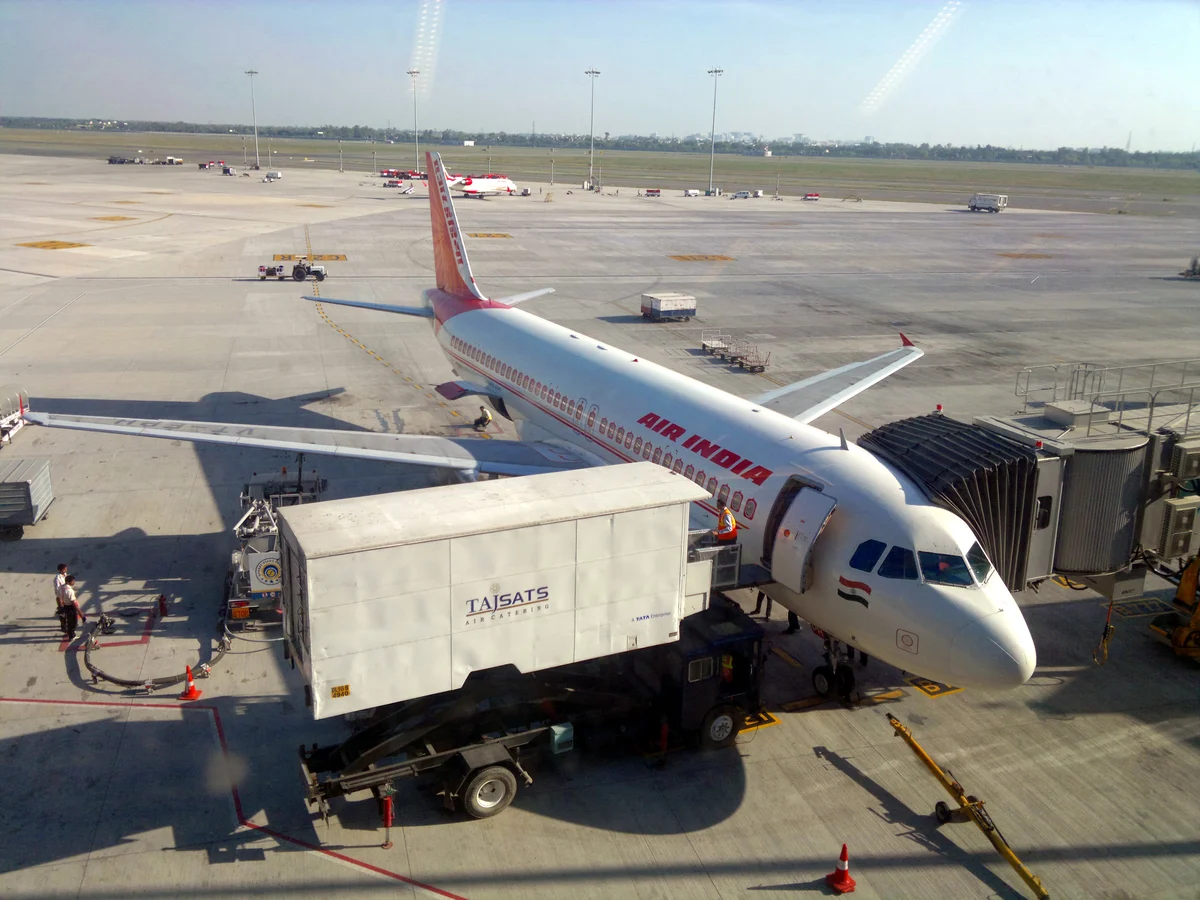
- Independent Air India operations photo at Delhi Terminal 3
- DGCA | India’s civil aviation regulator
- IATA | Operational Safety Audit registration process
- Aircraft Accident Investigation Bureau | February 2026 AI171 clarification
