Estimate gold value and a jewellery total
Use an INR quote before tax and fees and the net weight of the gold. A purity conversion estimates metal value. Finished jewellery can cost more.
Calculator + data table
Find the IBJA 916, 995 and 999 reference, convert per-10-gram rates and estimate a jewellery total from purity, net weight, making charges and GST.
Open the latest official IBJA benchmarkUse an INR quote before tax and fees and the net weight of the gold. A purity conversion estimates metal value. Finished jewellery can cost more.
The India Bullion and Jewellers Association publishes opening and closing gold benchmarks in rupees per 10 grams. For 22K, open the Gold 916 column. For the latest number, check the date and AM or PM label directly on the publisher’s site. The closing 916 benchmark on 25 November 2026 was ₹110,871 per 10 grams, equivalent to ₹11,087.10 per gram before GST and making charges.
IBJA publishes opening and closing observations for several gold purities. Find the latest dated Gold 916 entry and read the AM or PM designation next to it. If the latest entry carries an earlier date, keep that date attached when you record or share the number. A publication timestamp on a retailer’s page may describe when that page changed, so check whether it also gives the date and session of the underlying benchmark.
Use the whole label when comparing two numbers. A 916 opening quote and a 916 closing quote are separate observations, even when the date is the same. A 999 quote is for a different fineness altogether. If a seller gives only one number by phone, ask which purity and weight it covers and when that quote applies. That gives you enough information to put the seller’s metal rate alongside a benchmark on the same basis.
IBJA’s figures exclude GST and making charges. Keep the benchmark, its per-gram equivalent and the seller’s total in separate fields in your notes. A single figure headed “gold price” can lose all three distinctions when copied into a message.
The same bulletin puts 25 November’s closing 999 gold at ₹121,038 and 995 gold at ₹120,553 per 10 grams. The 916 opening quote that day was ₹111,120 per 10 grams. IBJA lists 24 November as a market holiday and gives dates and sessions for its published observations. A different seller may quote during an IBJA holiday, but that is a separate observation.
Fineness expresses gold content in parts per thousand. The Bureau of Indian Standards lists 22K as 916 fineness, 18K as 750 and 14K as 585. For calculations using a marked fineness, divide that number by 1,000. A 916 item has a nominal gold fraction of 0.916, and a 999 rate represents gold with a nominal gold fraction of 0.999. Keep the full marked number when a listing gives both a carat description and a fineness.
A plain item with 8 grams of 916 alloy contains an estimated 7.328 grams of fine gold, calculated as 8 × 916 ÷ 1,000. The item still weighs 8 grams. Use the 8 grams with a rate already quoted for 916 gold. The 7.328 grams is useful for comparing gold content across items of differing fineness.
An 8 gram item of 750 fineness contains 6 grams of fine gold. Its difference from the 8 gram 916 item is 1.328 grams of fine gold. Similar-looking pieces can therefore have different metal values even at the same weight. The calculation describes the gold fraction of the alloy and assumes the weights supplied are for the gold alloy itself.
For hallmarked jewellery with a unique identification number, check that identifier in the BIS Care app. The lookup and the weight calculation answer different questions. Record the verified fineness for the calculation and obtain the item’s relevant gold weight from the seller’s breakdown.
The Ministry’s November 2026 hallmarking summary lists seven jewellery grades under IS 1417, 9K 375, 14K 585, 18K 750, 20K 833, 22K 916, 23K 958 and 24KS 995. The standard distinguishes 24KS standard gold from 24KF fine gold of 999 or more. The bullion quote for 999 belongs to its own reference line. Use the actual marked fineness and the corresponding benchmark column where one is published.
The hallmark includes the BIS mark, the grade and the item-specific six-character HUID. Use Verify HUID in BIS Care for a hallmarked item and compare the returned details with the article. BIS describes what should appear on the invoice, including the article description, net precious-metal weight, caratage and fineness, and hallmarking charges. The calculator takes the stated net weight.
When the quote and item have the same fineness, the arithmetic is the benchmark rate multiplied by the item weight in grams and divided by 10. A per-gram rate can be multiplied directly by grams. For a weight in milligrams, divide by 1,000 first. For a weight in kilograms, multiply by 1,000 first. Write the unit beside each input so a marking such as 500 mg enters the formula as 0.5 grams.
Assume a hypothetical Gold 916 benchmark of ₹90,000 per 10 grams. That is ₹9,000 per gram. A 0.5 gram item has a benchmark metal value of ₹4,500, an 8.35 gram item has a value of ₹75,150, and 100 grams has a value of ₹900,000. Each result uses the same hypothetical quote and the same fineness. GST, making charges and any seller adjustments remain outside the arithmetic.
For a decimal weight, keep the digits shown on the weight record through the multiplication. Round the currency result at the end. If a displayed per-gram rate has already been rounded, use the original per-10-gram figure for your calculation. This helps when reconciling an estimate with an invoice line, especially at larger weights where small unit-rate differences multiply.
Use the table to choose the calculation after you have confirmed the quote’s unit. In the table, the rate is in rupees and the weight is in grams.
| Fineness | ₹ per 10 g before tax and making | ₹ per gram before tax and making |
|---|---|---|
| 999 | 121,038 | 12,103.80 |
| 995 | 120,553 | 12,055.30 |
| 916 | 110,871 | 11,087.10 |
| 750 | 90,779 | 9,077.90 |
| 585 | 70,807 | 7,080.70 |
Equal purities need only a weight conversion. At ₹110,871 per 10 grams, five net grams of 916 gold give ₹55,435.50 before fees. A troy ounce is 31.1034768 grams under the NIST conversion. A traditional tola is about 11.6638 grams in the Maharashtra gazetteer reference. Check the physical unit used by your seller. Use the same currency before comparing rates and keep any exchange rate separate.
Choose a published observation for the target fineness when one is available for the session you want. If you have only a quote for another fineness, an estimate based on gold content is possible. Multiply the known rate by the target fineness and divide by the source fineness. This keeps the original weight unit. To value a particular item, apply the weight conversion to that estimated rate.
Suppose a hypothetical 999 benchmark is ₹100,000 per 10 grams. The corresponding gold-content estimate for 916 is ₹100,000 × 916 ÷ 999, or about ₹91,691.69 per 10 grams. For 12 grams of 916 alloy, the estimate is about ₹110,030.03 using the unrounded calculation. Both results depend on the hypothetical input, and the 916 figure is a calculation. A published 916 observation must be read from its own row.
Use 999 as the denominator when the source quote specifies 999. That rate describes the benchmark for 999 alloy. Dividing by 1,000 would treat the same quote as a rate for 1,000 fineness and change the result. Similarly, if your source is already a 916 quote and your target is 916, the ratio is one. Applying a further 0.916 factor would count the purity adjustment twice.
Label any derived figure as a gold-content estimate. The ratio assumes the value scales with the amount of gold. It leaves out the seller’s product pricing and any amounts attributable to other materials, workmanship or transaction terms.
For a gold biscuit or bar, get the stated weight and fineness for the exact product. A search for the 24 carat gold price can lead to a benchmark, a per-gram rate or a retail product listing. Read the fineness in the listing before using a 999 benchmark. Confirm the unit as well, since a figure displayed beside a 100 gram product may appear next to a separate price per gram.
With a hypothetical 999 benchmark of ₹100,000 per 10 grams, the benchmark metal value of a 100 gram 999 bar is ₹1,000,000. If a listing describes another fineness, the same multiplication values 100 grams at 999. Use the matching observation or mark the result as a purity-adjusted estimate. Even a correctly matched benchmark calculation leaves the final price of that product to the seller’s quote.
For a product you are considering, capture the quote date and the price payable for one unit of the stated weight. Ask whether the displayed amount already includes tax and whether any separate product or delivery charge applies. Two sellers can quote the same metal rate and reach different totals. A product price and a benchmark can only be compared directly after you identify which part of the product price represents the metal.
A buyback quote also needs its own label. Ask what the buyer would pay for that specific item, what weight and fineness it would use, and whether it would apply deductions. The purchase quote and the buyback quote describe different transactions.
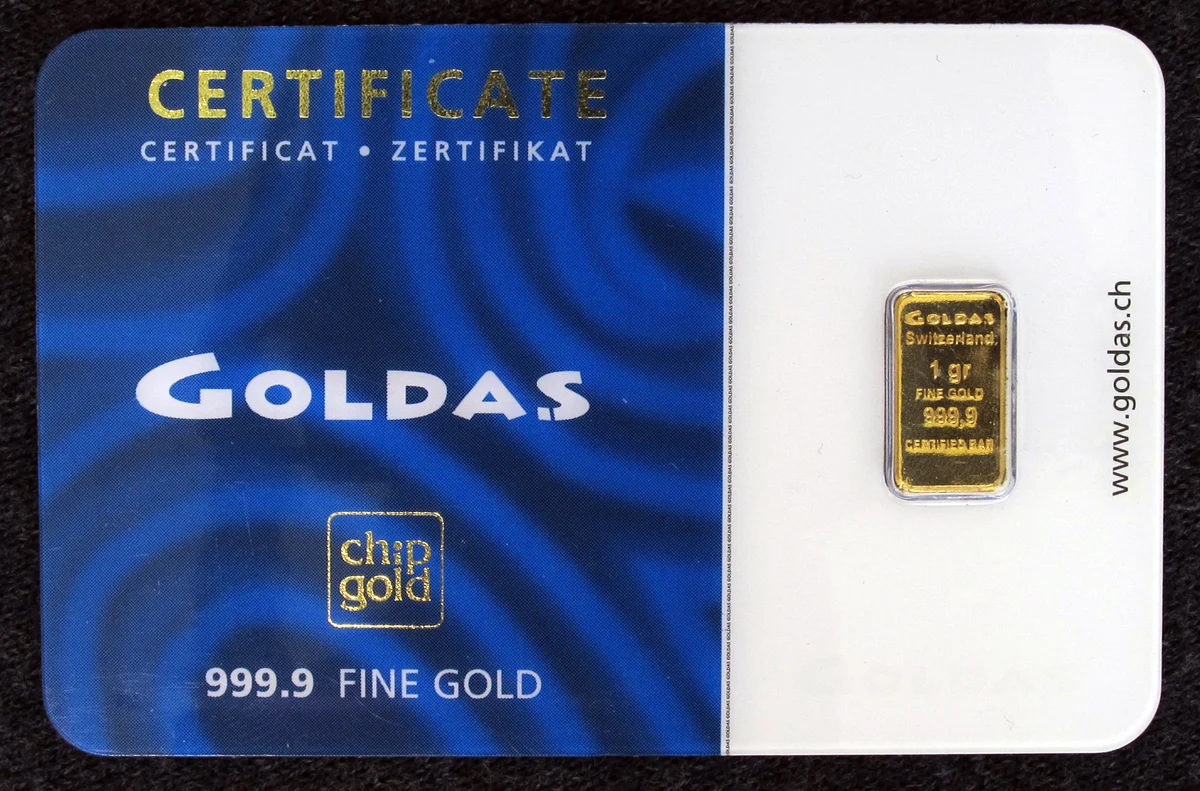
For a 100 gram example, the dated 999 rate of ₹121,038 per 10 grams implies a metal benchmark of ₹1,210,380. The specific product offer may list a separate packaging, dealer or issue premium. The image shows an assay card for one branded bar photographed in 2011. Read the grade and weight on the card for the product you actually buy.
Use the IBJA observation as a reference and obtain the retail quote from the branch or seller serving your location. A city name alone leaves the price basis unclear. Ask whether the displayed figure is the seller’s 916 metal rate, the amount for a specific piece, or the total payable. Ask when the quote was prepared and whether it applies to the branch where you would collect the item.
For jewellery with stones or other components, request the weight the seller uses for the gold line. Multiplying the full piece weight by a 916 benchmark treats every gram as 916 alloy. If the quote gives one weight and one total, ask for the weight attributable to gold and any separate amounts for other materials. If making charges are listed as a percentage, record the amount to which the percentage applies so you can reconcile the quote.
A hypothetical ring weighs 7.4 grams overall and its quote identifies 6.8 grams of 916 gold alloy. With a hypothetical 916 benchmark of ₹9,000 per gram, the benchmark metal estimate is ₹61,200. Using the full ring weight would give ₹66,600, a difference of ₹5,400. That difference comes from the choice of weight in the calculation. Establish the seller’s actual gold line and other charges before interpreting any difference between ₹61,200 and the invoice total.
If comparing the metal rates quoted by two sellers, convert both to the same weight unit and record the fineness and time for each. Then compare the itemized totals for the actual pieces separately, since weight and charges may differ.
For a finished retail jewellery sale, CBIC’s sector FAQ applies 3% GST to the entire transaction value, including separately shown making charges. If the quoted price already includes GST, confirm its pre-tax basis before using the calculator. The calculator has a separate switch for the straightforward finished jewellery example. The tax line for a separate work service sold to a manufacturer addresses a different supply.
Hyderabad gold rates: compare 22K quotes, charges and GST
To verify a changing rate, reopen the IBJA benchmark and read across the dated row for the fineness you need. Confirm AM or PM and the unit before copying the figure. If an older closing observation is the latest one you can verify, call it the latest available closing observation and retain its own date. Record when you checked it separately from when it was observed. That distinction matters if you return to the calculation after another observation appears.
A manual calculation needs the source rate, its weight unit, the source fineness and the item’s gold weight. Add the target fineness if you are estimating across purities. With a rate per 10 grams and a weight in grams, a standard calculator can multiply the rate by the weight and divide by 10. If the purity differs, multiply that result by target fineness divided by source fineness. Keep the amount in rupees and note which rate you used next to it.
When a detail is missing, identify the input you need before proceeding. A missing session makes it harder to reproduce a benchmark comparison. A missing gold weight prevents a piece-specific estimate where other components contribute to the total weight. An unclear hallmark can be checked through the BIS Care app if the piece has a unique identification number. When a seller refreshes the quote, confirm the revised total and which line items changed.
The reference entries here are examples from a dated release. The calculator runs on the figures you enter and keeps the gold estimate separate from entered charges and the optional GST amount. It does not request a price feed. For an announced amount today, open IBJA or the jeweller’s own time-stamped quotation, copy the amount and unit and keep those with the calculation.