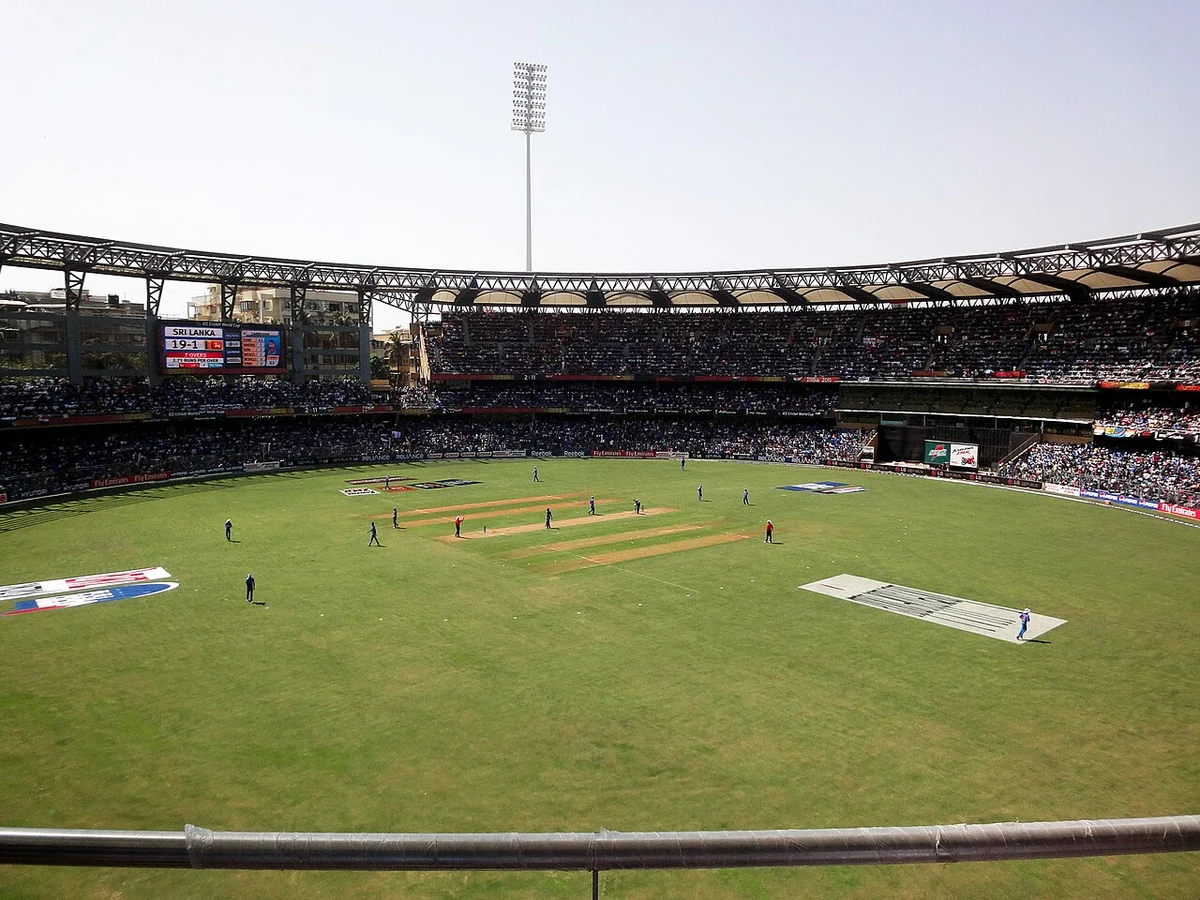
Historical match archive
ICC Men's T20 World Cup · 9 records dated 7 February 2026 to 8 March 2026. Coverage depends on what Cricsheet includes.
| Format | Recorded matches | India wins | Opponent wins | Other results |
|---|---|---|---|---|
| T20I | 9 | 8 | 1 | 0 |
| Start date | Format | Opponent | Venue | Innings scores | Result |
|---|---|---|---|---|---|
| 2026-03-08 | T20I | New Zealand | Narendra Modi Stadium, Ahmedabad | India 255/5 · New Zealand 159/10 | India won by 96 runs |
| 2026-03-05 | T20I | England | Wankhede Stadium, Mumbai | India 253/7 · England 246/7 | India won by 7 runs |
| 2026-03-01 | T20I | West Indies | Eden Gardens, Kolkata | West Indies 195/4 · India 199/5 | India won by 5 wickets |
| 2026-02-26 | T20I | Zimbabwe | MA Chidambaram Stadium, Chennai | India 256/4 · Zimbabwe 184/6 | India won by 72 runs |
| 2026-02-22 | T20I | South Africa | Narendra Modi Stadium, Ahmedabad | South Africa 187/7 · India 111/10 | South Africa won by 76 runs |
| 2026-02-18 | T20I | Netherlands | Narendra Modi Stadium, Ahmedabad | India 193/6 · Netherlands 176/7 | India won by 17 runs |
| 2026-02-15 | T20I | Pakistan | R Premadasa Stadium, Colombo | India 175/7 · Pakistan 114/10 | India won by 61 runs |
| 2026-02-12 | T20I | Namibia | Arun Jaitley Stadium, Delhi | India 209/9 · Namibia 116/10 | India won by 93 runs |
| 2026-02-07 | T20I | United States of America | Wankhede Stadium, Mumbai | India 161/9 · United States of America 132/8 | India won by 29 runs |
Data from Cricsheet under the ODC Attribution License 1.0. See the original archive notes and licence text. India IRL summarizes the innings records.
India vs Pakistan in Colombo
India beat Pakistan by 61 runs in their 2026 Men’s T20 World Cup Group A match at R Premadasa Stadium in Colombo on 15 February. India made 175 for 7, Pakistan were bowled out for 114, and the win secured India’s place in the Super Eight.
Ishan Kishan scored 77, accounting for 44 percent of India’s total when rounded to the nearest whole percent. The team’s 175 includes extras, so that percentage describes his share of the team score. The winning margin comes from subtracting Pakistan’s 114 from India’s 175. For a scorecard that displays Pakistan as 114/10, the ten indicates the wickets lost and gives the same information as ‘114 all out’ in a match report.
Pakistan were India’s third opponent in Group A, after the United States and Namibia. India had already won those first two matches and still had the Netherlands game to play. That puts the qualification result in context. The Colombo win clinched a place in the next stage with one group fixture to spare. The later Netherlands result completed a four-win group record.
Colombo was the only Sri Lankan stop on India’s nine-match route. The tournament was co-hosted, and the Pakistan fixture sits between two India matches at Indian grounds. When looking up highlights or a full scorecard, use the combination of 15 February, Colombo and Group A to identify the right match.
India vs South Africa in Ahmedabad
South Africa beat India by 76 runs in the Super Eight at Narendra Modi Stadium in Ahmedabad on 22 February. South Africa made 187 for 7, setting India 188 to win. India were dismissed for 111 in 18.5 overs. It was India’s only defeat in the tournament and came in their first match of the Super Eight.
The overs figure is cricket notation. India faced 18 completed overs and five legal deliveries of the nineteenth, which makes 113 legal balls. Reading 18.5 as a decimal would give the wrong ball count and distort any scoring rate calculated from it. The 76-run margin uses the difference between the teams’ scores. Subtracting 111 from the target of 188 instead gives the 77 runs India still needed to win.
India had played the Netherlands at the same ground four days earlier, making 193 for 6 in a 17-run group win. The change of stage matters when browsing results by venue. For the South Africa fixture, look for the Super Eight label and the South African innings of 187 for 7. Those details also distinguish this game from the teams’ 2024 final, which can appear in searches for the same two sides.
The Ahmedabad loss left two more Super Eight fixtures on India’s schedule. India won both, against Zimbabwe and the West Indies, before meeting England in the semi-final. The stage record was therefore two wins and one defeat. A reader checking the effect of the loss on the wider standings should use the ICC’s Super Eight records, since India’s results alone give only one team’s side of the group.
All nine India results in order
The 20-team tournament began on 7 February 2026 and was co-hosted by India and Sri Lanka. India opened their campaign that day in Mumbai and finished it on 8 March in Ahmedabad. The table follows the matches as played through four Group A fixtures, three Super Eight fixtures, the semi-final and the final. The scores appear in innings order so the first score shows the total the second side had to chase.
| Date | Stage | Opponent | Ground | Result |
|---|---|---|---|---|
| 2026-02-07 | Group A | United States of America | Wankhede Stadium, Mumbai | India won by 29 runs |
| 2026-02-12 | Group A | Namibia | Arun Jaitley Stadium | India won by 93 runs |
| 2026-02-15 | Group A | Pakistan | R Premadasa Stadium, Colombo | India won by 61 runs |
| 2026-02-18 | Group A | Netherlands | Narendra Modi Stadium, Ahmedabad | India won by 17 runs |
| 2026-02-22 | Super 8 | South Africa | Narendra Modi Stadium, Ahmedabad | South Africa won by 76 runs |
| 2026-02-26 | Super 8 | Zimbabwe | MA Chidambaram Stadium | India won by 72 runs |
| 2026-03-01 | Super 8 | West Indies | Eden Gardens, Kolkata | India won by 5 wickets |
| 2026-03-05 | Semi-final | England | Wankhede Stadium, Mumbai | India won by 7 runs |
| 2026-03-08 | Final | New Zealand | Narendra Modi Stadium, Ahmedabad | India won by 96 runs |
The tightest of India’s four group wins by runs was the 17-run result against the Netherlands. The widest was the 93-run win over Namibia. India reached 209 for 9 against Namibia and 193 for 6 against the Netherlands, a difference of only 16 runs between the first-innings totals. The winning margins differed by 76 runs because the two opponents finished on 116 and 176 respectively. Reading both innings together shows how much of the difference came from the replies.
Ahmedabad hosted three distinct points in the campaign. India finished group play there, lost their Super Eight opener there and then won the title there. Mumbai appears twice, for the opening match and the semi-final. For a historical itinerary, use the venue on the completed record for each fixture. The original ICC schedule included conditional knockout venue allocations, so its advance listing can differ from the ground recorded after the match.
- ICC | Final tournament match centre and completed records
- Cricsheet | India historical matches, complete 2026 tournament subset
- ICC | 2026 Men’s T20 World Cup tournament schedule
- ICC | 2026 India–Pakistan Group A match
- ICC | Ahmedabad Super 8 match against South Africa
- ICC report of India’s 61-run win over Pakistan
- ICC’s guide to India’s route to the final
How India finished the Super Eight
India responded to the South Africa loss by making 256 for 4 against Zimbabwe on 26 February at MA Chidambaram Stadium. It was India’s highest team total of the campaign, one run above their score in the final. Zimbabwe finished on 184 for 6 and India won by 72 runs. With a target of 257, Zimbabwe needed another 73 runs to win at the close of their innings.
The last Super Eight game reversed the innings order for India. At Eden Gardens on 1 March, the West Indies batted first and made 195 for 4. India passed the target of 196 and finished on 199 for 5. The five wickets in the result are the wickets India still had in hand when they completed the chase. A final score can exceed the target because the scoring play that completes the chase can carry the total past it.
The West Indies match was India’s only successful chase of the tournament. All seven other wins came when India batted first and defended a total. That gives a quick way to find the relevant games if you are comparing how India set and pursued targets. The two second innings to compare are the successful pursuit of 196 against the West Indies and the unsuccessful pursuit of 188 against South Africa. The scorecards establish the outcomes, while the sequence of deliveries is needed to identify when either chase changed course.
The England semi-final and New Zealand final
India beat England by seven runs in the second semi-final at Wankhede Stadium on 5 March. India made 253 for 7 and England replied with 246 for 7. Both teams lost seven wickets, and England’s target was 254. This was India’s smallest run margin of the tournament and the highest total scored against them across their nine matches.
Sanju Samson scored 89 for India and Jacob Bethell scored 105 for England in that semi-final. Bethell had the higher individual score in a match decided by the combined effort of each batting side. Samson also made 89 in the final. To keep the two innings distinct when consulting player records, pair the semi-final score with England and the final score with New Zealand.
India beat New Zealand by 96 runs at Narendra Modi Stadium on 8 March to take their third men’s T20 World Cup title. India scored 255 for 5 in 20 overs and dismissed New Zealand for 159 in 19 overs. Jasprit Bumrah took four wickets for 15 runs and was player of the match. The victory made India the first men’s side to defend the title.
India’s own totals in the two knockout matches differed by just two runs, from 253 against England to 255 against New Zealand. The opponents’ totals differed by 87 runs, from 246 to 159. The final’s 96-run victory was India’s biggest of the edition, even though the team made its highest score against Zimbabwe. The scorecards separate those two measures clearly. One records the size of India’s innings and the other takes the opposition’s reply into account.
India’s original squad and the Siraj replacement
The BCCI announced its initial 15 on 20 December 2025 for both the January home series against New Zealand and the World Cup. Suryakumar Yadav was named captain and Axar Patel vice-captain. Sanju Samson and Ishan Kishan were the two designated wicketkeepers. The shared announcement explains why the same list can appear under a January bilateral series heading and in early World Cup coverage.
Harshit Rana was in that initial squad and was injured in the 4 February warm-up. On 6 February, the ICC Event Technical Committee approved Mohammed Siraj as his replacement. The other 14 players stayed in the squad. For the updated tournament list, use the replacement decision alongside the original announcement. The ICC’s tournament-wide initial squad list of 2 February preceded that change.
The updated 15 comprised Suryakumar Yadav, Abhishek Sharma, Sanju Samson, Tilak Varma, Hardik Pandya, Shivam Dube, Axar Patel, Rinku Singh, Jasprit Bumrah, Mohammed Siraj, Arshdeep Singh, Kuldeep Yadav, Varun Chakaravarthy, Washington Sundar and Ishan Kishan. In a reference entry for Rana, the December announcement establishes his initial selection. In an entry for Siraj, the February approval establishes when he joined the tournament squad.
A squad announcement establishes eligibility and named roles at the time of selection. The declared XI on a match scorecard establishes who was selected for that fixture. That distinction matters when looking up the wicketkeeper or checking whether a squad member played against a particular opponent. Use the Colombo scorecard for the Pakistan fixture and the Ahmedabad final scorecard for the New Zealand fixture, even when the same player appears in both match reports.
India T20 World Cup 2026 squad, final 15, replacement and XI
Where to verify a fixture or scorecard
Start with the ICC’s completed match centre when checking a date, opponent, stage or venue. Open the individual scorecard for overs, innings figures and the declared XIs. This is especially useful for Ahmedabad, where a venue search can bring up three India fixtures from different stages. Use the dated ICC replacement notice for changes to the squad list and the completed scorecard for changes to the side selected from that squad.
Cricsheet’s completed records also give each match a stable identifier. The Pakistan fixture is 1512745, the South Africa fixture is 1512761 and the final is 1512773. When checking a downloaded record, match its date, teams and scores to the ICC entry before using the identifier in a dataset. The ball-by-ball file is the place to check the delivery sequence behind a chase or an individual innings that the results table gives only as a total.
For a fixture guide prepared before play, consult the latest official schedule for the planned ground and any conditions attached to its allocation. Once the match is complete, use its scorecard to verify where it took place. A completed-match archive answers historical queries such as the Colombo margin and India’s final score. Live coverage has a separate feed and permissions, and the availability of an archive file only establishes that the completed record can be retrieved.
India cricket live scores, official match links and India TV rightsWhere to watch India cricket in the USA, fixtures and start times
- ICC | Final tournament match centre and completed records
- Cricsheet | India historical matches, complete 2026 tournament subset
- ICC | Ahmedabad men’s T20 World Cup final scorecard
- ICC | Approved Harshit Rana replacement on 6 February 2026
- ICC | 2026 India–Pakistan Group A match
- ICC | Ahmedabad Super 8 match against South Africa
- ICC | 2026 Men’s T20 World Cup tournament schedule
Sources
- ICC | Final tournament match centre and completed records
- Cricsheet | India historical matches, complete 2026 tournament subset
- ICC | Ahmedabad men’s T20 World Cup final scorecard
- BCCI | 20 December 2025 initial T20 World Cup and January bilateral squad
- ICC | Approved Harshit Rana replacement on 6 February 2026
- ICC | 2026 India–Pakistan Group A match
- ICC | Ahmedabad Super 8 match against South Africa
- ICC | Tournament stats tracker
- ICC | 2026 Men’s T20 World Cup tournament schedule
- ICC | February 2026 India–South Africa match report
- ICC | 2026 Men’s T20 World Cup final report
- ICC report of India’s 61-run win over Pakistan
- ICC’s guide to India’s route to the final