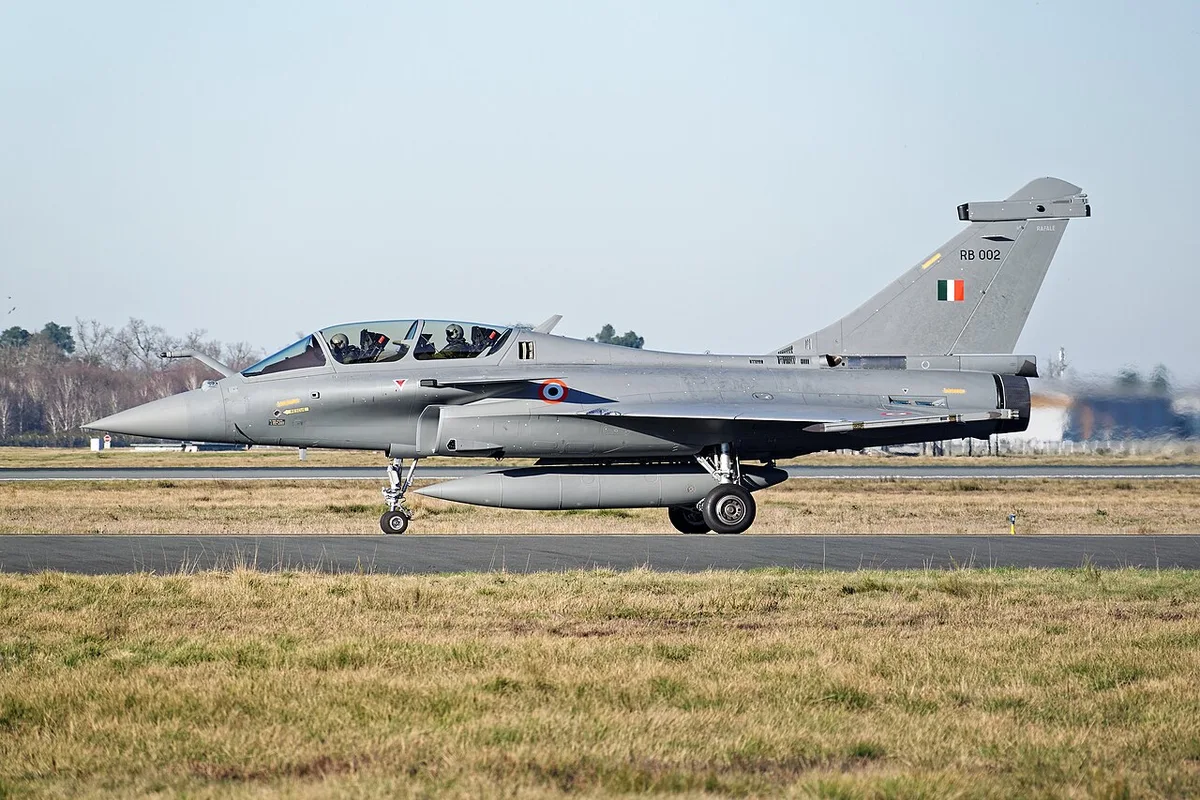
What India publicly sought on Rafale source code
India publicly sought access to Rafale source code in negotiations over a proposed purchase of 114 additional aircraft, according to a 2 March 2026 report on Defence Secretary Rajesh Kumar Singh’s remarks at Rising Bharat. The public records cited here establish that India signed separate agreements for 36 Air Force aircraft in 2016 and 26 naval aircraft in 2025, while leaving the outcome of the reported source code request unconfirmed.
The March report attributes the public remarks to the Defence Secretary at a named event. It supports saying India sought access in those talks. Acceptance by France or Dassault would require a separate dated record. The official notices below document the aircraft procurements at different stages and establish the context of that request.
The term “source code dispute” can imply a documented exchange between parties. The evidence here identifies a request from the Indian side. It leaves the other side’s response, any counterproposal, and the final disposition of the request open. Reports about negotiations can capture an important development even while those questions remain unresolved.
Keep that distinction when attaching a date to the story. The Ministry of Defence published the procurement approval on 12 February 2026. The Week published its account of Singh’s remarks on 2 March. The first date marks a formal procurement step, while the second dates public reporting on terms India sought. Together they establish the setting for the request without establishing when it was first made or how long the issue had been under discussion.
India’s Rafale procurement milestones
Read each milestone by the action recorded on that date. A declaration records a plan. A parliamentary answer can document the plan and the status of talks. Acceptance of Necessity records a procurement approval at the stage described by the Defence Acquisition Council. A signing announcement records that the parties reached an agreement. Those distinctions explain why the same quantity appears more than once in the Rafale timeline.
| Date of record or milestone | Procurement | Status | What the record supports |
|---|---|---|---|
| 30 July 2015 | Air Force · 36 | Declaration reported | A parliamentary answer describes the joint declaration and continuing negotiations. |
| 23 September 2016 | Air Force · 36 | Signed agreement | The 36-aircraft intergovernmental agreement was signed. |
| July 2023 | Navy · 26 | Acceptance of Necessity | The council cleared the naval proposal at this stage. |
| 28 April 2025 | Navy · 26 | Signed agreement | The naval intergovernmental agreement was signed. |
| 12 February 2026 | Air Force · 114 proposed | Acceptance of Necessity | The official decision records the stage. The manufacturer confirms the proposed count. |
| 2 March 2026 | Air Force · 114 proposed | Reported negotiating position | The report attributes the access request to Defence Secretary Rajesh Kumar Singh. |
The dated parliamentary answer illustrates why publication dates need careful labels. On 30 July 2015, the Ministry of Defence recorded that a joint declaration for the acquisition of 36 aircraft existed and that negotiations were ongoing. Use 30 July as the date of the parliamentary answer. For the date India signed the agreement for those 36 aircraft, use 23 September 2016.
The record for the naval purchase gives a month for the council milestone and a specific day for the agreement. Keep July 2023 at month precision and use 28 April 2025 for signing. Official summaries published around a new agreement can help connect the milestones, while the procurement announcement provides the best support for the signature date and the quantity covered by that agreement.
The timeline also has a change in evidentiary footing in 2026. The council decision is the official source for the procurement stage. The manufacturer supplies the proposed quantity in its account of direct negotiations. The news report supplies the attribution for the Defence Secretary’s remarks. Keeping those sources attached to their respective claims makes it possible to update one part of the timeline when new evidence appears.
- Press Information Bureau: Procurement Timeline for Rafale
- Press Information Bureau: April 2025 Intergovernmental Agreement
- Ministry of Defence, 2016 fighter acquisition agreement
- Ministry of Defence, July 2015 parliamentary statement
- Ministry of Defence, 2023 year-end review
- Ministry of Defence, April 2025 India–France naval agreement
- Defence Acquisition Council, decisions of 12 February 2026
- Dassault Aviation, 2025 annual report
- The Week, 2 March 2026 report of the Indian Defence Secretary’s public remarks
What the 114-aircraft proposal and ₹3.60 lakh crore figure mean
On 12 February 2026, the Defence Acquisition Council published Acceptance of Necessity for Multi-Role Fighter Aircraft (Rafale). Dassault Aviation’s 2025 annual report describes that decision as authorizing the start of direct negotiations for 114 aircraft. The government release establishes the formal decision and its date, and the company report connects that decision to the size of the proposal.
Adding the 114 proposed aircraft to the 62 already ordered gives 176. That is a conditional calculation. It would become a cumulative order figure if a later signed agreement covered the full 114 alongside the two earlier agreements. If the quantity changed during negotiations, the later agreement would supply the figure to add. As long as the evidence stops at approval and negotiations, the signed and proposed quantities need separate labels.
The approximate ₹3.60 lakh crore figure in the council announcement covers multiple proposals approved that day. It therefore cannot be assigned in full to the Rafale item. Dividing it by 114 would compound the error by using the total for several proposals as the numerator and the aircraft count from one proposal as the denominator. A Rafale-specific amount would require a source that expressly assigns a value to that purchase and explains the scope it covers.
The decisive update for the 114-aircraft proposal would be a public record that confirms a signature and states the contracted quantity. A later statement that talks are progressing adds information about the proposal’s status. A confirmation of signature would change how the aircraft are counted. For cost, even a signing announcement can leave the question open if it gives the quantity but omits a deal-specific value.
What access, ownership and delivery mean in public reporting
Source code is the human-readable form of software. In procurement reporting, “access” can refer to permission whose scope depends on the agreed terms. Ownership addresses who holds the rights. Delivery addresses whether the material was actually provided. Those are distinct claims, and each needs wording that identifies what happened. A general reference to access in negotiations leaves the scope of any eventual permission open.
Suppose a public statement says a buyer has permission to inspect specified material under agreed conditions. The statement could support a precise claim about permission to inspect. A claim that ownership changed hands would need language addressing ownership. A claim that the buyer received the material would require evidence of delivery. Reading the verb and its object gives a reader a way to assess the claim without relying on technical details.
The same care applies to the shorthand “transfer.” A released agreement or official summary might use that word for a defined action. Quote or paraphrase the action at the same level of specificity the source provides. If the source says only that an access request was discussed, “transfer” describes an outcome the reader still needs to verify. The available March report supports attributing the request to Indian negotiating remarks.
The April 2025 announcement establishes the scope and date of the naval aircraft procurement at the level disclosed in the release. Its silence on alleged proprietary software terms leaves those terms undetermined in this record. Similarly, a public account of an access request in the later negotiations gives no basis for assigning that request or its outcome to either earlier signed agreement. Each claim belongs with the procurement and the statement that support it.
How to verify a new claim about the negotiations
Start with the claim whose status may have changed. For a report that India has signed for more aircraft, look for a dated Ministry of Defence or Press Information Bureau announcement that names the procurement and identifies the action taken. Look for the signature date and quantity in the text. If a manufacturer statement also describes the agreement, check whether both accounts concern the same purchase and the same stage.
For a new claim about source code, trace the wording back to a transcript, a full recording, an official release or a published statement attributable to a party. Pay attention to whether the speaker describes a request, an offer, an agreement or completed delivery. Record when the speaker made the statement, when the account was published, and which procurement it concerns. A recent publication date can accompany a description of an earlier event.
Independent coverage helps most when it adds evidence beyond another outlet’s account of the same remarks. Several articles quoting a single speech may confirm how widely a claim circulated while leaving its basis unchanged. A fuller recording can clarify what the speaker actually said. A dated statement from the other party or an authorized summary of agreed terms can answer a different question by documenting a response or an outcome.
Update the order count and the software account on their own evidence. A newly confirmed aircraft agreement can settle a quantity while leaving the reported access terms unclear. A later official statement can address those terms even if it appears separately from the signing release. When a source answers only part of the question, preserve the precise claim it supports and carry the unresolved detail forward with its last attributable date.
- Press Information Bureau: April 2025 Intergovernmental Agreement
- Ministry of Defence, April 2025 India–France naval agreement
- Defence Acquisition Council, decisions of 12 February 2026
- Dassault Aviation, corporate strategy and order context
- Dassault Aviation, 2025 annual report
- The Week, 2 March 2026 report of the Indian Defence Secretary’s public remarks
Sources
- Press Information Bureau: Procurement Timeline for Rafale
- Press Information Bureau: April 2025 Intergovernmental Agreement
- Ministry of Defence, 2016 fighter acquisition agreement
- Ministry of Defence, July 2015 parliamentary statement
- Ministry of Defence, 2023 year-end review
- Ministry of Defence, April 2025 India–France naval agreement
- Defence Acquisition Council, decisions of 12 February 2026
- Dassault Aviation, corporate strategy and order context
- Dassault Aviation, 2025 annual report
- The Week, 2 March 2026 report of the Indian Defence Secretary’s public remarks