Match the card to the purchases you already make
For qualifying online purchases across retailers, start with CASHBACK SBI Card, which earns 5% subject to a ₹2,000 online cap per statement cycle. For spending concentrated on Amazon India, eligible Swiggy orders or Flipkart, compare the Amazon Pay ICICI Bank Credit Card, Swiggy BLCK HDFC Bank Credit Card or Flipkart Axis Bank Credit Card respectively, using the fees, limits and redemption terms below.
Start with recent statements and group purchases by merchant and category. Keep individual transaction amounts where a card sets a minimum, and posting dates where they affect a cap or waiver. A household’s online total can include marketplace orders, utility payments, insurance premiums and school fees. Those payments can look similar in a banking app, yet an issuer may treat them differently for cashback.
The table uses published standard fees and shows the timing of the main reward limits. Where a fee applies, budget separately for applicable tax. Keep first-year and renewal figures separate, because the joining fee and the conditions for waiving a later fee answer different questions. Use the exact product name on the offer screen, especially when comparing the three Swiggy cards.
For an annual comparison, add the rewards that survive each billing period’s limits and deduct the applicable card fee and tax. Value each reward according to where it lands and how much of it you expect to use. This gives you a purchase-reward comparison you can reproduce from statements.
| Card | Joining and renewal fees before tax | Main reward rates and limits |
|---|---|---|
| CASHBACK SBI Card | ₹999 joining and ₹999 renewal from year two. Renewal reversal at ₹2 lakh or more in eligible annual spend. | 5% qualifying online and 1% qualifying offline. ₹2,000 per bucket per statement cycle, ₹4,000 overall. |
| Amazon Pay ICICI Bank Credit Card | No joining or annual fee. Invite-only access. | 5% Prime or 3% non-Prime on eligible Amazon India purchases. Eligible 2% and 1% categories also apply. Rewards go to Amazon Pay balance. |
| Swiggy ORNGE HDFC Bank Credit Card | ₹500 joining and renewal. Renewal waiver at ₹1.5 lakh or more in qualifying previous-year spend. | 5% eligible Swiggy and included online categories share ₹1,500 per billing cycle. Eligible other spend earns 1% up to ₹1,000 per cycle. |
| Swiggy BLCK HDFC Bank Credit Card | ₹1,000 joining and renewal. Renewal waiver at ₹2 lakh or more in qualifying annual spend. | 10% eligible Swiggy and 5% selected online each have a ₹1,500 billing-cycle bucket. Eligible other spend earns 1% up to ₹1,000 per cycle. |
| Flipkart Axis Bank Credit Card | ₹500 joining and ₹500 annual fee from year two. Waiver above ₹3.50 lakh in qualifying spend. | Myntra 7.5%, Flipkart 5% and Cleartrip 5%, each capped at ₹4,000 per merchant per statement quarter. Selected preferred merchants earn 4% and eligible other spend earns 1%. |
| Original Swiggy HDFC Bank Credit Card | ₹500 joining and renewal. Renewal waiver at ₹2 lakh or more in qualifying spend. | 10% eligible Swiggy, 5% included online and 1% eligible other spend, with respective billing-cycle caps of ₹1,500, ₹1,500 and ₹500. New application availability unverified. |
- SBI Card — CASHBACK SBI Card exact retail fee and cashback
- SBI Card — revised cashback caps from 1 April 2026
- ICICI Bank — Amazon Pay ICICI Bank Credit Card and published eligibility
- HDFC Bank — original Swiggy HDFC Bank Credit Card, terms published 18 September 2026
- HDFC Bank — Swiggy HDFC fee and statement credit FAQ
- HDFC Bank — current Swiggy ORNGE and BLCK card terms, 22 September and 12 November 2026
- Axis Bank — Flipkart Axis Bank Credit Card product and eligible quarter caps
Calculate SBI cashback one statement cycle at a time
CASHBACK SBI Card credits earned cashback to the card statement. Since 1 April 2026, online and offline cashback have each had a ₹2,000 statement-cycle limit, with an overall limit of ₹4,000. At the published rates, ₹40,000 in qualifying online purchases reaches the online ceiling, while the offline ceiling requires ₹2 lakh in qualifying offline purchases within the same cycle.
Suppose a single statement cycle contains ₹50,000 in qualifying online purchases and ₹20,000 in qualifying offline purchases. The online purchases generate ₹2,500 before the limit, so the issuer credits ₹2,000 for that bucket. Offline purchases add ₹200. The total is ₹2,200 in gross statement credit before fees or tax. The unused offline capacity cannot absorb the ₹500 cut from the online calculation.
A cycle cap matters most when spending arrives in bursts. For cards scored on a statement-cycle basis, assign each purchase to the cycle where it counts under the issuer’s terms. Averaging a large purchase across quieter cycles can overstate the value you would actually receive. Use the statement’s opening and closing dates when you are reconstructing past spending.
The revised cashback notice adds exclusions for digital gaming merchants, tolls and government-related transactions. Merchant EMI and Flexipay, along with specified categories such as utilities, rent, insurance and education, are also covered by exclusions. Check the issuer’s current list and merchant classification before assigning the 5% rate to a purchase simply because you pay for it online.
Value Amazon Pay rewards where you will spend them
The Amazon Pay ICICI Bank Credit Card has no joining or annual fee, and the public product page describes access as invite-only. The issuer also publishes indicative eligibility. An invitation and the published criteria help establish whether the card is an option to investigate. Approval remains an issuer decision, so keep an alternative in the comparison if access is uncertain.
Eligible Amazon India purchases earn 5% for Prime members and 3% for non-Prime members, subject to category exclusions. On ₹20,000 of fully eligible Amazon India purchases, those rates produce ₹1,000 and ₹600 respectively. The ₹400 difference is the amount attributable to the higher rate for that spending. If Prime is a separate purchase you are considering, compare the incremental reward with the current membership price and the value of any other Prime benefits you would use.
The issuer also lists 2% for eligible Amazon Pay categories and 1% for eligible other spending, with no earnings cap stated for those ordinary eligible categories. Rewards go to Amazon Pay balance. For a comparison with SBI’s statement credit, look at how much of that balance you could use on purchases you already expect to make.
The issuer’s dated update identifies eligible flights and hotels in its specified Amazon Pay travel channel for the 5% or 3% rate. The ordinary outside-Amazon 1% rate has exclusions including fuel, rent, tax, education, utilities and international spending. Check the current product terms for the precise category and booking channel before including a transaction at either rate.
Compare Swiggy ORNGE, BLCK and the original card
Under the terms dated 22 September 2026, ORNGE puts eligible Swiggy and included online spending in a shared 5% bucket capped at ₹1,500 per billing cycle. The terms specify a ₹249 minimum transaction for the 5% bucket and ₹100 for the 1% bucket. The 1% bucket has a separate ₹1,000 cap. Check the listed merchants and any conditions attached to named offers.
BLCK’s 12 November 2026 terms give eligible Swiggy purchases a 10% bucket and selected online purchases a separate 5% bucket, each with a ₹1,500 billing-cycle cap. Eligible other spending earns 1% up to ₹1,000 a cycle. The transaction minimum is ₹249 for the 10% bucket and ₹100 for the 5% and 1% buckets. These minimums apply transaction by transaction.
Take a cycle with ₹10,000 of eligible Swiggy orders and ₹25,000 in online purchases that qualify on both cards, with every purchase clearing the relevant minimums. ORNGE reaches its shared ₹1,500 cap. BLCK earns ₹1,000 on Swiggy and ₹1,250 online, totalling ₹2,250. That cycle’s ₹750 gross difference can be weighed against BLCK’s ₹500 higher standard fee before tax. Annual value still depends on how often that pattern occurs and which renewal fee applies.
The original card’s terms cover eligible Food Delivery, Instamart and Dineout at 10%, with a ₹249 transaction minimum. Its FAQ documents cashback as statement credit from 21 June 2024. Existing holders can use the published terms to check their statements. Prospective applicants should confirm availability and match the application’s exact product name to its fee and reward schedule.
Track Flipkart Axis rewards by statement quarter
The Flipkart Axis Bank Credit Card earns 7.5% at Myntra and 5% each at Flipkart and Cleartrip on eligible transactions. Each merchant has its own ₹4,000 statement-quarter cap. Selected preferred merchants earn 4%, and other eligible spending earns 1%. The issuer pays cashback as statement credit. Confirm the preferred-merchant list before applying the 4% rate to a purchase.
A shopper with ₹90,000 in eligible Flipkart purchases and ₹20,000 in eligible Myntra purchases in the same statement quarter would calculate ₹4,500 at Flipkart before the cap and receive ₹4,000 for that merchant. Myntra would add ₹1,500, making ₹5,500 in gross statement credit from the two merchants. Further eligible Myntra purchases still have room under that merchant’s ceiling during the quarter.
Quarterly limits make the timing of large purchases important. Check when the issuer’s statement quarter begins and ends before comparing an appliance or travel booking with a card that resets each statement cycle. Use the periods defined in the card terms for your calculation. The Axis notice dated 28 August 2026 concerns dynamic currency conversion and late-payment terms. Use the product page for the quarterly cashback figures.
Keep a separate annual total for the fee waiver. Axis requires qualifying spending strictly above ₹3.50 lakh, excludes rent and wallet loads from waiver eligibility, and counts by posting date. A purchase placed close to the annual cutoff can post in a different period. Check the posted transaction date before treating it as part of that year’s total.
Price the first year and renewal separately
Enter the joining fee and applicable tax against first-year rewards, then calculate renewal value using the published annual fee and waiver condition. ORNGE’s priced card waives renewal at ₹1.5 lakh or more in qualifying previous-year spending. BLCK’s threshold is ₹2 lakh or more, as is the original Swiggy card’s. Use the qualifying spend definition for the exact card alongside its threshold.
At exactly ₹2 lakh in spending that qualifies under each issuer’s waiver rules, the published thresholds are met for SBI, ORNGE, BLCK and the original Swiggy card. The Axis threshold remains above that amount. This comparison deliberately assumes the spending qualifies on each card. For an actual statement, verify the issuer’s exclusions and counted annual total before entering zero for the renewal fee.
Price a documented offer on its own terms. HDFC’s BLCK app offer dated 13 November 2026 has a limited period and narrower eligibility. A first-year promotion affects the opening year, while a lifetime fee offer needs its own terms and eligibility evidence. Save the issuer’s offer wording and check that the product and application channel match what you were shown.
For international purchases, add a separate cost line. ICICI Bank’s published update reduced the Amazon Pay card’s forex markup from 3.5% to 1.99% effective 11 October 2025. Check any merchant currency conversion and applicable tax separately. The outside-Amazon reward exclusions include international spending, so omit the ordinary 1% reward when modelling that cost.
| Card | Relevant period or destination | What to compare |
|---|---|---|
| CASHBACK SBI Card | Statement cycle | Separate qualifying online and offline cashback buckets |
| Amazon Pay ICICI | Amazon Pay balance | Check the membership and transaction category on the bank’s terms |
| Swiggy HDFC variants | Billing cycle | Check the specific card variant and relevant cap combination |
| Flipkart Axis | Statement quarter | Check the advance payment or refund effect for the applicable merchant rules |
- SBI Card — CASHBACK SBI Card exact retail fee and cashback
- ICICI Bank — Amazon Pay ICICI Bank Credit Card and published eligibility
- ICICI Bank — dated Amazon Pay terms update
- HDFC Bank — Swiggy HDFC fee and statement credit FAQ
- HDFC Bank — current Swiggy ORNGE and BLCK card terms, 22 September and 12 November 2026
- Axis Bank — Flipkart Axis Bank Credit Card product and eligible quarter caps
Check repayment costs and verify the live terms
If a balance may carry over, compare borrowing costs before using rewards to rank cards. RBI’s Commercial Banks Credit and Debit Card Issuance and Conduct Directions, issued on 28 November 2025 and updated on 1 October 2026, require applicable APR disclosures and worked explanations for covered products. They also require annual fees and APRs to be displayed equally prominently. Use the current Most Important Terms and Conditions, or MITC, for the exact product’s rates and charges.
The minimum amount due and total amount due are separate statement figures. Use the MITC’s worked explanation to see what paying only the minimum means for your balance. The RBI directions require disclosure of the effect of minimum payments and of the suspension of the interest-free period when a prior balance remains outstanding. The cashback figures in this comparison measure purchase rewards. A borrowing-cost estimate needs repayment amounts and timing, plus the issuer’s interest calculation.
To verify a changing detail, match the full product name across the issuer’s application screen, fees page, rewards terms and MITC. Look for the effective date and read the specific row for the fee, category or cap you are checking. If a newer notice covers a different charge, use the current document that actually governs the disputed term. If your shortlist includes American Express India products, check whether each is a credit card or a charge card and read the corresponding payment terms.
What the Reserve Bank of India does and where to check its decisionsRazorpay in India, gateway fees, onboarding and settlement
- RBI — Commercial Banks Credit and Debit Card Issuance and Conduct Directions
- SBI Card — revised cashback caps from 1 April 2026
- ICICI Bank — Amazon Pay ICICI Bank Credit Card and published eligibility
- HDFC Bank — current Swiggy ORNGE and BLCK card terms, 22 September and 12 November 2026
- Axis Bank — Flipkart Axis Bank Credit Card product and eligible quarter caps
- American Express India credit-card important terms
- American Express India charge-card important terms
Sources
- RBI — Commercial Banks Credit and Debit Card Issuance and Conduct Directions
- SBI Card — CASHBACK SBI Card exact retail fee and cashback
- SBI Card — revised cashback caps from 1 April 2026
- ICICI Bank — Amazon Pay ICICI Bank Credit Card and published eligibility
- ICICI Bank — dated Amazon Pay terms update
- HDFC Bank — original Swiggy HDFC Bank Credit Card, terms published 18 September 2026
- HDFC Bank — Swiggy HDFC fee and statement credit FAQ
- HDFC Bank — current Swiggy ORNGE and BLCK card terms, 22 September and 12 November 2026
- Axis Bank — Flipkart Axis Bank Credit Card product and eligible quarter caps
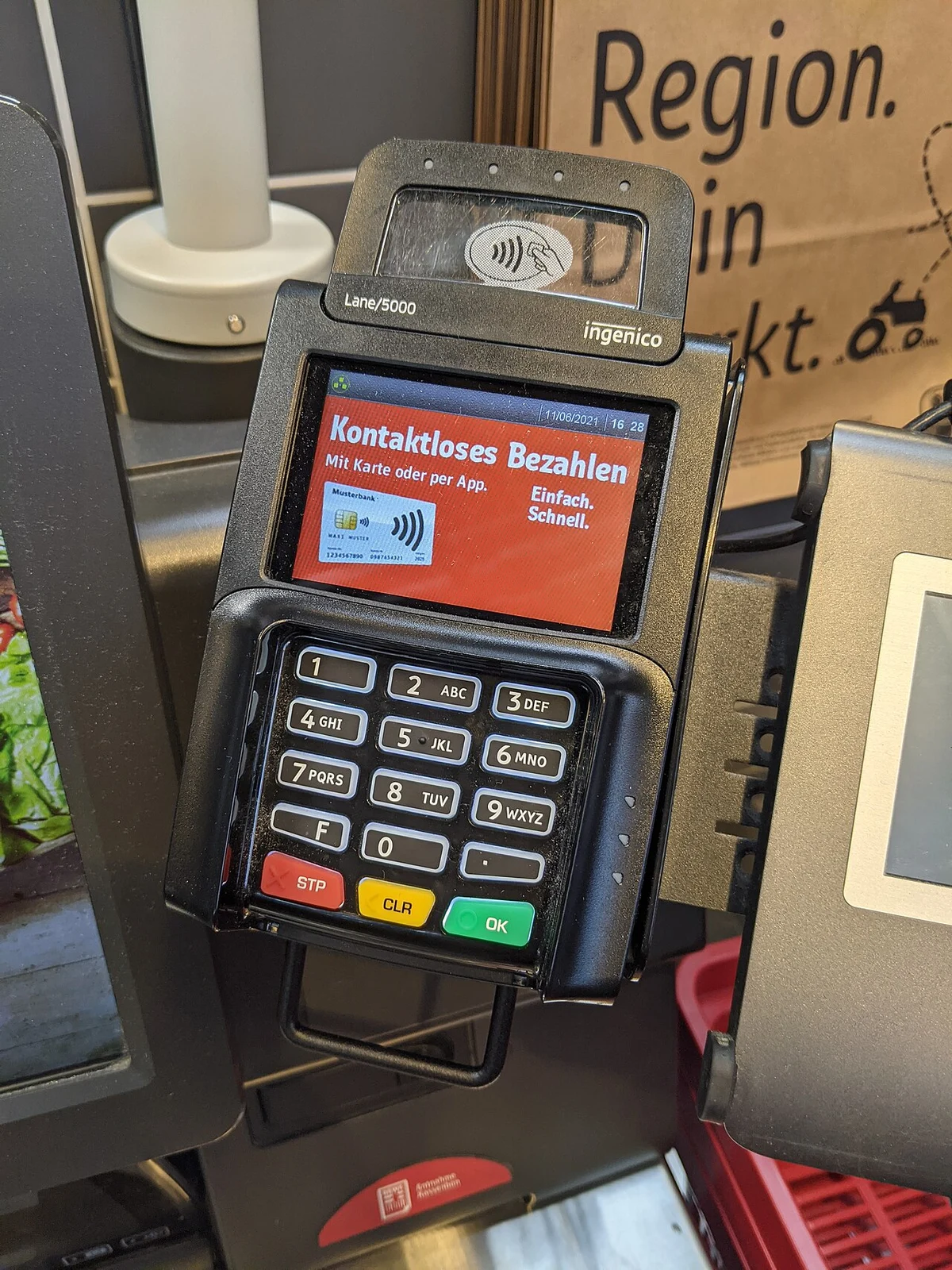
- Anselm Schüler — payment terminal at self-checkout, Wikimedia Commons
- American Express India credit-card important terms
- American Express India charge-card important terms
