Choose an outfit for each event on your invitation
Wear an outfit that meets the host’s dress code for the event you’re attending and any entry requirements at the ceremony venue. If the invitation leaves the style open, consider a sari, a kurta set or formal separates you already own, then choose shoes and layers for the setting.
Start with the part of the invitation that names the event, address and dress code. The wedding ceremony and reception can have separate entries, and you may be invited to only one. If a dress instruction appears under a single event, confirm its scope before buying clothes for the rest of the programme. A message to the host that names the event and describes your proposed outfit gives them something concrete to respond to.
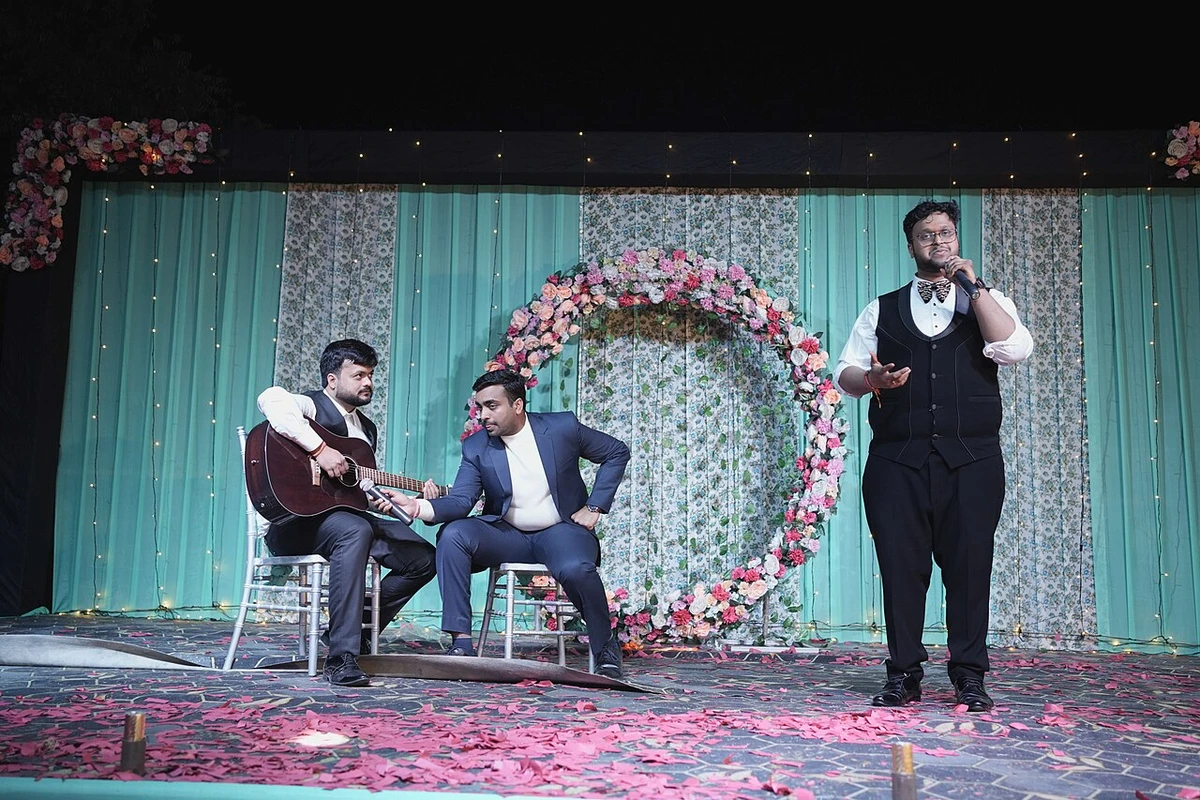
Haldi, Mehendi and Sangeet are among the events listed by Taj Devi Ratn in Jaipur. The event name helps you find the right entry on the schedule. The host’s directions tell you which clothes or colours they want guests to wear. Look for an event-specific note in the invitation or wedding itinerary, especially if the same family has given different instructions for different functions.
If your invitation asks guests to wear a particular colour for Mehendi and gives a separate dress code for the reception, choose the reception outfit first if it has the more specific requirements. Then see whether pieces you own can meet the Mehendi request. Ask whether a coloured layer or accessory counts if the wording leaves that unclear. That answer can save a second purchase and gives you a clear basis for deciding what to pack.
| Decision | What to check | Where to confirm it |
|---|---|---|
| Clothing style and colour | Any instructions for the specific function | Invitation or host |
| Footwear and head covering | Entry rules for the ceremony space | Ceremony venue |
| Shoes and hem length | Surfaces along the full route | Host or venue coordinator |
| Layers | Outdoor time and expected temperature | Current itinerary and weather forecast |
| Whether to buy a set | Included pieces, size, delivery and return terms | Exact listing and checkout |
Check ceremony entry rules and seating
At a place of worship, check the rules for the building where the ceremony takes place. Incredible India describes footwear removal and head covering at Sri Harmandir Sahib, also known as the Golden Temple, in Amritsar. The Sikh Rehat Maryada, published by the SGPC, also describes removing shoes when entering a gurdwara and places the Anand marriage ceremony in a congregational setting. For your visit, ask the ceremony venue what guests should bring and whether it supplies any required head covering.
Check the reception address independently, even when both functions appear on the same invitation. An institution can have its own ordinary clothing protocol. Rajasthan International Centre in Jaipur, for example, accepts Western and Indian dress under its member and guest protocol, including kurta, pyjamas and Nehru jacket with suitable shoes or sandals. The same protocol excludes shorts, bathroom slippers and bare feet. For a function there, check the invitation and ask which conditions apply to event guests.
Ask about seating when it affects what you can comfortably wear. If guests will sit on the floor, check that you can lower yourself, sit and stand again while keeping the outfit in place. A close waistband, a blouse that pulls across the shoulders or a jacket that rides up may feel manageable during a standing fitting. Sitting in the full outfit for a few minutes gives you a better indication of how it will feel through the ceremony.
If you’re going straight from a gurdwara ceremony to a reception at another address, choose shoes you can remove and put back on easily, and keep any required head covering where you can reach it at arrival. Confirm the reception dress code before packing a change. One outfit may serve both venues if it meets each set of requirements.
Match shoes, hems and layers to the venue
Find out where guests will spend their time and what they’ll walk across to get there. Taj Devi Ratn in Jaipur lists its 468-square-metre Adya Ballroom opening onto a lawn for weddings and receptions. An indoor ballroom on the invitation can therefore be only part of the setting. The host or venue coordinator can tell you whether the actual plan includes drinks outside, lawn seating or a walk between spaces.
For a route across grass, a shoe with a broad base is less likely to sink than a narrow heel. Check how well the shoe stays on when you turn or take a step down. Try on the shoes with the trousers, skirt or drape you’ll wear. A hem set with taller shoes may drag once you switch to flats, and a wide trouser leg can catch under a shoe as you get up from a chair.
Use the event time and a current forecast for the venue to choose a layer. Ask how much of the event takes place outside and whether you can leave a layer somewhere once you go indoors. Try it over the full outfit, particularly if the sleeves are bulky or the shoulder fabric needs to stay in place. Check whether you can take the layer off without pulling at the drape or needing someone to help.
For a reception that starts with drinks on a lawn and moves to dinner indoors, plan around the outdoor stretch first. If low, stable shoes work for the entire evening, set your hem with those shoes. If you plan to change into taller shoes inside, check the hem in both pairs and find out where you can leave the outdoor pair. That makes the shoe change a practical option you can assess before the event.
Compare a draped sari, a pre-draped sari and a sharara set
The Metropolitan Museum of Art records a wedding sari in its collection, and Incredible India documents the Banaras brocade and sari weaving tradition. These references give you context for particular garments and textiles. To choose something you can wear as a guest, look at the construction of the exact outfit, how you’ll put it on and what the host has asked for.
With a sari you’ll drape yourself, establish how you’ll get dressed at the venue or wherever you’re staying. Check whether the blouse and any required underskirt are already fitted and whether you can put everything on in the time available. If you plan to get help, arrange it for the place and time you’ll actually be dressing. A short try-on with the shoes also lets you see where the drape falls as you walk.
With a pre-draped sari, the set may come in ready-to-wear sizes, so pay particular attention to the waist and blouse fit. Mohey’s Wine Satin Pre Draped Saree with Moti Work, item UC167787, was listed at ₹9,999 including tax. Its Sea Green Organza Pre Draped Saree, item UC164085, was listed at ₹14,999 including tax. Both listings displayed M through XXXL, included the blouse and draped sari, and specified dry cleaning. Those prices and sizes describe the named items. Check the current listing for an orderable size and any fibre details you need.
A sharara set gives you another way to wear a coordinated outfit with separate bottoms. Biba’s historical Teal Cotton Straight Kurta Sharara Suit Set shows a three-piece configuration with a kurta, sharara and dupatta. Use the contents field on the specific listing to see what comes with the outfit. When trying on a sharara, walk in your event shoes and check how easily you can keep the dupatta positioned while sitting or moving through a crowd.
| Product type | Example seller listing | Fit and contents to check |
|---|---|---|
| Pre-draped sari | Mohey wine satin pre-draped sari | Top and lower garment sizing and listed accessories |
| Pre-draped sari in another fabric | Mohey sea green organza pre-draped sari | Length, opacity and blouse details on the exact listing |
| Kurta and sharara set | Biba teal cotton straight kurta and sharara suit | Which pieces the set includes and item-specific measurements |
| Kurta and jacket with pajama | Manyavar denim blue festive kurta jacket | Compare body chart, finished garment measurements and each included piece |
Indian fashion styles, regional textiles and how to buy by fitLashkaraa sizing, shipping countries and occasion wearPanash India orders, outfit prices, stitching and delivery
Use the item’s measurements for a kurta and jacket
A kurta and jacket set can make sense when you want coordinated pieces and the host’s dress code allows them. Manyavar’s Denim Blue Festive Kurta Jacket With White Pajama, item UC102088, was listed at ₹4,999 including tax. Its contents were a kurta, jacket, pyjama and pocket square. The listing described cotton and art silk and specified dry cleaning. Check the contents if you’re comparing it with a listing that shows similar styling in its photographs.
Read the heading above each measurement before choosing a size. This item’s chart lists both the wearer’s chest measurement and the kurta’s finished chest measurement. The listed 36/S pairs a 36-inch body chest with a 40-inch kurta chest, and 38/M pairs 38 with 42. For 40/L the pair is 40 and 44, and for 42/XL it is 42 and 47. The room built into the kurta changes across those entries, so use the actual garment figures if you want to compare the cut with a kurta you own.
If your chest measures 40 inches, start with 40/L in that item’s body column. The listed kurta chest is 44 inches, which gives four inches of difference around the chest. Then look up the jacket and pyjama in their separate charts. If the kurta appears suitable and the jacket appears tight, ask the seller what sizing options are available for the set before ordering.
When you try it on, button the jacket over the kurta and reach forward as you would at a table. Check for pulling across the upper back and look at where each sleeve ends. Sit down in the pyjama and check the waistband and knees. Those movements tell you whether the pieces work together for the event, especially when your fitting time is short.
Decide whether to rewear, borrow or buy
Start by putting together a complete outfit from pieces you can already access. If the host’s dress code allows formal separates, check how your existing pieces look together with the shoes you’ll wear. If borrowing gives you a better fit for the requested style, try on every piece before committing. Ask about permission to adjust a hem or take in a waist, and agree on care and return timing with the owner.
When comparing purchases, work from what you still need to get dressed. The Manyavar jacket set supplies four listed pieces, while the two Mohey pre-draped options include their blouses. The historical Biba example includes a dupatta as one of its three pieces. Check whether pieces photographed with the outfit also appear in the listing’s contents. A garment that looks complete in a product image may still leave you sourcing a piece on a short deadline.
Check the current price and orderable size on the exact item page, then enter the delivery PIN you’ll actually use for the order. A size shown in the range can be unavailable to order. Compare the displayed arrival estimate with the day you need the clothes in hand, allowing time to try them on with shoes and check the individual pieces. Use the checkout terms for your own order if they differ from a general product page display.
If you’re travelling before the wedding, think through where you can inspect a purchase and what you would wear if it arrives after you leave. A borrowed outfit you can already try on can be the better choice when an online purchase leaves very little fitting time. Include care in that decision. A dry-clean-only label matters if you intend to rewear the outfit during the trip and need to clean it between functions.
Check the return window before altering a new outfit
Read both the return and exchange terms before ordering. The Manyavar and Mohey India direct policy describes eligible garment return requests within 48 hours of delivery and exchanges within 10 days. The ten-day period applies to exchanges. The policy excludes accessories, expects garments to be unused and unaltered with tags, and keeps the pieces of a garment set together. It describes store exchange and return as India-only.
Verify the current policy through the seller you’ll actually pay. Match it to the item and order channel, especially if you’re buying from a store, a marketplace or a different country. Check when the window starts and how to submit a request. If someone else will receive the package, plan for them to let you know as soon as it arrives so you can work from the delivery date.
Inspect and try on the full set before sending any piece for alteration. Check the item and size against the order and confirm each listed component is present. Keep the tags attached while you make the fit decision. Prioritise issues that affect whether you can wear the outfit through the event, such as a jacket you can’t fasten comfortably or a drape you can’t secure at the waist.
If a set arrives several days before the wedding and only one piece fits poorly, decide promptly whether to request an eligible return or pursue an exchange. Confirm whether a replacement can arrive with time for a fitting. If you choose to keep the set, check that a tailor can complete the adjustment before you hand it over, and bring the shoes or other pieces that affect the fit.
Sources
- Metropolitan Museum of Art: Wedding Sari
- Incredible India: Banaras Brocades and Sarees
- Taj Devi Ratn Jaipur venue operator, indoor and outdoor wedding settings
- Incredible India Ministry of Tourism, Golden Temple guest entry example
- Rajasthan International Centre, Jaipur, institutional dress code
- Manyavar India Denim Blue Festive Kurta Jacket With White Pajama
- Mohey India Wine Satin Pre Draped Saree with Moti Work
- Mohey India Sea Green Organza Pre Draped Saree
- Biba India Teal Cotton Straight Kurta Sharara Suit Set example
- Manyavar and Mohey India direct returns and exchanges
- Indian wedding sangeet documentary photograph
