Estimate fuel cost for a trip
Enter the whole route distance, your vehicle’s expected efficiency and a local pump quote. Use the price per litre for the fuel grade you intend to buy.
Calculator + data table
Check an outlet-specific petrol or diesel price, read dated IndianOil references, and calculate your trip cost using distance and fuel economy.
Check IndianOil’s retail-price guidanceEnter the whole route distance, your vehicle’s expected efficiency and a local pump quote. Use the price per litre for the fuel grade you intend to buy.
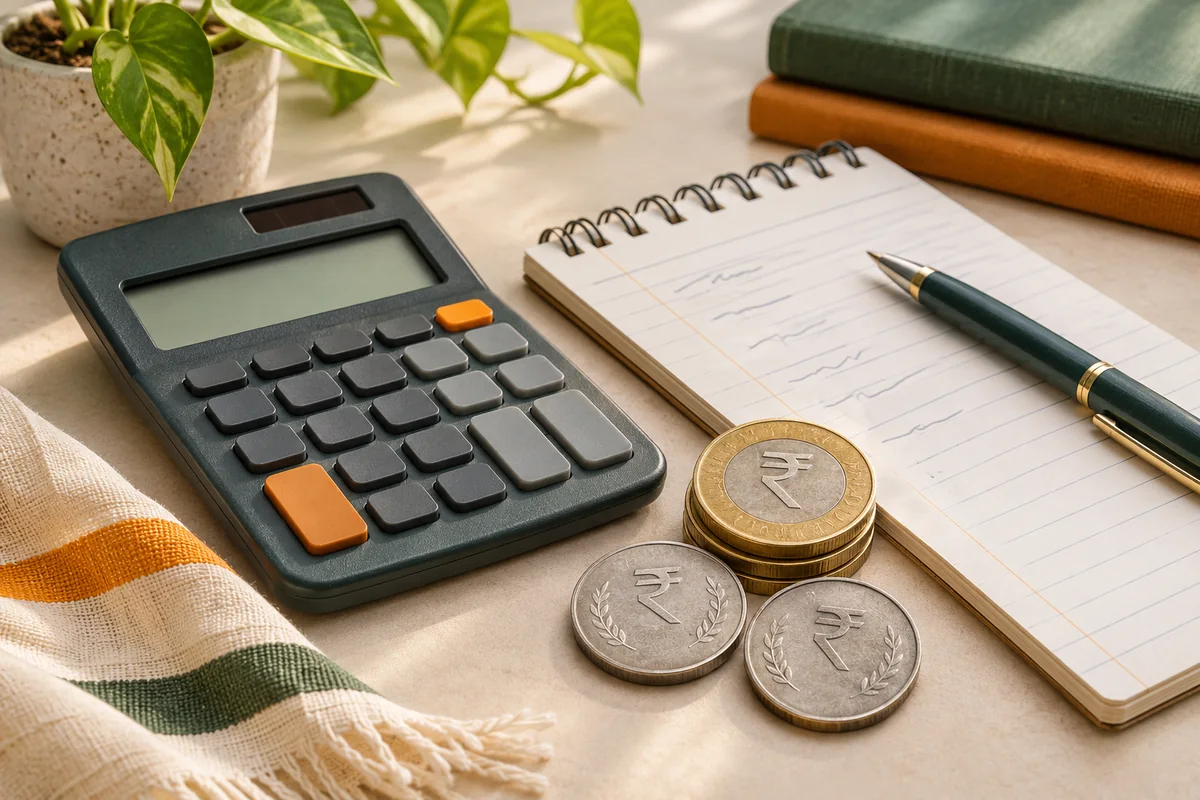
Find the pump’s current price in rupees per litre and use the grade you intend to buy. The Petroleum Planning and Analysis Cell, or PPAC, publishes dated metro benchmarks. Its 25 November 2026 notice for an IndianOil outlet in Delhi gave ₹102.12 per litre for petrol and ₹95.20 for diesel. Those figures refer to that date, city and retailer. Use your own local price in the calculator when you are pricing a real journey.
IndianOil’s price guidance gives an outlet-level route. Ask the pump for its dealer code and send RSP followed by a space and that code to the published number, 92249 92249, if your mobile service can send that message. IndianOil describes the reply as indicative. Read the outlet name and date with the amount if they appear and check the dispenser price for the product you want before filling.
A price in a city bulletin, a text-message result and a receipt can cover different times. For a trip later in the month, keep the quote date so you can replace the amount nearer departure. For a trip you just completed, use the receipt date and amount to calculate actual fuel spend. Label your records by city, retailer and fuel type. That matters if one person supplies a diesel quote and another supplies a petrol price from the same station.
The PPAC metro archive lists petrol and diesel reference observations for Delhi, Mumbai, Chennai and Kolkata. Its historical PDF posted on 11 November 2026 identifies IOC as the retailer and uses Indian rupees per litre. Open the PDF or the archive to see the full series for each city. A reader comparing two cities should select the same date and same product in both columns.
Dates on the web page and inside the table carry different meanings. The page may say it was updated recently, while the rows may run through an earlier date. Read the observation date on the individual row. If the archived series and a separate late-day notice have different scopes, keep the narrower description with the later price. The Delhi figures above come from the 25 November notice, while the four-city historical source checked for this page is the 11 November release.
Different pump locations can post different totals. PPAC’s price build-up material describes components including upstream or retailer amounts and taxes. The final retail selling price is the amount to use for a pump budget. A cost component is useful when trying to understand a change between dates. It is not the amount that you expect to pay for a litre. Check the source’s notes about city, taxes and grade before comparing figures across pages.
| Question | Source | Detail to retain |
|---|---|---|
| Cost for the planned fill | Chosen outlet or IndianOil indicative service | Fuel grade, outlet and time of quote |
| Historical metro benchmark | PPAC metro archive | City, retailer, product, date and ₹ per litre |
| Reason a retail price changed | PPAC price build-up information | Price component, applicable region and date |
| Amount actually paid | Pump receipt | Litres, date, grade and total |
Take the total kilometres you expect to drive and divide by the kilometres the vehicle usually travels on one litre. Then multiply the resulting litres by the price per litre. With 320 kilometres and 16 km/L, the vehicle is expected to use 20 litres. At the dated Delhi example of ₹102.12 per litre, the estimated fuel spend is ₹2,042.40. Substituting a different pump price changes the cost while leaving the estimated litres the same.
Use the route distance in the direction you intend to travel, and add the return distance separately if the trip is two-way. The return route can differ because of a detour, a one-way system or a planned stop. If you expect to drive extra kilometres at the destination, include them in the amount you enter. The calculator uses all the kilometres in its total, so adding a separate return again to the result would double-count it.
Enter kilometres per litre as the efficiency. Some vehicles or reviews display litres per 100 kilometres. To convert a figure in that format, divide 100 by the displayed litres. An average of 6.25 L/100 km corresponds to 16 km/L. If a US vehicle specification gives miles per gallon, first check that it uses the US liquid gallon and convert both the distance and volume units before entering the efficiency.
A single efficiency figure helps estimate a trip, but the distance you get from each litre can change with driving conditions. Use a value based on a comparable journey when you have one. A previous city drive may be a poor match for a long highway leg. A heavy car or a route that includes stops and slow traffic may use more fuel than the vehicle’s displayed long-run average suggests.
Try a lower and higher efficiency using the same price and distance. For a 320 km trip at ₹102.12 per litre, 14 km/L gives about 22.86 litres and ₹2,334.17. At 18 km/L the trip uses about 17.78 litres and costs about ₹1,815.47. Those values show a range driven by the efficiency assumption. The calculator applies the unrounded litres when multiplying and rounds the displayed rupee estimate to two decimal places.
If part of the trip is urban and part is highway, calculate each section separately with the efficiency you expect for it. Combine the estimated fuel volumes before multiplying by a common price. If you will buy at different pumps, multiply the number of litres you expect to buy at each quoted price separately. Averaging the two prices gives the same result only when equal volumes are purchased at both pumps.
For a completed trip, collect the number of litres and kilometres from matching records. Resetting a trip meter at a fill and recording the next fill at a comparable level gives you one way to estimate use. Divide the kilometres covered by the litres added at the second fill. Keep the calculation as a rough measurement because a pump shutoff can stop at different levels and a short interval amplifies that difference.
A receipt records what was bought at a particular fuel stop. It does not necessarily record the fuel consumed between the beginning and end of a single outing. If you already had fuel in the tank, one fill can fund several trips. Split these tasks in your records. Keep total fuel purchased for payment reconciliation, and use volume and distance from a comparable interval to estimate efficiency for the next trip.
When drivers share a vehicle, agree whether to split an estimate or reimburse receipts. If you are sharing an estimate, divide the trip total by the number of contributors after you have agreed which kilometres are included. If you are reimbursing, retain the receipt and separate tolls, parking and other travel costs. Those items can matter to the trip total, but they are outside the fuel-only calculation above.
To compare two cars on fuel alone, run the same route through the calculator twice using each car’s actual fuel type and a plausible efficiency. Record the litre price and efficiency beside the estimated trip cost. A cheaper litre can still cost more on a specific route if the vehicle consumes more litres. The cost per kilometre is the litre price divided by the vehicle’s kilometres per litre.
At a planning efficiency of 16 km/L, a ₹100.00 litre price works out to ₹6.25 per kilometre. If you expect to drive another 40 km later in the day at the same average efficiency, the extra fuel would cost around ₹250. That is a budgeting example using an assumed price. For a vehicle purchase decision, add your own expected ownership costs separately and check the dealer’s quote for the actual variant in your city.
If a diesel or petrol pump offers a premium grade, verify the product required by the vehicle manufacturer and obtain a price for that particular grade. A regular petrol benchmark does not identify the price of another grade at the same outlet. For a rental, also read the company’s fuel return terms. A refuelling fee from the rental company may be charged on a different basis from the price at the dispenser.
Mahindra Thar price in India: OG and ROXX variant pricesToyota Urban Cruiser Hyryder price in India: Delhi variant table
A compact trip note can hold the three inputs from the calculator and the information needed to check them again. Copy the distance from the route you plan to drive, the efficiency from your comparable journey or vehicle information, and the date and outlet for the latest price. If the trip changes, update only the inputs that changed. That keeps the estimate traceable.
When you find a price online, check whether it describes an official benchmark, an outlet quote or a third-party estimate. Use the official PPAC archive for the original metro material and the retailer when the decision depends on a certain outlet. The day you opened a source belongs in your own review notes. The date printed with the price belongs alongside the price itself, especially if you share it with a travelling companion.
Before you leave, check the return route and any scheduled stop that changes the distance. Use a conservative efficiency when you are setting aside money for a route you have not driven. For expense records after the journey, replace the estimate with your actual receipts and keep the estimate only if you need to explain the difference.