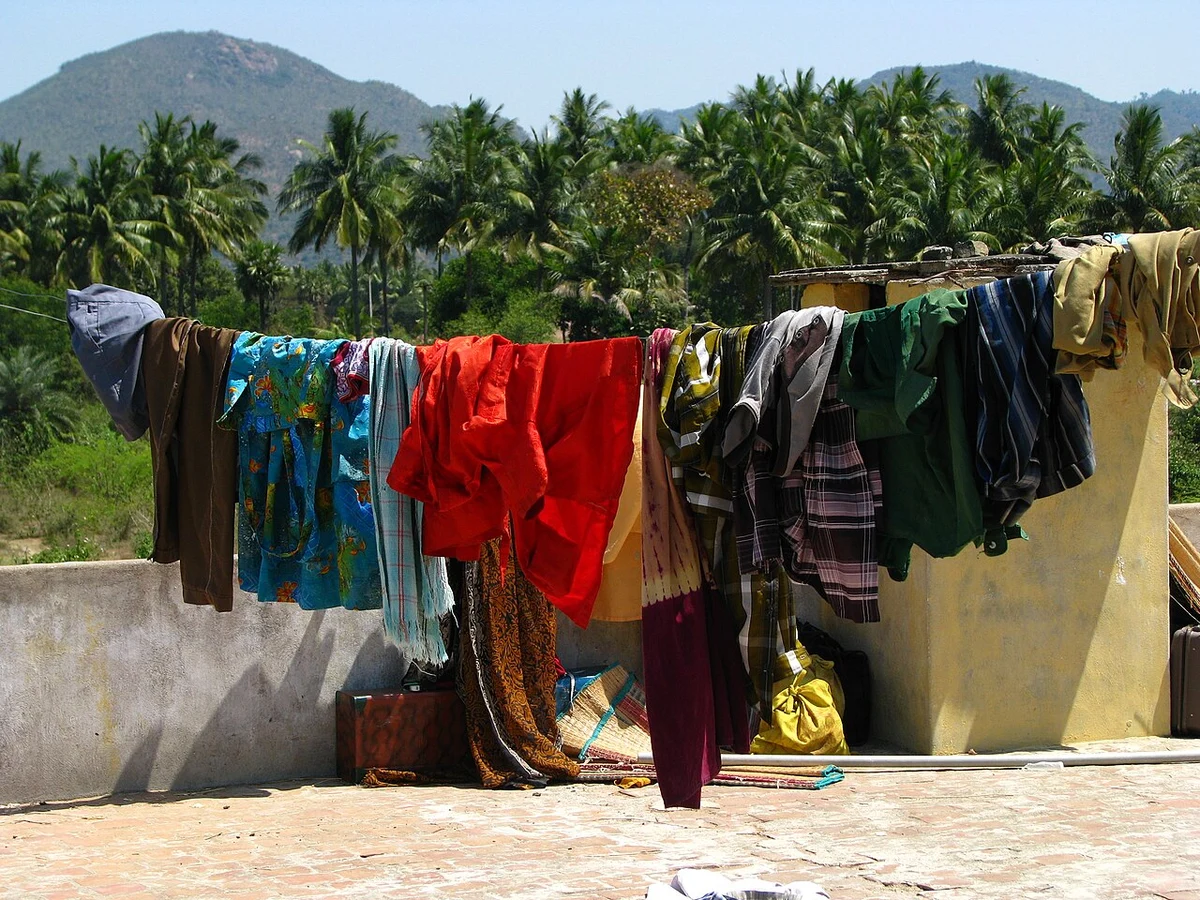
Read the wash and dry instructions together
Wash clothes using the method, temperature and cycle intensity their care labels allow, then measure detergent according to the pack for your wash type, load, soil level and water hardness. For drying, follow the separate care instruction and size each load to fit a ventilated rack or a compatible dryer setting, especially when rain limits outdoor space.
| Label cue in words | Treatment | What it means |
|---|---|---|
| 30 inside the wash tub | Washing | Use water at or below 30°C. Follow any bar instruction. |
| 30 with one bar below the tub | Washing | Wash at or below 30°C using a mild cycle. |
| 30 with two bars below the tub | Washing | Wash at or below 30°C using a very mild cycle. |
| Hand in the tub | Washing | Use the hand-wash instruction for that label. Some versions use 20–30°C and others permit a maximum of 40°C. |
| Crossed-out wash tub | Washing | Home washing is prohibited by the label. Check the professional-care instructions. |
| Bleach cue allows oxygen only | Bleaching | Use oxygen-based bleach if needed. The label prohibits chlorine bleach. |
| Crossed-out bleach triangle | Bleaching | The label prohibits bleaching. |
| Circle inside drying square, crossed out | Drying | The label prohibits tumble drying. Use the applicable natural drying instruction. |
| Flat drying with shade marking | Drying | Lay the item flat out of direct sun. |
| Line drying with shade marking | Drying | Hang the item on a line out of direct sun. |
Start with the washtub on the label. A number inside it is the maximum wash temperature in degrees Celsius. A bar under the tub calls for mild action, and two bars call for very mild action. A cooler setting can keep you within the temperature limit, but you still need the right cycle intensity. A crossed washtub rules out household washing. If you see a hand-wash marking, check which version it is because the permitted temperature can differ.
Read the drying square before you sort the load. A circle inside the square refers to tumble drying, and a cross through that symbol prohibits it. A horizontal line indicates flat drying, a vertical line indicates line drying, and a diagonal mark indicates shade. The bleaching triangle is a separate instruction. Depending on the marking, bleaching is allowed, restricted to oxygen bleach or prohibited. Check it before using a bleach product on a stain.
Suppose a top says 30°C with one bar and also calls for flat drying in shade. You can put it in a compatible mild wash at 30°C or cooler, then take it out with the rest of the load and lay it flat in a shaded spot. If the only drying space available is a line, wait until you can free up a flat surface before starting.
Read the washing and drying instructions in separate passes before sorting the pile. A cotton shirt and a wool cardigan can both show 30°C yet require different action inside the machine. The temperature states a ceiling, while the bars below the tub tell you how gently the garment needs to move. An instruction to dry flat can apply even to a garment that permits a machine wash. Take that drying space into account before you start the load, especially if several pieces will need the same small rack.
Measure detergent for your machine and water
Use the dose printed on the detergent you have. Look for the directions that match a front-loader, top-loader, semiautomatic machine or hand wash, as applicable. Then use the pack's load size and soil categories and any hardness adjustment it specifies. Check the machine manual for where the product goes. When you switch from powder to liquid or change products, read the new directions before using the amount you used for the previous detergent.
The Central Ground Water Board's 2025 groundwater quality report describes samples collected in particular places. A value from a monitoring site can tell you about that sample. For a detergent dose, you need information that applies to the water entering your machine. A building may switch between municipal water and a borewell, use stored water or treat its supply before it reaches the laundry tap. Ask your provider or building manager which supply feeds the machine and whether any hardness result applies to that outlet.
Say the building manager gives you a borewell test result and tells you the laundry tap is downstream of a softener. Ask for a result taken after treatment, or test the water at that tap. Compare the result and its units with any hardness bands on the current detergent pack. If the units or categories are unclear, check the detergent maker's dosing instructions. If the pack gives a standard dose, you can use that for your load and soil level while you confirm whether an adjustment applies.
Hand-wash a small load at home or while travelling
Check the label before washing in a basin. Depending on the exact hand-wash marking, the instruction may specify ambient water around 20–30°C or a maximum of 40°C. Read the drying direction as well and choose a place where the item can stay until dry. This matters on a short trip, when being able to wash a garment in the room only solves part of the problem.
Use an appropriate mild detergent and follow its hand-wash dose. Dissolve it in the water before adding the garment. Move the garment gently through the solution and rinse without rubbing or wringing it. Press out excess water gently and reshape the garment if needed. Use the drying method on the label. For an item that must dry flat, set it down in its intended shape so you can leave it there as it dries.
If you have one night left in a guesthouse and your hand-washable top requires flat drying, check whether the room offers a suitable surface with air circulation. A bathroom hook gives you somewhere to hang an item that permits line drying, while the top needs a place where it can lie flat. If space is tight or the room stays humid, wash a smaller item with compatible drying instructions and keep the top dry for packing. Check any thicker seams before folding the washed item into your bag.
Plan rack drying around your local monsoon
The India Meteorological Department places the main southwest monsoon season in June through September. The northeast monsoon in October through December is the chief rainy season for IMD's Tamil Nadu, Puducherry and Karaikal subdivision. For laundry, check the current forecast for your locality and look at conditions where the rack actually stands. A sheltered balcony can still take wind-driven rain, and a room where clothes normally dry well can stay humid through a spell of wet weather.
When drying space is limited, work out how many garments you can spread with gaps before you start the wash. Remove the wet load promptly and use a sheltered rack with space for air to move around the clothes. Lay flat-dry items on a suitable surface and keep shade-dry items out of direct sun. If the rack is already crowded, leave the next load until you've freed some space. Hanging washing in layers takes up less rail space, but makes it harder to dry the parts where fabrics overlap.
Suppose an October forecast for Chennai shows rain later in the day and you usually dry clothes on an open terrace. Choose a batch that fits indoors if you have to bring it in, and leave bulky items for a better drying window if the rack is too small. If rain starts early, move the load to the sheltered spot with the same gaps between pieces. Check waistbands and seams as the clothes dry. A local forecast can help you choose a place to hang the load, while a check of the garment tells you when it is ready to put away.
- GINETEX consumer reference for wash, bleach and drying meanings
- Ariel India laundry and detergent manufacturer instructions
- IMD Chennai northeast monsoon 2025 report and Indian seasonal distinction
- Samsung India dryer support and garment handling guide
- India Meteorological Department official forecasts and climate resources
Use a compatible dryer or finish drying on the rack
Before using a dryer, check which garments permit tumbling and what settings their labels allow. Look up the program and load limit for your model, since the settings can vary by appliance and cycle. Use that limit when deciding how much of the wash to transfer at once. Rain can make the dryer useful for eligible items. Keep any garment with a crossed tumble-dry symbol on its permitted natural drying method.
Separate thick and thin items when practical. A thin shirt can feel dry before a heavier item in the same batch has dried through. At the end of the cycle, inspect cuffs, waistbands, pockets and thick seams as well as the broad panels of fabric. If only one or two pieces are damp, take the dry items out. Check the care label and the appliance manual before choosing a further cycle, or finish those pieces on the rack if their labels permit it.
If ordinary shirts and a pair of jeans are both eligible for the same dryer program, the jeans may still feel damp around the waistband or where pocket fabric doubles up. Take the dry shirts out and give the jeans their own space on the rack if line drying is allowed. When you rely on the rack for the whole wash, use the same check before folding. Leave room for the thick item until those areas are dry, even after its legs or other exposed sections feel ready.
Sources
- ISO 3758:2023, textiles care labelling code, fourth edition
- GINETEX consumer reference for wash, bleach and drying meanings
- Ariel India laundry and detergent manufacturer instructions
- Central Ground Water Board 2025 groundwater quality report
- IMD Chennai northeast monsoon 2025 report and Indian seasonal distinction
- Samsung India dryer support and garment handling guide
- Open Indian laundry documentary photo by McKay Savage
- Central Ground Water Board Indian groundwater hardness observations
- India Meteorological Department official forecasts and climate resources
- Bureau of Indian Standards, IS 14452:2023 / ISO 3758:2012
