What counts as an ethnic group in India?
India has no definitive Census list or count of ethnic groups. To understand a named community, read locally documented history alongside two separate official records where relevant: Census mother-tongue returns and state- or Union Territory-specific Scheduled Tribe recognition.
| Record | Place and year | Reported count | Scope | Source table |
|---|---|---|---|---|
| Santali language group | India, Census 2011 | 7,368,192 | Mother-tongue return | C-16 language paper, statement 4 |
| Santal Scheduled Tribe | Jharkhand, Census 2011 | 2,754,723 | Scheduled Tribe enumeration | Ministry of Tribal Affairs, table 1.24 |
| All Scheduled Tribes | Odisha, Census 2011 | 9,590,756 | Scheduled Tribe enumeration | Ministry of Tribal Affairs, state total covering 41,974,218 residents |
| All Scheduled Tribes in the early national release | India, Census 2011 | 104,281,034 | Scheduled Tribe enumeration | Ministry table 1.2, denominator 1,210,569,573, excluding three Senapati subdivisions |
| Tribal Museum curated collections | Bhubaneswar, Odisha | — | Community history and cultural documentation | State research and training institute |
Ethnicity is a description of collective identity. Depending on the community and the question, shared history, kinship, ties to a place, cultural practices or language may matter. A community name can carry different meanings in a historical account, a questionnaire and a legal schedule. Start by identifying who used the name, where they used it and what they meant by it.
The Census of India’s C-16 table describes the mother tongue people reported. Scheduled Tribe tables describe populations enumerated under an administrative classification at the time of the census. A local cultural source can explain how a community describes itself, how a name is used or how an institution interprets its history. Each source answers a different question.
Choose the source by the question you want to answer. If you need to know how widespread a mother-tongue return was in a particular district, start with C-16. If you need to know the wording of an official Scheduled Tribe entry, start with the recognition orders. If the question concerns how people understand a community name, look for sources that explain its use in that setting and identify whose account they present.
- Legislative Department: Constitution of India, Article 342
- Census of India: Mother-Tongue Table, 2011
- Office of the Registrar General and Census Commissioner — Census 2011 C-16 dataset catalogue
- Odisha Government — Scheduled Castes and Scheduled Tribes Research and Training Institute and Tribal Museum
- Registrar General — Census 2011 language paper, Paper 1 of 2018
- Ministry of Tribal Affairs — Demographic Status of Scheduled Tribe Population, Census 2011 early coverage
- Ministry of Tribal Affairs — Statistical Profile of Scheduled Tribes in India, Table 1.24
What Census mother-tongue figures measure
The 2011 Census language paper describes several stages between a response and a published statistic. The Registrar General received 19,569 raw mother-tongue returns. The paper reports 1,369 rationalised mother tongues and separately describes 1,474 names that remained unclassified and went into the other-mother-tongue category. These figures refer to different stages or categories of processing, so adding the latter two counts will not reconstruct the raw returns.
The paper publishes 121 grouped languages. Of these, 22 appear in the Constitution’s Eighth Schedule and 99 are outside it. The paper’s alphabetical abstract separately shows 270 mother tongues with at least 10,000 speakers at the all-India level. That threshold describes what is shown separately in the abstract. A name’s absence from that abstract leaves open whether it appears in a grouped category or whether it is documented in other sources.
Read the hierarchy before extracting a number. A language-group row can already include the constituent mother-tongue returns printed beneath it. Adding the group total and those returns would count the same people twice. Preserve the level of the row in your wording, especially when a language-group heading and one of its constituent returns share a name.
C-16 publishes figures for national, state, district, tahsil and town geographies as available, with sex and total, rural or urban breakdowns. Use the same population scope for a count and its denominator. A mother-tongue figure describes one reported characteristic. It leaves unanswered how many people learned the language later, use it at work or understand it alongside other languages, as well as how they identify ethnically.
How Scheduled Tribe recognition works
Article 342 of the Constitution provides for Scheduled Tribes to be specified in relation to a particular State or Union Territory. The President specifies them by public notification, after consultation with the Governor where the jurisdiction is a State. Under Article 342(2), Parliament may change the list by law. For a present-day lookup, the jurisdiction is part of the question from the outset.
The Ministry of Tribal Affairs registry brings together the principal orders and amendments. Find the exact State or Union Territory, read the entry as written and check whether an amendment affects the wording or specifies an area. Apply the wording to the jurisdiction covered by the order. A familiar spelling or a similar listing in another state is insufficient to carry the entry across a boundary.
The Constitution also uses schedules for other purposes. The Eighth Schedule lists languages, including Santali. The Fifth Schedule concerns designated areas, and residence in such an area is a separate matter from Scheduled Tribe status. If a source calls something scheduled, establish whether it is referring to a language, an area or a group specified under Article 342 before interpreting the label.
A historical count needs its own source. The 2011 A-11 table for Jammu and Kashmir records individual Scheduled Tribe categories for that census and geography. Its rows document the enumeration at the time. For a question about present-day recognition, consult the orders and subsequent amendments. The Ministry registry includes a 2024 Odisha amendment, a concrete reason to check the legal record even when the historical table is clear.
The Ministry’s current register, for example, links an Odisha amendment from 2024. Use that text for changes to the legal list. When quoting a number from the Census, use the historical wording printed in the table and note the reference year. The state-specific legal record and the population table answer different questions even when they use a similar community name.
Santali and Santal in the 2011 tables
Statement 4 of the Census language paper records 7,368,192 people across India who returned a mother tongue counted in the Santali language group in 2011. That is 0.61% of the paper’s national population total of 1,210,854,977. The geographic scope is all India, and the statistic represents the published language group.
The Ministry of Tribal Affairs’ Statistical Profile gives 2,754,723 people in the named Santal Scheduled Tribe row for Jharkhand in Census 2011. That figure describes an administrative category within the state. The Jharkhand A-11 appendix is useful for district detail. It identifies the Santal category by group code and district, while the statewide figure comes from the Ministry’s state table.
Suppose you want to describe the relationship between Santali use and Santal identity in Jharkhand. The first published number covers the whole country, so begin by finding the Jharkhand C-16 figure and checking whether it represents the grouped language or a constituent return. Align the 2011 geography and population scope with the state Scheduled Tribe count. This makes the two totals easier to interpret side by side, but a count of people recorded in both would require evidence that connects the two characteristics.
Subtraction cannot recover that overlap, and division cannot tell you what proportion of people in the Santal row returned Santali. Both calculations would require a shared numerator defined for the same people. The two published totals can still anchor a description if each carries its full label, its geography and its year. A locally grounded account can then discuss what language and identity mean to the people it covers.
- Legislative Department: Constitution of India, Article 342
- Office of the Registrar General and Census Commissioner — Census 2011 C-16 dataset catalogue
- Registrar General — Census 2011 language paper, Paper 1 of 2018
- Ministry of Tribal Affairs — Statistical Profile of Scheduled Tribes in India, Table 1.24
- Census A-11 Appendix — Jharkhand district Scheduled Tribe population, 2011
How geography changes the percentages
In the Ministry of Tribal Affairs’ 2011 Odisha snapshot, 9,590,756 Scheduled Tribe residents out of 41,974,218 residents give a share of about 22.8%. The numerator is the state’s all Scheduled Tribes row. It already includes the individual categories counted within that total, so adding named rows on top would inflate the figure. For a district share, use the district total and its corresponding resident population.
The Ministry’s early national demographic table reports 104,281,034 Scheduled Tribe residents out of 1,210,569,573, or about 8.6% in its coverage. The notes exclude three subdivisions of Senapati district in Manipur. The later Census language paper includes those subdivisions in its national population total. Keep the numerator and denominator from the same coverage when calculating the Scheduled Tribe share. The difference between the two population totals reflects coverage within the 2011 census material.
Odisha’s 22.8% and the early national figure of 8.6% describe the Scheduled Tribe share of their respective populations. Neither percentage counts how many communities are present or tells you how many people belong to ethnic minorities. For district work, the original Scheduled Tribes Primary Census Abstract provides demographic and rural or urban breakdowns. A rural share needs both a rural numerator and a rural denominator.
Check the boundary as well as the place name. For a figure taken from a 2011 district or state workbook, retain the geography used in that workbook. If a second source uses a later boundary or an informal region that spans districts, identify which areas it includes before comparing them. Two figures labelled with the same place can cover different populations when the underlying boundaries differ.
- Office of the Registrar General and Census Commissioner — Census 2011 C-16 dataset catalogue
- Registrar General — Census 2011 language paper, Paper 1 of 2018
- Ministry of Tribal Affairs — Demographic Status of Scheduled Tribe Population, Census 2011 early coverage
- Census of India — Scheduled Tribes Primary Census Abstract, 2011
- Ministry of Tribal Affairs — Statistical Profile of Scheduled Tribes in India, Table 1.24
Where local histories add context
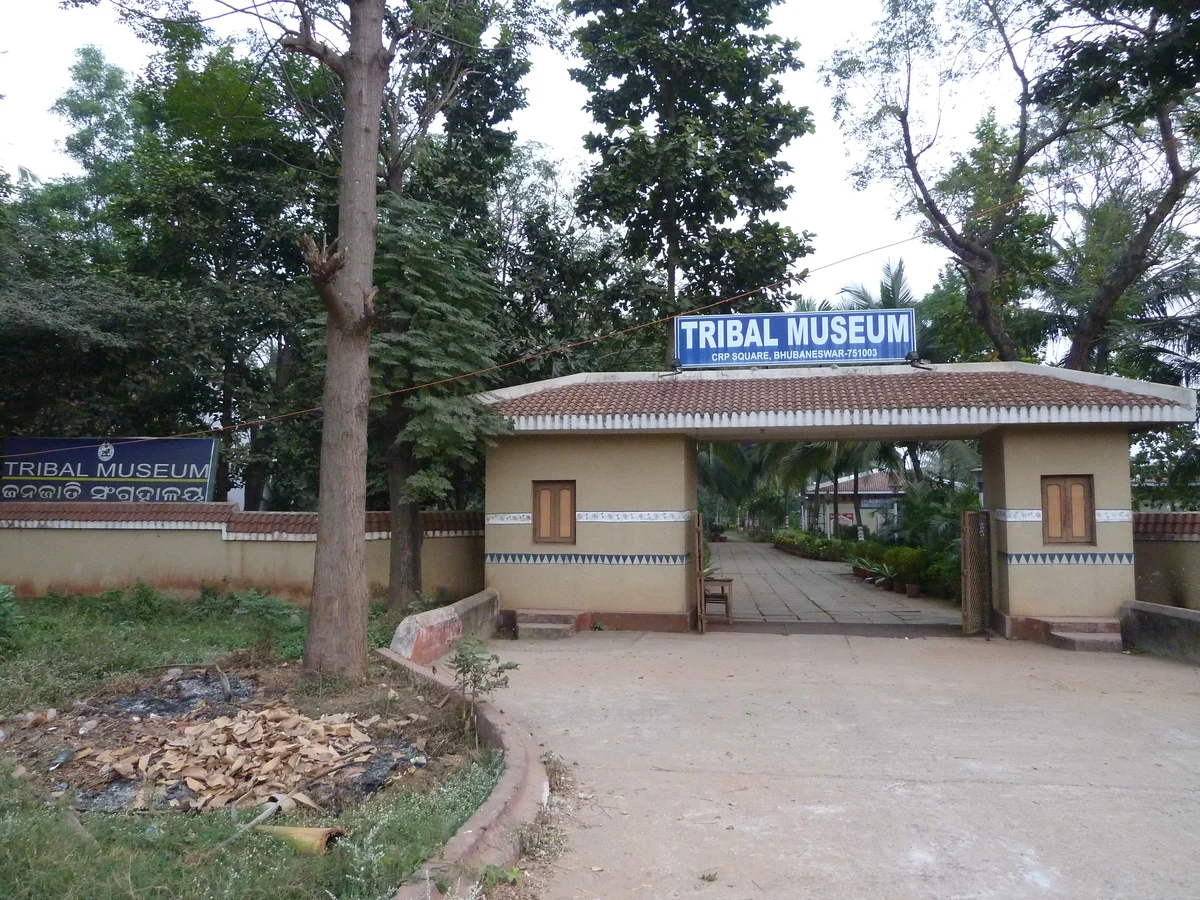
The Tribal Museum in Bhubaneswar, operated by Odisha’s Scheduled Castes and Scheduled Tribes Research and Training Institute, offers a starting point for researching locally documented cultural material. The institute describes exhibitions, research and cultural programmes. Use a named exhibit or publication to establish what the institution documents, then identify the people, place and period to which that material refers.
If a museum label identifies an object with a named community, keep that association tied to the object and the label’s account. A claim about who made or used similar objects across a wider area needs evidence from that wider area. Where a community-authored account is available, it can help establish how contributors describe the practice and which names they use for themselves.
Regional descriptions deserve the same care. A district in a Census table has a defined statistical boundary. A region named in a historical account may refer to settlements, a landscape or an area understood differently over time. When a source uses a broader regional term, carry over the places it actually documents. That preserves the distinction between a local account and a description that can reasonably cover the wider region.
How to verify a figure or listing as records change
For a population figure, open the Census catalogue and find the relevant workbook, then record the census year, table identifier, exact row and column and any coverage note. Use the catalogue to check for a newer release with the same measure. A newer publication may still report an older enumeration. The census year tells you when the people were counted, while the publication information helps you identify the edition.
The Census 2027 notification sets 1 March 2027 as the general population reference date. The 1 October 2026 reference applies to Ladakh and specified snow-bound non-synchronous areas of Jammu and Kashmir, Himachal Pradesh and Uttarakhand. Those dates establish when the population is referenced for enumeration. To update a 2011 comparison, look for the actual release of comparable mother-tongue or Scheduled Tribe tables and read their definitions and coverage notes.
For a listing, verify the current order through the Ministry registry and read any later amendment that applies to that jurisdiction and entry. If a table and an order use different wording, quote each in its own context and date the historical figure. Where comparability depends on a boundary or classification change, explain that change before presenting a difference as a change in population.
- Office of the Registrar General and Census Commissioner — Census 2011 C-16 dataset catalogue
- Ministry of Tribal Affairs — updated constitutional orders and state-specific amendments
- Census of India — Scheduled Tribes Primary Census Abstract, 2011
- Registrar General — Census 2027 population reference date Gazette notification
Sources
- Legislative Department: Constitution of India, Article 342
- Census of India: A-11 Individual Scheduled Tribes in Jammu and Kashmir, 2011
- Census of India: Mother-Tongue Table, 2011
- Office of the Registrar General and Census Commissioner — Census 2011 C-16 dataset catalogue
- Registrar General — Census 2011 language paper, Paper 1 of 2018
- Ministry of Tribal Affairs — updated constitutional orders and state-specific amendments
- Ministry of Tribal Affairs — Demographic Status of Scheduled Tribe Population, Census 2011 early coverage
- Census of India — Scheduled Tribes Primary Census Abstract, 2011
- Ministry of Tribal Affairs — Statistical Profile of Scheduled Tribes in India, Table 1.24
- Census A-11 Appendix — Jharkhand district Scheduled Tribe population, 2011
- Registrar General — Census 2027 population reference date Gazette notification
- Odisha Government — Scheduled Castes and Scheduled Tribes Research and Training Institute and Tribal Museum
- Wikimedia Commons — Bhubaneswar Tribal Museum entrance photograph
