Three ways to look at pictures of ancient India
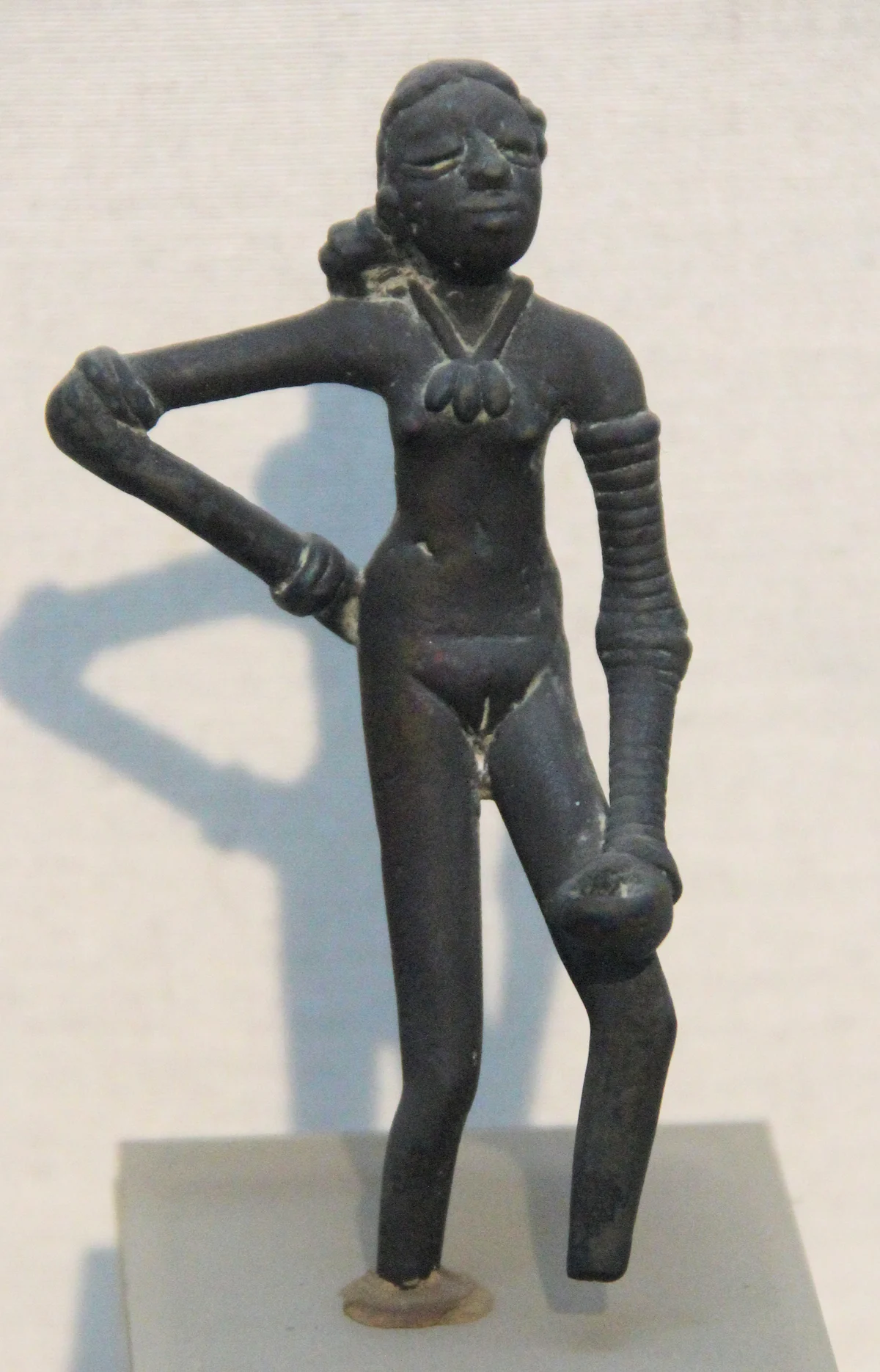
Start with three documented views of ancient South Asia. The bronze known as the Dancing Girl was found at Mohenjodaro and is held in New Delhi. A photograph from Dholavira, Gujarat, shows the surviving steps of a Harappan reservoir. At Bhimbetka, in Madhya Pradesh, a photograph captures painted animal and human figures on sandstone. Each picture has a different kind of record behind it.
The three sources provide different kinds of context. The museum gallery brings together objects found at multiple sites, so a photograph of an object needs both a findspot and a collection name. The Dholavira gallery shows surviving features and remains, so the location and coverage of the frame matter. The Bhimbetka record supplies a property name and photographic context that should travel with the selected image.
For a quick visual comparison, pair one object view with one wider site view. In the object view, look at the visible outline and surfaces and check whether the frame includes a scale. In the site view, look at which visible features share the frame and how much ground surrounds them. Give a close detail its own caption so its subject and the limits of the crop stay clear.
Start by describing one detail you can point to in the picture. Then check the record for its name or context. This order helps when a picture is easy to recognise but its caption makes a larger claim about an ancient occupation, a building’s function or the identity of a figure. Each of those claims needs evidence specific to the subject.
Ancient India maps: Indus sites and Ashokan edicts
- National Museum, New Delhi: Harappan Civilization Gallery
- UNESCO: Dholavira Gallery
- UNESCO World Heritage Centre: Rock Shelters of Bhimbetka Image Record
- Indian national museum repository, Dancing Girl accession Hr.5271/195
- Visual candidate — Gary Todd’s cropped Dancing Girl photograph
- UNESCO World Heritage Centre, Dholavira archaeological site
- Visual candidate — Dholavira stepped reservoir by Bhajish Bharathan
- UNESCO World Heritage Centre, Rock Shelters of Bhimbetka
- Visual candidate — photographed painted figures at Bhimbetka
The Dancing Girl and the meaning of a museum label
The National Museum records the Dancing Girl as accession Hr.5271/195. It lists bronze, a findspot of Mohenjodaro and an approximate date of 2500 BCE. The figure measures 10.5 × 5 × 2.5 centimetres. “Dancing Girl” is the conventional title. The camera gives you a view of the figure’s pose and decoration. The museum entry gives the material, scale and provenance that an enlarged photograph leaves out.
A photograph can help you study the figure’s pose. Follow the outline from the shoulders to the arms and down through the legs, as far as the chosen view allows. If the gallery offers another angle, compare how much of the outline appears in each view. A silhouette can make a pose easy to recognise while concealing parts of the same form behind it.
Suppose two images carry the title Dancing Girl. One shows a complete figure and the other fills the frame with a detail. Check both image records before treating them as views of the same object. A caption for the detail could use the conventional name and say which portion of the figure appears, with the object record carrying the material and discovery information.
Check the attribution before describing surface details. A highlight can be visible in a photograph, while the cause of that highlight may be unclear from the image alone. Likewise, the apparent size on a screen depends on framing and display. For material and dimensions, use the object record where it supplies them. Keep an observation about the picture specific to the chosen view.
Keep the findspot and collection separate
| Subject | Location or holding institution | Source date or scope |
|---|---|---|
| Dancing Girl | Found at Mohenjodaro in present-day Pakistan, held at National Museum, New Delhi | Bronze dated to circa 2500 BCE by the museum, photographed in 2019 |
| Dholavira reservoir | Khadir, Gujarat | Photograph from 2017, site occupied circa 3000–1500 BCE |
| Bhimbetka painted figures | Rock Shelters of Bhimbetka, Madhya Pradesh | Photograph from 2011, the exact phase of the pictured figures is unverified |
The Harappan gallery in New Delhi houses objects from sites in present-day Pakistan and India. A museum location tells you where the collection is held. The findspot tells you where the object was discovered. Both are useful in a caption, particularly when someone encounters a museum photograph in a search result or sees it reproduced away from the gallery page.
Start with the individual object record when the gallery brings several artefacts together. A gallery heading establishes the collection’s subject, but the entry for the individual object is where you should check its recorded discovery location. Carry over the level of precision the record gives. A recorded site name can go in a caption without any more specific claim about the place within that site.
Imagine a page that displays two Harappan objects side by side. The available entry for one identifies a findspot, and the other gives only a general gallery attribution. Give the first its recorded findspot and leave the second’s discovery location unspecified. The fact that the objects share a display or appear at the same size on a page supplies no basis for copying the first location to the second.
Modern place names help readers locate a discovery. Attach them to the findspot where verified, and keep them apart from any period label used for the object. The resulting caption can answer where the object was found, how the source classifies it and where it is held without making a modern location do the work of archaeological dating.
| Field | What to record |
|---|---|
| Subject | The object, feature or wider view visible in this frame |
| Findspot or site | The documented discovery location for an object or the named place in a site view |
| Current collection | The holding institution when the pictured object is identified in its records |
| Period | The source’s wording for the specific object or photographed remains, when supplied |
| Photograph date | The documented capture date, when supplied |
| Credit and permission | The asset-specific credit and applicable publication terms |
Read Dholavira as a photograph of surviving remains
At Dholavira, stone walls and steps descend into an excavated basin. The photograph presents one reservoir at the Harappan site on Khadir in Gujarat. UNESCO’s account dates occupation at Dholavira from approximately 3000 to 1500 BCE and describes a fortified settlement, a cemetery and a system for managing seasonal water. The reservoir photograph lets you inspect one surviving feature in that wider system.
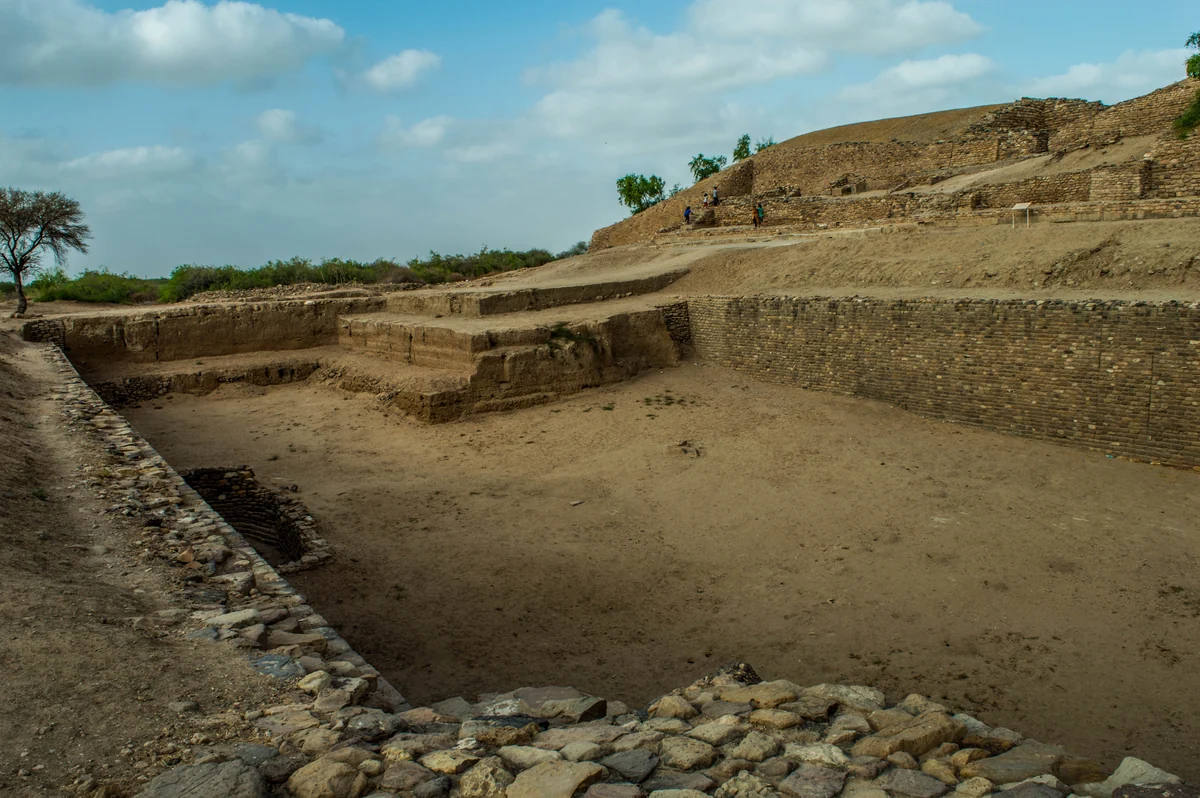

A wider photograph lets you compare the visible positions of features within one frame. A closer photograph can give you a clearer view of a surface or edge. To connect the two views, check for a recognisable point in both images or look for a source caption that ties them together. Similar-looking details alone leave room for several possible matches, especially when their surroundings are cropped out.
Imagine a wide view that includes several lengths of visible masonry and a close crop of one length. If only the wide image is securely located, describe the crop as a detail from that frame. Save any name for the feature until the source identifies it. This keeps the detail useful without suggesting that its function or full extent is evident from the crop.
Keep the photograph’s capture date separate from the period assigned to the ruins. A capture date locates the recorded view in time. A period label applies to the photographed remains at the level the archaeological source supports. If the record supplies a period for the site as a whole, preserve that scope when writing about a view of one portion.
Ancient India maps: Indus sites and Ashokan edictsDeserts of India: the Thar, Rajasthan and the Himalayan cold desert
Identify what a Bhimbetka photograph covers
The Bhimbetka photograph shows red figures on a rock surface. UNESCO describes five groups of shelters set in sandstone outcrops at the foot of the Vindhyan hills. Its property account gives a broad span for rock paintings across the site, from the Mesolithic into historical periods. The image record identifies animal and human figures, but gives no verified phase or shelter number for the frame shown here.
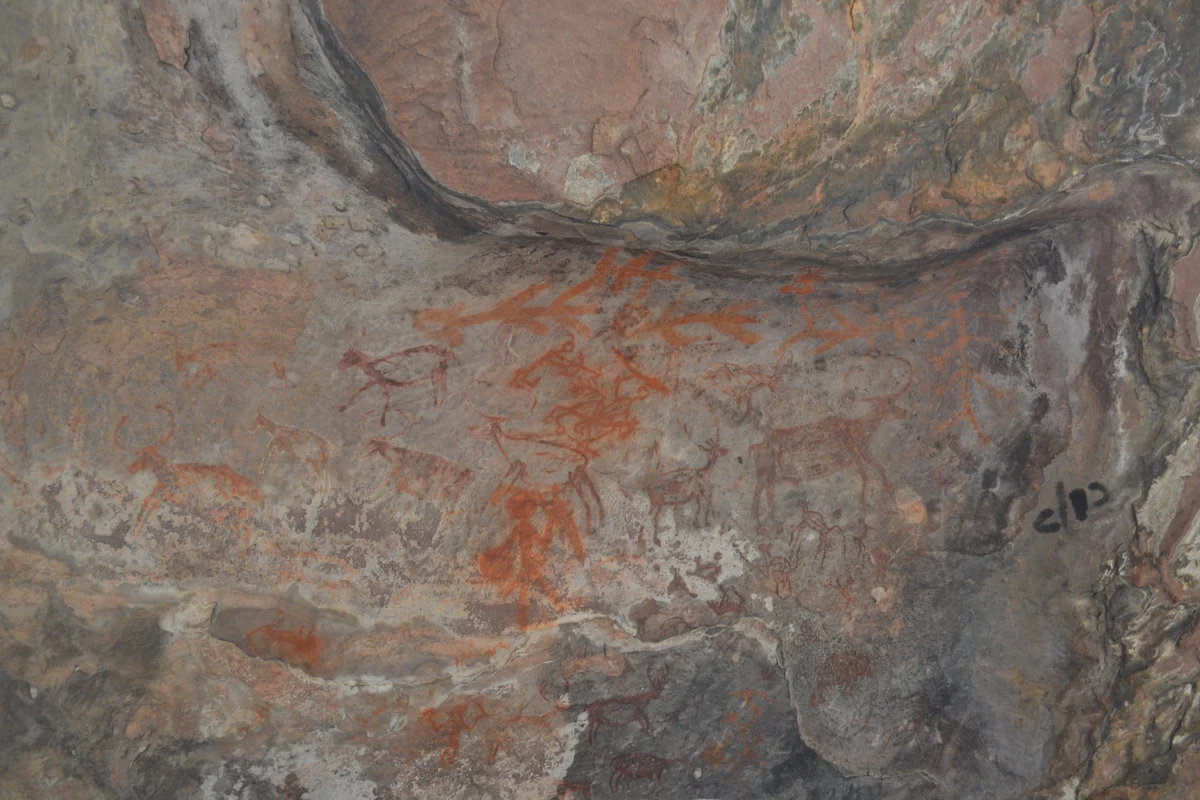

A photograph that includes surrounding rock can help a reader place a detail within the visible surface. A tighter crop can make a detail easier to inspect while removing that context. When both views come from the same photograph, identify the crop as a detail of the wider view. When they are separate frames, check the records before saying they show the same surface.
Suppose a thumbnail suggests the subject is a particular painted figure. Open the full image and check how the asset record describes the photograph. If the record establishes only the property and a general view, label the image at that level and describe visible details plainly. Give a specific motif name, shelter identifier or date only when the source supports it for that view.
Read the asset credit alongside the description. The credit identifies who or what must be acknowledged for the photograph. The permission information governs whether and how it may be reproduced. Check the individual asset for both before choosing a crop or placing it next to an image from a different record.
Distinguish photographs, replicas and reconstructions
Identify what the camera was pointed at. A photograph of a surviving object records its visible appearance from a particular angle. A photograph of a replica records a modern physical rendering of an object. A photograph of a reconstruction may show a model or display that proposes how a structure or scene looked. A rendered illustration can make a similar proposal without involving a photographed subject.
Place that identification next to the image where a reader will see it. This matters when the same conventional object name or site name appears under very different pictures. A reader can use a documented photograph to inspect a visible detail and a labelled reconstruction to understand a proposed arrangement. The caption needs to make clear which details the reader is looking at in each case.
Imagine a surviving site photograph beside an illustrated view of the same area with walls shown at full height. Label the photographed remains and the illustrated reconstruction separately. If the illustration’s source documents how it derived the wall heights, that basis can go with its caption. A complete-looking outline in the illustration supplies no measurement for the feature in the photograph.
Give uncertain details their own wording when a reconstruction is well documented. An image may depict a securely located feature alongside details inferred by its creator. Describe each at the level the record supports. The museum and UNESCO entries used here provide starting points for documented subjects and views. Any proposed reconstruction needs its own source and attribution.
Two Metropolitan Museum records let you compare much later works using the same method. Its “Bust of a Female Deity (Yakshi?)”, accession 28.159.11, is dated to the Mauryan period in the third to second century BCE. The museum retains a question mark in the identification. The fifth-century Gupta terracotta “Fragment of a Plaque with a Figure”, accession 1987.424.22, has a separately documented height of 26.7 centimetres. Both records offer public-domain object images and appear in the sources below.
- National Museum, New Delhi: Harappan Civilization Gallery
- UNESCO: Dholavira Gallery
- UNESCO World Heritage Centre: Rock Shelters of Bhimbetka Image Record
- UNESCO World Heritage Centre, Dholavira archaeological site
- UNESCO World Heritage Centre, Rock Shelters of Bhimbetka
- Visual candidate — The Met, Bust of a Female Deity (Yakshi?), 28.159.11
- Visual candidate — The Met, Fragment of a Plaque with a Figure, 1987.424.22
Verify a caption against the exact image record
When a credit, object label or image location may have changed, return to the institution’s current record for the exact asset. Match the frame, angle and edges, and look for an object or image identifier when one is provided. A search thumbnail or a copy elsewhere can keep an earlier caption even when the current institutional record gives more precise wording or different information.
Check details at the level where they are documented. For the Harappan object, look for the individual museum entry. For a particular Dholavira view, find the chosen frame in the gallery and read the information attached to it. For Bhimbetka, check the property and photographic context in the image record. If an entry supplies a broad description, keep the caption broad until you can verify a more precise one.
Suppose a repost gives a photograph a year while the institutional record gives only a date associated with the gallery entry. Check what that date labels. A record update and a photograph’s capture are separate events. If you cannot verify the capture year, use the documented subject and location and omit the year from the caption.
Before reusing an image, check the current credit and the terms for the exact version you plan to publish. A full frame, a crop and an annotated copy can raise different questions under those terms. If the record leaves the intended use unclear, keep the caption notes and select a different verified asset or wait for permission before publishing that frame.
Sources
- National Museum, New Delhi: Harappan Civilization Gallery
- UNESCO: Dholavira Gallery
- UNESCO World Heritage Centre: Rock Shelters of Bhimbetka Image Record
- Indian national museum repository, Dancing Girl accession Hr.5271/195
- Visual candidate — Gary Todd’s cropped Dancing Girl photograph
- UNESCO World Heritage Centre, Dholavira archaeological site
- Visual candidate — Dholavira stepped reservoir by Bhajish Bharathan
- UNESCO World Heritage Centre, Rock Shelters of Bhimbetka
- Visual candidate — photographed painted figures at Bhimbetka
- Visual candidate — The Met, Bust of a Female Deity (Yakshi?), 28.159.11
- Visual candidate — The Met, Fragment of a Plaque with a Figure, 1987.424.22
