Make a local food search
Choose what to look for and enter a US place. The link opens Google Maps with your search terms. The directory below has sourced examples you can compare separately.
Restaurant finder + local reporting
Find an Indian restaurant by ZIP code, neighborhood or dish. Compare sourced branches, regional menus and dine-in or pickup details.
Choose what to look for and enter a US place. The link opens Google Maps with your search terms. The directory below has sourced examples you can compare separately.
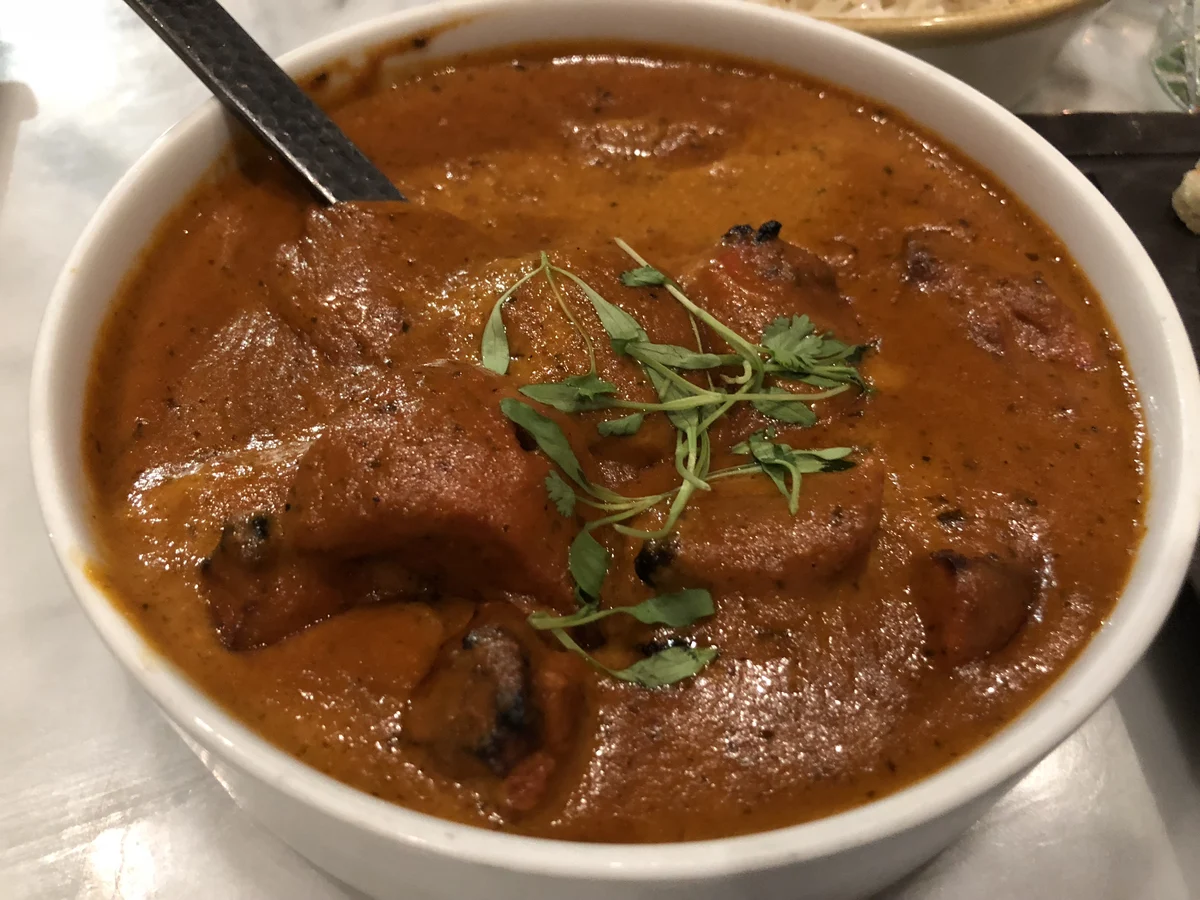
Search for “Indian restaurants near me” using the place you’ll leave from, then check the exact branch’s current menu and hours before you go. If you want a particular cooking style or dish, add its name and look for it on that branch’s menu.
Pick the kind of result you need first. For dinner out, look for dine-in service at a street address. For pickup, check where the order will be handed over. For delivery, enter the destination to see whether it falls inside the restaurant’s service area. A broad food search can also surface caterers, specialty grocers with prepared food, and takeaway counters. Each can be worth considering if its service fits your plans.
Use a neighborhood, ZIP code, station, or landmark when your device location is unavailable or when you are planning for later. If you are arranging a meal for several people, an agreed meeting point can make the results easier to compare. A hotel name is useful once you have confirmed which property you mean, especially when the chain has several locations in the same city.
Someone searching from an office for a meal after an appointment should use the appointment address as the origin, with each candidate restaurant as the destination. If they need to get home by a certain time, the onward trip belongs in that decision too.
In the search box above, enter a place such as Sunnyvale, CA, and choose dosa if the dish is the starting point. The link forwards the words you entered to Google Maps when you open it. A ZIP around work is more helpful than your home ZIP if you want lunch during a short break. For dinner after a train journey, try the arrival station and check the return service once you have an address.
Keep the location fixed while you refine the food search. “Indian restaurant” gives you a broad first pass. If you have a preference, try a regional term such as Gujarati, Kerala, or Hyderabadi alongside the neighborhood or ZIP code. Then search for the meal or dish you would order. A restaurant that serves several styles may be easier to find by a menu item than by a regional label.
Look at how much of the menu supports the description you found. Several dishes and accompaniments organized under a regional heading give you more to work with if you want to explore that cooking style. A single item can be enough if you have one specific craving. Read the description for the preparation and sides, especially when a menu uses a broad name for a dish with many variants.
Search spellings may vary across menus and ordering platforms. Try both spacing and common romanized spellings if the results are sparse. Once a promising result appears, make sure the dish is available in the service you intend to use. An item on a dine-in menu may be missing from the pickup menu or offered only as a special.
A diner looking for appam with stew can search for both dishes near their departure point and look for them together on the same branch’s menu. If the menu lists appam separately, the diner can check whether the stew is available at the planned meal.
Compare a shortlist using the same origin, departure time, and travel mode. The nearest map pin can involve a longer trip if the usable entrance is on another street or a crossing adds a detour. For transit, look at the walk on each end and any transfers. For driving, include the time you expect to spend finding parking or reaching the pickup counter.
Check the direction of travel as you open directions. For a meal before another commitment, run the trip to the restaurant and the trip from there to the next stop. If you plan to come back the same way, check the return around the time you expect to leave. Transit options, road conditions, and travel estimates can change over the course of an evening.
Verify the address against the business’s own location information, including the suite when there is one. At a food hall or shared commercial address, the street pin may get you to the building while the restaurant’s instructions tell you which entrance or counter to use. This is especially useful if another person will collect an order you place.
Two candidates appear close to a station. One is convenient from the station exit the diner will use, while the other is easier to reach from the venue they are visiting afterward. Checking both legs gives the diner a basis for choosing that reflects their evening.
For a Sunnyvale meal, VTA’s Rapid 522 timetable has a stop at El Camino Real and Bernardo for the Madras Cafe example. For the Wood Avenue branch in Edison, NJ TRANSIT’s Metropark station is a possible rail origin at 100 Middlesex Turnpike in Iselin. Set out the second leg explicitly in each case. Compare the time from the stop to the restaurant and the return schedule, particularly for a late reservation.
For a vegetarian or vegan meal, start with the menu’s own labels and read the dish descriptions. Vegetarian dishes can include paneer, yogurt, cream, or ghee. Ask about ingredients in the dish and its accompaniments when the description leaves a question open. For a mixed group, check that each diner can build a full meal from the items available during that service.
If a diner needs halal food, check what the restaurant says about the branch and ask which items the statement covers. If an allergy affects the choice, contact the branch about the specific ingredients and any shared preparation relevant to the order. A dietary tag on a search result gives you a place to begin that conversation. If staff cannot answer the question, the requirement remains unresolved.
Ask about the exact feature that will make a visit workable if you need step-free access, a particular seating arrangement, or an accessible restroom. A general accessibility icon may leave out the details of the entrance or the route to the table. A branch can tell you whether there is a usable side entrance and how to find it from the street.
A group chooses a restaurant for its vegetable mains and then checks whether the bread, rice, and sauces can meet one guest’s vegan preference. The answers determine which dishes they can share and whether the guest has a satisfying meal available.
Little India’s South Downing menu describes yogurt and cream in its Chicken Tikka Masala. That illustrates the value of reading the ingredients for a particular dish and branch. Where sesame or another allergen matters, ask the restaurant about the sauce, garnish and shared cooking surfaces, and provide enough detail for staff to check with the kitchen. FDA’s Food Code is a model that jurisdictions adopt in their own ways.
Use the source that can answer the specific question. A tourism guide helps you discover a place. The branch can confirm its menu, address, and service. An ordering platform can tell you what it is accepting for a particular collection time or delivery address. A directions service can estimate the trip from your current origin. These sources update on different schedules, so check the detail that would change your decision.
If two listings disagree about an address, look for a move or closure notice on the restaurant’s own site or current business channels. If the restaurant has several branches, use the phone number associated with the branch you mean. Give the address you found when asking about the discrepancy. For a shared meal, send the confirmed branch address to the group so everyone navigates to the same place.
County Business Patterns from the U.S. Census Bureau reports establishments using standard industry classifications. Its Food Services grouping can provide industry context for an area, and its classification does not identify individual restaurants by regional Indian cuisine. A county figure therefore cannot tell you how many restaurants serve a particular regional style or whether a specific branch offers dine-in service. For those decisions, work from individual businesses and current menus.
A map shows a restaurant open, while its ordering page is temporarily unavailable. A diner planning pickup can check directly whether the branch is accepting phone orders during the intended window. The same diner planning to eat there would ask instead about seating and kitchen hours.
