Find your cutoff in the official Visa Bulletin
If you were born in India and are applying in a numerically limited US green-card category, you generally compare your priority date with the India cutoff for your category in the State Department’s monthly Visa Bulletin. Your priority date must be earlier than a listed cutoff, and if you are filing Form I-485 from within the United States, USCIS tells you which of the bulletin’s two charts to use that month.
Start with the official Visa Bulletin index and open the edition for the month you need to assess. Each edition has separate family-sponsored and employment-based preference tables. Within each group, find the Final Action Dates chart and the Dates for Filing chart. The same category and country can have a different entry in each chart, so keep the chart title with any date you copy into your notes.
A dated entry sets a strict boundary. If the cutoff is January 22, 2021, a priority date of January 21, 2021 meets that cutoff. A priority date of January 22, 2021 falls on the boundary and must wait for a later cutoff or a current entry. The letter C means current in that chart. The letter U means unavailable. Apply the symbol or date to the exact row and column you are reading.
Some family cases have no preference row to look up. A spouse, qualifying unmarried child under 21, or eligible parent of a US citizen can fall in the immediate-relative categories, which are outside the numerical preference limits. Confirm the petition classification first. For an immediate-relative case, the relevant timing information comes from the agency handling your application and, for consular processing, the assigned interview post.
Confirm that India is your chargeability column
Chargeability is the country assignment used for immigrant visa number limits. It ordinarily follows your country of birth. An applicant born in India who later becomes a Canadian citizen and lives in Toronto would ordinarily still read the India column. Residence and citizenship can matter elsewhere in the process, so keep those details separate from the country assignment used in the bulletin.
The statute provides exceptions for certain spouses and children and for certain people born in a country where neither parent was born or resident at the time. An accompanying spouse’s chargeability can sometimes give the principal applicant access to a more favorable column. The State Department’s Foreign Affairs Manual describes how the family members must immigrate together in certain cases, including a consular example in which both spouses need simultaneous visa issuance and admission.
Cross-chargeability changes the column used for visa availability. The petition classification and priority date still determine the row and the date you compare. Parents cannot use a child’s chargeability. If a different birth country in the family appears relevant, the statutory exceptions and the State Department guidance are the places to verify whose chargeability can be used and how the timing of the family members’ immigration affects that determination.
Identify your family category and priority date
Family immigration generally starts with Form I-130. The petitioner’s status and the qualifying relationship determine the family classification. For the immediate-relative parent category, the US citizen petitioner must be at least 21. For preference cases, a US citizen’s adult unmarried son or daughter falls under F1, a married son or daughter under F3, and a sibling under F4 when the citizen petitioner is at least 21.
A lawful permanent resident’s spouse or qualifying unmarried child under 21 falls under F2A. An adult unmarried son or daughter of a lawful permanent resident falls under F2B. This makes the petitioner’s status essential to the lookup. The spouse of a permanent resident checks F2A, while the spouse of a US citizen can qualify as an immediate relative. Both routes generally start with Form I-130.
Read the classification and priority date in your petition or agency case records before relying on a bulletin comparison. If a petitioner has naturalized or the beneficiary’s marital status has changed, confirm how the agency classifies the case before switching rows. A classification change can change which cutoff applies. Once you have the classification, record the priority date as written and keep it separate from the date the National Visa Center says your documents were complete.
Identify your employment category and priority date
EB-1 covers priority workers. EB-2 covers advanced-degree professionals and people of exceptional ability. EB-3 covers skilled workers, professionals and other workers. The bulletin lists Other Workers separately, so use that line if it matches your case, even in a month when its India dates match the main EB-3 line. EB-4 covers certain special immigrants, and EB-5 covers immigrant investors.
Form I-140 is the common petition for EB-1 through EB-3. For a petition that requires an individual labor certification, the priority-date rule can run from the date the Department of Labor accepted the labor certification application for processing. For petitions that require no labor certification and for Schedule A cases, the rule looks to proper filing of the petition with USCIS. Use the recorded priority date when comparing cutoff dates. An I-140 approval date marks a separate event.
Some applicants can self-petition through EB-1A or an EB-2 national interest waiver. The petition route and the preference row answer different questions. A national interest waiver case uses the EB-2 visa-number rules, including the applicable country column. The bulletin can tell you whether the recorded date meets the cutoff, while the petition process determines whether the case qualifies under the claimed basis.
Dates differ because visa numbers are constrained by worldwide limits, preference allocations and country rules. The general 7% per-country provision is a statutory cap across the combined family and employment preferences, with exceptions and prorating rules. It gives neither an individual category’s India allocation nor the number of cases ahead of a particular applicant. Comparing EB-1 and EB-2 cutoffs can establish which dates qualify in a given month.
EB-1A India priority dates and the EB-1 bulletin rowEB-2 NIW priority dates for India and the Visa BulletinEB-3 India priority dates for skilled and other workers
Compare the November 2026 India dates
In November 2026, the India EB-2 Final Action cutoff was November 1, 2013, and the Dates for Filing cutoff was January 15, 2015. An India EB-2 case with a priority date of July 1, 2014 met the filing date comparison and still fell outside the final-action cutoff. For an adjustment applicant, the filing comparison could matter that month if the USCIS chart selection and other filing requirements were met.
F2A shows the same distinction through a symbol. Its Dates for Filing entry was current, while Final Action showed October 22, 2026 in the India column. The bulletin’s accompanying text distinguishes F2A numbers exempt from the per-country count from numbers subject to it. Read that text alongside the table when applying the snapshot to an F2A case. The C in the filing column concerns that filing stage, and F2A remains a family preference.
| Preference row | Preference type | Final Action Dates | Dates for Filing |
|---|---|---|---|
| F1 | Family | January 22, 2021 | February 1, 2021 |
| F2A | Family | October 22, 2026 | C (Current) |
| F2B | Family | August 22, 2020 | September 1, 2020 |
| F3 | Family | October 22, 2015 | November 1, 2015 |
| F4 | Family | December 15, 2006 | February 1, 2007 |
| EB-1 | Employment | February 1, 2023 | July 1, 2024 |
| EB-2 | Employment | November 1, 2013 | January 15, 2015 |
| EB-3 | Employment | January 22, 2014 | January 15, 2015 |
| EB-3 Other Workers | Employment | January 22, 2014 | January 15, 2015 |
The EB-2 and EB-3 rows illustrate why you should read both charts even when two categories share a date. Both had January 15, 2015 for filing, while their Final Action entries differed. The dates in the table are eligibility boundaries for that edition. The gap between the two charts measures the difference between their cutoff dates and gives no timetable for when one chart might reach a particular priority date.
Consider two fictional F2A cases, with priority dates of October 21 and October 22, 2026. For November’s India Final Action row, the October 21 date is earlier than the published cutoff. The October 22 date equals the cutoff. November shows a C in the filing chart. Check USCIS’s monthly instructions to select the applicable chart for adjustment, or the agency instructions you receive for a consular case. The two examples describe only how to read the entries.
Follow the right process for filing and interviews
For adjustment of status in the United States, open the USCIS monthly filing-chart selection and locate the instruction for your preference group and month. The archived November 2026 guidance lists Dates for Filing for both the family and employment preferences covered here. USCIS makes the selection monthly. Check it again for the month you intend to submit Form I-485. Filing eligibility also depends on requirements in the form instructions and the circumstances of the case.
For consular processing, an approved petition ordinarily goes to the National Visa Center where applicable. Follow NVC instructions for fees, the DS-260 immigrant visa application and document submission in the Consular Electronic Application Center. When the bulletin permits document preparation under Dates for Filing, NVC’s instructions govern what to submit and when. An interview takes place later at the assigned immigrant visa post, which can differ from the country used for chargeability.
For limited preference visas, interview scheduling depends on Final Action visa-number availability, documentary completion and capacity at the assigned post. For a case assigned to Mumbai, look up Mumbai in the State Department’s Immigrant Visa Scheduling Status Tool and compare the month shown for the relevant case group with the month NVC confirmed documentary completion. A published scheduling month describes the cases the post is scheduling. The appointment notice supplies the individual interview details.
Visa issuance follows its own decision after the consular interview. A person approved through consular processing generally becomes a lawful permanent resident upon admission to the United States as an immigrant, and the physical green card evidences that status. In the domestic route, USCIS adjudicates Form I-485. For timing purposes, keep the petition decision, adjustment filing, interview and final decision as distinct events.
| Process stage | Primary agency resource | What to compare |
|---|---|---|
| Adjustment in the United States | USCIS monthly chart instructions | Applicable month and which chart to use for Form I-485 |
| Consular processing outside the United States | State Department NVC overview | Stage of the case and the next NVC instruction |
| NVC document and payments channel | State Department CEAC overview | Case-specific instructions for documents, fees and DS-260 |
| Published consular appointment capacity | State Department IV Scheduling Status Tool | Post and reported document-completion month |
| Immigrant visa interview scheduled in Mumbai | State Department Mumbai post supplement | Local instructions for the assigned interview |
Recheck the month before acting on a date
Use the bulletin index to distinguish the current edition from the upcoming edition, and open the archived edition if you are checking what applied in a past month. Use the chart heading and the month printed on the bulletin or official PDF to identify what you are reading. In particular, read the notes below the relevant table whenever an entry has accompanying text. A date copied into a search result can lose both its chart heading and its qualifications.
A cutoff can advance, stay in place or move backward. A later cutoff admits earlier priority dates up to the new boundary. If it moves backward, a date that met Final Action in one month may fall outside it in the next. A case already filed can therefore still be waiting for a visa number at final action. Recheck the applicable month even if you previously saw your date clear the line.
Use a source matched to the event you are checking. The State Department bulletin supplies the preference cutoff. USCIS supplies the monthly adjustment filing-chart instruction. For an overseas case that has reached documentary completion, NVC notices and the post’s published scheduling information address interview progress. Save the applicable month, row and chart with your comparison so you can tell which input changed when you check again.
Sources
- U.S. State Department family immigration, immediate relatives versus preferences
- State Department November 2026 Visa Bulletin, family preference and employment snapshots
- State Department employment immigrant visa preferences and petition stages
- Department of State and USCIS, overseas consular process versus domestic adjustment
- 8 U.S.C. §1152(b) and State chargeability rules
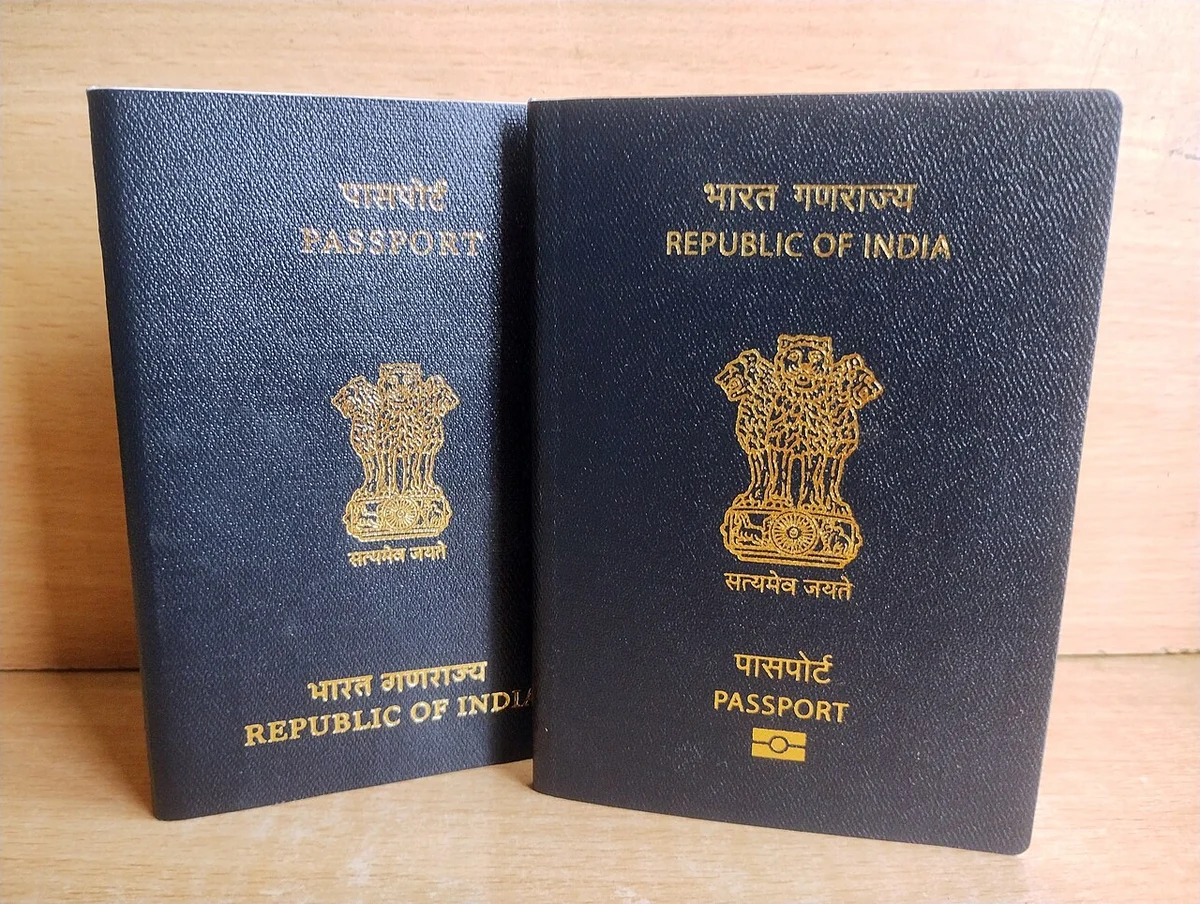
- Existing licensed Indian passport-cover photograph for international documentation context
- USCIS | Adjustment of status filing charts
- State Department Foreign Affairs Manual chargeability guidance
