What the cutoff history can predict
Past EB-2 India priority date cutoffs show how far and how unevenly the published dates have moved, but they cannot reliably predict when an individual priority date will qualify. The November 2026 Visa Bulletin lists a Final Action Date of 1 November 2013 and a Date for Filing of 15 January 2015, both unchanged from October.
Those dates describe two different thresholds in the same bulletin. The Final Action Date governs the priority date comparison for final action when visa numbers are available. The Date for Filing serves a paperwork function, with its use depending on the processing route. Read each date with its chart name attached. A headline that calls 15 January 2015 simply the EB-2 India cutoff leaves out the distinction that determines what the date means.
The 2026 sequence makes a straight-line forecast especially misleading. The published Final Action Date advanced from July 2013 in January to July 2014 by April, held in May, and moved back into 2013 in the original June table. July showed the category as unavailable. October returned to a dated entry, and November repeated it. A rate calculated from the first advance would miss both the reversal and the period of unavailability.
For a reader tracking a particular priority date, the history answers concrete questions. It can show whether a published threshold has passed that date before, whether the threshold later moved back, and whether a particular change appeared on one chart or both. Each answer describes an observed bulletin or a comparison between bulletins. The next cutoff remains an open question until the agency publishes it.
- U.S. Department of State Visa Bulletin archive
- State Department January 2026 Visa Bulletin, India EB-2
- State Department April 2026 Visa Bulletin, India EB-2
- State Department May 2026 Visa Bulletin, India EB-2
- State Department June 2026 Visa Bulletin, India EB-2
- State Department July 2026 Visa Bulletin, India EB-2
- State Department October 2026 Visa Bulletin, India EB-2
- State Department November 2026 Visa Bulletin, India EB-2
Compare the published 2026 dates
Read down either column to track a single cutoff over time. From January to April, Final Action moved 365 calendar days later, from 15 July 2013 to 15 July 2014. February was unchanged. March moved 62 days later to 15 September 2013, and April moved 303 days later. April and May had identical published cutoffs in both columns. The net movement covers two advances and a flat month, and the original June publication later showed a retrogression.
| Bulletin month | U.S. fiscal year | Final Action Date | Date for Filing |
|---|---|---|---|
| January 2026 | FY2026 | 15 July 2013 | 1 December 2013 |
| February 2026 | FY2026 | 15 July 2013 | 1 December 2013 |
| March 2026 | FY2026 | 15 September 2013 | 1 November 2014 |
| April 2026 | FY2026 | 15 July 2014 | 15 January 2015 |
| May 2026 | FY2026 | 15 July 2014 | 15 January 2015 |
| June 2026 | FY2026 | 1 September 2013 | 15 January 2015 |
| July 2026 | FY2026 | U (unavailable) | 15 January 2015 |
| August 2026 | FY2026 | U (unavailable) | 15 January 2015 |
| September 2026 | FY2026 | U (unavailable) | 15 January 2015 |
| October 2026 | FY2027 | 1 November 2013 | 15 January 2015 |
| November 2026 | FY2027 | 1 November 2013 | 15 January 2015 |
Compare May with the original June table and the Final Action Date moves 317 calendar days earlier. This is retrogression, a backward move in the published cutoff. The Date for Filing stayed at 15 January 2015 across those two issues. A chart that combines the two series into one line would hide which threshold moved and make the stable filing date look like evidence of stable final action.
Reading across a row answers a different question. The January cutoffs were 139 calendar days apart. By November they were 440 days apart. Those gaps measure the distance between two priority date thresholds within an issue. They cannot tell you how long it took a case to go from filing to final action. To measure movement from October to November, compare each chart with itself. Both changes were zero days.
- U.S. Department of State Visa Bulletin archive
- State Department January 2026 Visa Bulletin, India EB-2
- State Department April 2026 Visa Bulletin, India EB-2
- State Department May 2026 Visa Bulletin, India EB-2
- State Department June 2026 Visa Bulletin, India EB-2
- State Department July 2026 Visa Bulletin, India EB-2
- State Department August 2026 Visa Bulletin, India EB-2
- State Department September 2026 Visa Bulletin, India EB-2
- State Department October 2026 Visa Bulletin, India EB-2
- State Department November 2026 Visa Bulletin, India EB-2
- State Department notice of FY2026 India EB-2 exhaustion, 22 May 2026
- State Department February 2026 Visa Bulletin, India EB-2
- State Department March 2026 Visa Bulletin, India EB-2
Read the May exhaustion notice alongside the tables
On 22 May 2026, the State Department announced that all FY2026 EB-2 visas available to applicants chargeable to India had been used. It said consular issuance could resume for qualified applicants once the FY2027 limits reset on 1 October. The May bulletin still preserved its dated cutoff, and the original June table still printed 1 September 2013. The separate announcement governs what those records can establish about issuance after exhaustion.
Suppose a reader with a priority date of 15 August 2013 finds the original June bulletin. That date is earlier than the printed 1 September 2013 Final Action Date, so it passes the comparison against that cell. To answer whether a consulate could issue an EB-2 India visa during June, the reader also needs the 22 May notice. The available numbers had already been used, even for priority dates earlier than the printed cutoff.
July made the exhaustion visible in the Final Action cell itself by marking it U, for unavailable. August and September also showed U while keeping 15 January 2015 in the separate filing chart. September closed FY2026. October opened FY2027 with a dated Final Action entry of 1 November 2013. That sequence records a change from unavailable to a dated threshold. Since September had no numeric date, an October advance measured in calendar days would have no starting value.
- State Department May 2026 Visa Bulletin, India EB-2
- State Department June 2026 Visa Bulletin, India EB-2
- State Department July 2026 Visa Bulletin, India EB-2
- State Department August 2026 Visa Bulletin, India EB-2
- State Department September 2026 Visa Bulletin, India EB-2
- State Department October 2026 Visa Bulletin, India EB-2
- State Department notice of FY2026 India EB-2 exhaustion, 22 May 2026
Find the chart that applies to your filing route
For applicants processing through a U.S. consulate, the State Department's Dates for Filing chart guides document submission after notification from the National Visa Center. For applicants seeking adjustment of status in the United States, USCIS separately designates which chart applies to filing that month. A State Department bulletin can publish both charts while USCIS directs employment-based adjustment applicants to use just one of them for filing.
For November 2026, the preserved copy of the USCIS instructions directs employment-based adjustment applicants to use Dates for Filing. That puts the India EB-2 date comparison at 15 January 2015 for filing that month. The Final Action Date remained 1 November 2013. Check the USCIS monthly designation again for any other month, even if the State Department leaves the two dates exactly where they were.
Consider someone with a priority date of 10 January 2015 checking the November adjustment filing chart. Their date is earlier than 15 January 2015, so it passes that filing date comparison. It falls after 1 November 2013, so it does not pass the Final Action Date comparison. A priority date of exactly 15 January 2015 would fail the filing date comparison because the rule requires an earlier date.
Keep the result as specific as the question the chart answers. Passing the filing date comparison is one element of determining whether an application can be filed. Petition eligibility or approval and the conditions for eventual final action are separate questions. That distinction matters when reading reports that a date has become eligible. Check which chart, processing route, and step the report is referring to.
EB-2 India priority dates and Visa Bulletin historyEB-2 NIW priority dates for India and the Visa BulletinEB-3 India priority dates for skilled and other workers
Why a cutoff cannot give you a place in line
A published cutoff gives you a date threshold. It supplies no count of how many people have priority dates between that threshold and yours, how much demand will materialize in that interval, or when available numbers will be issued. For that reason, the months separating two priority dates cannot be converted into months of remaining wait. Even a long advance on the calendar leaves the volume of cases covered by that advance unknown.
USCIS describes monitoring supply and demand with the State Department. Its inputs include documentarily qualified State Department applicants, pending adjustment applicants, and historical drop-off from denials, withdrawals, and abandonments. The published date cell is a much narrower piece of information than those inputs. Historical movement alone cannot reconstruct them or show how they will change for the next bulletin.
The annual limits explain why the fiscal year matters. The State Department's exhaustion notice describes EB-2 as 28.6% of the worldwide employment limit. It also describes a 7% foreign-state ceiling based on the combined worldwide employment-based and family-sponsored totals, prorated among categories. These figures describe different limits. Neither gives an applicant a fixed allocation or a timetable, and the October reset by itself provides no basis for predicting the size of a cutoff advance.
USCIS historical form processing times answer a separate timing question about administrative processing. If you see a form processing figure stated in months, its unit can look like the answer to how long a priority date will take to clear. To interpret the figure, check which form and administrative interval it measures. Visa-number availability still requires the relevant bulletin and any State Department notice affecting issuance.
Verify a new cutoff or a prediction
Start with the State Department Visa Bulletin archive and open the issue for the month you want to check. The archive groups issues by U.S. fiscal year, which starts on 1 October. October and November 2026 therefore sit under FY2027. On each employment-based chart, follow the 2nd preference row across to India. Record the month, chart name, and cell together so a subsequent comparison uses the same preference and country of chargeability.
The checked FY2027 archive contained October and November 2026. December was absent from the material reviewed. When a later issue appears, repeat the lookup for both charts and check for a separate State Department announcement that changes what the published date means for issuance. For an adjustment filing question, look up USCIS's designation for that specific month before comparing a priority date.
If you track the dates in a spreadsheet, give each chart its own series and preserve the original text of each cell. Use a separate field for its state. U means unavailable, C means current, and an uncollected month is a gap in the sample. Calculate calendar-day changes only when both observations are dated, and label comparisons that skip issues. Connecting September's U to October's dated entry with an ordinary line would imply a numerical change that the records cannot establish.
For a prediction that says EB-2 India will reach January 2015, first identify what event the claim predicts. In November 2026, the filing chart already showed 15 January 2015, while the Final Action Date stood at 1 November 2013. A claim about a future final-action cutoff needs a bulletin month and a specific date to be checkable. When that issue comes out, test the claim against the stated chart and check any separate notice before drawing a conclusion about actual visa issuance.
- U.S. Department of State Visa Bulletin archive
- State Department September 2026 Visa Bulletin, India EB-2
- State Department October 2026 Visa Bulletin, India EB-2
- State Department November 2026 Visa Bulletin, India EB-2
- State Department notice of FY2026 India EB-2 exhaustion, 22 May 2026
- USCIS monthly adjustment filing chart designation
- USCIS November 2026 adjustment chart, agency-authored page preserved as a public PDF
- USCIS November 2026 adjustment chart, canonical agency page
Sources
- U.S. Department of State Visa Bulletin archive
- State Department January 2026 Visa Bulletin, India EB-2
- State Department April 2026 Visa Bulletin, India EB-2
- State Department May 2026 Visa Bulletin, India EB-2
- State Department June 2026 Visa Bulletin, India EB-2
- State Department July 2026 Visa Bulletin, India EB-2
- State Department August 2026 Visa Bulletin, India EB-2
- State Department September 2026 Visa Bulletin, India EB-2
- State Department October 2026 Visa Bulletin, India EB-2
- State Department November 2026 Visa Bulletin, India EB-2
- State Department notice of FY2026 India EB-2 exhaustion, 22 May 2026
- USCIS monthly adjustment filing chart designation
- USCIS November 2026 adjustment chart, agency-authored page preserved as a public PDF
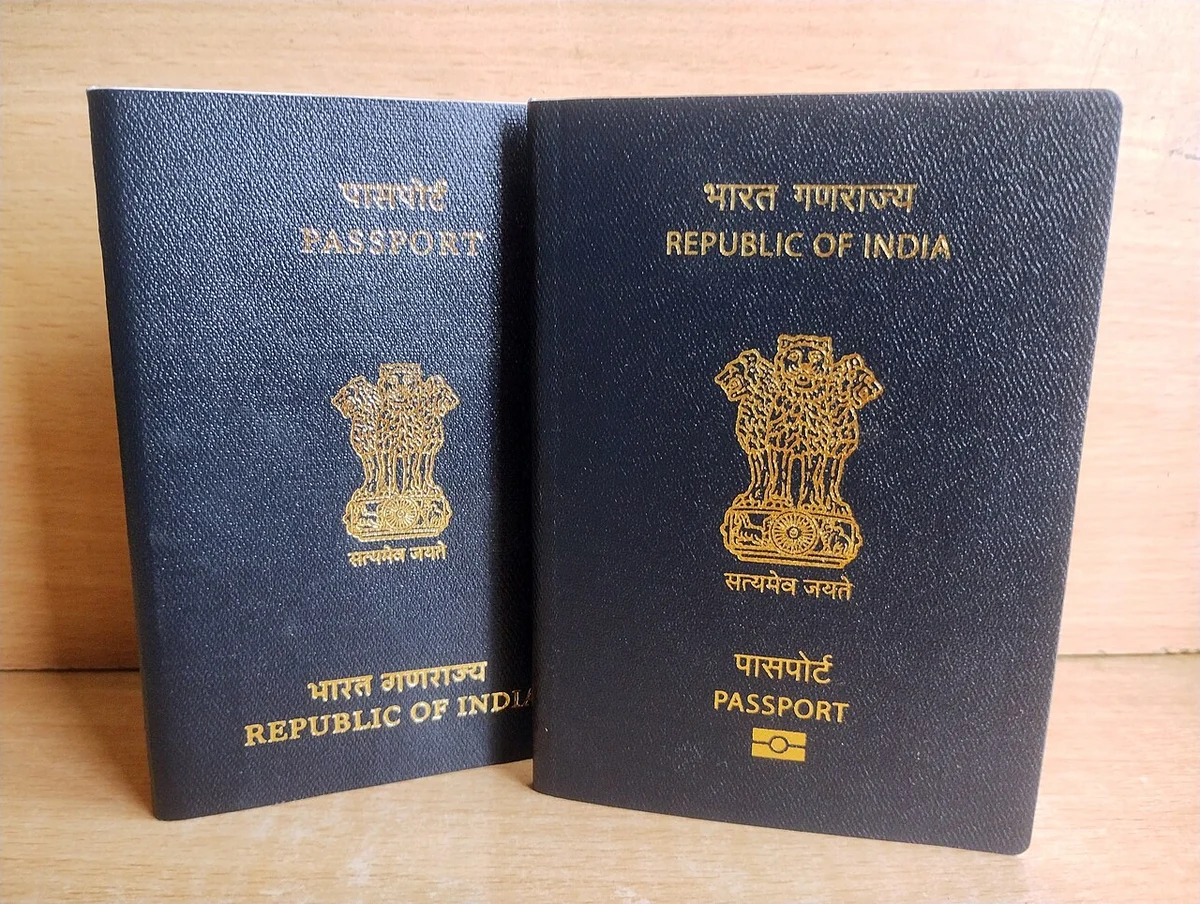
- Existing editorial photograph, Indian passport covers in July 2026
- USCIS | Historical case processing measures
- State Department February 2026 Visa Bulletin, India EB-2
- State Department March 2026 Visa Bulletin, India EB-2
- USCIS November 2026 adjustment chart, canonical agency page
